
Florida, the Sunshine State, is renowned for its pristine beaches, vibrant theme parks, and a captivating array of wildlife. Among its most beloved inhabitants are the gentle giants of the sea – the manatees. These docile marine mammals, often affectionately called “sea cows,” are a significant draw for tourists and a cherished part of Florida’s natural heritage. If you’re planning a trip to Florida with the hope of spotting these magnificent creatures, understanding where and when to find them is crucial for a successful and memorable experience. This guide will delve into the best locations, times of year, and activities for encountering manatees in their natural habitat, ensuring your Florida adventure is filled with wonder and unforgettable wildlife sightings.
Understanding Manatee Behavior and Habitat
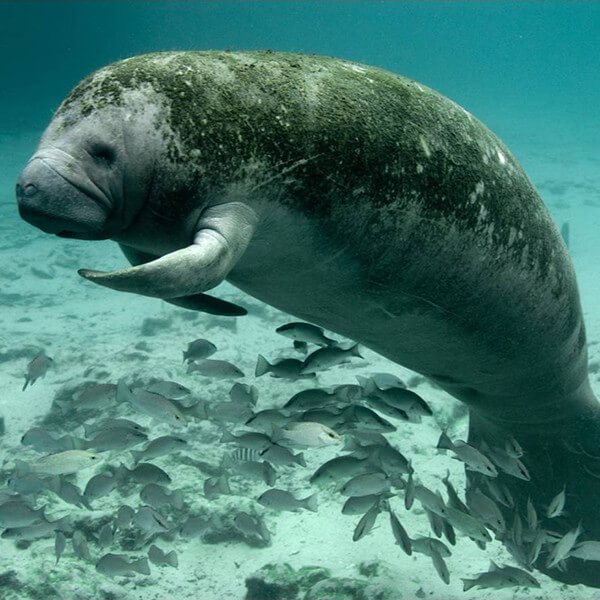
To effectively locate manatees in Florida, it’s essential to understand their behavioral patterns and preferred habitats. Manatees are herbivores, spending a significant portion of their day grazing on seagrass and other aquatic vegetation. Their diet dictates their need for shallow, warm waters, which provide abundant food sources and refuge from cooler temperatures and predators.
Seasonal Movements and Warm Water Refuges
The primary driver for manatee movements throughout Florida is water temperature. As a species adapted to warmer climates, manatees are sensitive to cold. During the cooler months, typically from November through March, manatees will migrate from the open coastal waters of the Gulf of Mexico and the Atlantic Ocean to warmer inland waters. These warm water refuges are critical for their survival, providing consistent temperatures above 70°F (21°C).
These essential warm water havens are often found in the discharge areas of power plants, natural springs, and bays with geothermal activity. The consistent warmth of these locations allows manatees to avoid the physiological stress of prolonged exposure to cold water, which can lead to a condition known as cold stress syndrome. Observing these seasonal migrations is key to maximizing your chances of seeing manatees, especially during the winter.
Preferred Habitats: Seagrass Beds and Shallow Bays
Beyond warm water refuges, manatees favor specific types of aquatic environments. They are most commonly found in shallow, protected bays, estuaries, and slow-moving rivers where seagrass beds are plentiful. These underwater meadows are their primary food source, and areas with healthy, extensive seagrass are magnets for these gentle grazers.
Estuaries, where freshwater rivers meet saltwater oceans, are particularly important. The nutrient-rich waters in these areas support a diverse range of aquatic plants that manatees feed on. Furthermore, the calm, shallow nature of these environments provides a safe space for manatees to feed, rest, and nurse their young. Many of Florida’s protected areas and state parks are situated in such habitats, making them prime locations for wildlife viewing.
Prime Locations for Manatee Sightings in Florida
Florida boasts numerous locations where you can increase your odds of encountering manatees. These spots range from natural springs and wildlife refuges to specific coastal areas known for their consistent manatee populations. Planning your visit around these key locations can significantly enhance your manatee spotting experience.
Crystal River: The Manatee Capital of the World
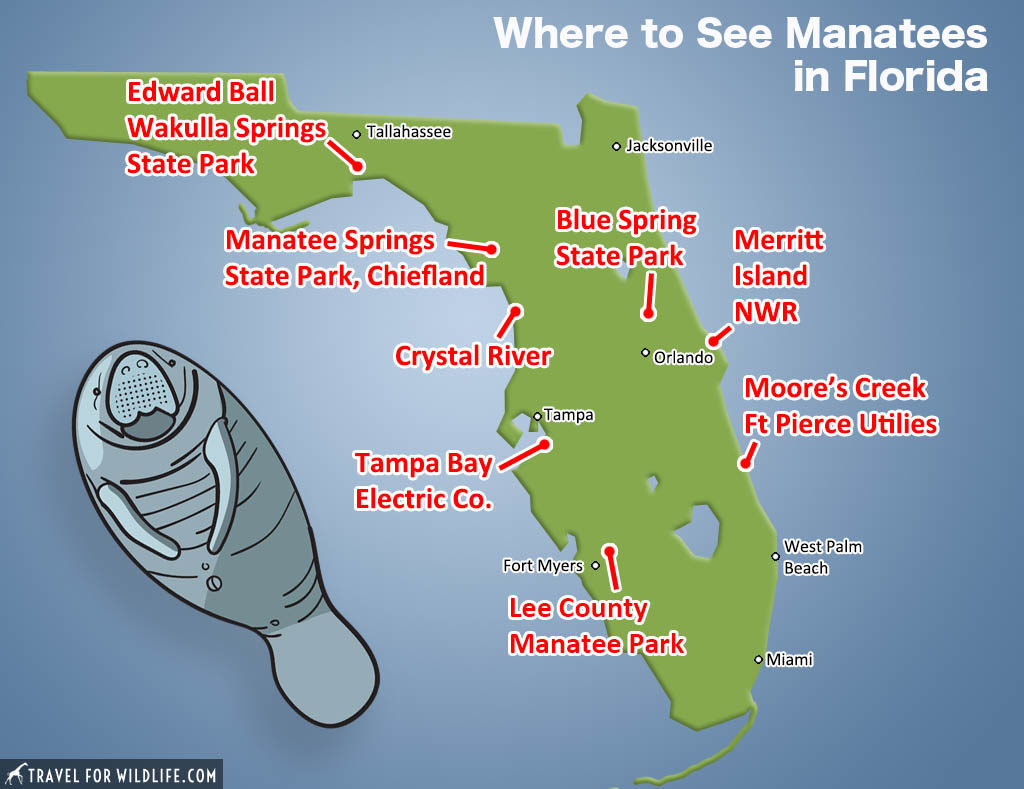
Often hailed as the “Manatee Capital of the World,” Crystal River on Florida’s Nature Coast is arguably the best place to see manatees year-round, but especially during the winter months. The area is home to the Crystal River National Wildlife Refuge, which encompasses several vital warm water springs. Kings Bay in Crystal River is particularly famous, attracting hundreds of manatees seeking refuge from the cold ocean waters.
During winter, Kings Bay becomes a sanctuary where manatees congregate. Several tour operators in Crystal River offer opportunities for visitors to observe and even interact with manatees. The most popular activity is manatee snorkeling tours, where you can don a wetsuit and mask and gently float alongside these magnificent creatures in the clear spring waters. It’s important to note that strict regulations are in place to ensure the well-being of the manatees. All interactions must be passive; touching, chasing, or disturbing the manatees is strictly prohibited. Kayaking and paddleboarding in Kings Bay also offer excellent viewing opportunities, allowing you to observe manatees at your own pace while respecting their space.
Blue Spring State Park: A Winter Spectacle

Located in Orange City, Blue Spring State Park is another essential destination for winter manatee viewing. This park protects Blue Spring, one of the state’s largest and most scenic natural springs. From November to March, the park’s river runs as warm as 72°F (22°C), making it an irresistible draw for manatees escaping the cold of the St. Johns River.
During the peak winter season, the spring run can host over a hundred manatees at any given time. The park offers a boardwalk that winds along the spring run, providing excellent vantage points for observing the manatees as they swim, rest, and play in the warm waters. Park rangers often provide educational programs about manatees and their importance to the Florida ecosystem. Due to the popularity of the park, it’s advisable to arrive early, especially on weekends, as it often reaches capacity. The boardwalk offers a unique perspective, allowing you to see manatees without disturbing them, which is crucial for their welfare.
Everglades National Park and South Florida Waters
While Crystal River and Blue Spring State Park are famous for winter congregations, manatees can be found in other parts of Florida throughout the year, particularly in the southern regions. Everglades National Park and the surrounding waters of South Florida are important habitats for manatees, especially during the warmer months.
In these areas, manatees can be observed in the shallow coastal waters, mangrove-lined estuaries, and the canals of cities like Fort Lauderdale and Miami. The Florida Keys also offer opportunities to spot manatees in their natural environment. While sightings might be more dispersed here compared to the concentrated winter aggregations, the chances are still good, especially if you explore areas with healthy seagrass beds and protected bays.
Several tour operators offer boat tours in these southern regions that focus on wildlife viewing, including manatees. These tours often navigate the calmer inland waterways and coastal areas, providing an excellent chance to see manatees feeding or swimming. Additionally, kayaking or paddleboarding in areas like Biscayne National Park can lead to serendipitous manatee encounters. The key in these locations is often patience and keeping an eye on the water for tell-tale signs, such as a tell-tale snout breaking the surface or a ripple from a fluke.
Tips for Responsible Manatee Viewing and Accommodation
When planning your manatee adventure, responsible viewing practices are paramount to protect these vulnerable animals. Combining your wildlife excursions with comfortable and convenient accommodation options will ensure a truly enjoyable Florida getaway.
Ethical Encounters: Respecting Manatee Space
The well-being of manatees is the top priority. Florida has strict regulations in place to protect them, and it’s crucial for all visitors to adhere to these guidelines. When on the water, maintain a safe distance from manatees. Never chase, corner, or harass them. If you are on a boat, observe them from a distance, and if you encounter them, cut your engine and drift.
For those interested in getting closer, guided tours are highly recommended. Tour operators in areas like Crystal River are knowledgeable about manatee behavior and follow strict guidelines for interaction. When snorkeling or swimming, move slowly and passively. Allow the manatees to approach you if they choose. Remember, they are wild animals, and their comfort and safety are essential. Avoid feeding manatees, as this can lead to dependency and health problems. It’s also vital to be aware of signage in manatee zones, which often indicate speed limits for boats and areas where manatees are frequently found.
Choosing Your Accommodation: Resorts, Apartments, and Beyond
Florida offers a diverse range of accommodation options to suit every traveler’s needs and budget. Whether you’re seeking a luxurious resort experience, a self-catering apartment, or a cozy villa, you’ll find it near prime manatee viewing locations.
In Crystal River, you’ll find charming inns and hotels that cater to manatee enthusiasts. Many offer packages that include guided manatee tours and equipment rentals. Look for properties with easy access to the waterfront or that are close to tour operator departure points. For a more secluded experience, consider renting a vacation home or villa in the surrounding areas.
If you plan to visit Blue Spring State Park, Orange City and nearby towns like Deland offer various accommodation choices, from comfortable hotels to quaint bed and breakfasts. For those exploring South Florida and the Everglades, cities like Miami, Fort Lauderdale, and Key West provide a wide array of hotels, resorts, and apartment rentals, offering a perfect base for day trips to coastal viewing spots.
When booking, consider amenities that will enhance your lifestyle and travel experience. Properties with swimming pools, on-site restaurants, and concierge services can add an extra layer of comfort to your trip. For longer stays or family vacations, serviced apartments or villas with kitchens can provide a more home-like environment and flexibility. Reading reviews from previous guests can help you find the perfect place that balances convenience, comfort, and proximity to manatee encounters, ensuring your Florida adventure is both exciting and relaxing.