
The California Gold Rush, a period of immense societal and economic upheaval, fundamentally reshaped the United States and continues to fascinate those interested in history, travel, and the spirit of adventure. While the name itself points to its most famous location, the story of where it all began and where the pursuit of gold unfolded is far richer and more geographically diverse than a single spot might suggest. This exploration delves into the heart of the California Gold Rush, examining its origins, key discovery sites, and the vast landscape it transformed.
The Spark: Discovery at Sutter’s Mill
The genesis of the California Gold Rush is inextricably linked to a specific, now iconic, location: Sutter’s Mill. In January 1848, James W. Marshall, an American carpenter working for John Sutter, a Swiss immigrant and owner of a vast land grant, discovered flecks of gold while supervising the construction of a sawmill on the American River near Coloma, California. This seemingly small find, initially kept secret by Sutter and Marshall for fear of disrupting their business interests, would soon ignite a worldwide frenzy.
The Site of the First Glimmer
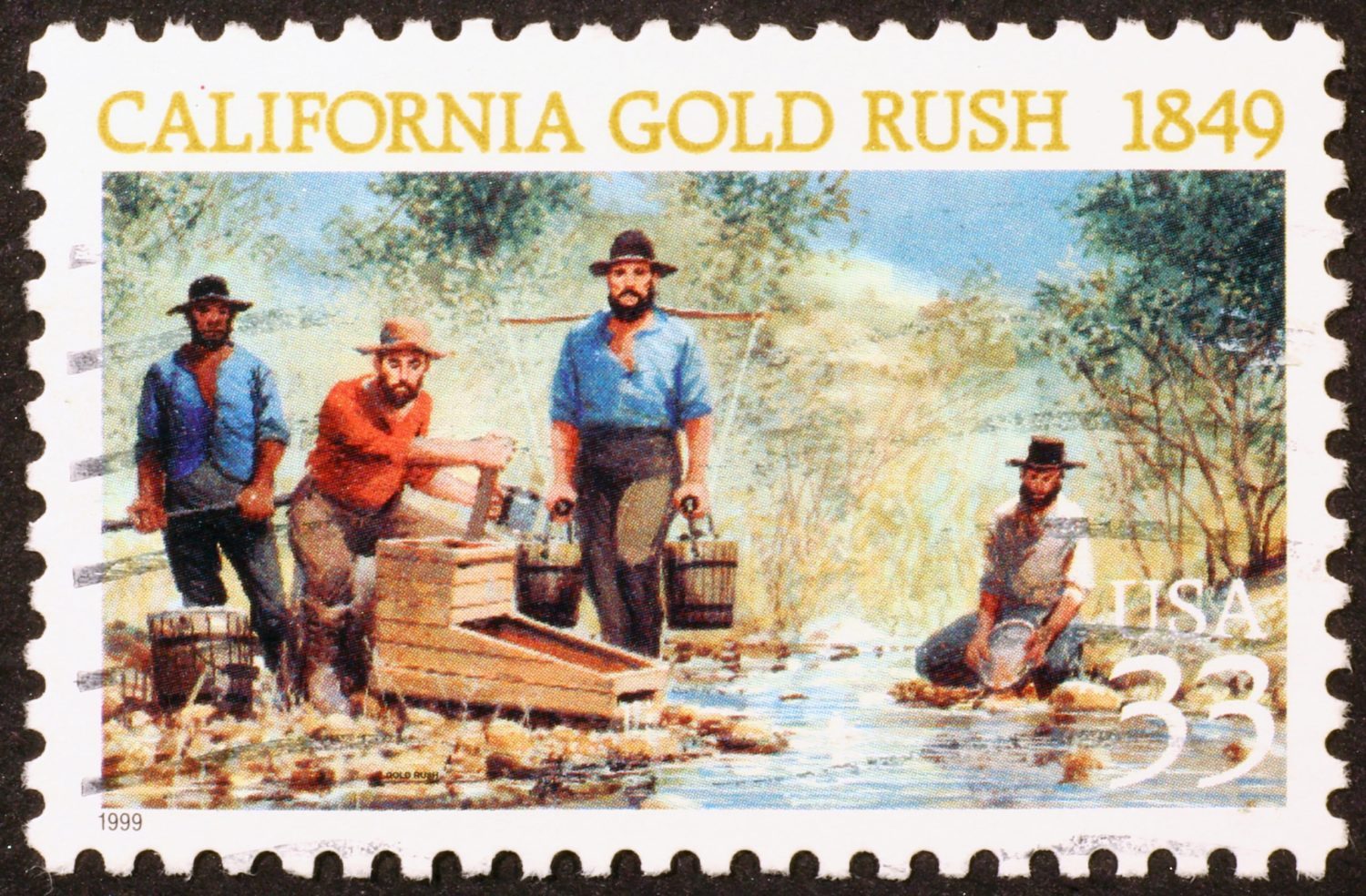
Sutter’s Mill was not a grand structure in its original form, but a functional woodworking facility. It stood on the south bank of the American River, a tributary of the Sacramento River. The specific spot where Marshall made his fateful discovery was in the tailrace of the mill, where water was diverted after passing through the saw mechanism. The process of panning the water, which was crucial for separating the heavier gold from lighter sand and gravel, would become the iconic image of the Gold Rush.
The discovery was confirmed by Marshall and Sutter, and the news, though initially suppressed, began to leak out. By late 1848, the secret was out, propelled by Samuel Brannan, a prominent businessman and publisher who, ironically, initially spread the word to boost sales of his goods. He famously ran through the streets of San Francisco, waving a bottle filled with gold dust and shouting, “Gold! Gold! Gold from the American River!” This act, more than any other, is credited with officially launching the Gold Rush and transforming a remote territory into a global magnet.
Today, the site of Sutter’s Mill is preserved as Marshall Gold Discovery State Historic Park in Coloma. Visitors can explore the reconstructed mill, learn about the lives of the prospectors, and even try their hand at gold panning, offering a tangible connection to the very beginnings of this historic event. The park not only marks the geographical origin but also serves as a poignant reminder of the individual discovery that set in motion a monumental chapter in American history.
Beyond the Mill: The Gold-Bearing Regions of California
While Sutter’s Mill was the catalyst, the California Gold Rush quickly spread across a vast swathe of Northern California, transforming numerous landscapes into bustling, often chaotic, mining camps and burgeoning towns. The gold was not confined to the immediate vicinity of the discovery; it was found in abundance in riverbeds and along the foothills of the Sierra Nevada Mountains.
The Mother Lode: The Heart of the Gold Rush
The most significant and productive gold-bearing region during the California Gold Rush became known as the Mother Lode. This geological formation is a series of gold-bearing quartz veins that stretch for over 120 miles through the western slopes of the Sierra Nevada. The Mother Lode was not a single, easily defined location but a vast, elongated area encompassing many individual mining districts.
The term “lode” itself refers to a vein of metallic ore. In this context, it meant that the gold was embedded within the rock, rather than simply lying loose in riverbeds. This discovery necessitated more sophisticated mining techniques than simple panning, leading to the development of placer mining (extracting gold from sediments) and, eventually, hard rock or lode mining (extracting gold from quartz veins).
Key areas within the Mother Lode that became synonymous with the Gold Rush include:
- Placer County: Towns like Auburn, Colfax, and Forest Hill sprang up, driven by placer mining operations along rivers like the North Fork of the American River.
- El Dorado County: Named after the mythical city of gold, this county was home to numerous mining camps, including Placerville (originally known as Hangtown), Georgetown, and Diamond Springs. The Cosumnes River and its tributaries were rich in placer gold.
- Amador County: Jackson, Amador City, and Sutter Creek were prominent mining centers, with rich veins of gold found in the quartz of the Mother Lode formation.
- Calaveras County: Famous for its quartz mining, Calaveras County boasted towns like San Andreas and Murphys, where significant amounts of gold were extracted.
- Tuolumne County: Sonora and Jamestown were major hubs in this southern portion of the Mother Lode, with gold found in both placer deposits and hard rock veins.
- Mariposa County: The southernmost extent of the Mother Lode, Mariposa County, saw the development of towns like Mariposa itself, where John C. Frémont had significant mining interests.
These counties, and the many smaller mining camps that dotted their landscapes, formed the physical epicenter of the Gold Rush. The allure of these areas drew hundreds of thousands of prospectors, adventurers, and fortune-seekers from around the world.
Beyond the Mother Lode: Expansion and New Discoveries
The initial frenzy around the Mother Lode and the riverbeds of the western Sierra Nevada did not entirely satisfy the insatiable hunger for gold. As the easily accessible placers began to diminish, prospectors ventured further afield, leading to new discoveries and further expansion of the Gold Rush’s geographical reach.
- The Trinity River: In the more remote northwestern part of California, the Trinity River and its tributaries also proved to be gold-bearing. This led to the establishment of mining camps and towns in this rugged and less populated region, requiring arduous journeys for prospectors.
- The Klamath River: Similarly, the Klamath River basin in northern California yielded significant amounts of gold, attracting miners to its waters and surrounding hills.
- Southern California: While the primary focus remained in the north, gold was also discovered in Southern California, particularly in areas like the San Gabriel Mountains and the Colorado Desert. These discoveries, though generally less prolific than those in the Sierra Nevada, contributed to the overall narrative of gold scattered across the state.
The expansion of mining activities also brought significant changes to existing settlements. San Francisco, originally a small port town, exploded in population and economic importance as it became the primary gateway for supplies and transportation for the mining districts. Sacramento, strategically located at the confluence of the American and Sacramento Rivers, also grew rapidly into a vital supply and administrative center.
The Journey and The Lifestyle of a Forty-Niner
Understanding “where” the California Gold Rush took place also necessitates understanding “how” people got there and the distinct lifestyle they adopted once they arrived. The journey itself was often an epic undertaking, fraught with peril and requiring immense determination.
Routes to the Gold Fields
Prospective miners, known as “forty-niners” (referring to the year 1849, the peak year of migration), had several primary routes to reach California:
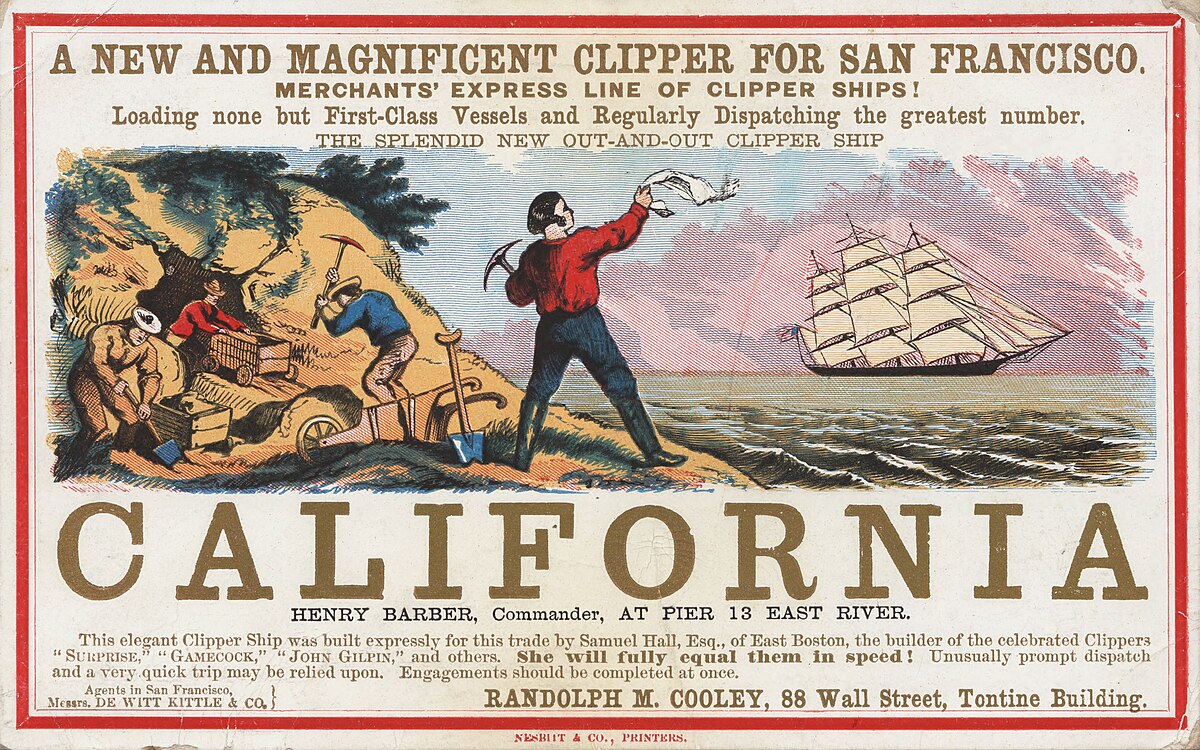
- By Sea (Circumnavigation): The longest and most expensive route involved sailing around the tip of South America via the Straits of Magellan. Ships would depart from ports on the Atlantic Coast of the United States, such as New York City or Boston, and embark on a months-long voyage around the continent. Another, though often more perilous, sea route involved sailing to Nicaragua or Panama, crossing the Isthmus by land, and then catching another ship on the Pacific Coast to San Francisco.
- By Land (The Overland Trails): For those who chose to brave the overland journey, the primary routes were the Oregon Trail and the California Trail. These trails stretched for thousands of miles across the plains, mountains, and deserts of the American West. Migrants traveled by wagon train, facing challenges such as disease, starvation, harsh weather, and encounters with Native American tribes. The California Trail, in particular, led emigrants through vast stretches of territory that would eventually become synonymous with the Gold Rush.
The choice of route often depended on financial resources, time availability, and personal inclination. Regardless of the path taken, the journey was a testament to the allure of gold and the promise of a better life.

Life in the Mining Camps
Once in California, the forty-niners found themselves in a rugged, often lawless, environment. The mining camps were rudimentary settlements, often consisting of tents, crude cabins, and boarding houses. The lifestyle was dictated by the demands of mining.
- The Daily Grind: Days were spent toiling in the rivers or digging into the earth, sifting through gravel and rock in the hope of finding gold. The work was backbreaking, often performed in challenging weather conditions.
- Community and Commerce: Despite the individualistic nature of prospecting, mining camps developed their own forms of community. Saloons, general stores, and blacksmiths were essential services. Prices for goods and services were often inflated due to the scarcity and the immense demand, contributing to the rapid fortunes made by some entrepreneurs who were not miners themselves.
- The Boomtown Phenomenon: The discovery of gold in a particular area would lead to the rapid establishment of a boomtown. These towns could experience explosive growth, attracting thousands of people. However, they could also collapse just as quickly when the gold ran out or the focus shifted elsewhere. Towns like San Francisco, Sacramento, and Stockton grew into permanent cities, while countless smaller camps faded into ghost towns.
- Law and Order: In the absence of established government authority in the early days, vigilante justice was common. As populations grew, rudimentary forms of law enforcement and courts began to emerge, though often with limited effectiveness.
The lifestyle of a forty-niner was one of extreme contrasts: immense hardship alongside incredible opportunity, isolation alongside burgeoning communities, and the constant hope of striking it rich. The geographical locations that defined the California Gold Rush were not just places where gold was found, but dynamic landscapes shaped by the relentless pursuit of fortune and the diverse lives of those who chased it.