
The vast expanse of Texas, a state renowned for its independent spirit and diverse landscapes, often sparks a common question among travelers and residents alike: Which time zone is Texas? For many, the answer isn’t as straightforward as one might expect, given the state’s immense size. While a significant portion of Texas operates under one primary time zone, a closer look reveals a nuanced reality that can impact your travel plans, business meetings, and even your daily life within the Lone Star State. This exploration delves into the intricacies of Texas’s time zone, offering insights for those planning a visit, a relocation, or simply seeking to understand this geographical quirk.
Understanding the time zone of a destination is a fundamental aspect of travel planning. It influences everything from flight schedules and hotel check-in times to the timing of tours and dining reservations. For Texas, this understanding is crucial due to its sheer geographical scale. Without a clear grasp of its time zone, travelers might find themselves arriving too early or too late for crucial appointments, missing out on planned activities, or experiencing unnecessary confusion. This guide aims to demystify the time zone situation in Texas, providing clear answers and practical advice.
The state of Texas is a geographical marvel, stretching from the Gulf Coast’s humid subtropical climate to the arid plains of West Texas. Its diverse topography, rich history, and vibrant culture have made it a popular destination for tourists and a hub for business. From the bustling metropolises of Houston and Dallas to the historic charm of San Antonio and the artistic flair of Austin, each city offers a unique experience. However, beneath these varied attractions lies a geographical consideration that affects all who traverse its borders: its time zone.
Navigating Texas Time: Central Time Zone Dominance
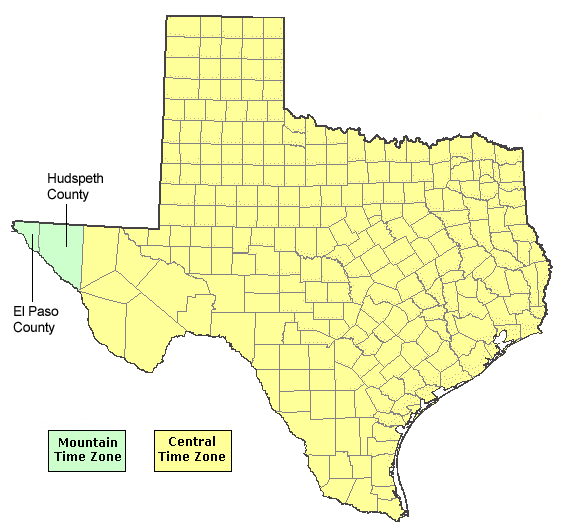
The vast majority of the state of Texas observes Central Standard Time (CST), which is UTC-6. During the warmer months, it shifts to Central Daylight Time (CDT), observing UTC-5. This is the time zone you’ll find yourself in when visiting most of the state’s major cities and attractions. From the iconic Alamo in San Antonio to the bustling Galleria in Houston, most travelers will operate on CDT during the spring and summer months and CST during the fall and winter.
Central Daylight Time (CDT) and Central Standard Time (CST)
The transition between CDT and CST is a phenomenon known as Daylight Saving Time (DST). In the United States, DST typically begins on the second Sunday in March and ends on the first Sunday in November. During this period, clocks are moved forward by one hour to make better use of daylight. For Texas, this means that from March to November, most of the state is on CDT. Once DST ends, the clocks are set back, and the state reverts to CST.
This consistent adherence to CDT/CST across most of Texas simplifies travel for many. When booking flights into Dallas/Fort Worth International Airport (DFW) or George Bush Intercontinental Airport (IAH) in Houston, or planning a trip to Austin for its vibrant music scene, you can generally assume you’ll be in the Central Time Zone. This allows for straightforward coordination of travel itineraries and business engagements.
Impact on Travel and Business
For travelers, understanding the Central Time Zone is crucial for seamless journey planning. If you are flying into Texas from a different time zone, such as the Pacific Time Zone (UTC-8/UTC-7) or the Eastern Time Zone (UTC-5/UTC-4), remember to adjust your watch accordingly upon arrival. For example, if you are traveling from Los Angeles (Pacific Time) to Dallas (Central Time) in November, you will need to set your watch one hour ahead. Conversely, if you are traveling from New York (Eastern Time) to Dallas, you will set your watch one hour back.
Business travelers also find this consistency beneficial. Meetings scheduled across various Texas cities will generally adhere to the same time zone, reducing the risk of miscommunication. However, it’s always prudent to double-check the specific time zone being used when confirming meeting times, especially if dealing with individuals in the Panhandle region, which presents a unique exception.
The Panhandle’s Peculiarity: A Glimpse of Mountain Time
While the dominance of the Central Time Zone is undeniable, there’s a notable exception within Texas that often catches people by surprise: a small sliver of the westernmost part of the state, particularly the Texas Panhandle, observes Mountain Time Zone (MT). This region observes Mountain Standard Time (MST), which is UTC-7, and shifts to Mountain Daylight Time (MDT), UTC-6, during DST.
El Paso and Hudspeth County: The Western Outliers
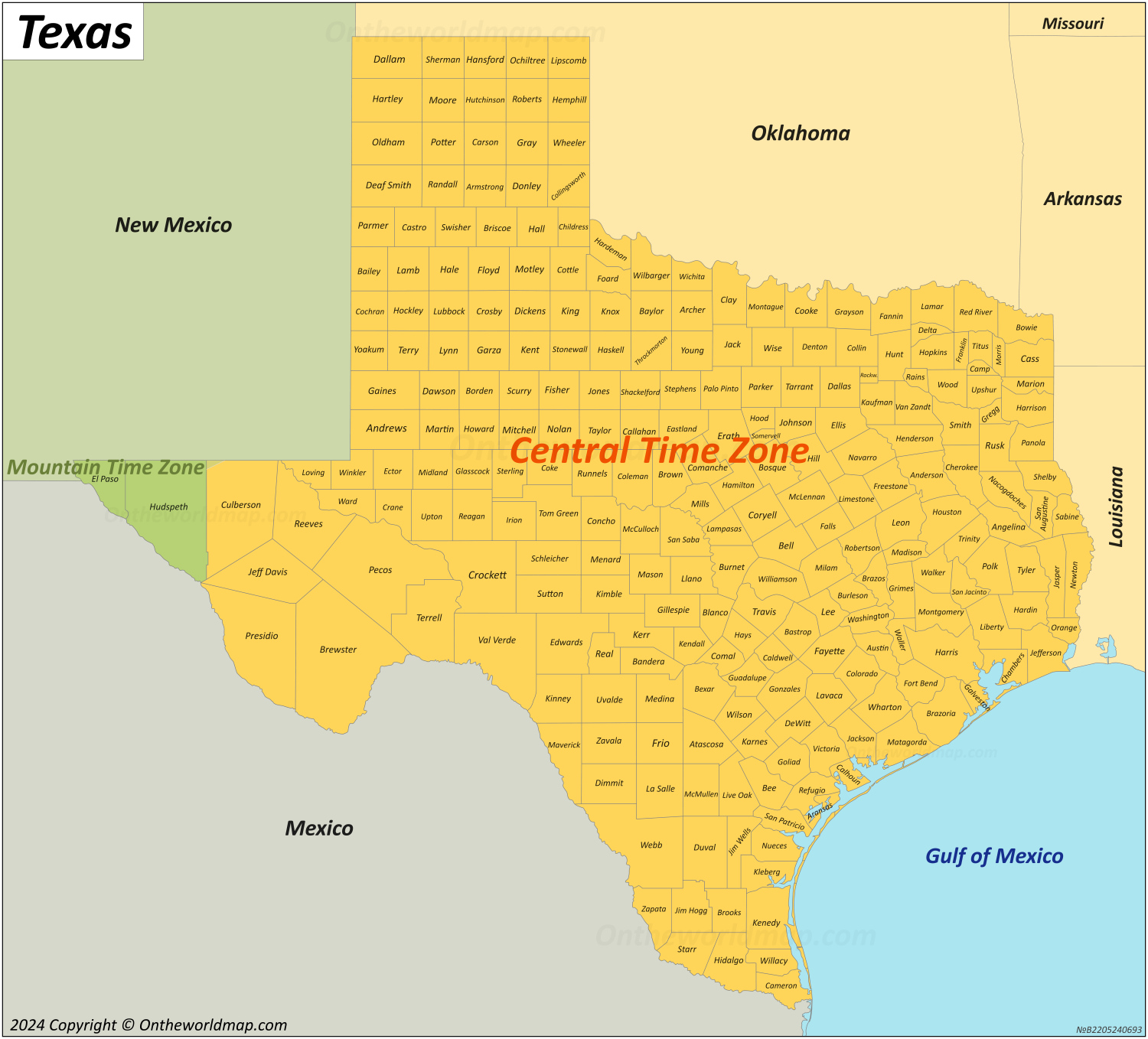
The primary areas in Texas that fall under the Mountain Time Zone are El Paso and Hudspeth County. These areas, geographically closer to New Mexico and Mexico than to the rest of Texas, have historically aligned with the Mountain Time Zone. This alignment makes sense from a practical standpoint, as it synchronizes them with neighboring communities in New Mexico and other parts of the Mountain Time Zone, facilitating commerce, communication, and daily life.
For travelers heading to El Paso, perhaps to explore the historic Mission Trail or to enjoy the stunning desert landscapes, it’s imperative to recognize this time difference. If you are driving from, say, San Antonio (Central Time) to El Paso (Mountain Time) in the morning, you will need to set your watch one hour back as you enter the Mountain Time Zone. This means that 10:00 AM in San Antonio would be 9:00 AM in El Paso. This time shift can be particularly important for ensuring timely arrivals for flights departing from El Paso International Airport (ELP) or for making it to pre-booked tours or dining reservations.
Practical Implications for Visitors
The existence of two time zones within Texas necessitates a bit of extra attention for travelers. While most of Texas is on Central Time, if your itinerary includes destinations in the far western part of the state, like El Paso, you must factor in the time zone change. This is especially true for those planning cross-state travel within Texas. For instance, driving from Dallas to El Paso involves traversing a considerable distance and crossing a time zone boundary.
For those booking accommodations, it’s always wise to confirm the local time of your hotel. While most hotel booking platforms will automatically display times in the local time zone of the property, a quick mental check based on the city you’re staying in can prevent any last-minute confusion. Similarly, when arranging meetings or activities, clearly stating the time zone can avoid any ambiguity. For instance, instead of saying “meet at 2 PM,” say “meet at 2 PM Central Time” or “meet at 2 PM Mountain Time.”
Planning Your Texas Adventure: Time Zone Considerations
When embarking on a journey through the diverse landscapes of Texas, from the piney woods of East Texas to the rugged beauty of Big Bend National Park, understanding the time zone is a small but significant detail that can enhance your travel experience. Whether you’re planning a luxurious resort stay in the Hill Country, exploring the historical landmarks of Galveston, or embarking on a budget-friendly road trip, a little foresight regarding time zones will go a long way.
Accommodation and Activity Booking
When booking your accommodation, whether it’s a charming bed and breakfast in Fredericksburg or a modern suite in downtown Houston, confirm the local time of your booking. Most online platforms will present this information accurately, but cross-referencing with the city’s known time zone is a good practice. Similarly, when booking tours, activities, or making restaurant reservations, especially in El Paso or other parts of the Panhandle that observe Mountain Time, ensure you are clear about which time zone is being referenced.
If your trip involves moving between Central and Mountain Time zones, consider the practical impact on your schedule. For example, if you have a business meeting scheduled for late afternoon in El Paso, remember that this will be an hour later in Dallas. This can affect travel plans between the two cities, especially if you are relying on flights or need to account for driving times.
Lifestyle and Travel Tips
For those planning a lifestyle-oriented trip, such as a luxury vacation or a family getaway, knowing the time zone helps in setting realistic expectations for your daily activities. For instance, if you’re looking to catch a sunset in West Texas, understanding the time difference will help you plan the perfect moment. Similarly, for families traveling with children, maintaining a consistent routine as much as possible can be aided by being aware of the local time.
Budget travelers might find that understanding time zones helps them maximize their day. For example, arriving in a new city in the morning allows more time for exploration and enjoying attractions before checking into their accommodation.

Embracing the Texas Experience
Ultimately, the time zone of Texas is a minor detail in the grand tapestry of this captivating state. What truly matters is the unparalleled hospitality, the rich cultural experiences, and the breathtaking scenery that await you. From the iconic Space Center Houston to the historic streets of Austin, Texas offers something for every traveler. By being mindful of its time zone nuances, you can ensure your visit is as smooth and enjoyable as possible, allowing you to fully immerse yourself in the unique charm and spirit of the Lone Star State. Whether you’re setting your watch to CDT, CST, MST, or MDT, the adventure that awaits in Texas is timeless.