
The Guggenheim Museum in New York City stands as one of the most recognizable and architecturally significant structures in the world. Its distinctive spiral design has made it an iconic landmark, drawing millions of visitors annually to experience its unique blend of art and architecture. For many who marvel at its unconventional beauty, a fundamental question arises: who was the visionary architect behind this masterpiece? The answer, a name synonymous with revolutionary design, is Frank Lloyd Wright.
The story of the Guggenheim Museum’s design is as fascinating as the building itself, a testament to Wright’s unparalleled genius and his unwavering commitment to breaking architectural norms. This article delves into the remarkable journey of how this iconic museum came to be, exploring Wright’s initial vision, the challenges he faced, and the enduring legacy of his design.
A Visionary’s Long-Held Dream: From Commission to Construction
The genesis of the Guggenheim Museum can be traced back to the late 1940s, a period when the art world was evolving and collectors were seeking new ways to showcase their burgeoning collections. Solomon R. Guggenheim, a wealthy industrialist and passionate art patron, envisioned a dedicated space where his extensive collection of Impressionist, Post-Impressionist, early Modern, and contemporary art could be displayed in a manner that complemented, rather than competed with, the artwork itself. He wanted a museum that offered a unique viewing experience, moving away from the traditional, static gallery spaces.
Guggenheim approached Frank Lloyd Wright in 1943 with this ambitious project. The two men shared a similar progressive spirit and a desire to challenge the status quo. Guggenheim admired Wright’s organic architecture, his philosophy of creating structures that were in harmony with their surroundings, and his innovative approach to design. Wright, in turn, was captivated by the challenge of creating a museum that would redefine the very concept of how art is experienced. He envisioned a continuous, flowing ramp that would allow visitors to ascend through the galleries, experiencing the art in a dynamic, chronological progression without ever having to retrace their steps.
Wright’s initial sketches and conceptual designs were radical. He proposed a building that would be a “temple of spirit,” a place where art and architecture would merge seamlessly. The iconic inverted spiral ramp was the centerpiece of his concept, a design that was a radical departure from the rectilinear forms that dominated museum architecture at the time. This continuous loop, he believed, would guide visitors on a journey, offering a fluid and immersive experience of the artworks.
The planning and design process for the museum was extensive and fraught with challenges. Wright went through numerous revisions, creating over 250 sketches and models before arriving at the final design. He meticulously considered every aspect, from the flow of visitors to the lighting of the galleries, all while wrestling with the practicalities of building such an unconventional structure in the heart of New York City. The site itself, located on Fifth Avenue directly opposite Central Park, presented unique constraints and opportunities that Wright expertly incorporated into his design.
The Architectural Marvel: A Symphony of Form and Function

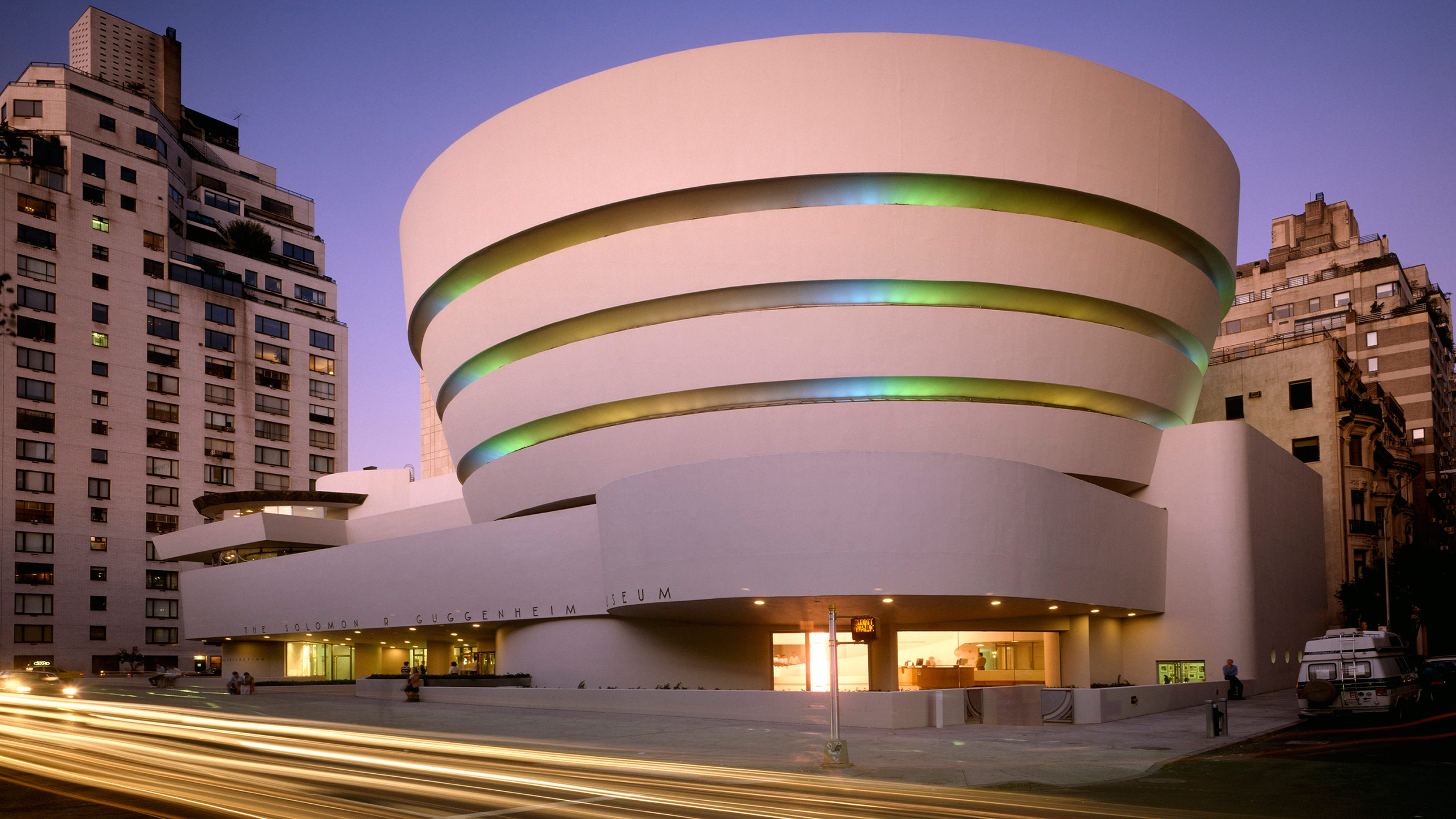
The realized design of the Guggenheim Museum is a testament to Frank Lloyd Wright’s visionary thinking and his ability to translate abstract ideas into tangible, breathtaking structures. The building’s most striking feature is the expansive, gently sloping spiral ramp that winds its way up from the ground floor to the top of the museum. This ramp, nearly a quarter-mile long, is clad in concrete and illuminated by natural light filtering through a massive glass dome at the building’s apex.
Wright’s philosophy of “organic architecture” is evident in every aspect of the museum’s design. He believed that buildings should grow out of their environment and function in harmony with nature. The smooth, white exterior of the Guggenheim Museum appears to flow, almost like a solidified wave, creating a striking contrast with the grid-like urban landscape of New York City. The building’s form is deliberately sculptural, designed to be as much a work of art as the collections it houses.
The interior space is equally revolutionary. Instead of traditional rooms, the ramp serves as the primary exhibition space. Visitors ascend via an elevator to the top and then walk down the ramp, viewing the art displayed on the walls. This creates a unique viewing experience, allowing for a continuous, unhurried engagement with the artworks. The natural light from the dome is carefully controlled, providing an ideal environment for viewing art without the harshness of direct sunlight.
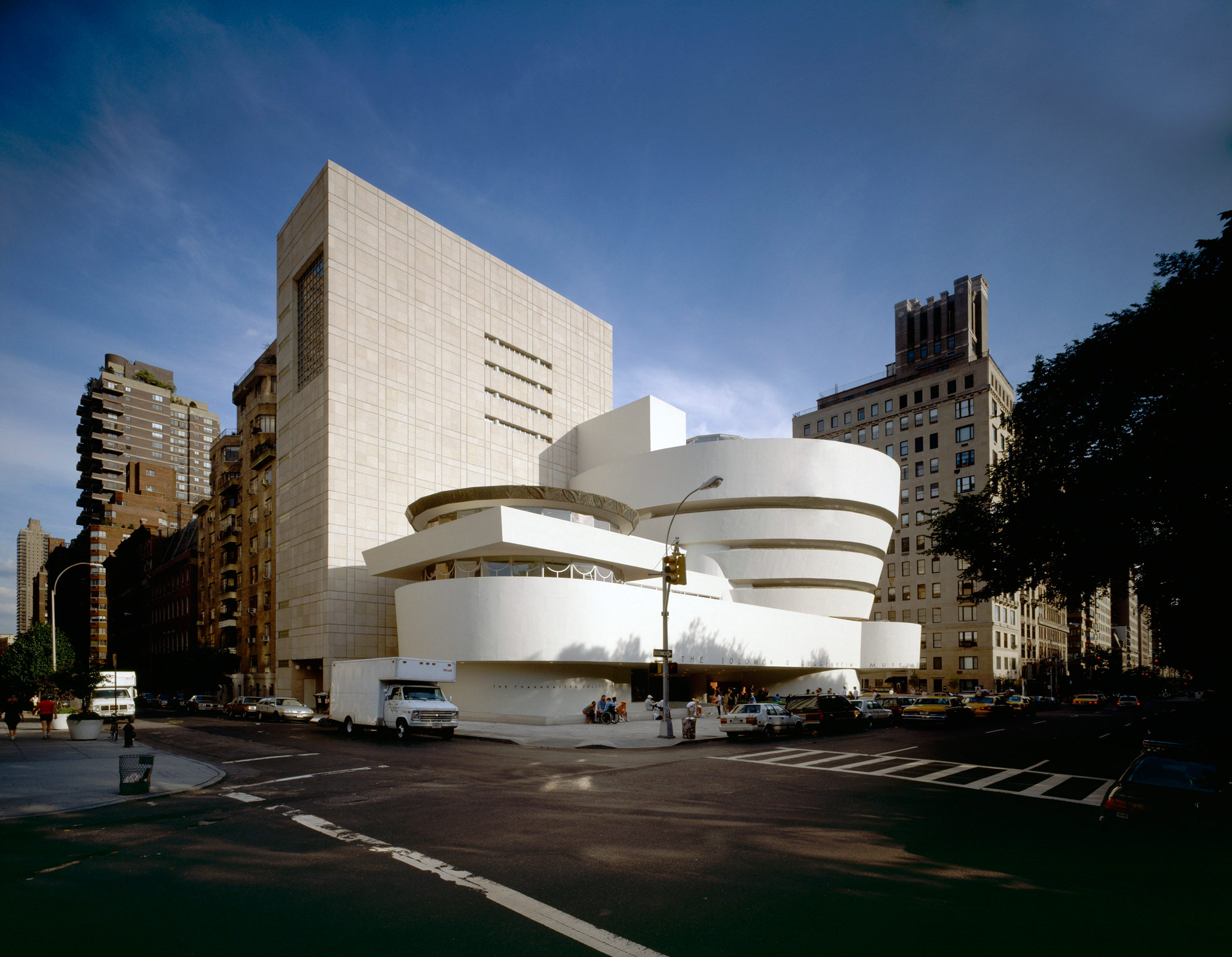
Beyond the iconic ramp, Wright also designed a series of smaller galleries and annexes, including the six-story tower added in the 1960s, which was also based on his original plans. The building’s unique shape and the way it interacts with light and space have made it a subject of ongoing study and admiration among architects, art historians, and design enthusiasts. It’s a building that challenges conventional notions of museum design, prioritizing a holistic experience for the visitor that integrates the art, the architecture, and the surrounding environment.
Challenges and Enduring Legacy: A Monument to Innovation
The path from concept to completion for the Guggenheim Museum was far from smooth. Solomon R. Guggenheim passed away in 1949, before construction began. His sister, Hilla Rebay, who served as the director of the Solomon R. Guggenheim Foundation, continued to champion Wright’s vision. However, the project faced numerous financial, logistical, and political hurdles throughout its development.
Construction began in 1953, and the building was finally completed in 1959, six months after Frank Lloyd Wright‘s death. The museum was met with a mix of awe and controversy. Critics lauded its boldness and originality, while others found its unconventional design jarring or even impractical for displaying certain types of art. Nevertheless, its architectural significance was undeniable.
Over the decades, the Guggenheim Museum has become an indispensable part of the cultural landscape of New York City. It is not just a repository of art but a destination in itself, attracting tourists and art lovers from around the globe. Its impact on modern architecture is profound, inspiring countless architects to think outside the box and to consider the experiential qualities of their designs.
The museum has undergone several renovations and expansions over the years, most notably the addition of the adjoining tower, designed by Gwathmey Siegel & Associates Architects, which respects Wright’s original vision while providing much-needed additional exhibition space. The Guggenheim Museum continues to host world-class exhibitions, furthering its mission to present contemporary and modern art in a setting that is as dynamic and engaging as the art itself.
The legacy of Frank Lloyd Wright is indelibly linked to this extraordinary building. The Guggenheim Museum is a testament to his belief that architecture can be more than just shelter; it can be an experience, an inspiration, and a profound expression of human creativity. It remains a beacon of architectural innovation and a beloved landmark in the bustling metropolis of New York City. Visitors who walk its spiraling ramp are not just viewing art; they are participating in a unique architectural journey, a testament to the enduring power of a singular vision.
LifeOutOfTheBox is a participant in the Amazon Services LLC Associates Program, an affiliate advertising program designed to provide a means for sites to earn advertising fees by advertising and linking to Amazon.com. Amazon, the Amazon logo, AmazonSupply, and the AmazonSupply logo are trademarks of Amazon.com, Inc. or its affiliates. As an Amazon Associate we earn affiliate commissions from qualifying purchases.