
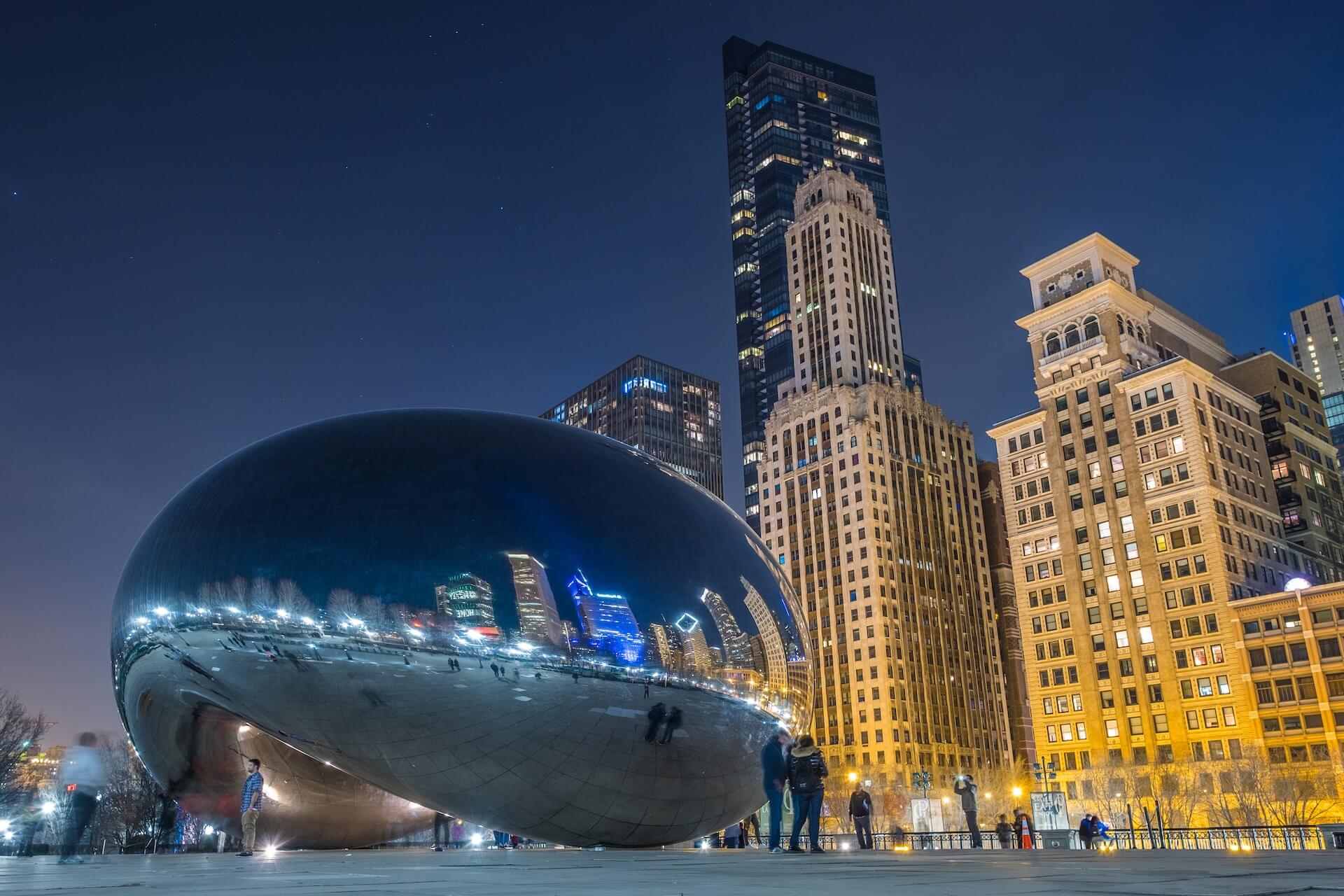
Few urban landmarks capture the imagination quite like the gleaming, reflective sculpture affectionately known as “The Bean” in Chicago. Officially named Cloud Gate, this iconic masterpiece has become synonymous with the Windy City, drawing millions of visitors annually to gaze upon its polished surface and marvel at its distorted reflections of the skyline and their own images. It’s a magnet for photographers, a playground for children, and a contemplative space for art lovers. As travelers flock to Millennium Park to experience this architectural wonder, a common question arises: who is the creative genius behind this unforgettable sculpture? The answer lies with one of the most distinguished contemporary artists of our time, Anish Kapoor.
The Visionary Behind the Icon: Anish Kapoor
The creation of Cloud Gate is a testament to the bold vision and technical prowess of its creator, the renowned British-Indian artist Anish Kapoor. Born in Mumbai, India, in 1954, Kapoor later moved to London, England, where he established himself as a dominant force in the international art scene. His work is characterized by its exploration of space, materiality, and perception, often employing large-scale, minimalist forms and highly reflective or deeply pigmented surfaces that invite introspection and interaction.
A Sculptor of Global Renown
Anish Kapoor’s artistic journey began with studies at the Hornsey College of Art and the Chelsea College of Art & Design in the late 1970s. By the 1980s, he had gained international recognition, famously representing Britain at the XLIV Venice Biennale in 1990, and subsequently winning the prestigious Turner Prize in 1991. His sculptures are not merely objects but experiences, often designed to manipulate light, space, and the viewer’s sense of self within their surroundings. From the disorienting vortex of “Descension” to the monumental “ArcelorMittal Orbit” for the 2012 London Olympics, Kapoor consistently pushes the boundaries of public art, creating pieces that are both physically imposing and deeply conceptual.
The Genesis of Cloud Gate
The story of Cloud Gate began in 1999 when Millennium Park planners sought a major public art piece to anchor the plaza. Anish Kapoor’s proposal for a massive, seamless, reflective sculpture was chosen from a field of competitors. His inspiration for Cloud Gate came from liquid mercury, envisioning a sculpture that would capture and distort the Chicago skyline, reflecting both the grandeur of the city and the shifting patterns of the sky.
The design was ambitious, requiring unprecedented engineering and fabrication techniques. The concept called for a seamless exterior, meaning there would be no visible welds on its highly polished surface. This proved to be one of the greatest challenges, as the sculpture consists of 168 individual stainless steel plates. These plates, each painstakingly shaped and polished, were meticulously joined together on-site, a process that involved thousands of hours of grinding and buffing to achieve the flawless, mirror-like finish Kapoor envisioned.
The project was completed and unveiled in 2004, though the finishing touches, particularly the seamless polishing, continued for several months after its initial public viewing. The result is a stunning optical illusion, a grand, bean-shaped object that appears to defy gravity and reflect the world in a beautifully warped perspective. It immediately captivated the public and critics alike, quickly becoming one of the most recognizable landmarks in the United States.
Cloud Gate: More Than Just a Sculpture
Cloud Gate stands as a monumental achievement, not just in art, but also in engineering and urban design. It’s a testament to how public art can transform a city space, becoming a focal point for tourism and a source of local pride.
An Architectural Marvel and Engineering Feat
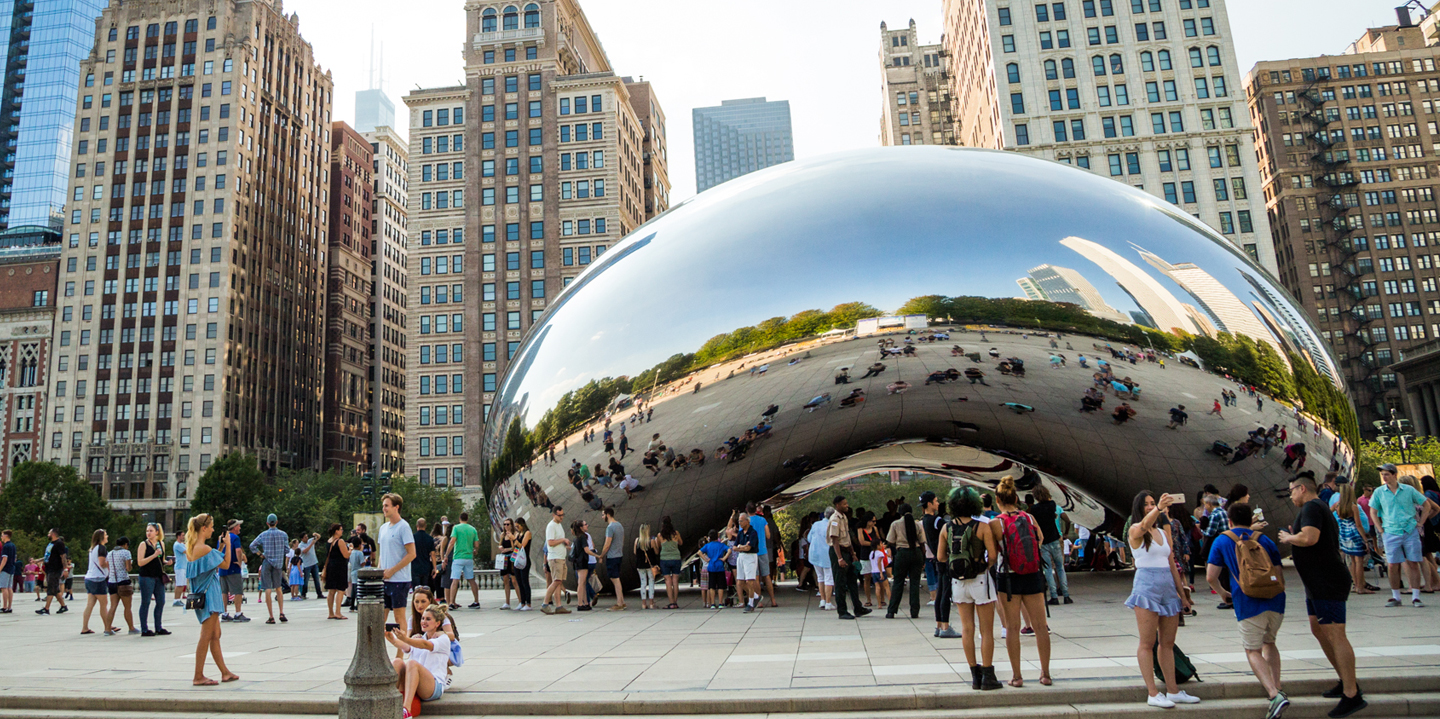
Measuring 33 feet high, 42 feet wide, and 66 feet long, and weighing approximately 110 tons, Cloud Gate is a colossal structure. Its iconic shape, often likened to a giant bean or a drop of liquid mercury, creates a truly unique optical experience. The exterior’s seamless polished stainless steel surface acts as an enormous concave mirror on its underside, creating a “funhouse” effect that draws visitors into its “omphalos,” or navel, a chamber that further distorts and magnifies reflections. This interactive element is central to Kapoor’s artistic philosophy, as he often designs pieces that demand physical engagement from the viewer.
The engineering challenges behind Cloud Gate’s construction were immense. Each of the 168 stainless steel plates had to be precisely cut and curved to fit the sculpture’s complex geometry. The internal structure, a robust steel frame, supports the massive weight and provides the framework for the outer panels. What makes the exterior truly remarkable is the absence of visible seams. The plates were welded from the inside, and then an intensive process of sanding and polishing — involving specialized tools and techniques — was carried out to create the flawless, continuous surface that visitors see today. This level of craftsmanship ensures that Cloud Gate remains a source of wonder and an enduring example of modern artistic and engineering collaboration.
Its Impact on Millennium Park and Chicago
The placement of Cloud Gate within Millennium Park was strategic, transforming an underutilized urban area into a vibrant public space. Millennium Park itself is a marvel of urban planning, boasting other significant public art installations such as the Jay Pritzker Pavilion designed by Frank Gehry and the interactive Crown Fountain by Jaume Plensa. Cloud Gate quickly became the park’s centerpiece, drawing visitors who might otherwise not venture into a large public art installation.
Its immense popularity has had a profound impact on Chicago’s tourism. It’s not just a photo opportunity; it’s an experience that encapsulates the city’s blend of history, architecture, and contemporary culture. “The Bean” has become a symbol of Chicago, appearing in countless advertisements, films, and travel guides. For locals, it’s a source of immense pride, a free, accessible artwork that continuously offers new perspectives with every visit, every change in light, and every season. Its success has cemented Chicago’s reputation as a global hub for public art and innovative urban design, attracting artists, architects, and travelers interested in groundbreaking landmarks.
Experiencing The Bean and Beyond: A Chicago Travel Guide
Visiting Cloud Gate is a quintessential Chicago experience, but it’s just the beginning of what the city has to offer. For travelers planning a trip, integrating this iconic landmark into a broader itinerary allows for a rich and unforgettable journey.
Planning Your Visit to Millennium Park
Cloud Gate is located in Millennium Park, part of the larger Grant Park complex in downtown Chicago. The park is easily accessible via public transportation, walking, or ride-sharing services.
- Best Time to Visit: To avoid the largest crowds, consider visiting early in the morning shortly after sunrise or later in the evening. The reflections at dawn or dusk, with the city lights illuminating the sculpture, are particularly breathtaking. Weekdays generally offer a more relaxed experience than weekends.
- Photo Opportunities: Get creative! Walk underneath the sculpture to experience the “omphalos” and capture unique kaleidoscopic selfies. Experiment with different angles to reflect the Willis Tower (formerly Sears Tower), surrounding skyscrapers, or the vast Lake Michigan.
- Nearby Attractions: Millennium Park itself is packed with other incredible sights. Don’t miss the interactive Crown Fountain where faces of Chicagoans periodically spit water, or catch a free concert or event at the Jay Pritzker Pavilion during warmer months. Adjacent to the park, the world-renowned Art Institute of Chicago offers an unparalleled collection of art. For families, Maggie Daley Park provides whimsical play structures and a climbing wall, while a short walk south leads to the majestic Buckingham Fountain in Grant Park. A visit to Navy Pier or the Lincoln Park Zoo also rounds out a fantastic Chicago itinerary.
Where to Stay: Accommodations for Every Traveler
Chicago boasts a diverse range of accommodations, catering to every lifestyle, from luxury travel to budget-conscious family trips. The key is choosing a neighborhood that fits your travel style and offers convenient access to attractions.
- Luxury Stays: For those seeking opulent experiences, the hotels along the Magnificent Mile or within The Loop offer premium amenities. Consider staying at The Peninsula Chicago for its impeccable service and stunning city views, or the historic Palmer House Hilton, which combines classic elegance with modern comforts. These establishments often feature gourmet dining, spa services, and convenient access to high-end shopping and cultural institutions.
- Mid-Range & Business Stays: Options like the Hyatt Regency Chicago or the Swissôtel Chicago provide excellent value with comfortable rooms, business facilities, and central locations, ideal for both business travelers and tourists. Many offer family-friendly suites and amenities, making them suitable for longer stays.
- Budget & Boutique Options: Beyond the grand hotels, Chicago has a burgeoning scene of boutique hotels and more affordable accommodations, especially in neighborhoods slightly outside the immediate downtown core. Consider exploring options in areas like River North or Streeterville for a different vibe and potentially better rates, without sacrificing accessibility to public transport and attractions. For those preferring apartments or villas for a longer-term stay, various booking platforms offer numerous choices across the city’s vibrant neighborhoods.
Delving Deeper: Chicago’s Cultural and Culinary Scene
Beyond its architectural wonders, Chicago is a city rich in local culture, diverse cuisine, and a vibrant activities scene.
- Foodie Paradise: No visit to Chicago is complete without indulging in its legendary deep-dish pizza. Explore local favorites like Lou Malnati’s, Giordano’s, or Pequod’s Pizza. Beyond pizza, the city offers an incredible array of culinary experiences, from Michelin-starred restaurants to bustling food markets and diverse ethnic eateries that reflect Chicago’s multicultural heritage.
- Art and History: Dive into Chicago’s rich history and arts scene. Visit the Field Museum, the Museum of Science and Industry, or catch a show at one of the historic theaters in the Theater District. Architectural boat tours offer a fantastic way to learn about the city’s innovative skyline and the stories behind its famous buildings.
- Activities for All: Whether it’s a family trip enjoying the shedd aquarium, a business stay with evening networking events, or a romantic getaway exploring the city’s many parks and waterfronts, Chicago offers an endless array of activities. Enjoy a leisurely stroll along the Chicago Riverwalk, experience the thrilling views from the Skydeck Chicago at Willis Tower, or unwind with a picnic in Lincoln Park.
In conclusion, Cloud Gate, or “The Bean,” is much more than just a large sculpture; it’s a dynamic landmark that profoundly shapes the experience of Chicago. Its creator, Anish Kapoor, gifted the city a timeless masterpiece that continues to inspire awe and reflection. For any traveler, whether embarking on a luxury escape or a budget-friendly adventure, a visit to this captivating sculpture in Millennium Park is an absolute must, offering a unique blend of art, architecture, and urban charm in the heart of Illinois.