
The sight of flags flying at half-staff can evoke a sense of solemnity and respect, prompting many to wonder about the reasons behind this somber display. In Florida, as across the United States, the lowering of the Stars and Stripes, and sometimes state flags, signifies a period of mourning or remembrance. Understanding the protocols and occasions that lead to this national tradition is key to appreciating its significance. This practice is not arbitrary; it is governed by specific rules and is often tied to important events, the passing of prominent figures, or national tragedies. For travelers visiting the Sunshine State, noticing this can offer a poignant connection to the unfolding events or historical moments being honored.
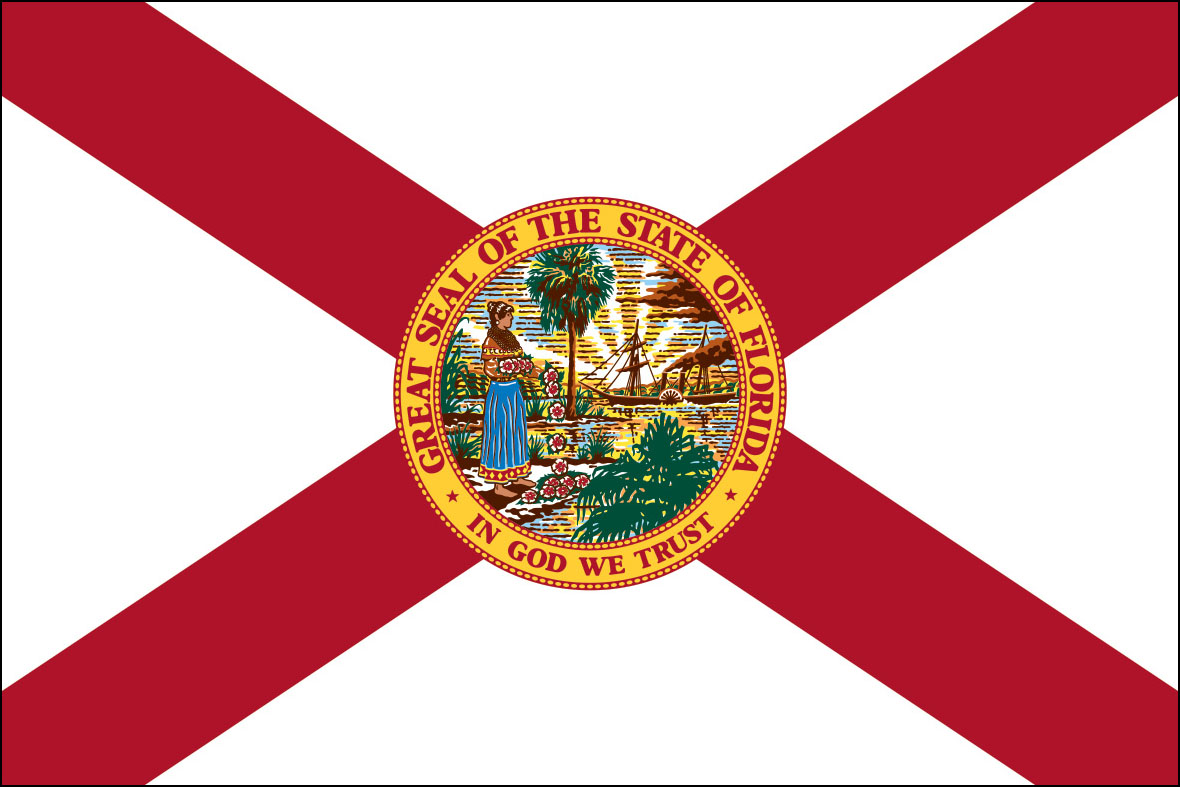
Understanding the Protocol of Half-Staff Flags
The tradition of flying flags at half-staff is deeply rooted in American history and is a visible symbol of national grief or respect. This protocol is not exclusive to Florida; it is a nationwide practice guided by federal law and presidential proclamations. The United States Flag Code outlines the specific circumstances under which the flag should be flown at half-staff, ensuring a consistent and dignified observance across the country.
When and Why Flags Are Lowered
The primary reasons for lowering the flag to half-staff fall into several broad categories, all centered around honoring those who have made significant contributions or experienced tragic loss.
-
Death of National Figures: The most common reason for flags to be flown at half-staff is the death of a current or former President, Vice President, Supreme Court Chief Justice, Speaker of the House, or other high-ranking government officials. In such cases, the President of the United States issues a proclamation ordering the flag to be flown at half-staff on federal buildings and all military posts across the nation, and often in U.S. territories and possessions, for a specific period. For state-level officials or prominent figures within Florida, the Governor of Florida may issue a proclamation for flags within the state to be lowered. This could include former governors, state legislators, or individuals who have made exceptional contributions to the state’s well-being.
-
National Tragedies and Memorial Days: Flags are also lowered to commemorate national tragedies or on specific memorial days. This includes events like the anniversary of the attacks on September 11, 2001, when flags are flown at half-staff from sunrise to sunset as a tribute to the victims. Memorial Day itself is another occasion where flags are flown at half-staff until noon, then raised to full-staff, symbolizing the nation’s movement from mourning to remembrance and resilience. Other significant tragedies, such as mass shootings or natural disasters with widespread impact, may also prompt presidential or gubernatorial proclamations.
-
Honoring Fallen Service Members: The death of members of the U.S. Armed Forces, particularly those killed in the line of duty, is another significant reason for flags to be flown at half-staff. This can be a temporary measure for individual service members or a broader observance following a significant loss of life in conflict.
-
Specific State and Local Observances: While federal proclamations carry the broadest mandate, individual states and even local municipalities have their own protocols for honoring local heroes or marking specific regional events. For instance, a local city in Florida might lower its flags to half-staff to honor a fallen firefighter or police officer within their community, or to mark a significant local anniversary.
The Mechanics of Half-Staff Display
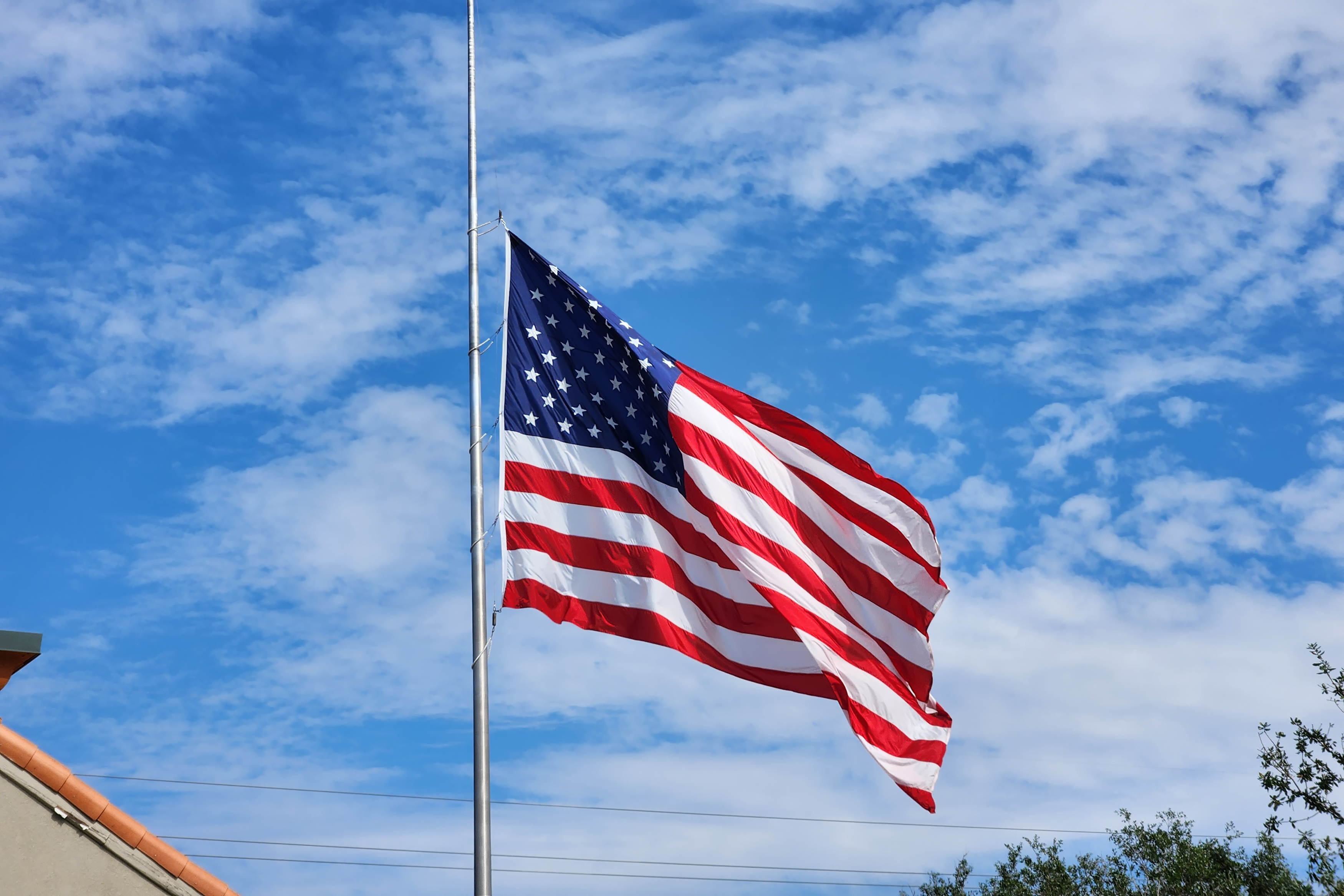
The act of lowering the flag to half-staff is performed with specific care and respect. The flag is first raised to the peak of the staff for an instant and then lowered slowly to a position halfway between the top and bottom of the staff. When the flag is lowered at the end of the day, it should be raised again to the peak before being lowered for the final time. This ritual is a subtle yet powerful way to convey respect and remembrance. For visitors to Florida, understanding these practices can add a layer of context to the state’s visual landscape, especially if they are exploring historical sites or significant landmarks.
Florida’s Specific Observances and Notable Events
While federal guidelines provide the overarching framework, Florida, like any state, can have its own specific reasons for lowering flags. These often align with national observances but can also be unique to the state’s history, its prominent figures, or its specific relationship with national events.
Gubernatorial Proclamations and State Significance
The Governor of Florida plays a crucial role in directing state flag observances. A gubernatorial proclamation can order flags on all state buildings and grounds to be flown at half-staff in remembrance of individuals or events of particular importance to Florida. This might include:

-
Honoring Former Florida Governors or State Officials: The passing of a former governor or a highly respected long-serving member of the Florida legislature would almost certainly trigger a proclamation for flags to be lowered. This is a way for the state to publicly acknowledge their service and mourn their loss.
-
Commemorating State-Specific Tragedies or Anniversaries: Florida has experienced its share of unique challenges and triumphs. Events like significant natural disasters, acts of heroism within the state, or anniversaries of important Florida historical moments might be recognized with flag observances.
-
In Solidarity with National Mourning: When a national tragedy occurs, the Governor of Florida will typically issue a proclamation to ensure that state flags are flown at half-staff in accordance with any presidential directive, demonstrating unity with the nation’s grief.
Examples of Past Observances in Florida
Throughout its history, Florida has participated in numerous flag-lowering ceremonies. While pinpointing the exact reason for flags being at half-staff “today” without a specific date requires current information, past examples illustrate the types of events that prompt such actions:
- Following national tragedies like the Oklahoma City bombing or the Columbine High School massacre, flags across Florida would have been lowered in solidarity.
- The passing of prominent national figures such as former Presidents or Supreme Court Justices would have seen flags at federal buildings and potentially state buildings in Florida at half-staff.
- In more recent times, the tragic events at Marjory Stoneman Douglas High School in Parkland, Florida, led to widespread observances of flags at half-staff, both within the state and nationally, to mourn the loss of students and educators.
- Anniversaries of significant national events, such as the Pearl Harbor attack, also see flags flown at half-staff on December 7th.
For tourists visiting Florida, especially those interested in the state’s cultural tapestry and historical context, observing flags at half-staff can be an opportunity to learn more. Local visitor centers, news outlets, or official state websites can often provide information about the specific reasons behind such observances. This can add a unique, albeit somber, dimension to a travel experience, fostering a deeper understanding of the community’s values and collective memory.
Impact on Travel and Tourism in Florida
The presence of flags at half-staff, while a solemn occasion, can have a subtle impact on the visitor experience in Florida. It serves as a visual reminder of shared national sentiments and can offer travelers a moment of reflection and connection.
Enhancing Cultural and Historical Understanding
For tourists who are engaged with the local culture and history of a destination, seeing flags at half-staff can be an opportunity to learn. It prompts questions like “Why are the flags at half staff today?” and encourages a deeper dive into the events or figures being honored. This can lead to:
- Learning about Current Events: Travelers might discover ongoing national or state mourning periods, gaining insight into contemporary issues or societal concerns that are being addressed.
- Appreciating Historical Context: If the observance is tied to a historical event or figure, it can deepen a tourist’s understanding of the location’s past. For example, if flags are lowered near a significant historical landmark, it might prompt visitors to explore its connection to the event being commemorated.
- Connecting with Local Sentiment: Observing this practice can foster a sense of shared humanity and allow travelers to connect with the local community on an emotional level, even if indirectly. It shows respect for the community’s customs and values.
Practical Considerations for Travelers
While the primary purpose of flags at half-staff is ceremonial and symbolic, there are minor practical considerations for travelers:
- Information Gathering: Travelers can easily find out the reason by checking local news websites or official Florida government portals. Many attractions or visitor centers may also have information available.
- Respectful Behavior: During periods of national or state mourning, visitors are encouraged to be mindful of their surroundings and to maintain a respectful demeanor, especially in public spaces and at memorial sites.
- Potential for Special Events: Sometimes, national days of mourning or remembrance might coincide with specific events or ceremonies. While these are usually somber, they can offer unique, albeit subdued, experiences for those interested in deeper cultural immersion.
Ultimately, the sight of flags at half-staff in Florida is a testament to the nation’s capacity for remembrance and respect. For visitors, it is an opportunity to pause, understand, and connect with the broader narrative of the places they are exploring, adding a layer of depth to their travel experiences beyond just sightseeing and accommodation. Whether one is enjoying the vibrant theme parks of Orlando, exploring the historic streets of St. Augustine, or relaxing on the beaches of Miami Beach, understanding these visual cues can enrich the journey.