
The sale of Alaska by Russia to the United States in 1867 for a mere $7.2 million remains one of history’s most intriguing diplomatic and territorial transactions. At the time, this vast, resource-rich land, now a premier travel destination famed for its breathtaking nature and unique experiences, was considered by many a frozen wasteland—a sentiment that earned the deal the derisive moniker “Seward’s Folly.” Yet, behind this seemingly simple exchange of land for cash lies a complex web of geopolitical anxieties, economic pressures, and strategic calculations that offer a fascinating glimpse into imperial ambitions and the nascent expansion of the United States. Understanding why Russia, a formidable global power, willingly relinquished such a colossal territory, approximately twice the size of Texas, requires delving into the historical context of the mid-19th century, exploring both Russian internal struggles and burgeoning American aspirations.
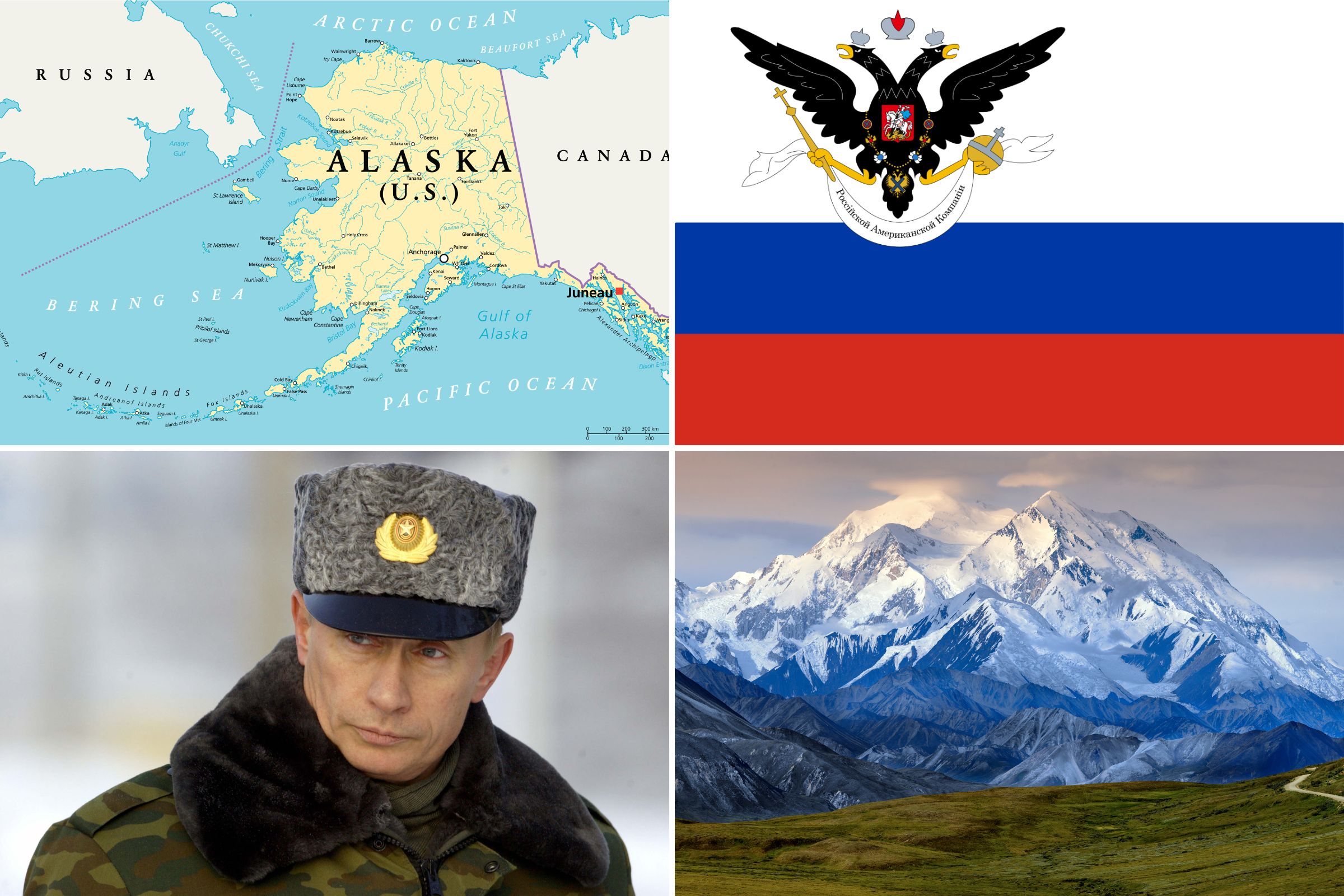
A Frozen Frontier: Imperial Russia’s Alaskan Predicament
For nearly a century, Alaska had been a Russian possession, a distant outpost of its empire across the Bering Strait. Discovered by Vitus Bering in 1741, the territory quickly became a crucial hub for the lucrative fur trade, especially the highly prized sea otter pelts. However, managing this vast, icy frontier proved to be an increasingly formidable challenge for the imperial government based thousands of miles away in St. Petersburg.
Early Russian Presence and the Fur Trade
The initial Russian interest in Alaska was driven almost entirely by the quest for furs. Adventurous traders, known as promyshlenniki, ventured into the treacherous waters of the North Pacific, establishing small settlements and trade posts. The most influential entity in this endeavor was the Russian-American Company, chartered by Tsar Paul I in 1799. This quasi-governmental monopoly was granted exclusive control over trade and resources in Russian America, effectively governing the territory and its indigenous populations, such as the Tlingit and Aleut people.
The company’s headquarters in New Archangel (present-day Sitka) grew into a significant port, a microcosm of Russian colonial life in the North Pacific. Here, Russian Orthodox churches were built, and a distinct blend of cultures emerged. For visitors exploring Alaska’s history today, Sitka remains a fascinating landmark, offering insights into this complex past, from the preserved St. Michael’s Cathedral to the Sitka National Historical Park.
Despite the initial profitability of the fur trade, its long-term viability was questionable. Overhunting severely depleted sea otter populations, and the costs of maintaining a colonial presence in such a remote and inhospitable land steadily increased. The vast distances involved, the harsh climate, and the limited number of Russian settlers (never exceeding a few hundred) meant that imperial control was tenuous at best. Accommodation and logistical support for these early adventurers were rudimentary, a stark contrast to the modern hotels and resorts that now cater to visitors seeking to explore the Alaskan wilderness.
The Looming Shadow of Great Britain
Perhaps the most significant external pressure contributing to Russia’s decision was the growing threat posed by Great Britain. Following its defeat in the Crimean War (1853-1856), Russia found itself in a precarious geopolitical position. The war, fought against an alliance of Great Britain, France, and the Ottoman Empire, exposed the weaknesses of the Russian military and its logistical capabilities. The humiliation of defeat led Tsar Alexander II to initiate a period of significant internal reforms, including the emancipation of the serfs.
In the context of Alaska, the proximity of British Canada was a major concern. Russia feared that in any future conflict, Alaska would be indefensible against a British invasion from its colonial territories. The idea of losing Alaska to a rival power without any compensation was far more unappealing than selling it to a friendly nation. The United States, despite its internal divisions leading up to the Civil War, was seen as a potential counterweight to British influence in North America. This strategic calculation played a pivotal role in the Russian willingness to negotiate.
The Czar’s Calculus: Economic Strain and Strategic Shift
Beyond the external threat, internal pressures and shifting imperial priorities were equally crucial in pushing Russia towards divesting itself of Alaska. The vast empire, sprawling across two continents, faced significant financial challenges and an urgent need for modernization.
Financial Woes After the Crimean War
The Crimean War had drained the Russian treasury, leaving the nation in a state of near-bankruptcy. The expenses of maintaining a distant colony like Alaska, with its limited returns and high defense costs, were increasingly seen as an unsustainable burden. Tsar Alexander II and his advisors, particularly his brother, Grand Duke Konstantin Nikolayevich, who headed the naval ministry, advocated for the sale. They argued that the funds generated could be better invested in strengthening the Russian heartland, particularly in developing infrastructure and reforming the military.
The Russian-American Company itself was struggling financially, requiring significant government subsidies to stay afloat. The dwindling fur trade and the failure to discover other valuable resources (like gold, which would remain hidden for decades) made Alaska seem like a perpetually unprofitable venture. From an economic perspective, selling a territory that cost more to maintain than it generated revenue was a rational, if unromantic, decision for a cash-strapped empire.
A Vision for European Consolidation
Another underlying factor was Russia’s strategic shift towards consolidating its power and influence in Europe and Central Asia. The empire sought to focus its resources on its western and southern borders, where its core interests and traditional rivals lay. Distant American possessions were a distraction, diverting attention and resources that could be better utilized closer to home.

The decision reflected a re-evaluation of imperial priorities. Rather than stretching its military and administrative capacities across the globe, Russia aimed to solidify its control over contiguous territories and assert its dominance in European affairs. The sale of Alaska was, therefore, not just an economic transaction but a strategic realignment, signaling a retreat from North American imperial ambitions to focus on spheres considered more vital to Russian security and prosperity. For modern travelers interested in the vastness of human ambition and the complex interplay of history and geopolitics, this decision offers a fascinating case study in how nations prioritize their long-term interests.
America’s Manifest Destiny: The Acquisition of “Seward’s Folly”
On the American side, the acquisition of Alaska was largely driven by the expansionist fervor of “Manifest Destiny”—the belief that the United States was destined to expand its dominion across the North American continent. This ambition found its most vocal champion in Secretary of State William H. Seward.
The Visionary William H. Seward
William H. Seward, a shrewd politician and ardent expansionist under President Andrew Johnson, saw immense strategic and economic potential in Alaska, even when others did not. He envisioned a vast American empire stretching across the Pacific, with Alaska serving as a crucial stepping stone for trade with Asia. He was also keen to remove any lingering European colonial presence from North America, aligning with the Monroe Doctrine.
Seward initiated negotiations with Baron Eduard de Stoeckl, the Russian minister to the United States, who had been authorized by Tsar Alexander II to facilitate the sale. The negotiations were conducted with remarkable speed and secrecy, a testament to both men’s determination. For travelers visiting Washington D.C. and exploring the Department of State archives, the documents related to this historic transaction offer a tangible connection to a pivotal moment in American diplomatic history.
The $7.2 Million Bargain and its Aftermath
The treaty for the purchase of Alaska was signed in the early hours of March 30, 1867, at the Department of State in Washington D.C., sealing the deal for $7.2 million—a mere two cents per acre. The initial public and congressional reaction was largely negative. Many Americans, recovering from the Civil War, saw the purchase as wasteful and referred to it derisively as “Seward’s Folly,” “Seward’s Icebox,” or “Walrussia.” They questioned the value of a vast, desolate land seemingly devoid of resources and far from the settled parts of the United States.
Despite the criticism, Seward tirelessly advocated for the purchase, emphasizing its strategic importance for trade and its potential, even if unknown at the time. The Senate eventually ratified the treaty, albeit by a narrow margin. The formal transfer ceremony took place on October 18, 1867, in Sitka, where the Russian flag was lowered and the American flag raised, marking the end of Russian colonization in North America.
The wisdom of “Seward’s Folly” became abundantly clear decades later with the discovery of gold in the Klondike Gold Rush of the late 19th century and, more significantly, the massive oil reserves at Prudhoe Bay in the 20th century, leading to the construction of the Alaskan pipeline. These discoveries transformed Alaska from a perceived barren land into one of the most resource-rich regions in the world, validating Seward’s foresight and securing his legacy as a visionary statesman.
Alaska Today: A Legacy of Grandeur and a Premier Travel Destination
From a vast, unprofitable Russian outpost to a strategic American acquisition, and ultimately to a treasure trove of natural resources and breathtaking landscapes, Alaska’s journey is a testament to changing perceptions and the enduring value of foresight. Today, Alaska stands as a monumental landmark in its own right, a testament to both its wild grandeur and the historical forces that shaped it.
From “Icebox” to Tourist Hotspot
The “icebox” epithet is now a distant memory, replaced by images of majestic glaciers, abundant wildlife, and vibrant indigenous cultures. Alaska has transformed into a premier tourism hotspot, drawing millions of visitors annually. It offers an unparalleled array of attractions and activities for every type of traveler.
Cruise ships ply the serene waters of the Inside Passage, offering spectacular views of fjords, glaciers, and marine life like whales and seals. National Parks such as Denali National Park provide opportunities for wilderness adventures, from hiking and wildlife viewing to mountaineering. Anchorage and Juneau serve as vibrant urban centers, blending modern amenities with access to wild frontiers. Here, visitors can immerse themselves in local culture, sample exquisite Alaskan food, and learn about the rich history of the region.
The allure of Alaska lies in its sheer scale and untamed beauty, making it a dream for those seeking unique travel experiences. Whether it’s witnessing the Northern Lights, dog sledding, or fishing for salmon, the state promises unforgettable memories. This transformation from a distant outpost to a must-visit destination illustrates the profound impact of historical decisions on contemporary lifestyle and tourism.

Planning Your Alaskan Adventure
For those inspired to explore this incredible state, Alaska offers a diverse range of accommodation options to suit every preference and budget. From luxurious wilderness lodges that provide unparalleled access to remote nature and creature comforts like gourmet food, to comfortable hotels in cities like Anchorage and Fairbanks, to cozy bed and breakfasts perfect for family trips, the choices are plentiful. Many resorts and villas cater to specific interests, such as fishing, bear viewing, or glacier expeditions.
When booking your trip, consider the time of year, as the Alaskan seasons offer vastly different experiences. Summer is ideal for hiking and wildlife viewing, while winter provides opportunities for aurora borealis sightings and snow activities. Reading reviews and doing a comparison of different accommodations and travel guides can help tailor your adventure. Whether you’re planning a luxury travel escape, a budget travel expedition, or a relaxing long-term stay to truly soak in the wilderness, Alaska delivers on its promise of the grand and unforgettable. The decisions made centuries ago, born out of imperial struggles and expansionist dreams, laid the groundwork for one of the world’s most incredible destinations, forever inviting intrepid explorers to discover its boundless wonders.