
A Peculiar Preamble: Understanding Oklahoma’s Unique Shape
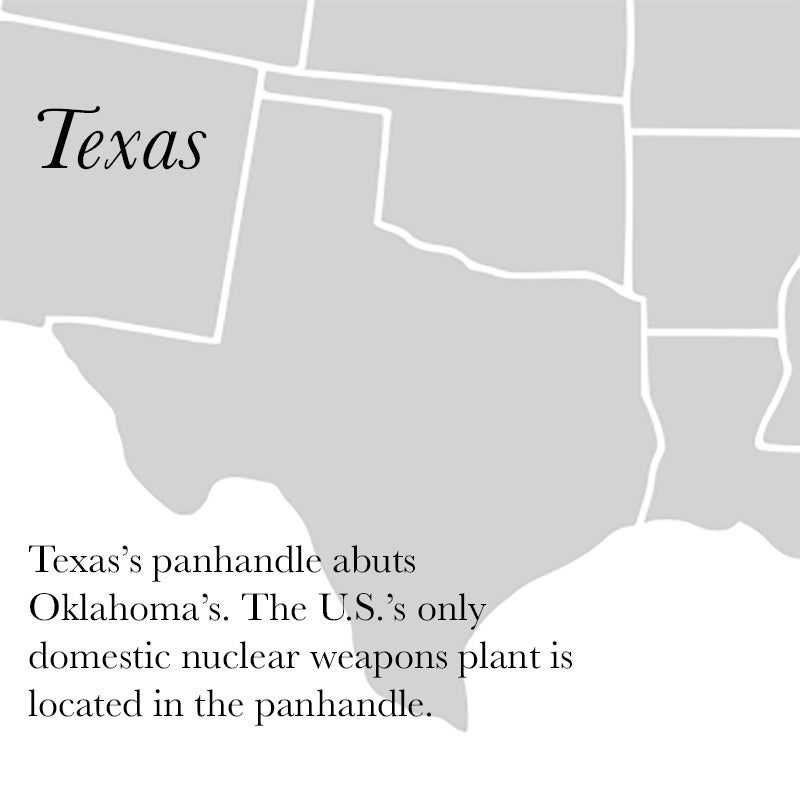
The map of the United States is a patchwork of diverse shapes and sizes, each state boasting a unique geographic identity. Yet, among them, Oklahoma stands out for a particularly distinctive feature: its long, slender western extension, colloquially known as the Oklahoma Panhandle. This 166-mile strip of land, bordering Texas to the south, Kansas and Colorado to the north, and New Mexico to the west, is more than just a cartographic anomaly; it’s a geographic riddle rooted in a fascinating and complex history of territorial disputes, political compromises, and the evolving ambitions of a young nation.
For travelers, historians, and those simply curious about the quirks of American geography, the existence of the Oklahoma Panhandle often sparks questions. Why does this seemingly isolated region belong to Oklahoma? What forces shaped its boundaries, and what stories does it hold within its dry, windswept plains? To answer these questions, we must embark on a journey back in time, tracing the footsteps of explorers, pioneers, and politicians who, perhaps inadvertently, drew the lines that define this unique corner of the Great Plains. Understanding the Oklahoma Panhandle’s origin not only sheds light on the state’s peculiar shape but also offers a window into the broader narrative of westward expansion, land acquisition, and the intricate process of nation-building. It’s a story that intertwines grand geopolitical maneuvers with the intimate struggles of those who sought to make a home in what was once truly a “No Man’s Land.”

The Enigmatic Oklahoma Panhandle: A Geographical Curiosity
The Oklahoma Panhandle comprises three counties: Cimarron County, Texas County, and Beaver County, from west to east. It’s a region characterized by its expansive High Plains landscape, sparse population, and a rugged beauty that speaks of resilience and wide-open spaces. For those venturing into its confines, it represents a distinctive travel experience, far removed from the bustling urban centers, offering a glimpse into a lifestyle deeply connected to the land.
Its current designation as the Oklahoma Panhandle makes perfect sense on a modern map, yet its creation was anything but straightforward. The geographical anomaly wasn’t an intentional design but rather a byproduct of various legislative acts and boundary agreements that sought to rationalize the ever-expanding United States in the 19th century. Its history is a testament to the complexities of defining borders, where political will often clashed with geographical realities, leading to an outcome that, while seemingly odd, eventually found its place within the fabric of the nation. The story of the panhandle is, in essence, a lesson in American history, etched into the very shape of the state itself.
The Tangled Tapestry of Territorial Claims: How the Panhandle Came to Be
The genesis of the Oklahoma Panhandle is a captivating tale woven from the threads of international treaties, statehood aspirations, and the careful drawing of lines on a map. It’s a narrative that begins not with Oklahoma but with empires and nascent republics far removed from the dusty plains of the American West.
From Spanish Claims to American Expansion: Early Influences
The vast expanse of land that would eventually become the Oklahoma Panhandle was initially part of the immense territory claimed by Spain in the New World. Following the Louisiana Purchase in 1803, when Napoleon Bonaparte sold this immense tract of land from France to the United States, the exact western boundary of this acquisition remained nebulous, especially concerning Spanish possessions to the southwest, which would later become Mexico and subsequently Texas.
Early American explorers and settlers largely bypassed this remote area, considering it part of the Great American Desert. Its semi-arid conditions and perceived lack of valuable resources made it less attractive than other frontier regions. However, as the United States expanded westward, establishing clear borders became paramount.
The Compromise of 1850 and the Birth of “No Man’s Land”
The pivotal moment in the creation of the Oklahoma Panhandle arrived with the Compromise of 1850. This landmark legislative package sought to address escalating tensions over slavery, particularly concerning newly acquired territories from Mexico and the disputed claims of the newly independent Republic of Texas.
When Texas joined the United States in 1845, it did so as a slave state. Its vast, sweeping territorial claims, inherited from its time as a republic, extended far north to the 42nd parallel, encompassing parts of what are now New Mexico, Colorado, Kansas, and the future Oklahoma Panhandle. However, the Missouri Compromise of 1820 had established the 36°30′ parallel as the line dividing free and slave territories within the Louisiana Purchase.
To maintain the delicate balance between free and slave states, and to settle Texas’s substantial debts, the Compromise of 1850 dictated that Texas must relinquish its claims to all lands north of 36°30′ North latitude. This decision was critical: because Texas was a slave state, it could not, under the existing compromises, extend its slave-holding institutions north of that line into territories derived from the Louisiana Purchase. Thus, Texas drew its northern boundary at 36°30′.
The Public Land Strip and Its Unclaimed Status
The result of the Compromise of 1850 was the creation of a peculiar strip of land. To the north, Kansas Territory (and later Colorado Territory) had established its southern boundary at the 37th parallel. This left a narrow, rectangular piece of land – approximately 34 miles wide – situated between Texas’s northern border (36°30′ N) and Kansas’s southern border (37° N).
This strip, due to its unique position, was not officially assigned to any state or territory. It became known as the “Public Land Strip” or, more famously, “No Man’s Land.” For nearly four decades, from 1850 to 1890, this area existed outside the legal jurisdiction of any organized government. It had no law enforcement, no formal courts, and no federal protection.

This legal vacuum naturally attracted a colorful array of individuals seeking refuge or opportunity. Squatters, outlaws, cattle rustlers, and honest settlers hoping to escape taxes or legal troubles flocked to No Man’s Land. Despite the lack of formal governance, communities did form, often creating their own informal systems of law and order to manage disputes and protect property. It was a true frontier, embodying both the challenges and the spirit of self-reliance characteristic of the American West. The Santa Fe Trail, a crucial trade route, passed just north of this strip, further highlighting its peripheral yet geographically significant location.
Establishing Borders: Texas, Kansas, and Colorado
The surrounding territories solidified their boundaries during this period. Kansas became a state in 1861, with its southern border firmly set at 37° North latitude. Colorado Territory was also established in 1861, taking its southern boundary from Kansas at the same 37th parallel. To the west, New Mexico Territory also had defined boundaries. Meanwhile, Texas maintained its northern boundary at 36°30′ North.
This effectively boxed in the “Public Land Strip” with clear, established state and territorial lines on all sides except the east, where it bordered the Indian Territory. The strip remained an unincorporated, ungoverned anomaly for decades, a true “no man’s land” in every sense. Its eventual incorporation was a matter of administrative necessity as the United States moved towards fully organizing all its continental lands.
Oklahoma Territory and Statehood: Claiming the Panhandle
The fate of No Man’s Land finally changed with the advent of organized Oklahoma Territory. As the United States sought to open up the Indian Territory for non-native settlement after the American Civil War, the creation of a new territory became inevitable.
On May 2, 1890, the Organic Act officially created Oklahoma Territory. This act also formally attached the “Public Land Strip” to the new territory, designating it as Beaver County, named after the Beaver River (also known as the North Canadian River) that flows through it. The long, narrow shape of this annexed land is precisely what gave Oklahoma its distinctive “panhandle” appearance.
When Oklahoma achieved statehood in 1907, merging Oklahoma Territory and Indian Territory into a single entity, the Panhandle became an integral part of the new state. Beaver County was subsequently divided into the three counties we know today: Beaver County, Texas County, and Cimarron County. This historical journey, marked by international agreements, territorial disputes, and legislative compromises, definitively answers the question of “Why Does Oklahoma Have A Panhandle?” It is a remnant of a bygone era, a living testament to the complex process of defining the lines on the American map.
Beyond the Borders: Life, Landmarks, and Lifestyle in the Panhandle
While its history is undeniably fascinating, the Oklahoma Panhandle is more than just a historical footnote. It is a vibrant, albeit sparsely populated, region with its own unique character, offering distinct travel experiences, notable landmarks, and a lifestyle shaped by its geography and past.
A Rugged Beauty: Travel and Tourism in the Oklahoma Panhandle
For those seeking an authentic American frontier experience, the Oklahoma Panhandle offers a rewarding destination. The landscape is primarily High Plains, characterized by vast stretches of grassland, rolling hills, and a sky that seems to stretch infinitely in all directions. The semi-arid climate means hot summers and cold winters, with dramatic thunderstorms in spring and autumn.
Tourism here is not about glitzy resorts or crowded attractions; it’s about embracing the quiet solitude and the raw beauty of nature. Activities often revolve around outdoor pursuits such as hiking, birdwatching, and especially stargazing. Cimarron County, home to the highest point in Oklahoma, boasts some of the darkest skies in the continental United States, making it a prime location for amateur astronomers and astrophotographers. The region is also steeped in the history of the Dust Bowl era, with historical markers and museums detailing the struggles and resilience of its inhabitants during the 1930s.
Small towns like Boise City, Guymon, Beaver, Goodwell, and Hooker serve as the hubs of community life. They offer a glimpse into rural American culture, where friendly faces, local diners, and community events define the social fabric. Visitors often find themselves charmed by the genuine hospitality and the slower pace of life.
Notable Landmarks and Attractions
The Oklahoma Panhandle is home to several significant landmarks and attractions that draw visitors interested in history, nature, and unique experiences:
- Black Mesa: Located in Cimarron County, Black Mesa is the highest point in Oklahoma, reaching 4,973 feet above sea level. This flat-topped mesa offers stunning panoramic views and is a popular spot for hiking. The mesa is also geologically significant, known for its dinosaur fossils and ancient volcanic flows. Adjoining it is Black Mesa State Park, which provides facilities for camping, hiking, and enjoying the dark skies.
- Boise City: The county seat of Cimarron County, Boise City holds a unique historical distinction. It is the only city in the continental United States to have been bombed during World War II. This accidental bombing by an Army Air Force training crew in 1943 is commemorated in the town, offering a fascinating, albeit unusual, piece of local history.
- Dust Bowl History: Throughout the panhandle, remnants and reminders of the Dust Bowl era are present. While no specific single monument dominates, the entire region serves as a living museum to this environmental and economic catastrophe. Local museums and historical societies in towns like Guymon and Beaver often house exhibits detailing the hardships and eventual recovery of the region.
- Optima Lake: Though often low on water due to its location in a semi-arid region, Optima Lake and the surrounding wildlife refuge offer opportunities for birdwatching, hiking, and experiencing the unique ecosystems of the High Plains.
- Oklahoma Panhandle State University: Located in Goodwell, this university serves as an educational and cultural hub for the region, offering a taste of academic life in a rural setting. Its campus and events contribute significantly to the local community.
Accommodation and Hotels: Where to Stay
When planning a visit to the Oklahoma Panhandle, visitors should anticipate a different kind of accommodation experience compared to more urban or heavily touristed areas. Options are generally more modest and focused on providing comfort and practicality rather than luxury.
The main towns of Guymon, Boise City, and Beaver offer the primary choices for hotels and motels. These typically include well-maintained chain hotels and locally owned establishments, providing clean rooms, essential amenities, and friendly service. Due to the remote nature of the region, it’s always advisable to book in advance, especially during peak travel seasons or local events.
For those seeking a more immersive natural experience, camping is a popular option. Black Mesa State Park offers dedicated campgrounds with various facilities, from primitive sites to those with RV hookups. There may also be a limited number of bed and breakfasts or guest ranches, offering a more personalized and authentic stay, particularly appealing to those interested in the local lifestyle and ranching culture. Regardless of the choice, accommodation in the panhandle emphasizes comfort and convenience within its rural setting, ensuring a restful base for exploring the region’s unique offerings.
The Lifestyle of the Panhandle: A Glimpse into Rural American Life
Life in the Oklahoma Panhandle is defined by its agricultural roots, strong community bonds, and a deep appreciation for the vast, open landscape. Ranching and farming, particularly wheat and cattle, form the backbone of the economy and a significant part of the local identity. The residents, often descendants of the hardy settlers who first tamed this challenging land, embody a resilient spirit, a practical outlook, and a profound connection to their heritage.
The lifestyle here is slower-paced than in urban areas, with an emphasis on family, community events, and outdoor pursuits. Hunting, fishing, and simply enjoying the solitude of nature are common pastimes. The “dark skies” of Cimarron County are not just a tourist attraction but also a daily reality for residents who experience unpolluted night views, fostering a unique connection to the cosmos. Despite its remote feel, modern amenities and connectivity are present, allowing residents to stay connected while preserving their distinct way of life. It’s a place where the grandeur of the Great Plains meets the enduring spirit of American self-reliance, creating a lifestyle that is both challenging and deeply rewarding.
The Panhandle’s Enduring Legacy
The Oklahoma Panhandle is far more than a simple geographical oddity; it is a compelling testament to the intricate forces that shaped the United States. Its origin, rooted in the Compromise of 1850 and the deliberate act of preventing Texas from extending slavery into new territories, showcases how broad national policies could lead to the creation of a singular and unique piece of land. From its early days as “No Man’s Land” to its eventual incorporation into Oklahoma Territory, the panhandle’s history is a microcosm of America’s westward expansion and the often-messy process of nation-building.
Today, this slender strip of Oklahoma continues to draw interest, not just for its historical narrative but also for its distinctive natural beauty and unique lifestyle. For travelers seeking destinations off the beaten path, it offers an authentic rural American experience, characterized by wide-open spaces, star-filled skies, and the enduring hospitality of its communities. Whether hiking Black Mesa, delving into the history of the Dust Bowl, or simply enjoying the quietude of the High Plains, the Oklahoma Panhandle promises a journey of discovery. It stands as a proud and resilient symbol of American ingenuity and perseverance, a distinctive feature on the map with a story as grand and expansive as its own breathtaking skies.
LifeOutOfTheBox is a participant in the Amazon Services LLC Associates Program, an affiliate advertising program designed to provide a means for sites to earn advertising fees by advertising and linking to Amazon.com. Amazon, the Amazon logo, AmazonSupply, and the AmazonSupply logo are trademarks of Amazon.com, Inc. or its affiliates. As an Amazon Associate we earn affiliate commissions from qualifying purchases.