
The vast, untamed wilderness of Alaska conjures images of towering glaciers, abundant wildlife, and a frontier spirit. Its sheer scale and proximity to Canada often lead travelers and history buffs alike to ponder its geopolitical destiny. Why is this immense territory, often perceived as more geographically connected to its northern neighbor, an integral part of the United States? The answer lies not in geography alone, but in a fascinating confluence of historical events, shrewd diplomacy, and a pivotal purchase that reshaped the political map of North America.
The Genesis of an American Purchase: Seward’s Folly
The story of Alaska becoming part of the United States is inextricably linked to the vision and determination of one man: William Henry Seward. As the Secretary of State under President Andrew Johnson, Seward was a staunch advocate for American expansionism and saw immense strategic and economic potential in acquiring the vast territory then known as Russian America.

The Russian Perspective and the Desire to Sell
By the mid-19th century, the Russian Empire had established a presence in Alaska, primarily focused on the lucrative fur trade. However, maintaining such a distant and sparsely populated colony proved increasingly challenging and expensive for Russia. Several factors contributed to their desire to divest themselves of this northernmost possession:
- Financial Strain: The Crimean War (1853-1856) had been a costly endeavor for Russia, depleting its treasury and highlighting the vulnerability of its far-flung territories.
- Fear of British Expansion: The Russian government was concerned that in the event of another conflict with Great Britain, British forces from Canada could easily seize Alaska. Selling it to a neutral party like the United States would prevent it from falling into British hands.
- Limited Economic Returns: While the fur trade was profitable, the vastness of the territory and the difficulties in transportation and administration meant that the economic returns were not as substantial as anticipated.
- Geopolitical Considerations: The sale was also seen as a way to strengthen ties with the United States and potentially counter British influence in the Pacific.
Seward’s Vision and Diplomatic Acumen
William Henry Seward had been eyeing Alaska for years, recognizing its strategic importance for American trade and naval power in the Pacific. He understood the potential for natural resources, even if the full extent was not yet known. Despite facing considerable opposition and skepticism from many in the U.S. Congress and the public, Seward relentlessly pursued the acquisition.
He engaged in extensive negotiations with the Russian minister to the United States, Eduard de Stoeckl. The deal was struck relatively quickly, with the treaty for the purchase of Alaska being signed on March 30, 1867. The agreed-upon price was a staggering $7.2 million, which equated to about two cents per acre – a bargain by any measure, even then.
The “Seward’s Folly” Controversy and Eventual Vindication
The immediate reaction to the purchase in the United States was far from celebratory. The press and many politicians derided the acquisition, famously dubbing it “Seward’s Folly” or “Seward’s Icebox.” Critics argued that the land was barren, uninhabitable, and a waste of taxpayer money. They questioned the strategic value and the economic benefits, viewing it as a pointless territorial expansion into an icy wasteland.
The Ratification Process and Public Skepticism
The ratification of the treaty by the U.S. Senate was a hard-fought battle for Seward. He had to lobby senators, appeal to national pride, and counter the widespread ridicule. The House of Representatives’ approval of the appropriation bill for the $7.2 million was even more contentious, facing significant opposition.
Despite the public outcry and political opposition, Seward remained resolute. He believed in the long-term potential of Alaska and the strategic advantages it would bring to the United States.
The Unforeseen Riches: Gold and Beyond
The narrative of “Seward’s Folly” began to shift dramatically with the discovery of significant natural resources. While the fur trade had been the primary driver for the Russians, the true economic potential of Alaska lay in its abundant mineral wealth and other natural resources.
- The Klondike Gold Rush (1896-1899): Although the major gold rush occurred in the Yukon Territory of Canada, a significant portion of the gold was also found and extracted from Alaska. This influx of prospectors and the subsequent economic boom brought widespread attention and investment to the region, proving the immense value of the land. Cities like Skagway and Juneau experienced rapid growth during this period.
- Other Natural Resources: Beyond gold, Alaska proved to be rich in other valuable resources, including oil, timber, fisheries, and minerals. The discovery of vast oil reserves at Prudhoe Bay in the late 1960s cemented Alaska’s economic importance to the United States, generating billions of dollars in revenue.
These discoveries not only vindicated William Henry Seward but also made the purchase one of the most profitable land deals in history. The $7.2 million spent was recouped many times over through resource extraction and taxation.
Geographic Considerations and Canadian Non-Interest
While the purchase of Alaska was a deliberate act by the United States, it’s also important to consider why Canada did not become the acquiring nation.
The Colonial Status of Canada
At the time of the purchase in 1867, Canada was not yet a fully independent nation. It was a collection of British colonies that would only confederate into the Dominion of Canada in 1867. The British government, which held ultimate authority over colonial affairs, was the primary entity that could have considered such an acquisition.
British Priorities and the Alaskan Panhandle
The British Empire at the time had vast global interests and was focused on consolidating its power elsewhere. While Great Britain did have colonial possessions in North America, including the territory that would become British Columbia and the Yukon, their focus was not on acquiring the vast, sparsely populated, and potentially problematic territory of Russian America.
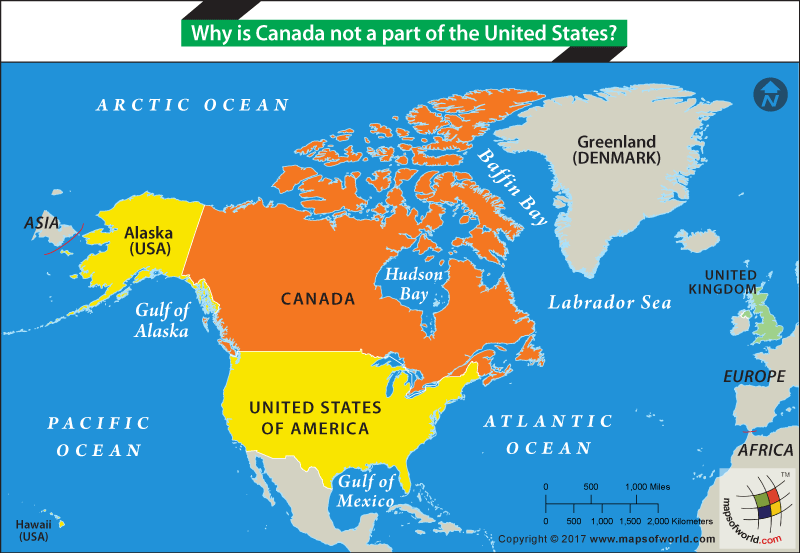
Furthermore, a significant portion of the disputed border between Russian America and British Columbia was eventually settled, leading to the establishment of the Alaskan Panhandle. This long, narrow strip of land, extending south and east from the main body of Alaska, borders the Canadian province of British Columbia. The resolution of this border dispute, through arbitration in 1903, ultimately solidified the boundaries that exist today, ensuring that Alaska remained a contiguous territory within the United States, with a distinct maritime border with Canada.
The Role of the United States’ Ambitions
The United States had a clear and present ambition for westward expansion and increased influence in the Pacific. William Henry Seward’s vision of a greater American presence on the Pacific Rim directly fueled his desire to acquire Alaska. This proactive approach, coupled with the Russian desire to sell, created an opportunity that Canada, in its colonial state and with different priorities, did not actively pursue or possess the capacity to undertake at that specific historical juncture.
Alaska: A Unique Destination for Travelers
Today, Alaska stands as a premier destination for travelers seeking unparalleled natural beauty, adventure, and unique cultural experiences. Its inclusion within the United States has allowed for the development of extensive tourism infrastructure, offering visitors a wide array of opportunities.
Exploring the Natural Wonders
From the majestic peaks of the Alaska Range to the dramatic fjords of the Inside Passage, Alaska offers a breathtaking natural landscape.
- National Parks: Denali National Park and Preserve is a must-visit, home to Denali (formerly Mount McKinley), the tallest peak in North America. Visitors can experience incredible wildlife viewing opportunities, including grizzly bears, moose, caribou, and Dall sheep.
- Glaciers and Icefields: Iconic glaciers like the Mendenhall Glacier near Juneau and the vast Wrangell-St. Elias National Park and Preserve offer stunning vistas of ice formations and opportunities for glacier trekking and ice climbing.
- Coastal Exploration: The coastline of Alaska is a playground for cruise ships and kayakers, with opportunities to spot whales, sea otters, and puffins. Ketchikan, known as the “Salmon Capital of the World,” is a popular port of call.
Cultural Immersion and Local Experiences
Beyond its natural grandeur, Alaska offers a rich tapestry of cultural experiences.
- Indigenous Heritage: Visitors can learn about the vibrant cultures of the indigenous peoples of Alaska, including the Tlingit, Haida, Tsimshian, Athabascan, Inupiat, and Yup’ik peoples, through museums, cultural centers, and traditional art forms.
- Frontier History: Explore the history of the gold rush era in towns like Skagway and Dawson City (though technically in the Yukon Territory, it is closely linked to Alaskan gold rush history). The Iditarod Trail Sled Dog Race also offers a glimpse into the state’s adventurous past and present.
- Unique Activities: From dog sledding and salmon fishing to whale watching and aurora borealis viewing, Alaska provides a wealth of unique activities for every type of traveler, whether seeking luxury adventures or budget-friendly explorations.
The strategic purchase by the United States transformed a remote Russian outpost into an integral part of American identity and a world-class travel destination, offering a unique blend of wild beauty, historical intrigue, and cultural richness.