
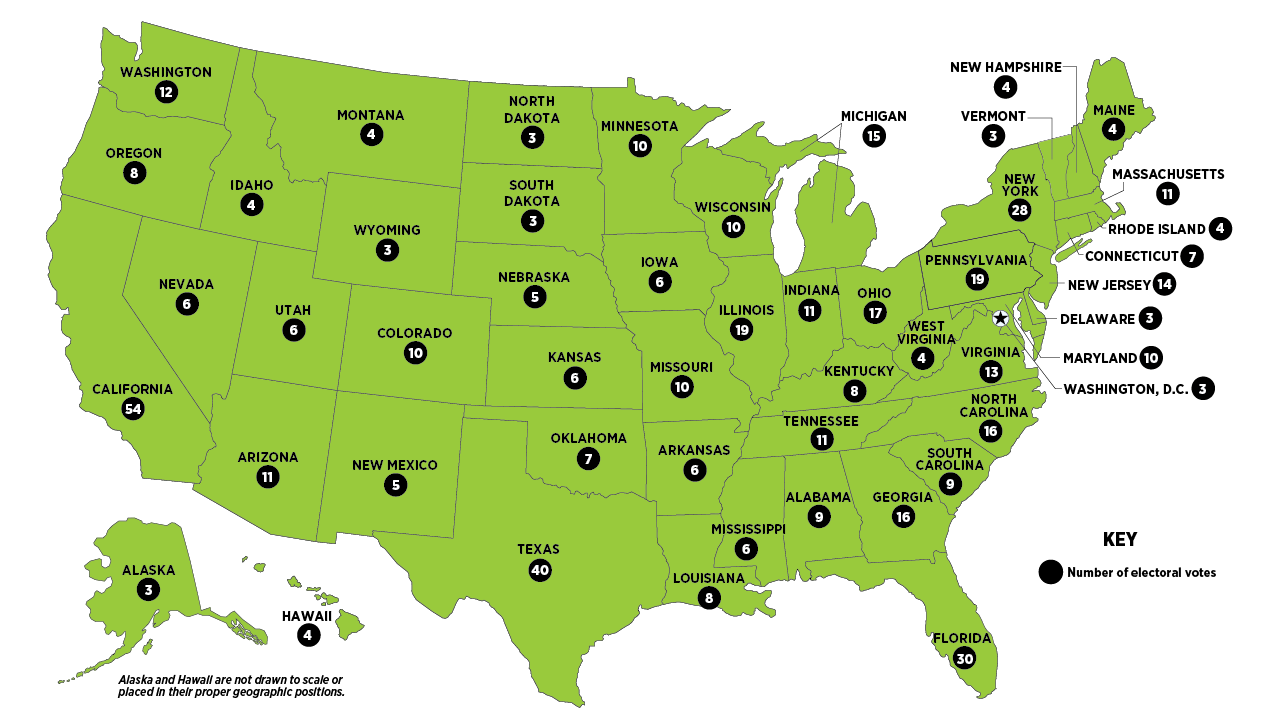
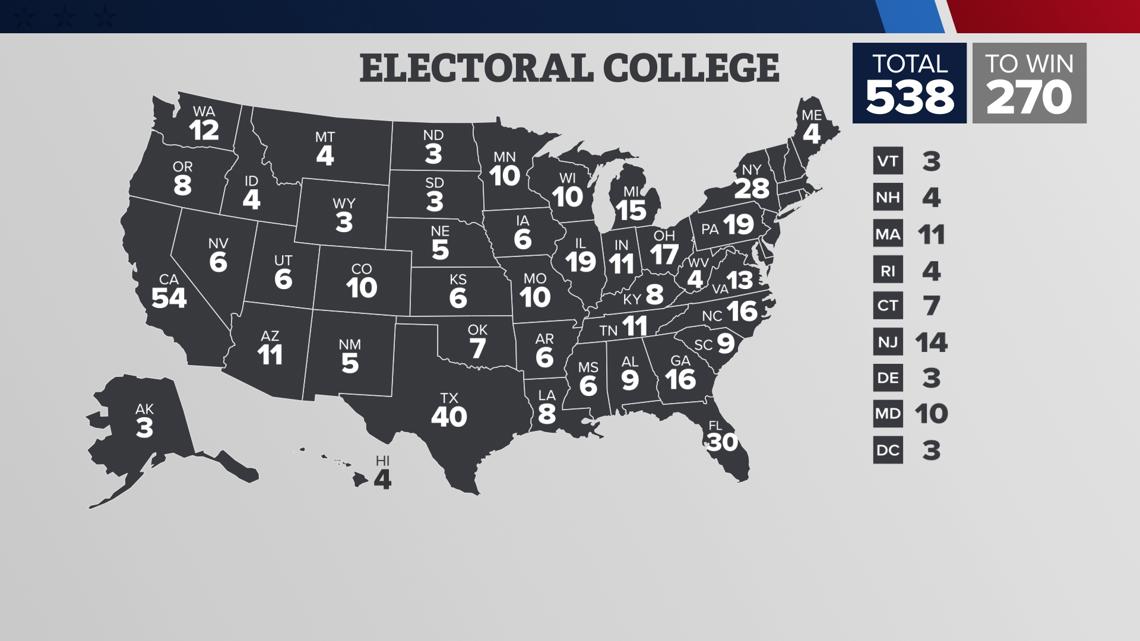
The United States presidential election is a complex dance, and at its heart lies the Electoral College. While the popular vote garners significant attention, it’s the allocation of Electoral College votes that ultimately determines the next president. Each state is assigned a certain number of these votes, and for the populous state of California, this number is notably high: 54. This substantial allocation isn’t arbitrary; it’s a direct reflection of the state’s immense size, population, and its historical significance within the American narrative. To truly understand why California wields such electoral power, we need to delve into the mechanics of the Electoral College and the factors that contribute to its vote count.

The Foundation: The Electoral College and Representation
The Electoral College was established by the Founding Fathers as a compromise between electing the president by popular vote and electing the president by a vote in Congress. The system aims to balance the influence of more populous states with that of less populous ones, ensuring that a candidate cannot win the presidency solely by appealing to a few large urban centers.
How Electoral Votes Are Calculated
The number of Electoral College votes each state receives is determined by its total number of representatives in Congress. This number is the sum of its representation in the House of Representatives and its two Senators.
- House of Representatives: The number of representatives for each state in the House of Representatives is based on its population, as determined by the decennial U.S. Census. States with larger populations have more representatives. California, being the most populous state in the nation, naturally has the largest delegation in the House of Representatives.
- Senate: Every state, regardless of its population, is allotted two Senators. This provides a counterweight to the population-based representation in the House, giving smaller states a proportionally greater voice in the Senate.
Therefore, a state’s total Electoral College vote count is: (Number of Representatives in the House) + 2 (for its two Senators).
California’s Population Powerhouse: A Deep Dive
The primary driver behind California‘s 54 Electoral College votes is its sheer population. For decades, California has been the most populous state in the United States. This demographic reality directly translates into a larger number of seats in the House of Representatives, and consequently, a higher Electoral College total.
The Impact of the U.S. Census
The U.S. Census Bureau conducts a census every ten years, and the data collected is crucial for reapportioning the seats in the House of Representatives among the states. After each census, states that have gained population might see their number of representatives increase, while those that have lost population may see theirs decrease.
California‘s consistent growth over the past century has consistently led to it gaining representatives in the House. This steady increase in representation directly translates to a rising number of Electoral College votes. For instance, after the 2020 U.S. Census, California retained its 53 seats in the House of Representatives, which, when added to its two Senate seats, resulted in its current 54 Electoral College votes. This figure is the highest of any state, underscoring California‘s significant demographic weight.
Historical Growth and Immigration
California‘s rapid population growth can be attributed to a variety of factors throughout its history, including the Gold Rush, its thriving agricultural sector, and its emergence as a hub for technology and entertainment. Immigration, both domestic and international, has played a pivotal role in shaping the state’s demographic landscape. The influx of people seeking economic opportunities, a better lifestyle, or refuge has continually boosted California‘s population numbers, thereby solidifying its position as the most populous state and, by extension, the state with the most Electoral College votes.
Implications for Presidential Elections and Tourism
California‘s substantial Electoral College bloc has profound implications for presidential campaigns. Candidates recognize the immense value of winning California, even though its outcome is often predictable due to the state’s strong Democratic leanings. This doesn’t mean California is ignored; rather, it means campaign strategies are tailored to maximize turnout and engagement within the state.
Campaign Strategies and the “Golden State”
While California is often considered a “safe” state for the Democratic Party, its 54 Electoral College votes are still a crucial component of any winning coalition. Presidential candidates from both major parties will invest resources in California, even if the focus is on energizing their base, fundraising, and ensuring high voter turnout. The sheer number of votes makes it a necessary, albeit often challenging, target. Campaigns will spend time and money on advertising, holding rallies, and mobilizing volunteers across the state, from the bustling streets of Los Angeles to the tech hubs of the San Francisco Bay Area.
Tourism and Electoral Influence
The connection between California‘s Electoral College votes and tourism might seem indirect, but it’s significant. The state’s prominent role in national politics draws attention to its many attractions and diverse regions. When presidential candidates visit California for campaign stops, they often visit iconic landmarks, engage with local communities, and highlight the state’s economic and cultural contributions. This media attention can indirectly boost tourism by showcasing California‘s appeal as a travel destination.
From the sun-drenched beaches of Southern California to the majestic redwood forests of the north, California offers an unparalleled range of travel experiences. Tourists flock to the state for its world-renowned theme parks like Disneyland and Universal Studios Hollywood, its vibrant cities such as San Francisco and San Diego, and its breathtaking natural wonders like Yosemite National Park and the Death Valley National Park. The constant discussion of California in the national political arena, partly due to its electoral weight, keeps it on the radar of potential travelers, reinforcing its status as a top-tier destination for domestic and international tourism.
Furthermore, the lifestyle associated with California – whether it’s the luxury of Beverly Hills, the laid-back vibe of Santa Monica, or the family-friendly resorts scattered along its coast – is often showcased during political events and media coverage, further enticing visitors. The state’s diverse offerings cater to every type of traveler, from budget backpackers exploring the hostels in Berkeley to families seeking luxury accommodations in Napa Valley. The economic impact of this tourism is substantial, and its connection to the state’s political influence, though indirect, is undeniable.
Accommodation and Experiences
The demand generated by both residents and visitors fuels a robust hospitality industry. California boasts an extensive array of accommodations, from sprawling resorts in Palm Springs to charming boutique hotels in Carmel-by-the-Sea, and from modern apartments in Oakland for long-term stays to opulent villas in Malibu. Travelers can compare options, read reviews, and book their perfect stay, whether they’re visiting for a business trip to San Jose or a leisurely family vacation exploring the museums of San Diego. The sheer volume of tourism means that the competition among hotels and other accommodation providers is fierce, leading to a wide range of amenities and price points. This vibrant travel sector, in turn, contributes to California‘s overall economic strength, a factor that indirectly supports its large population and, by extension, its significant Electoral College representation. The experiences available are as varied as the state’s geography: exploring the historic architecture of San Francisco‘s Golden Gate Bridge, enjoying the culinary delights of Los Angeles‘ diverse food scene, or discovering the natural beauty of Big Sur all contribute to California‘s allure as a premier travel destination.
In conclusion, California‘s 54 Electoral College votes are a direct consequence of its status as the most populous state in the United States. This demographic reality, shaped by historical growth and sustained immigration, translates into a large delegation in the House of Representatives, which, when combined with its Senate representation, determines its electoral power. This considerable electoral influence shapes presidential campaign strategies and, by keeping the state in the national spotlight, indirectly enhances its appeal as a global tourism and lifestyle destination.