
New York City, a metropolis synonymous with ambition, culture, and relentless energy, boasts one of the most recognizable nicknames in the world: The Big Apple. This seemingly whimsical moniker has become an inseparable part of the city’s identity, evoking images of grandeur, opportunity, and an unparalleled zest for life. But where did this unique phrase come from, and how did it embed itself so deeply into the global consciousness? The journey of “The Big Apple” from a niche slang term to a worldwide symbol is a fascinating tale interwoven with horse racing, jazz, and a savvy tourism campaign, reflecting the very essence of New York City itself.
The Seed of a Legend: From Racetracks to Reporters
The origins of The Big Apple are most accurately traced back to the vibrant world of horse racing in the early 20th century. At this time, New York was a major hub for thoroughbred racing, drawing participants and spectators from across the United States. The term first gained prominence through the writings of John J. Fitz Gerald, a sports writer for The New York Morning Telegraph.
It was in the early 1920s that Fitz Gerald, while overhearing stable hands in New Orleans referring to New York City’s racetracks as “the big apple,” understood the profound significance of the phrase. For jockeys and trainers from smaller circuits, competing in New York represented the pinnacle of their careers – the biggest prize, the grandest stage, the ultimate goal. In their parlance, the “big apple” was the largest and most coveted reward, much like the largest apple on a tree. Fitz Gerald was captivated by the imagery and began using the term in his daily horse racing column, which he aptly titled “Around the Big Apple.” His column, which chronicled the horse racing scene in and around New York, helped popularize the term within the sporting community.

This initial usage, though confined to a specific subculture, laid the groundwork for the nickname’s broader adoption. It spoke to the city’s magnetic pull, its status as a place where dreams could be realized, and where success, in any field, felt magnified. For travelers seeking an authentic glimpse into the vibrant history of sports in America, exploring the historical sites of New York’s former racetracks, or even attending modern racing events, offers a tangible connection to the origins of this iconic phrase. The allure of the “big apple” was already taking root, even if most of the city’s residents were unaware of its burgeoning existence.
Beyond the Racetracks: The Jazz Age and Wider Appeal
While horse racing provided the initial stage, the term “The Big Apple” truly began its journey into the broader cultural lexicon during the electrifying Jazz Age of the 1920s and 1930s. This was a period of immense cultural ferment, and New York City, particularly its vibrant Harlem district, was at the epicenter of the jazz movement. Musicians, dancers, and performers flocked to the city, drawn by the promise of fame and fortune.
For these artists, New York City was not just another gig; it was the gig. Performing in Manhattan’s illustrious clubs and theaters was the ultimate aspiration, the equivalent of hitting the jackpot. The phrase “the big apple” resonated deeply with them, symbolizing the ultimate destination for success and recognition in their craft. As a popular saying went among jazz musicians, “There are many apples on the tree, but only one Big Apple.” This sentiment perfectly encapsulated the city’s unparalleled status as a land of opportunity and the ultimate test of one’s talent.
As jazz music gained mainstream popularity, so too did its associated slang. The term “The Big Apple” began to seep into everyday conversation, particularly among those involved in entertainment and the arts. It became a colloquialism used to refer to New York City not just as a geographical location, but as a concept: a place where dreams were pursued, where the stakes were high, and where the rewards for success were immense. This period marked a significant turning point, moving the nickname from a specialized term to one that carried a broader cultural weight, laying the groundwork for its eventual universal acceptance. For those passionate about tourism and exploring local culture, a deep dive into New York City’s jazz history in Harlem still offers a fascinating connection to this era, with many venues continuing the legacy of legendary performers.
The Resurgence: A Stroke of Marketing Genius
Despite its growing presence in certain cultural circles, “The Big Apple” remained a relatively obscure nickname for decades. It wasn’t until the 1970s that the term was intentionally revived and propelled into the global spotlight through a clever and highly effective tourism campaign.
In the early 1970s, New York City was facing a period of significant economic and social challenges. Crime rates were high, the city was grappling with fiscal crises, and its image had suffered considerably. There was a pressing need to revitalize its reputation and attract both tourists and residents. Enter Charles Gillett, the president of the New York Convention and Visitors Bureau (now known as NYC & Company). Gillett recognized the charm and positive connotations of “The Big Apple” and saw its potential as a powerful marketing tool.
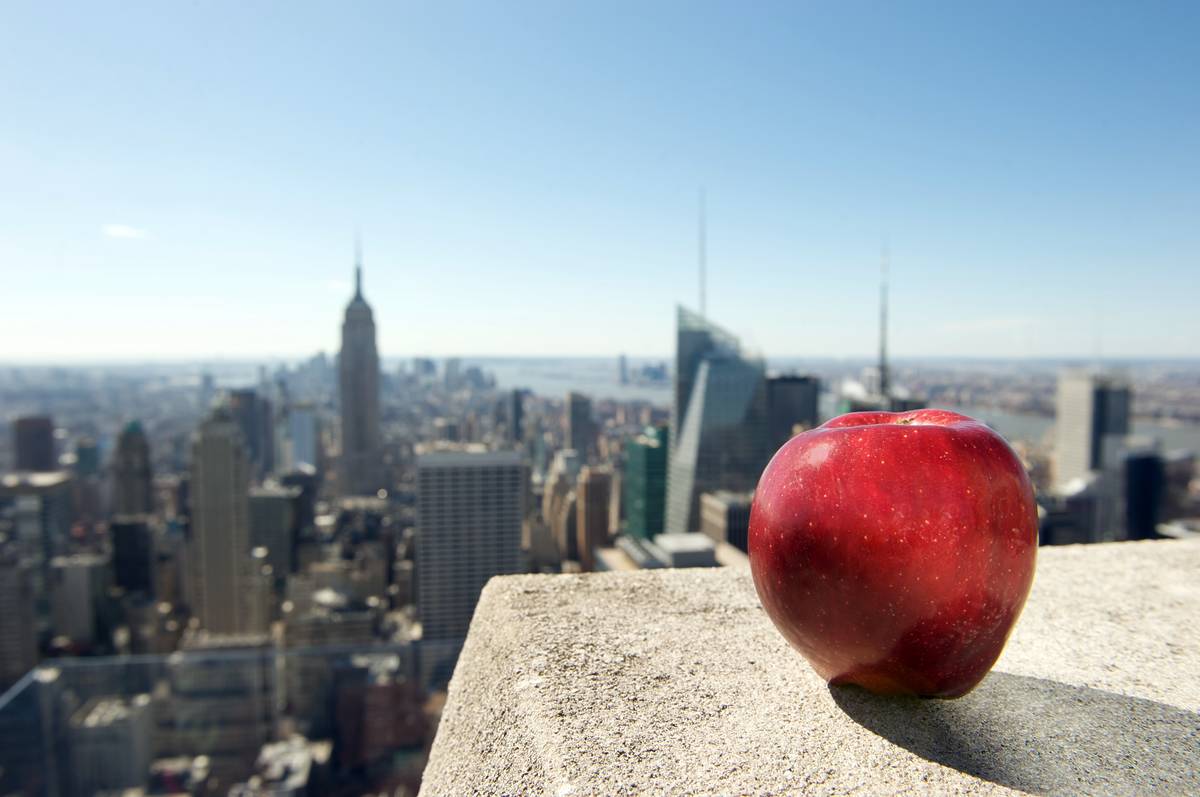
He spearheaded a major promotional campaign in 1971, designed to rebrand New York City and encourage tourism. The campaign prominently featured the catchy slogan “I Love New York” alongside the image of an apple, firmly cementing the nickname in the public consciousness. This initiative was brilliantly timed and executed. By embracing a positive, slightly whimsical moniker, the campaign aimed to shift perceptions away from the city’s problems and towards its vibrant, dynamic, and opportunity-filled essence.
The success of Gillett’s campaign was undeniable. “The Big Apple” quickly became synonymous with New York City, both domestically and internationally. It captured the imagination of people worldwide, inviting them to experience the city that promised so much. This era marks the point at which the nickname truly transitioned from a subcultural reference to a universal symbol, an achievement in branding that continues to pay dividends for the city’s tourism industry. It highlighted the power of a strong narrative in transforming a city’s image, a lesson often studied in modern tourism management and destination marketing.

The Enduring Legacy: “The Big Apple” Today
Today, “The Big Apple” is more than just a nickname; it’s a global icon, instantly recognized and beloved. It embodies everything that makes New York City unique: its grand scale, its boundless opportunities, its cultural richness, and its enduring appeal. For millions around the world, the phrase conjures up images of towering skyscrapers, bustling streets, world-class entertainment, and a melting pot of cultures.
The nickname serves as a perfect shorthand for the city’s larger-than-life persona. When travelers plan their trips to The Big Apple, they envision a destination where every turn offers a new adventure. From the bright lights of Times Square and the theatrical magic of Broadway to the serene expanse of Central Park and the historical significance of the Statue of Liberty, the city offers an unparalleled array of attractions and experiences. Landmarks like the Empire State Building and the Brooklyn Bridge stand as testaments to human ingenuity, inviting visitors to delve into their history and admire their architectural brilliance.
The lifestyle options in New York City are as diverse as its population. Whether it’s luxury travel experiences along Fifth Avenue with stays in opulent suites and resorts, or budget travel that explores hidden gems in neighborhoods like Greenwich Village through boutique apartments, The Big Apple caters to all. Family trips can involve educational tours of the Metropolitan Museum of Art or exhilarating ferry rides past historical islands, while business stays find convenience in centrally located hotels with top-tier amenities.
The culinary scene alone is a major draw for tourism, offering everything from Michelin-starred dining to diverse street food that reflects the city’s immigrant heritage. The local culture, a dynamic blend of arts, fashion, finance on Wall Street, and community spirit, provides an endless tapestry of activities and tips for visitors to immerse themselves. The nickname truly encapsulates the idea that New York City is a place of grand ambition and endless possibilities, much like the most desirable fruit on a tree, waiting to be picked and savored.
Experiencing The Big Apple: A Tourist’s Perspective
For any traveler, a trip to The Big Apple is an entry into a world unlike any other. The city’s reputation as a global hub for everything from finance and fashion to art and entertainment ensures a vibrant, ceaselessly evolving landscape for visitors. Planning a trip here involves navigating a wealth of choices across destinations, attractions, and unique experiences.
Iconic Landmarks and Attractions: At the heart of New York City’s allure are its famous landmarks. The soaring heights of the Empire State Building offer panoramic views that stretch across the five boroughs, providing a true sense of the city’s immense scale. The majestic Statue of Liberty stands as a beacon of freedom and democracy, an essential pilgrimage for many. Times Square, with its dazzling billboards and throngs of people, is an electrifying sensory experience, while a stroll through Central Park offers a tranquil escape amidst the urban bustle. History enthusiasts and art lovers will find endless fascination at institutions like the Metropolitan Museum of Art, whose vast collections span millennia and continents.
Culinary Delights and Cultural Experiences: The Big Apple’s culinary scene is a world unto itself, a testament to its incredible diversity. From authentic global cuisines found in bustling neighborhoods to Michelin-starred restaurants offering avant-garde dining experiences, there’s something to satisfy every palate. Visitors can embark on food tours to sample everything from classic New York pizza and bagels to gourmet delights. Beyond food, the city’s cultural tapestry is rich and varied. Catching a world-class performance on Broadway is often a highlight, but equally compelling are the smaller, independent theaters, live music venues, and countless art galleries that showcase both established and emerging talents. Exploring the local culture means delving into the unique rhythms of different neighborhoods, from the historic brownstones of Harlem to the bohemian charm of Greenwich Village.
Accommodation for Every Style: As a premier global destination, New York City offers a comprehensive range of accommodation options to suit every type of traveler and budget. For those seeking luxury, there are iconic hotels with lavish suites and resorts offering unparalleled service and amenities. Business travelers can find efficient, well-equipped hotels in prime locations like Midtown Manhattan or near Wall Street. Families might opt for serviced apartments or larger suites that provide more space and conveniences, while budget-conscious adventurers can discover charming boutique hotels or guesthouses that offer a more localized experience. Booking in advance, especially for popular times of the year, is always a wise tip when visiting this bustling city.
Why “The Big Apple” Resonates with New York City’s Identity
The enduring power of “The Big Apple” lies in how perfectly it encapsulates the spirit and character of New York City. It’s a metaphor that speaks to opportunity, aspiration, and the grand scale of urban life. Just as an apple is a universally recognized symbol of health, vitality, and even temptation, The Big Apple represents a city brimming with life, where dreams are chased and often, against all odds, realized.
The city’s relentless energy, its diverse population, and its status as a global leader in finance, arts, education, and innovation all contribute to its “big apple” aura. It is a place where one can strive for the biggest prize, whether it’s a coveted role on Broadway, a breakthrough in a research lab, or a successful startup on Wall Street. It’s a magnet for talent and ambition from every corner of the globe, attracting individuals who are all reaching for their own “big apple.”
Moreover, the nickname provides a sense of playful grandeur. Unlike other global cities that might be defined by their history or specific industries—like Paris’s romance or London‘s heritage, or Tokyo‘s futuristic glow—New York City’s nickname transcends a single characteristic. It’s an invitation to experience greatness, to be part of something monumental.
In conclusion, the journey of “The Big Apple” from racetrack slang to global icon is a microcosm of New York City’s own story: dynamic, ever-evolving, and ultimately, undeniably captivating. It’s a testament to the city’s enduring appeal as a place of immense possibilities, making every visit a quest to take a bite out of the grandest apple on the tree.
LifeOutOfTheBox is a participant in the Amazon Services LLC Associates Program, an affiliate advertising program designed to provide a means for sites to earn advertising fees by advertising and linking to Amazon.com. Amazon, the Amazon logo, AmazonSupply, and the AmazonSupply logo are trademarks of Amazon.com, Inc. or its affiliates. As an Amazon Associate we earn affiliate commissions from qualifying purchases.