
New York City – a name that conjures images of towering skyscrapers, bustling avenues, iconic landmarks, and a ceaseless energy unlike anywhere else on the planet. For millions, it is the ultimate travel destination, a place where dreams are pursued and global cultures converge. But beyond its undeniable allure as a premier tourism hub, New York City carries an intriguing nickname, one that has become synonymous with its identity: the “Big Apple.” This moniker is far more than just a catchy phrase; it’s a testament to the city’s ambition, its magnetic pull, and its enduring status as a center of opportunity and excitement. For travelers planning their next grand adventure, understanding the origin of this famous nickname not only adds a layer of rich historical context to their visit but also deepens their appreciation for the vibrant tapestry of experiences that await in the metropolis often hailed as the greatest city in the world.
The journey to uncover why New York City became known as the “Big Apple” takes us back through the early 20th century, revealing a story intertwined with sports, journalism, music, and eventually, a groundbreaking tourism campaign. It’s a tale that speaks volumes about the city’s self-perception and its carefully cultivated image on the global stage. As we delve into the history, we’ll see how this simple, evocative phrase came to encapsulate the very essence of what makes New York City a dream destination, influencing everything from the local culture and lifestyle to the choices visitors make when seeking accommodation or planning their itinerary. Whether you’re looking for luxury hotels overlooking Central Park, a budget-friendly apartment in a lively neighborhood, or simply aiming to soak in the atmosphere of a city that never sleeps, the “Big Apple” narrative provides a fascinating backdrop to your travel experience.

The Roots of the “Big Apple”: From Racetracks to the Roaring Twenties
The genesis of the “Big Apple” nickname is most commonly attributed to the vibrant world of horse racing in the 1920s. At a time when New York City was rapidly solidifying its reputation as a global powerhouse, horse racing was a major sport, attracting crowds and considerable media attention. It was within this context that the term first gained traction, thanks to a prominent sports journalist named John J. Fitz Gerald.
Fitz Gerald, a writer for the New York Morning Telegraph, began using the phrase “The Big Apple” in his column, “Around the Big Apple,” starting in 1921. He reportedly first heard stable hands in New Orleans referring to New York City’s racetracks as the “Big Apple.” For them, winning a race in New York was the ultimate prize, the pinnacle of their profession – the biggest, most coveted “apple” on the tree of horse racing. Fitz Gerald clearly understood the metaphorical power of the phrase and adopted it enthusiastically, popularizing it among his readership. He even took credit for the term, writing in his column on February 18, 1924: “The Big Apple. The dream of every lad that ever threw a leg over a thoroughbred and the goal of all horsemen. There’s only one Big Apple. That’s New York.”
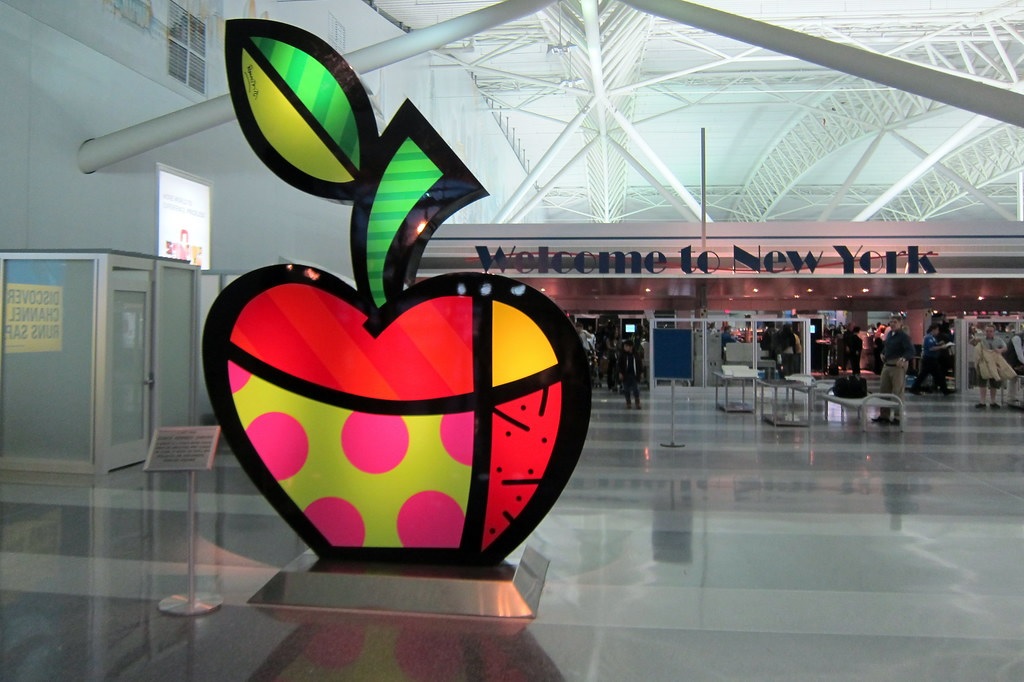
This origin story highlights an essential aspect of New York City’s character: its role as a land of opportunity, where success is magnified and aspirations soar. Even in its earliest usage, the term connoted something grand, desirable, and central to a particular pursuit. For the website’s audience, this historical detail serves as a reminder that New York City has always been a place where people strive for the best, whether it’s athletes chasing victory, artists seeking recognition, or travelers searching for unforgettable experiences.
From Racetracks to Jazz Clubs: The Term’s Cultural Expansion
While horse racing provided the initial spark, the “Big Apple” quickly began to circulate beyond the sports pages, finding a new, resonant home within the city’s burgeoning jazz scene of the 1920s and 30s. During this vibrant era, New York City was establishing itself as the undisputed capital of jazz music. Musicians from across the United States flocked to Manhattan, particularly to neighborhoods like Harlem, where legendary clubs and a thriving cultural scene promised fame and fortune.
For these musicians, playing a gig in New York City was the ultimate achievement, representing the pinnacle of their careers. They too began to refer to the city as “The Big Apple,” drawing parallels to the horse racing metaphor. If you made it in New York, you had truly made it. Clubs in other cities, such as Kansas City or New Orleans, might have been considered “little apples,” but New York City was the grandest of them all. Jazz slang adopted the term wholeheartedly, solidifying its place in the popular lexicon of the era. The phrase even inspired a popular dance called the “Big Apple” in the mid-1930s, further cementing its cultural footprint.
This cultural diffusion showcases how deeply ingrained the idea of New York City as a land of unparalleled opportunity and aspiration became. For those interested in local culture and the history of American music, the jazz connection adds another layer of appreciation for the “Big Apple.” It illustrates how the city has historically been a magnet for talent and creativity, a characteristic that continues to define its appeal to travelers seeking immersive cultural experiences, from Broadway shows to avant-garde art galleries. The vibrant nightlife and diverse culinary scenes found throughout the five boroughs of Manhattan, Brooklyn, Queens, the Bronx, and Staten Island are modern echoes of this historic dynamism.
The Term’s Fading and Resurgence: Rebranding a Metropolis
Despite its widespread use in the jazz age, the “Big Apple” nickname gradually faded from popular usage during the mid-20th century. By the 1960s and early 1970s, New York City faced significant challenges, including rising crime rates, economic downturns, and a generally negative public perception. The city was seen by many as gritty, dangerous, and past its prime. The cheerful, aspirational imagery of the “Big Apple” seemed out of step with the harsh realities of the time, and the term slipped into relative obscurity.
However, the late 1970s brought a determined effort to revitalize New York City’s image and attract tourists back to its streets. This period marked a pivotal moment for the “Big Apple” and its journey to global recognition. It was during this time that the New York Convention and Visitors Bureau (now NYC & Company) launched a highly successful advertising campaign aimed at rebranding the city.
Rebranding a Metropolis: The Iconic Tourism Campaign
The pivotal figure in the “Big Apple” revival was Charles Gillett, the president of the New York Convention and Visitors Bureau in the 1970s. Recognizing the need for a catchy, positive image to draw tourists back to a struggling city, Gillett stumbled upon the old jazz-era nickname. He loved its upbeat, aspirational connotations and believed it perfectly captured the spirit of New York City – a place where opportunities were ripe for the taking.
In the mid-1970s, Gillett spearheaded a major tourism campaign that explicitly embraced “The Big Apple” as the city’s official moniker. The campaign prominently featured the phrase, often accompanied by vibrant imagery of iconic landmarks like the Statue of Liberty, Empire State Building, and Times Square. This concerted effort proved incredibly successful. The “Big Apple” resonated with both New Yorkers and potential visitors, symbolizing a fresh start and a renewed sense of pride in the city.
The campaign not only helped to turn around New York City’s negative image but also firmly re-established “The Big Apple” in the global consciousness. It became a marketing triumph, proving how a well-executed branding strategy can transform perception. For anyone interested in tourism marketing, the story of the “Big Apple” campaign is a case study in effective destination branding, emphasizing how deeply intertwined a city’s identity can become with its chosen nickname. This period illustrates how crucial tourism and effective communication are for urban centers, impacting everything from hotel bookings and local economic activity to the overall visitor experience. It reminded the world that New York City was still the place where big dreams happened.

The “Big Apple” Today: A Global Icon for Travelers
Today, “The Big Apple” is more than just a nickname; it’s a globally recognized symbol of New York City’s unparalleled opportunities, cultural diversity, and boundless energy. For travelers, the term embodies the promise of an extraordinary experience, a chance to visit a city that stands as a beacon of human achievement and ambition. From luxury travelers seeking five-star hotels and exclusive dining experiences to budget travelers exploring vibrant neighborhoods and free attractions, the “Big Apple” caters to every kind of wanderer.
The city’s status as a premier travel destination is undeniable, with millions flocking annually to witness its iconic landmarks and immerse themselves in its unique atmosphere. Imagine strolling through Central Park, catching a world-class show on Broadway, marveling at the sheer scale of the Empire State Building, or crossing the majestic Brooklyn Bridge. Each of these experiences, and countless others, contribute to the tapestry of the “Big Apple.” The nickname itself reinforces the idea that New York City offers the biggest and best of everything: the biggest opportunities, the biggest shows, the biggest dreams, and some of the most memorable travel experiences on the planet.
For those planning their trip, the themes of travel, tourism, and lifestyle come alive in New York City. Whether it’s seeking out local culture in Greenwich Village, exploring the high fashion of Fifth Avenue, or understanding the financial pulse on Wall Street, the city offers a microcosm of the world. Its landmarks are not just structures; they are monuments to history, architecture, and human ingenuity, each telling a piece of the “Big Apple” story. From the art collections at the Metropolitan Museum of Art to the bustling grandeur of Grand Central Terminal and the reflective solemnity of the National September 11 Memorial & Museum (which is commonly included when discussing prominent landmarks around One World Trade Center), the sheer variety of attractions ensures there’s something for every interest.
Experiencing the “Big Apple” Lifestyle: Culture, Food, and Activities
Visiting the “Big Apple” is not just about seeing famous places; it’s about experiencing a distinct way of life. The city’s lifestyle is characterized by its fast pace, its incredible diversity, and its constant evolution. For culture enthusiasts, New York City offers world-class museums, cutting-edge art galleries in neighborhoods like SoHo, and an unparalleled performing arts scene. Music lovers can find everything from intimate jazz clubs to grand concert halls.
The food scene in New York City is a reflection of its multicultural population, offering an astounding array of culinary experiences. From Michelin-starred restaurants to diverse street food vendors, visitors can embark on a global gastronomic journey without ever leaving the five boroughs. Food tours are a popular way to explore specific neighborhoods and their unique flavors, providing insights into local culture and history through taste. Tips for tourists often include advice on exploring different ethnic enclaves for authentic experiences, be it dim sum in Chinatown or pasta in Little Italy.
Beyond structured activities, simply walking the streets, observing the architecture of Rockefeller Center, or enjoying the dynamic energy of Times Square contributes to the quintessential “Big Apple” experience. Whether it’s a luxury travel experience featuring private guided tours and high-end shopping, a budget travel adventure focused on free attractions and local eats, a family trip designed around educational museums and parks, or a business stay requiring convenient access to corporate hubs and premium services, the city adapts to every need. The “Big Apple” spirit encourages visitors to pursue their own version of greatness, whatever that may entail.
Navigating Accommodation in the City That Never Sleeps
The sheer scale and popularity of the “Big Apple” mean that accommodation options are incredibly diverse, catering to every preference and budget. From opulent suites in historic hotels like The Plaza Hotel overlooking Central Park to modern boutique hotels in Meatpacking District or comfortable, amenity-rich apartments perfect for long-term stays, New York City offers it all. Travelers can choose from sprawling resorts, cozy villas, or serviced apartments, depending on their travel style and duration.
Booking accommodation in the “Big Apple” often requires careful planning, especially during peak seasons. Websites dedicated to hotel comparisons and reviews are invaluable tools for finding the perfect spot. Many visitors opt for hotels in Manhattan for proximity to major attractions, while others prefer the vibrant local scenes and often more budget-friendly options found in Brooklyn or Queens. Understanding the various neighborhoods and their unique characteristics is key to selecting the right base for your New York City adventure. Amenities, such as fitness centers, concierge services, and dining options, also play a significant role in enhancing the overall stay, ensuring that visitors can relax and recharge amidst their exciting “Big Apple” explorations.
The reputation of New York City as “The Big Apple” subtly influences accommodation choices. Many hotels and resorts leverage this iconic status in their branding, promising an experience that reflects the grandeur and opportunity associated with the nickname. Whether you’re seeking a luxurious retreat or a practical base for urban exploration, the spirit of the “Big Apple” – of something grand, desirable, and ultimately fulfilling – permeates the very fabric of its hospitality industry, ensuring that every guest can find their own perfect slice of this extraordinary city.
In conclusion, the journey of how New York City came to be known as “The Big Apple” is a captivating narrative that weaves together sports, journalism, music, and clever marketing. What started as a niche term among horse racing enthusiasts evolved into a cultural emblem, faded into obscurity, and was triumphantly resurrected to brand the city as the ultimate global destination. Today, the nickname continues to resonate, embodying the city’s boundless energy, its vast opportunities, and its magnetic appeal to travelers from every corner of the globe. As you plan your visit to this magnificent metropolis, remember that you’re not just traveling to a city; you’re stepping into “The Big Apple,” a place where dreams are cultivated, grand experiences await, and the pursuit of the extraordinary is a daily reality.