
The skyline of New York City, with its towering skyscrapers, iconic landmarks, and bustling streets, stands as a testament to centuries of ambition, trade, and cultural convergence. Today, it is arguably the most famous city in the world, a global hub for finance, art, fashion, and an unparalleled magnet for travel and tourism. Millions flock here annually, eager to explore its diverse neighborhoods, dine in its world-class restaurants, and experience the unique energy that permeates every avenue. But beneath this modern marvel lies a rich, intricate history. The question “Why was New York founded?” delves into the very essence of its existence, tracing its roots back to a strategic harbor, a valuable commodity, and the complex aspirations of European colonial powers. Understanding its origins is not just an academic exercise; it enriches every visit, turning a simple tour into a journey through time, revealing how the choices of early settlers shaped the city we know and love today. From the earliest indigenous inhabitants to the persistent Dutch traders and the conquering English, the story of New York’s founding is a fascinating narrative of opportunity, conflict, and relentless growth that laid the groundwork for its future as a global metropolis.
The Allure of the New World: Early European Exploration
Long before European ships dotted its magnificent harbor, the land that would become New York was a vibrant ecosystem, home to indigenous peoples who had thrived there for millennia. Their presence is a crucial, often overlooked, chapter in the city’s foundational story. However, it was the arrival of European explorers, driven by a thirst for new trade routes, resources, and expansion, that began the transformation of this pristine wilderness into a future urban powerhouse. These early voyages were not just about discovery; they were about staking claims, mapping territories, and identifying strategic locations that could serve colonial ambitions. The natural advantages of the region, particularly its deep, sheltered harbor, would quickly mark it as an unparalleled site for a future settlement.
The Lenape People: First Inhabitants and Stewards of the Land
Before any European set foot on its shores, the land now known as Manhattan and the surrounding areas was the ancestral territory of the Lenape people, an Algonquian-speaking nation. They called their island home “Manna-hatta,” meaning “island of many hills” or “place where we gather wood for bows.” The Lenape lived in harmony with the abundant natural resources of the region, utilizing the Hudson River and the Atlantic Ocean for fishing and transportation, and the dense forests for hunting and gathering. Their intricate network of trails would later form the basis for many of New York’s modern streets, a subtle but enduring legacy. For centuries, they flourished, developing a complex social structure and a deep spiritual connection to the land. Their sophisticated understanding of the environment and their peaceful coexistence were characteristics that would starkly contrast with the arrival of the European powers. These indigenous populations established a sustainable lifestyle long before the concept of urbanization, highlighting a crucial aspect of New York’s rich, multi-layered history.

European Arrival: Giovanni da Verrazzano and Henry Hudson’s Discoveries
The first recorded European to explore the New York Harbor was the Italian explorer Giovanni da Verrazzano in 1524, sailing under the French flag. He described the area as “a very agreeable place situated between two small prominent hills,” noting the deep water suitable for ships. While he didn’t establish a permanent settlement, his observations confirmed the strategic value of the harbor, a fact now commemorated by the majestic Verrazzano-Narrows Bridge. However, it was nearly a century later, in 1609, that the English navigator Henry Hudson, employed by the Dutch East India Company, embarked on a more extensive exploration. Hudson was searching for a fabled Northwest Passage to Asia, and while he didn’t find it, he extensively charted the magnificent river that now bears his name, the Hudson River. His voyage revealed not only a vast navigable waterway stretching deep into the continent but also an abundance of valuable fur-bearing animals, particularly beaver. This discovery was pivotal. The promise of a lucrative fur trade immediately captured the attention of Dutch merchants, transforming the distant shores of North America from a mere stopover into a potential economic goldmine. This shift from exploration to economic exploitation laid the fundamental groundwork for the city’s eventual establishment, driven by commercial interests and the burgeoning global trade networks.
Dutch Dreams: Establishing New Amsterdam
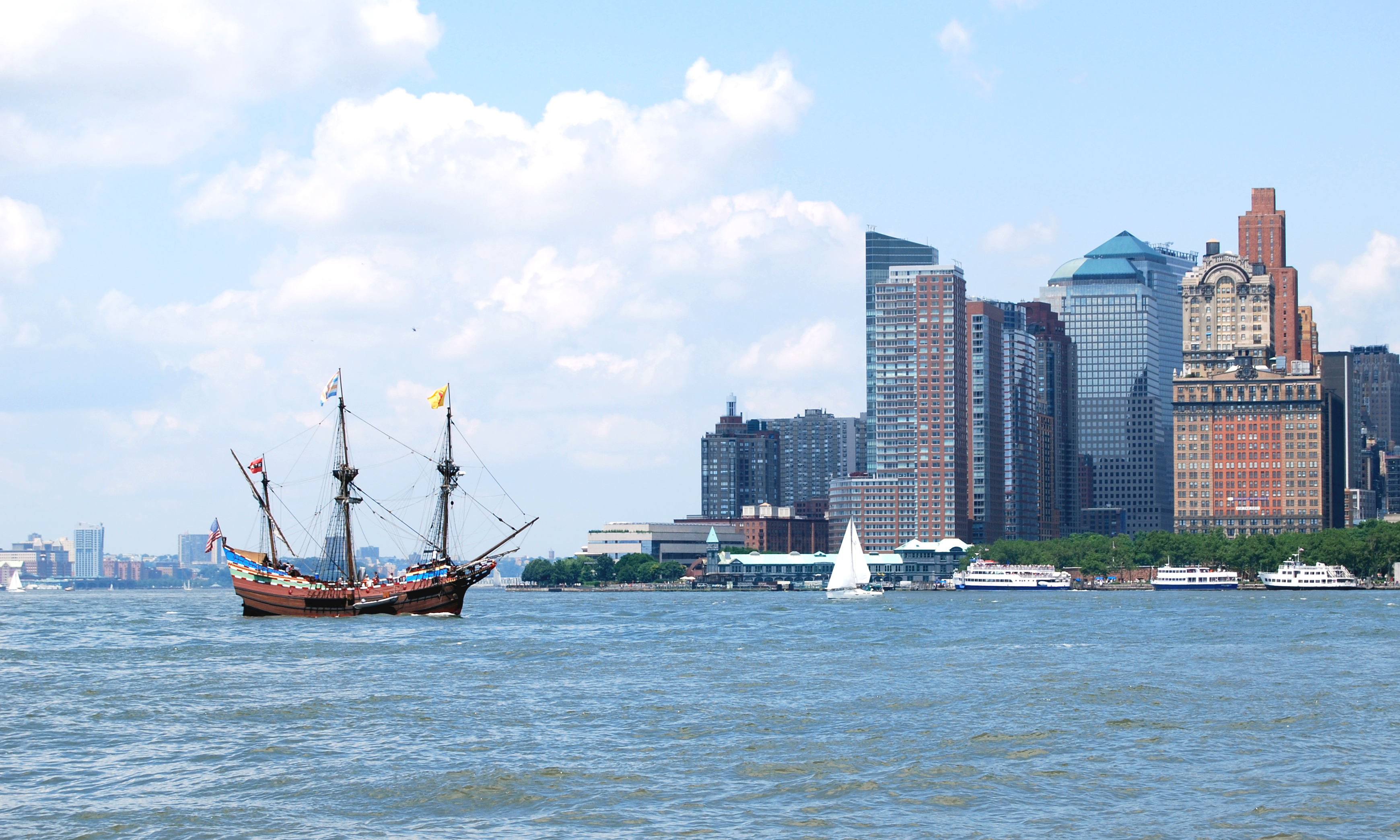
The reports from Henry Hudson’s voyage ignited a spark of interest among the pragmatic and commercially driven Dutch. The Dutch Republic was a leading maritime and economic power in the 17th century, famous for its global trade networks and its innovative spirit. They saw immense potential in the fur trade, a commodity highly prized in European markets, especially for beaver pelts used in felt hat production. This economic incentive, rather than a desire for religious freedom or vast agricultural lands, became the primary catalyst for the Dutch to establish a permanent presence in the New World. They envisioned a trading post that would serve as a crucial node in their expanding global empire, directly connecting the rich resources of North America to the sophisticated markets of the Netherlands. The Dutch approach to colonization was fundamentally mercantile, emphasizing profit and commerce above all else. This commercial ethos would profoundly shape the character of the settlement, fostering a unique blend of entrepreneurship and diversity from its very inception.
The Dutch West India Company and Peter Minuit’s Purchase
In 1621, the Dutch West India Company (WIC) was granted a charter by the Netherlands to oversee trade and colonization in the Americas and West Africa. Their primary goal in North America was to secure the fur trade. To facilitate this, they established a general provincial government for their colony, New Netherland. In 1626, Peter Minuit, the Director-General of New Netherland, famously “purchased” the island of Manhattan from the Lenape people for goods valued at 60 Dutch guilders (a sum often cited as $24, though its modern equivalent is much higher when considering purchasing power). While the specifics of this transaction are still debated—the Lenape likely understood it as an agreement for shared usage rather than outright sale of land—it nonetheless marked the formal establishment of New Amsterdam as the capital of New Netherland. This event is a cornerstone of New York’s origin story, highlighting the colonial power dynamics and the foundational commercial transaction that defined the settlement’s earliest days. Visitors today can reflect on this history near Bowling Green in Lower Manhattan, where the Dutch first established their toehold.

A Fur Trading Post and a Melting Pot in the Making
New Amsterdam quickly developed into a bustling fur trading post strategically located at the mouth of the Hudson River. The settlement primarily consisted of merchants, traders, soldiers, and a growing number of diverse immigrants seeking economic opportunity. Unlike the predominantly English colonies, which often emphasized religious homogeneity, New Amsterdam was remarkably tolerant and cosmopolitan from its early days. By the 1640s, it was reported that eighteen different languages were spoken among its relatively small population. This early diversity was a direct result of the Dutch commercial ethos, which prioritized skilled labor and trade connections over ethnic or religious conformity. The city’s original wall, built to protect the settlement from English and indigenous attacks, gave rise to the iconic Wall Street, a perpetual symbol of global finance.
Early accommodation in New Amsterdam was relatively basic, with simple wooden houses and taverns serving as the mainstays for residents and transient traders. However, the burgeoning commercial activity also spurred the development of rudimentary services, laying the groundwork for future hospitality and lifestyle offerings. The Dutch built mills, warehouses, and a small fort to defend their interests, gradually shaping the landscape of Lower Manhattan. This focus on trade and an open-door policy for diverse settlers established a foundational characteristic of New York that endures to this day: its identity as a global crossroads, built by and for people from every corner of the earth. The energy of this nascent trading hub, driven by the relentless pursuit of profit, foreshadowed the dynamic metropolis it would become.
From New Amsterdam to New York: The English Takeover
Despite the Dutch vision and entrepreneurial spirit, their hold on New Netherland was tenuous. Geographically, it sat awkwardly between the rapidly expanding English colonies of New England and the Southern colonies, posing a significant strategic challenge to English ambitions for a contiguous North American empire. The English saw the Dutch presence as a bothersome wedge, interfering with their trade routes and territorial claims. The strategic value of New Amsterdam’s harbor, controlling access to the vast interior via the Hudson River, was not lost on them. This geopolitical tension, fueled by economic rivalry and imperial competition, eventually led to a dramatic shift in power, one that would fundamentally rename and reshape the future of this pivotal settlement. The English conquest was not merely a change of flags; it was a rebranding that cemented the city’s place within a different, yet equally ambitious, colonial project.
The Shifting Sands of Colonial Power
By the mid-17th century, Anglo-Dutch rivalry was intense, marked by a series of naval conflicts in Europe. In North America, King Charles II of England granted the entire territory of New Netherland to his brother, James, Duke of York, in 1664, despite the fact that it was not legally English territory at the time. This audacious move set the stage for a bloodless conquest. In August 1664, an English fleet, commanded by Colonel Richard Nicolls, arrived in New York Harbor and demanded the surrender of New Amsterdam. Despite the protests of Director-General Peter Stuyvesant, who was unpopular among many residents, the Dutch colonists were reluctant to fight. Surrounded and outnumbered, and with minimal support from the Dutch West India Company, Stuyvesant was compelled to surrender on September 8, 1664. The colony was immediately renamed New York in honor of the Duke of York. Although the Dutch briefly recaptured the city in 1673, it was permanently ceded to England by the Treaty of Westminster in 1674. This decisive shift in power ensured that the city’s future would be intricately tied to the British Empire, setting it on a different trajectory of growth and development within an established imperial framework.
Growth Under British Rule
Under British rule, New York continued to flourish as a vital port city and a center of commerce, expanding upon the foundations laid by the Dutch. The English maintained many of the Dutch commercial practices and even some of their laws, recognizing the pragmatic value of the established system. The city’s deep-water harbor remained its most important asset, facilitating extensive trade in furs, agricultural products, and manufactured goods between the colonies, Great Britain, and the Caribbean. New York became a bustling hub for merchants, artisans, and immigrants from various European backgrounds, further cementing its reputation for diversity. This cosmopolitan atmosphere contributed to a vibrant urban lifestyle, attracting individuals seeking opportunity and a degree of freedom not always found in more rigid colonial societies.
The British period saw significant infrastructure development, including the construction of more substantial docks, warehouses, and public buildings. Churches, markets, and an expanding network of streets continued to shape the burgeoning urban landscape. The city’s population grew rapidly, necessitating increased accommodation options, from simple inns for travelers to more elaborate homes for prosperous merchants. This growth under British dominion transformed New York from a successful trading post into a major colonial city, rivaling Boston and Philadelphia in importance. Its role as a key British stronghold also meant it played a pivotal part in colonial politics and, eventually, in the American Revolution, serving as a crucial military base for the British throughout much of the conflict. The very layout of Lower Manhattan, with its winding streets, reflects this colonial heritage, forming a fascinating landmark for those interested in the city’s profound historical roots.
A City Forged by Trade and Ambition: The Enduring Legacy
The foundational story of New York is a powerful narrative of ambition, strategic foresight, and relentless growth. From a desire for fur trading routes to the establishment of a vital port, the city’s origins are deeply intertwined with commerce and the diverse human spirit that drives it. This initial impetus for economic gain laid the bedrock for a city that would, over centuries, evolve into an unparalleled global center. The early patterns of trade, immigration, and cultural exchange established by the Dutch and then expanded by the English, created a unique urban DNA that continues to define New York’s character. It is a city that has always looked outwards, embraced newcomers, and thrived on the energy of innovation and aspiration.
Revolution, Immigration, and Urbanization
Following the American Revolution, in which New York played a complex role, serving as both a colonial capital and a British military stronghold, the newly independent nation quickly recognized the city’s strategic importance. It briefly served as the first capital of the United States, and it was at Federal Hall on Wall Street that George Washington was inaugurated as president. The 19th century ushered in an era of unprecedented growth, fueled by the completion of the Erie Canal in 1825, which connected New York Harbor to the Great Lakes and the vast interior of the continent. This cemented New York’s position as the nation’s premier port and economic engine.
The city became the primary gateway for millions of immigrants seeking a new life in America, passing through places like Ellis Island. Each wave of new arrivals, from the Irish and Germans to Italians, Jews, and countless others, contributed to the city’s incredible cultural tapestry, shaping its neighborhoods, its industries, and its distinctive lifestyle. The influx of people and capital spurred rapid urbanization, leading to engineering marvels like the Brooklyn Bridge and the development of modern infrastructure. This continuous cycle of immigration and development has been a driving force behind New York’s evolution, solidifying its identity as a truly global city, built on the dreams and hard work of countless generations.
New York’s Enduring Allure: A Hub for Travel and Tourism
Today, the reasons for New York’s founding—strategic location, economic opportunity, and openness to diverse peoples—continue to underpin its enduring appeal as a travel destination. The very history of its origins is woven into the fabric of its landmarks and attractions. Visitors can explore the historic streets of Lower Manhattan, where the Dutch and English first established their settlements, and feel the echoes of centuries past. From the solemn beauty of the Statue of Liberty to the vibrant lights of Times Square, every corner of the city tells a story.
New York offers an unparalleled range of experiences for every type of traveler. For those interested in history, sites like Federal Hall, St. Paul’s Chapel, and Fraunces Tavern offer tangible links to the city’s revolutionary past. Art enthusiasts can explore world-renowned institutions like the Metropolitan Museum of Art, the Museum of Modern Art (MoMA), and the Guggenheim Museum. The sprawling greenery of Central Park provides an urban oasis, a testament to forward-thinking urban planning. Broadway continues to be the epicenter of live theater, while diverse neighborhoods like Harlem, the Upper West Side, Brooklyn, and Queens offer a kaleidoscopic array of local culture, food, and distinct atmospheres.
For those planning a stay, the city boasts an incredible selection of hotels, from luxurious resorts and boutique hotels with opulent suites to convenient apartments and villas available for long-term stays. The range of accommodation options caters to every budget and lifestyle, whether one is looking for luxury travel, a budget trip, a family vacation, or a business stay. Many hotels offer exceptional amenities and expert guides to help visitors navigate the city’s endless offerings. Booking platforms and comparison sites are invaluable tools for finding the perfect place, often featuring reviews that help travelers make informed decisions.
The narrative of “Why New York was founded” is not just a historical account; it’s a living story that continues to unfold. It’s a testament to the idea that a strategic geographical location, combined with human ambition, trade, and an embrace of diversity, can create a city that defies expectations and consistently reinvents itself. From its humble beginnings as a Dutch fur trading post, New York has always been, and remains, a city of opportunity, a beacon for immigrants, and an essential destination for anyone seeking to witness the pinnacle of human endeavor and cultural dynamism. Its history teaches us that the choices made centuries ago continue to shape the vibrant, complex, and utterly captivating metropolis that stands before us today.
LifeOutOfTheBox is a participant in the Amazon Services LLC Associates Program, an affiliate advertising program designed to provide a means for sites to earn advertising fees by advertising and linking to Amazon.com. Amazon, the Amazon logo, AmazonSupply, and the AmazonSupply logo are trademarks of Amazon.com, Inc. or its affiliates. As an Amazon Associate we earn affiliate commissions from qualifying purchases.