
The Boston Massacre, a somber event that unfolded on the cobblestone streets of Boston, Massachusetts, on March 5, 1770, stands as a pivotal moment in the lead-up to the American Revolution. Far from being a mere street skirmish, this tragic encounter profoundly shaped public opinion, intensified colonial resistance against Great Britain, and cemented the resolve of patriots pushing for independence. Its significance resonates through history, influencing political discourse, solidifying identities, and laying the groundwork for a new nation. For modern travelers and history enthusiasts exploring the vibrant city of Boston today, understanding the Boston Massacre is crucial to grasping the spirit of liberty that permeates its historic landmarks, cultural institutions, and very atmosphere. It transformed a local confrontation into a symbol of imperial oppression, fueling the flames of revolutionary fervor that would soon engulf the thirteen colonies.
The Spark of Revolution: Setting the Stage
To fully appreciate the importance of the Boston Massacre, one must first delve into the tumultuous political and social climate of colonial Boston in the late 1760s. The city, a bustling port and intellectual hub, had become a hotbed of dissent against increasingly burdensome policies enacted by the British Parliament and King George III. Taxation without representation, particularly through acts like the Stamp Act and the Townshend Acts, had ignited widespread anger and boycotts among colonists who felt their rights as Englishmen were being systematically eroded. The presence of British troops, sent to enforce these unpopular laws and maintain order, served as a constant, grating reminder of imperial control, transforming the city into a powder keg awaiting a spark.
Tensions in Colonial Boston
By 1768, two regiments of British soldiers, known as “redcoats,” had been stationed in Boston. Their presence was ostensibly to protect customs officials and quell growing unrest, but it had the opposite effect. The soldiers were often seen as an occupying force, competing with locals for jobs, and their behavior sometimes led to friction. Skirmishes between soldiers and civilians became common, fueled by economic hardship, political grievances, and cultural clashes. The colonists, particularly those allied with groups like the Sons of Liberty, viewed the troops as symbols of tyranny and an infringement on their liberties. This palpable tension created an environment where a minor incident could quickly escalate into a major crisis. Walking through Boston’s historic streets today, one can almost sense the echoes of this strained relationship, especially when visiting sites like the Old State House, where British authority once resided amidst a seething colonial populace. This underlying hostility and the constant threat of violence made the events of March 5, 1770, almost inevitable.
The Fateful Night of March 5, 1770
The night of the Boston Massacre began innocently enough, with a lone British sentry standing guard outside the Customs House on King Street (modern-day State Street). A small crowd of colonists began to harass him, pelting him with snowballs, stones, and insults. The situation quickly spiraled out of control as more colonists gathered, drawn by the commotion and the ringing of alarm bells, and additional British soldiers arrived, led by Captain Thomas Preston. The crowd grew increasingly agitated, shouting “Fire!” and daring the soldiers to shoot. Amidst the chaos, confusion, and fear, a shot rang out, followed by several more. When the smoke cleared, five colonists lay dead or mortally wounded. The first to fall was Crispus Attucks, a sailor of African and Native American descent, often recognized as the first casualty of the American Revolution. Others killed included Samuel Gray, James Caldwell, and Patrick Carr, while Samuel Maverick died later from his wounds. This violent clash, though brief, forever altered the trajectory of colonial resistance, transforming diffuse grievances into a concrete act of British aggression that could not be ignored.
A Catalyst for Colonial Unity and Propaganda
The immediate aftermath of the Boston Massacre was a whirlwind of grief, outrage, and strategic maneuvering by colonial leaders. The event was not merely a local tragedy but a powerful tool that could be used to galvanize support for the cause of liberty across all thirteen colonies. Patriot leaders, particularly those in Boston, quickly seized upon the incident, framing it as a cold-blooded act of tyranny by the British military against unarmed civilians. This narrative, amplified through powerful imagery and impassioned rhetoric, played a critical role in shaping public opinion and fostering a sense of shared grievance among diverse colonial populations. It moved the conflict from economic disputes to a fundamental struggle over life, liberty, and justice.
Paul Revere’s Engraving and Public Outcry
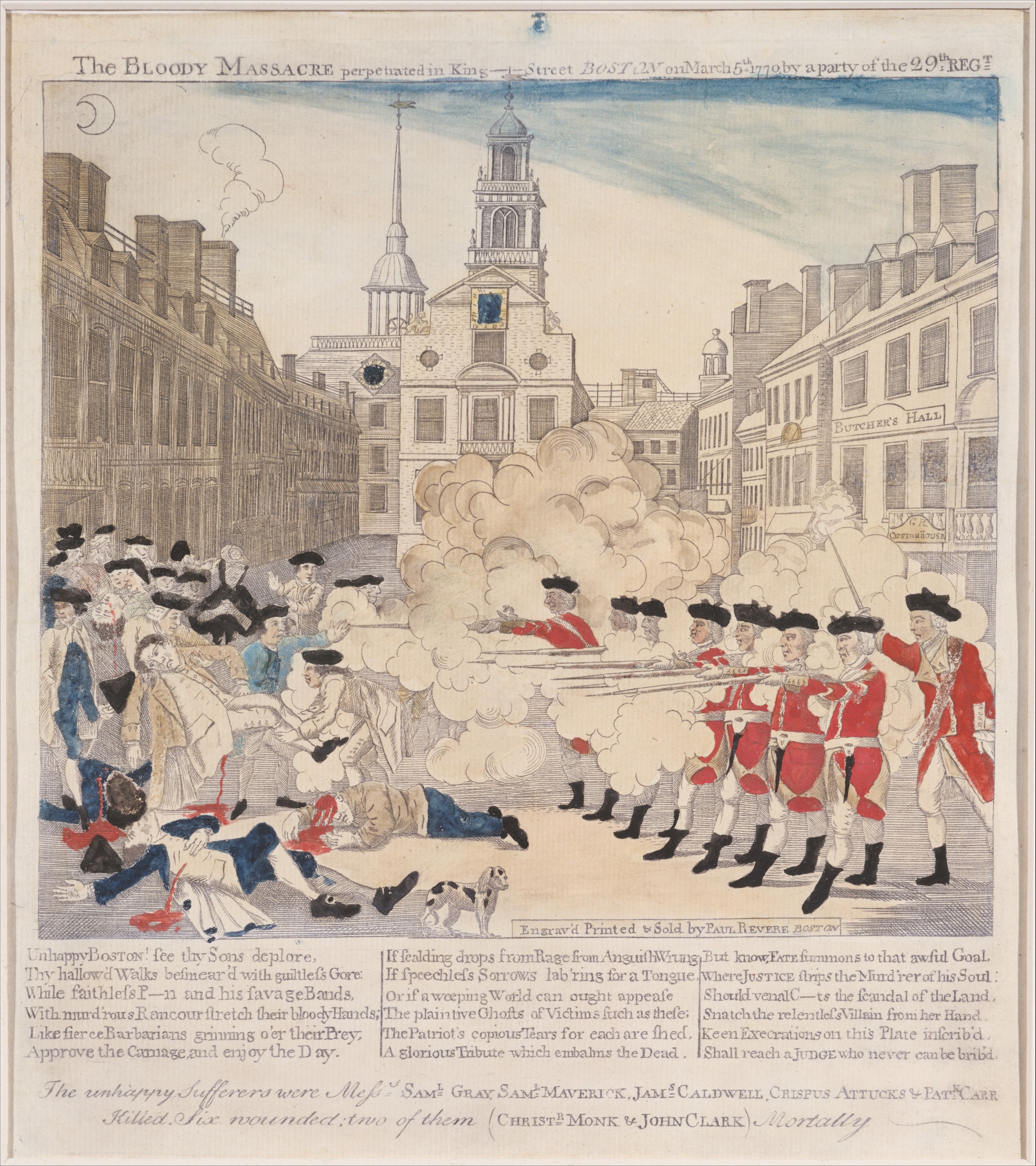
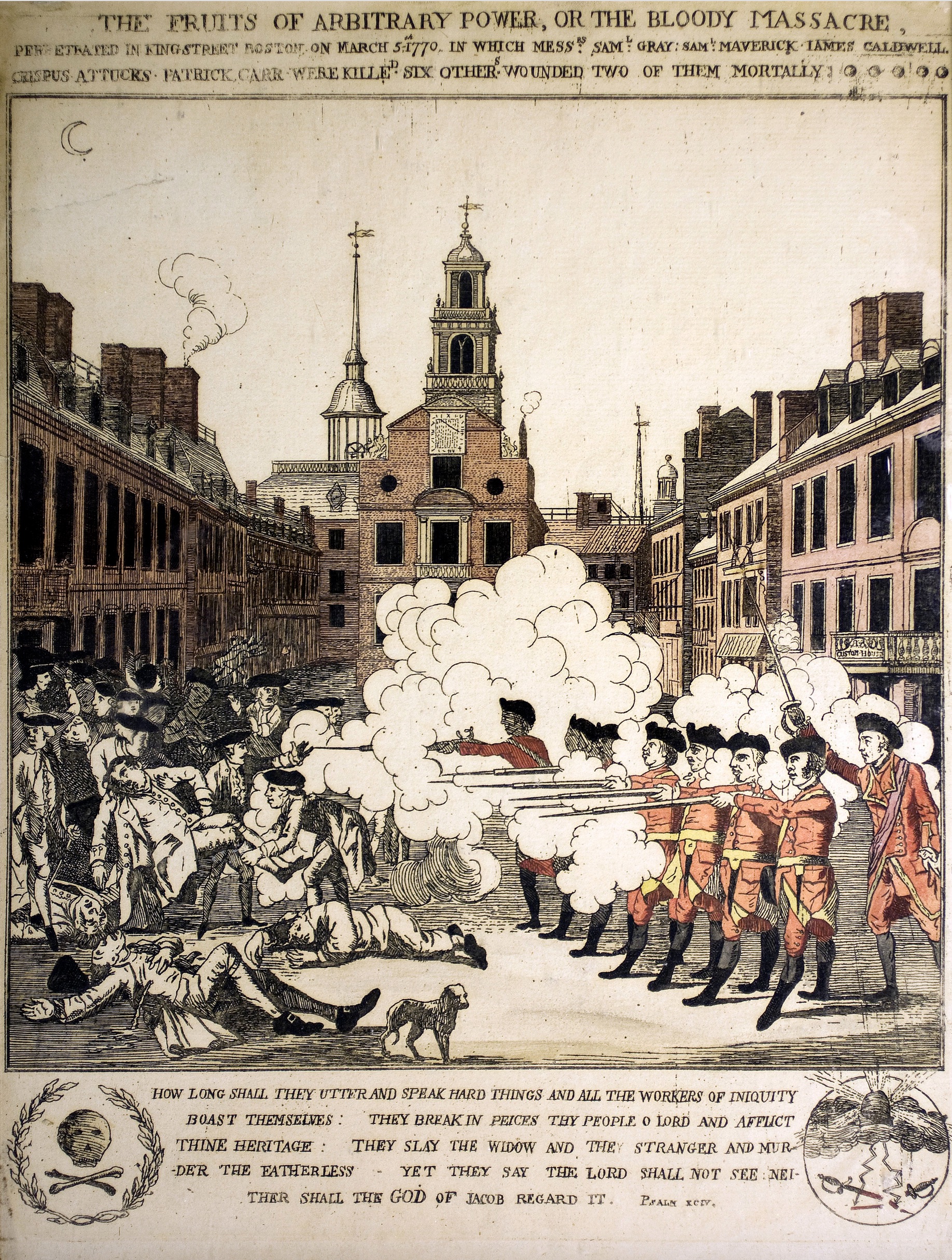
Perhaps no single artifact encapsulates the immediate impact and propaganda value of the Boston Massacre more effectively than Paul Revere’s iconic engraving, “The Bloody Massacre in King-Street.” Rushed into production shortly after the event, Revere’s depiction was a masterful piece of propaganda. It portrayed British soldiers, under the command of a seemingly ruthless officer, firing deliberately into an innocent, unarmed crowd, with no visible provocation. The reality was undoubtedly more chaotic and ambiguous, but [Revere](https://lifeoutofthebox.com/paul-revere]’s image omitted crucial details, such as the colonists throwing objects and harassing the soldiers, instead presenting a clear narrative of victimhood and aggression. This powerful visual, along with accompanying news reports and pamphlets penned by figures like Samuel Adams, was widely circulated throughout the colonies. It ignited outrage, solidified anti-British sentiment, and became an enduring symbol of British brutality, uniting disparate colonial communities under a common banner of protest against perceived injustices. The vivid imagery underscored the urgent need for colonists to protect themselves from an oppressive imperial power.
John Adams and the Quest for Justice
In a testament to the burgeoning principles of justice and due process in the colonies, the British soldiers involved in the Boston Massacre were put on trial for murder. Remarkably, it was John Adams, a staunch patriot and future president, who bravely took on their defense. Despite the intense public pressure and personal risk, Adams believed fiercely in the right to a fair trial, asserting that facts were “stubborn things” and that “every man, in a free country, is entitled to be tried by an impartial jury.” Assisted by Josiah Quincy II and Robert Auchmuty, Adams successfully argued that the soldiers had acted in self-defense, or at least under extreme provocation. Ultimately, Captain Preston and six of his men were acquitted, while two soldiers were found guilty of manslaughter. While the verdict was unpopular with many colonists, Adams’s courageous defense demonstrated the colonial commitment to the rule of law, even for their enemies. This judicial episode further complicated the narrative, forcing colonists to grapple with the complexities of justice while simultaneously fueling their political fervor against British governance, solidifying the idea that a truly independent nation would also need an independent judiciary.
Paving the Way for Independence
The Boston Massacre served as a critical inflection point, fundamentally altering the relationship between Great Britain and its American colonies. It stripped away any lingering illusions of peaceful reconciliation for many, exposing the stark reality that the imperial power was willing to use deadly force against its own subjects. The tragedy intensified the rhetoric of liberty, injustice, and tyranny, solidifying the nascent concept of an independent American identity. From this point forward, the path to revolution, though still arduous, became clearer and more inexorable. The massacre provided a tangible example of the dangers of unchecked British authority, inspiring colonists to seek more definitive solutions than mere protest or petition. It contributed significantly to the shift from seeking redress within the British system to contemplating a complete break from it.
The Intolerable Acts and Growing Resistance
While the immediate aftermath saw a temporary lull in overt hostilities (the Townshend Acts, except for the tax on tea, were repealed), the memory of the Boston Massacre simmered beneath the surface. It was frequently invoked by patriot leaders to remind colonists of British aggression and to bolster resistance against subsequent imperial policies. This simmering resentment eventually boiled over with the Boston Tea Party in 1773, a direct response to the Tea Act, which itself was partly a legacy of the ongoing financial strains and colonial resistance. In retaliation for the Tea Party, British Parliament passed a series of punitive measures known as the Intolerable Acts. These acts, which closed Boston’s port, restricted Massachusetts’ self-governance, and quartered British troops in colonial homes, were precisely the kind of oppressive actions that the Boston Massacre had warned against. Rather than quashing rebellion, the Intolerable Acts united the colonies, leading to the convening of the First Continental Congress and accelerating the march towards open conflict at Lexington and Concord in 1775. The massacre, therefore, was a crucial step in the progression from civic protest to armed rebellion.

Echoes in Modern Boston and Beyond
The enduring legacy of the Boston Massacre can be seen and felt throughout Boston and in the broader narrative of American history. It solidified the image of Boston as the “Cradle of Liberty,” a city at the forefront of the struggle for independence. The event served as a potent symbol for generations of Americans, reminding them of the price of freedom and the importance of vigilance against government overreach. Its significance is etched into the very fabric of American political thought, contributing to the principles enshrined in the Declaration of Independence and the Constitution, particularly concerns about standing armies and the rights of citizens against state power. For any lifestyle traveler seeking to understand the foundational values of the United States, the Boston Massacre is a mandatory point of study, illustrating the dramatic origins of a nation born from profound ideological conflict and bloody sacrifice.
Experiencing History: Visiting Boston’s Revolutionary Landmarks
For travelers drawn to history, Boston offers an unparalleled opportunity to walk in the footsteps of the revolutionaries and witness the sites where America’s fight for independence began. The city has meticulously preserved many of its 18th-century landmarks, creating an immersive experience that brings the drama of the colonial era to life. Engaging with these physical spaces provides a tangible connection to the events, emotions, and decisions that shaped a nation. From elegant boutique hotels in Beacon Hill to modern accommodations in Downtown Boston, visitors can find a comfortable base from which to explore the profound historical tapestry that defines this remarkable destination.
The Freedom Trail and Key Sites
The most accessible and rewarding way to explore Boston’s revolutionary past is by walking the Freedom Trail. This 2.5-mile red-lined path connects 16 historically significant sites, many of which are directly related to the Boston Massacre and the broader struggle for independence. At the heart of it all stands the Old State House, where the massacre occurred directly in front of its balcony. Today, a cobblestone circle embedded in the pavement marks the spot where the first shots were fired, a poignant reminder of the lives lost. Visitors can explore the interior of the Old State House, which once housed the provincial government of the Massachusetts Bay Colony, and imagine the fervent debates that took place within its walls.
Other crucial stops along the Freedom Trail include Faneuil Hall, known as the “Cradle of Liberty,” where Samuel Adams and others delivered fiery speeches against British rule; the Old South Meeting House, where thousands gathered before the Boston Tea Party; and the Paul Revere House in the charming North End. Further along, the Old North Church and the Bunker Hill Monument offer insights into the subsequent military engagements. These landmarks are not just static exhibits; they are living testaments to the courage and conviction of those who fought for American freedom, providing an invaluable context for understanding the long-term impact of events like the Boston Massacre.
Immersive Stays and Cultural Tourism
Boston’s deep historical roots make it an ideal destination for cultural tourism, offering more than just sightseeing. Many hotels and accommodations in the city embrace its heritage, providing experiences that complement historical exploration. Imagine staying in a hotel that dates back to the colonial era, or one that offers guided historical tours, allowing you to delve deeper into the stories of its past. Local restaurants celebrate regional cuisine that dates back centuries, providing a taste of the past alongside contemporary flavors. From luxury resorts offering panoramic views of historical sites to charming boutique inns reflecting Boston’s unique character, visitors can tailor their accommodation to their historical interests. Engaging with local guides, attending historical reenactments, or simply soaking in the atmosphere of neighborhoods like Beacon Hill or the North End offers a truly immersive journey. Understanding the Boston Massacre in this rich, living context elevates a simple vacation into a profound educational and cultural experience, solidifying its importance not just as a historical event, but as an integral part of Boston’s enduring identity and appeal.
LifeOutOfTheBox is a participant in the Amazon Services LLC Associates Program, an affiliate advertising program designed to provide a means for sites to earn advertising fees by advertising and linking to Amazon.com. Amazon, the Amazon logo, AmazonSupply, and the AmazonSupply logo are trademarks of Amazon.com, Inc. or its affiliates. As an Amazon Associate we earn affiliate commissions from qualifying purchases.