
Navigating the intricacies of renting in California involves understanding a complex web of regulations designed to protect both tenants and landlords. One of the most common points of contention and confusion revolves around rent increases. For tenants, knowing their rights regarding notice periods is crucial for financial planning and avoiding unexpected moves. For landlords, adhering to these legal requirements is essential to prevent disputes and maintain a good landlord-tenant relationship. This article delves into the specific notice periods required for rent increases in California, exploring the nuances based on lease type and local ordinances.

Understanding California’s Rent Control Landscape
California has a patchwork of laws governing rent increases. While statewide laws set a baseline, many cities and counties have enacted their own rent control ordinances that offer additional protections to tenants. It’s vital to distinguish between statewide limits and local protections, as the latter can often be more stringent.
Statewide Rent Increase Limitations
The Tenant Protection Act of 2019 (Assembly Bill 1482) established statewide rent increase limitations for many properties in California. This act aims to provide a degree of predictability for renters by capping annual rent hikes.
AB 1482 and its Applicability
Generally, AB 1482 applies to residential properties that are at least 15 years old and are not otherwise exempted. Exemptions typically include:
- Housing for students: Dormitories owned by universities or K-12 schools.
- Housing occupied by a “natural person” owner: Where the owner also resides in the property and has no more than two separate dwelling units on the property.
- Certain deed-restricted affordable housing: Properties with specific affordability covenants.
- Hotels: Provided they are occupied by a guest for fewer than 30 consecutive days.
For properties covered by AB 1482, the annual rent increase is capped at 5% plus the percentage change in the Consumer Price Index (CPI) for the region, with a maximum total increase of 10% per year.
Notice Requirements Under AB 1482
For rent increases that fall under the statewide limitations of AB 1482, landlords must provide tenants with at least 30 days’ written notice if the increase is 10% or less of the current rent. If the rent increase is more than 10% of the current rent (which would likely exceed the AB 1482 cap unless the CPI is exceptionally high, pushing it towards the maximum allowable), the landlord must provide 90 days’ written notice.
It is critical to understand that this 90-day notice period for increases exceeding 10% is a statewide requirement under AB 1482, even if the property is not under a strict local rent control ordinance. However, some local ordinances may mandate even longer notice periods.
The Impact of Local Rent Control Ordinances
Many cities in California, such as Los Angeles, San Francisco, Oakland, and Berkeley, have their own rent control laws. These ordinances often provide stronger protections than AB 1482, including lower annual rent increase caps and longer notice periods.
Notice Periods Under Local Ordinances
Local rent control ordinances can significantly alter the notice requirements for rent increases. While the statewide 30-day/90-day rule is a minimum, many local laws mandate longer notice periods.
- Common Local Notice Periods: It is not uncommon for cities with rent control to require 60 days’ written notice for any rent increase, regardless of the percentage. Some ordinances might even stipulate longer periods, especially for significant increases or for properties with long-term tenants.
- Determining Applicability: Tenants and landlords must first determine if their property falls under a local rent control ordinance. This can usually be ascertained by checking the city or county’s housing department website or by consulting the lease agreement, which may reference local regulations.
Rent Caps Under Local Ordinances
Beyond notice periods, local ordinances often set stricter annual rent increase caps than the statewide AB 1482. These caps are typically tied to a specific percentage of the local CPI or a fixed percentage set by the rent board.
For example, a local ordinance might allow for an annual rent increase of 3% or 5%, or a percentage tied to the local CPI, but with a maximum cap. The notice period for these increases would still apply, and if the increase is substantial enough to fall under a higher notice threshold (e.g., over 10% statewide, or even a lower percentage under a strict local rule), the landlord must provide the extended notice.
Specific Scenarios and Notice Requirements
The type of rental agreement and the nature of the rent increase are critical factors in determining the required notice period.
Month-to-Month Tenancies
For tenants on a month-to-month rental agreement, the rules for rent increases are generally more straightforward, but still subject to notice requirements.
Statewide Month-to-Month Notice
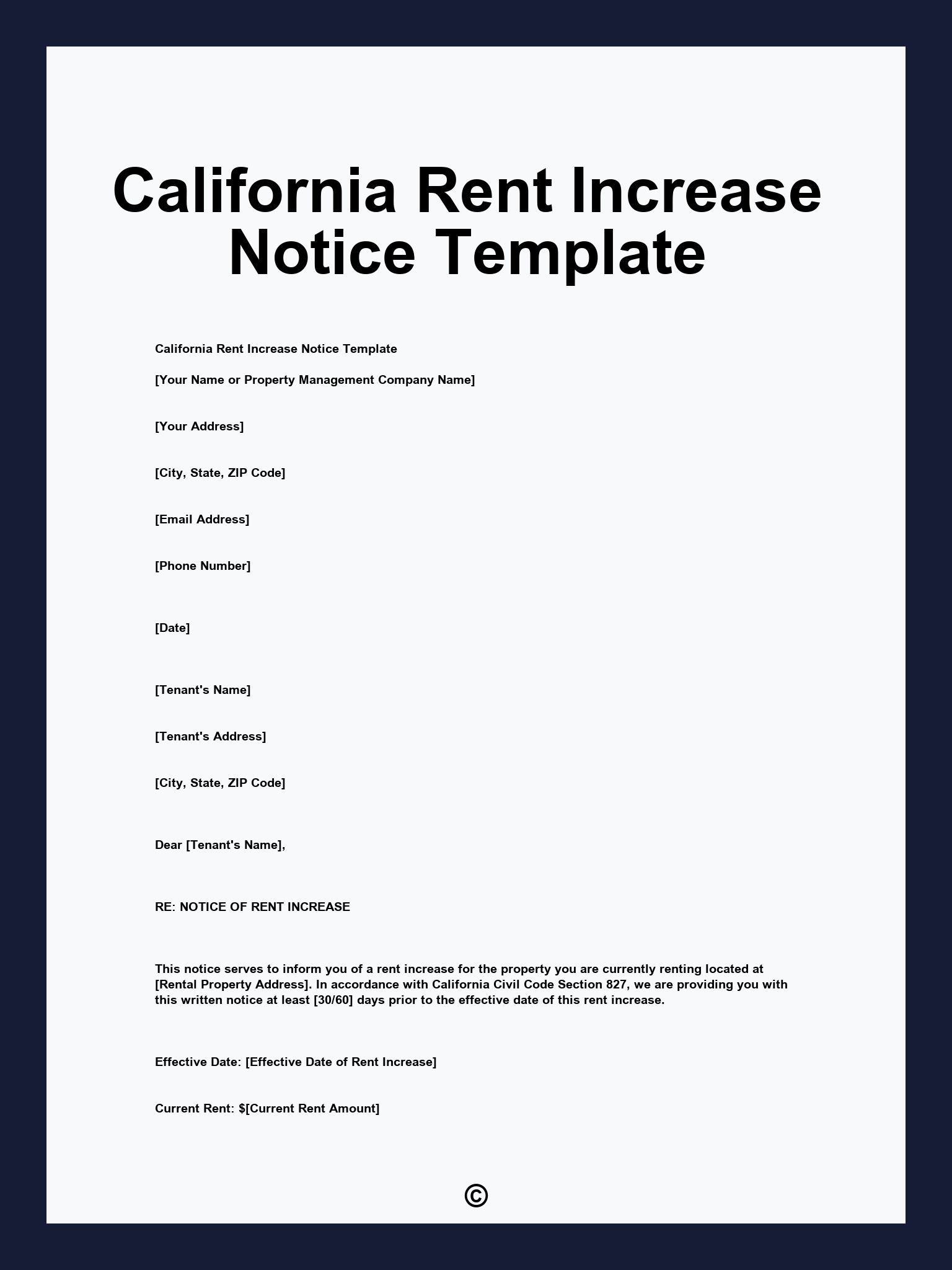
Under California Civil Code Section 827, for month-to-month tenancies, a landlord can change the terms of the tenancy, including increasing the rent, by providing the tenant with at least 30 days’ written notice. This applies to increases that do not trigger the longer notice period under AB 1482 or a local ordinance.
Local Month-to-Month Notice
If the property is covered by a local rent control ordinance, the notice period for month-to-month tenancies may be extended. For instance, a city might require 60 days’ written notice for any rent increase on a month-to-month tenancy, even if the increase is relatively small.
Fixed-Term Leases
Rent increases during a fixed-term lease (e.g., a 12-month lease) are generally not permitted unless the lease agreement specifically allows for them, or unless the tenant agrees to the increase.
Rent Increases at Lease Renewal
When a fixed-term lease is nearing its end, landlords often propose new terms for renewal, which may include a rent increase.
- Notice for Lease Renewal: If a landlord intends to change the terms of tenancy upon renewal of a fixed-term lease, they must provide at least 60 days’ written notice prior to the end of the lease term. This notice should clearly outline the proposed new rent and any other changes to the lease terms. This 60-day notice requirement is distinct from the rent increase notice itself and pertains to the notification of lease renewal terms.
- Impact of AB 1482: For properties covered by AB 1482, even at lease renewal, the rent increase proposed cannot exceed the annual cap. The 60-day notice still applies.
Mid-Lease Increases
In most cases, a landlord cannot unilaterally increase the rent during the term of a fixed-lease agreement. The rent is fixed for the duration of the lease. However, if the lease agreement contains a clause that permits rent increases under specific conditions (e.g., tied to an inflation index with a cap), then the notice period applicable to that clause would apply. Such clauses are less common in standard residential leases but may appear in commercial leases or specialized rental agreements.
Key Considerations for Tenants and Landlords
Adhering to proper procedures for rent increases is paramount for avoiding legal complications.
Tenant Rights and Protections
Tenants have the right to receive proper written notice before any rent increase. They also have the right to challenge an illegal rent increase.
- Reviewing Your Lease: Always read your lease agreement carefully. It should outline the terms of your tenancy, including any provisions for rent increases.
- Verifying Local Ordinances: If you suspect your rent increase may be unlawful or the notice period seems short, research your local city or county housing authority for applicable rent control laws and protections.
- Challenging an Increase: If you believe a rent increase is unlawful (e.g., insufficient notice, exceeds legal caps), you have the right to dispute it. Contact your local tenant rights organization or housing authority for guidance.
Landlord Responsibilities and Best Practices
Landlords must comply with all applicable state and local laws when implementing rent increases.
- Written Notice is Mandatory: Verbal notification of a rent increase is legally insufficient. All notices must be in writing and delivered according to legal requirements (e.g., personal delivery, certified mail).
- Accuracy of Information: Ensure the notice clearly states the new rent amount, the effective date of the increase, and the reason for the increase if required by local ordinance.
- Compliance with Caps: Be aware of both statewide and local rent increase caps. Exceeding these caps can render the increase invalid and lead to penalties.
- Consult Legal Counsel: For complex situations or if unsure about specific regulations, landlords are advised to consult with an attorney specializing in landlord-tenant law in California.

The Importance of Timely and Proper Notification
The requirement for advance written notice serves a vital purpose: it allows tenants to plan financially for the change in their housing costs. Whether it’s saving money to accommodate a higher rent, seeking alternative housing, or negotiating with the landlord, timely notification is essential for a stable rental market. For landlords, providing proper notice is not just a legal obligation; it’s a matter of good practice that fosters trust and minimizes potential disputes.
In California, the exact notice period for a rent increase hinges on a combination of statewide laws, like AB 1482, and potentially more stringent local rent control ordinances. Understanding these layers of regulation is key for both parties to ensure a lawful and equitable rental experience. Always err on the side of caution by providing more notice than may be strictly required if there is any ambiguity, and consult relevant legal resources or authorities when in doubt.
LifeOutOfTheBox is a participant in the Amazon Services LLC Associates Program, an affiliate advertising program designed to provide a means for sites to earn advertising fees by advertising and linking to Amazon.com. Amazon, the Amazon logo, AmazonSupply, and the AmazonSupply logo are trademarks of Amazon.com, Inc. or its affiliates. As an Amazon Associate we earn affiliate commissions from qualifying purchases.