
Understanding your rights and entitlements regarding sick leave is crucial, especially when traveling or considering extended stays in a state like California. While often associated with its vibrant cities and iconic attractions, California also boasts robust labor laws designed to protect workers, including provisions for paid sick time. This guide delves into the specifics of California’s paid sick leave requirements, offering clarity for both residents and visitors who may find themselves needing to utilize this benefit.
The Foundation of California’s Paid Sick Leave Law
The cornerstone of paid sick leave in California is the Healthy Workplaces, Healthy Families Act of 2014 (HWHFA). This legislation mandates that most employers provide paid sick leave to their employees. The primary objective is to allow workers to take time off when they or a family member are ill, without fear of losing pay or facing disciplinary action. This is particularly relevant for individuals working remotely or on assignment in California, as well as those considering a move or a lengthy vacation that might involve employment.

Who is Covered by the Law?
The HWHFA applies to nearly all employees in California, regardless of their employment status. This includes:
- Full-time employees: Those who work a standard workweek and are eligible for benefits.
- Part-time employees: Individuals working fewer hours than full-time, who still accrue sick leave.
- Temporary employees: Workers hired for a specific duration or project.
- Seasonal employees: Those employed for a limited season, such as during holiday periods or harvest times.
- Out-of-state employees working in California: Even if your primary residence or employer is elsewhere, if you perform work within the state’s borders for more than 30 days in a year, you are generally entitled to California paid sick leave. This is a critical consideration for digital nomads, business travelers, or anyone temporarily relocating for work.
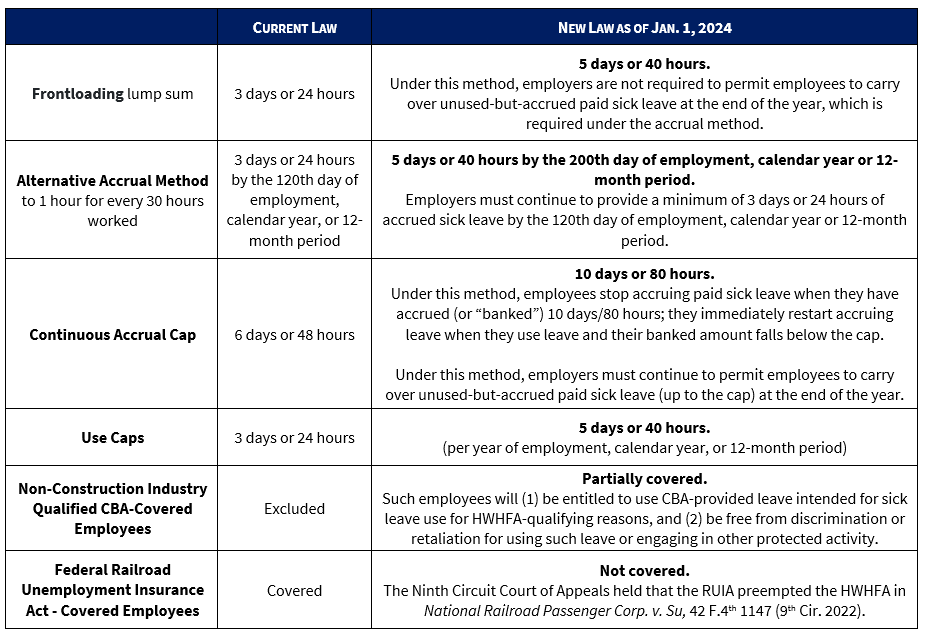
There are very limited exceptions, primarily for certain unionized employees covered by a bona fide collective bargaining agreement that provides equivalent or more generous paid sick leave, and for some specified categories of independent contractors (though the classification of workers as employees versus independent contractors is a complex and frequently litigated area in California).
How Sick Leave is Accrued
The HWHFA outlines two primary methods for sick leave accrual:
Standard Accrual Method
Under the standard method, employees accrue paid sick leave at a rate of one hour for every 30 hours worked. This applies to most employees. For instance, an employee working 40 hours per week would accrue approximately 1.33 hours of paid sick leave per week.
- Tracking: Employers are responsible for accurately tracking employee hours worked and accrued sick leave. This information should be clearly reflected on pay stubs or a separate written notice provided to the employee on or before each payday.
- Maximum Accrual: Employers can limit the total amount of paid sick leave an employee can accrue to at least 40 hours (or five days, assuming an eight-hour workday). However, they cannot limit the use of accrued sick leave to less than 40 hours per year.
- Carryover: Accrued, unused paid sick leave must be carried over to the following year.
Lump-Sum Method
Alternatively, employers may provide employees with their full annual sick leave entitlement at the beginning of each 12-month period. This lump sum must be at least 40 hours (or five days) and must be available for immediate use.
- No Carryover Requirement: If an employer chooses this method, they are generally not required to allow carryover of unused sick leave from one year to the next, provided the employee receives the full entitlement at the start of each period.
- Availability: The key is that the full amount must be available from day one of the 12-month period.
How Sick Leave Can Be Used
The HWHFA is broad in its definition of when paid sick leave can be utilized. The law aims to provide flexibility for employees to address health-related needs. Eligible uses include:
For the Employee’s Own Health
- Diagnosis, care, or treatment of an existing health condition: This covers visits to doctors, dentists, therapists, or other healthcare providers for ongoing medical issues.
- Preventive care: This includes annual check-ups, vaccinations, or screenings to prevent future illnesses.
For the Health of a Family Member
The definition of “family member” under the HWHFA is quite inclusive, encompassing:
- Child: Biological, adopted, foster, step, or legal ward, or a child for whom the employee stands in loco parentis.
- Grandchild:
- Grandparent:
- Sibling:
- Spouse or registered domestic partner:
- Designated person: An individual related by blood or whose association with the employee is the familial equivalent of a family relationship. This “designated person” clause offers significant flexibility for individuals who wish to care for someone outside of traditional familial definitions but with whom they share a close personal bond.
Other Qualifying Reasons
Beyond direct medical needs, paid sick leave can also be used for:
- Domestic violence, sexual assault, or stalking: Employees can use paid sick leave to seek medical attention, obtain services from a victim services organization, obtain counseling, or participate in legal proceedings related to domestic violence, sexual assault, or stalking. Employers may require reasonable documentation after three consecutive workdays of absence.

How Much Sick Time Can Be Used Per Year?
While employees may accrue a significant amount of sick leave over time, the HWHFA places a limit on how much can be used within a 12-month period.
- Minimum Use: Employers cannot limit an employee’s use of accrued paid sick leave to less than 40 hours (or five days, based on an eight-hour workday) in a 12-month period. This means that even if an employee has accrued more than 40 hours, they can use up to that amount if needed.
- Employer Limits: Employers can set a higher annual usage cap, provided it is at least 40 hours. For example, an employer might allow employees to use up to 80 hours of sick leave per year.
- Accrual vs. Use: It’s vital to distinguish between the maximum accrual and the maximum usage. An employee might accrue over 40 hours, but if the employer has set a usage cap of, say, 50 hours, the employee can use up to those 50 hours in a year. Any accrued leave beyond that 50-hour usage cap would remain available to be carried over to the next year, up to the employer’s maximum accrual limit.
Employer Obligations and Employee Rights
The HWHFA places specific responsibilities on employers to ensure compliance and protect employee rights.
Employer Responsibilities
- Provide Notice: Employers must provide employees with written notice of their paid sick leave rights upon hire or by July 1, 2015, whichever is later. This notice should detail the amount of sick leave available, the terms of its use, and the employer’s policy.
- Posting Requirements: Employers must display a poster in a conspicuous place accessible to employees detailing paid sick leave rights.
- Record Keeping: Maintain accurate records of hours worked and paid sick leave accrued and used for at least three years.
- No Retaliation: Employers are strictly prohibited from retaliating against employees for using paid sick leave, requesting information about paid sick leave, or filing a complaint related to paid sick leave. This includes adverse actions such as termination, demotion, or reduction in hours.
- No Requiring a Doctor’s Note for Less Than Three Days: For absences of less than three consecutive workdays, employers generally cannot require a doctor’s note or other documentation. They can require documentation for absences of three or more consecutive days, but this must be reasonable and may not delay the employee’s use of sick leave.
Employee Rights
- Right to Accrue and Use: Employees have the right to accrue and use paid sick leave as outlined by the law.
- Right to Information: Employees have the right to access information about their accrued sick leave balance.
- Right to Non-Retaliation: Employees are protected from any form of retaliation for exercising their paid sick leave rights.
- Right to Complaint: Employees can file a complaint with the California Labor Commissioner’s Office if they believe their rights under the HWHFA have been violated.
Navigating Sick Leave When Traveling or Working in California
For individuals traveling to or working in California, understanding these regulations can be particularly beneficial.
Short-Term Visitors and Business Travelers
If your visit is purely for leisure and you are not employed in California, the law’s provisions may not directly apply unless your employer is based in California and you are performing work there. However, if you are on a business trip that involves performing duties for a California employer, you are likely covered.
Digital Nomads and Remote Workers
The rise of remote work means more individuals are living and working from different locations. If you are a remote worker whose employer is based outside of California, but you are physically present and working in California for more than 30 days in a year, your employer is generally obligated to provide you with paid sick leave in accordance with California law. This is a crucial point for ensuring fair treatment and access to benefits regardless of your employer’s location.
Extended Stays and Relocation
For those considering an extended stay or a relocation to California, understanding paid sick leave is part of grasping the overall employee protections available. It adds another layer of security to your professional life while enjoying the diverse experiences California has to offer, from the beaches of San Diego to the vineyards of Napa Valley.
Common Scenarios and Considerations
To further clarify the application of the HWHFA, consider these common scenarios:
Scenario 1: Part-Time Employee at a Los Angeles Café
Maria works 20 hours per week at a café in Los Angeles. Using the standard accrual method (1 hour for every 30 hours worked), Maria accrues approximately 0.67 hours of paid sick leave per week. If she works 52 weeks a year at 20 hours/week, she would accrue about 34.84 hours of sick leave annually. If her employer allows accrual up to 40 hours and carryover, she could potentially have more available in subsequent years. If she needs to take a day off due to a severe flu, she can use her accrued paid sick time.
Scenario 2: Remote Worker for a New York Company, Living in San Francisco
John works remotely as a software engineer for a company headquartered in New York. He has been living and working from his apartment in San Francisco for the past 10 months. Because he is working in California for more than 30 days a year, his New York employer is obligated to provide him with California paid sick leave. Assuming the standard accrual, he accrues sick leave based on the hours he logs for his remote work. If he needs to care for his child who is ill, he can use his accrued paid sick time.
Scenario 3: Employee with Unlimited PTO
Some companies offer “unlimited” paid time off policies. However, in California, even under an unlimited PTO policy, employers must still track the accrual and usage of sick leave to ensure compliance with the HWHFA. If the unlimited PTO policy does not explicitly grant at least 40 hours (or five days) of paid sick leave that can be used for qualifying reasons, it may not meet the legal requirements. Employers must be able to demonstrate that their policy provides at least the minimum required sick leave.
Conclusion
The Healthy Workplaces, Healthy Families Act of 2014 is a vital piece of legislation in California that provides significant protections for workers. Understanding how much sick time is required, how it is accrued, and how it can be used is essential for anyone working or planning to work in the state. Whether you are a full-time resident, a temporary worker, or a digital nomad enjoying the sights from Lake Tahoe to Disneyland, these rights ensure that you can prioritize your health and the well-being of your loved ones without jeopardizing your employment. Employers must adhere to these mandates, and employees should be aware of their entitlements to ensure fair and compliant working conditions.
LifeOutOfTheBox is a participant in the Amazon Services LLC Associates Program, an affiliate advertising program designed to provide a means for sites to earn advertising fees by advertising and linking to Amazon.com. Amazon, the Amazon logo, AmazonSupply, and the AmazonSupply logo are trademarks of Amazon.com, Inc. or its affiliates. As an Amazon Associate we earn affiliate commissions from qualifying purchases.