
Navigating the landscape of professional licensure can often feel like charting an unfamiliar course, especially when aiming for a specific jurisdiction like California. For aspiring registered nurses (RNs), licensed vocational nurses (LVNs), and other nursing professionals looking to practice within the Golden State, securing a California nursing license is a pivotal step. This process, overseen by the California Board of Registered Nursing (BRN) for RNs and the California Board of Vocational Nursing and Psychiatric Technicians (BVNPT) for LVNs, requires meticulous attention to detail and adherence to established protocols. This guide aims to demystify the application process, providing a comprehensive roadmap for individuals seeking to embark on their nursing careers in California.

Understanding the California Nursing Licensure Pathway
Before diving into the application specifics, it’s crucial to understand the foundational requirements and the different types of licenses available. California offers several nursing credentials, primarily focusing on Registered Nurses (RNs) and Licensed Vocational Nurses (LVNs). The pathway to licensure largely depends on whether you are seeking an initial license by examination, endorsement, or reactivation.
Initial Licensure by Examination
This is the most common route for new nursing graduates who have completed an approved nursing education program and are seeking their first nursing license.
-
For Registered Nurses (RNs):
- Educational Requirements: You must have successfully completed an accredited registered nursing education program that meets the California BRN’s standards. This typically includes a specified number of theoretical and clinical hours in various nursing specialties. If your education was obtained outside the United States, a credential evaluation by a BRN-approved agency will be necessary to ensure equivalency.
- NCLEX-RN Examination: After graduating from an approved program, you will need to apply to take the National Council Licensure Examination for Registered Nurses (NCLEX-RN). The BRN will issue an Authorization to Test (ATT) once your application is approved and all prerequisites are met. Passing the NCLEX-RN is a mandatory requirement for licensure.
- Application Submission: The application for licensure by examination involves completing the official application form, submitting required fees, providing official transcripts, and undergoing a background check, which includes fingerprinting.
-
For Licensed Vocational Nurses (LVNs):
- Educational Requirements: Similar to RNs, LVN candidates must graduate from a BVNPT-approved vocational nursing program. These programs are designed to equip students with the skills and knowledge necessary for practical nursing roles. International graduates will also require a credential evaluation.
- NCLEX-PN Examination: Upon graduation, you will apply to take the National Council Licensure Examination for Practical Nurses (NCLEX-PN). The BVNPT will issue an ATT after verifying your eligibility. Successful completion of the NCLEX-PN is essential for LVN licensure.
- Application Submission: The LVN licensure by examination application involves submitting the completed form, applicable fees, official transcripts, and undergoing a criminal background check via fingerprinting.
Licensure by Endorsement
This pathway is for nurses who hold an active and unencumbered license in another U.S. state or territory and wish to obtain a California nursing license.
- Requirements:
- Verification of Licensure: You will need to have your license verified by the nursing board of the state(s) where you currently hold or have previously held a license. This is typically done through a Nursys verification or by sending a verification form to each state’s board.
- NCLEX Passage: You must have passed the NCLEX-RN or NCLEX-PN examination in the jurisdiction where you first obtained your license. The California BRN or BVNPT will confirm this information.
- Education Verification: For RNs licensed before July 1, 2009, or LVNs licensed before July 1, 2019, there are specific educational requirements that must be met. Nurses licensed after these dates generally meet the educational requirements through their NCLEX passage. However, if there are any discrepancies or if the education was obtained outside the U.S., a credential evaluation may be required.
- Application and Fees: Submit the endorsement application form with the required fees and undergo the criminal background check.
Reactivation of an Inactive License
If you previously held a California nursing license that has lapsed or become inactive, you may apply for reactivation.
- Requirements:
- Reactivation Application: Complete the reactivation application form.
- Fees: Pay the required reactivation fees, which may include back fees and penalty fees if applicable.
- Continuing Education (CE): Demonstrate completion of continuing education requirements for the period the license was inactive, as stipulated by the BRN or BVNPT. This often involves completing a specific number of CE hours.
- Competency Requirements: Depending on the length of time the license has been inactive, you may need to demonstrate current nursing competency through employment experience or by passing the NCLEX again. The specific requirements will be detailed by the respective board.
The Application Process: Step-by-Step Guidance
The application process, regardless of the pathway, involves several critical steps. Familiarizing yourself with these will help ensure a smooth and efficient experience.
Step 1: Determine the Correct Board and Application Type
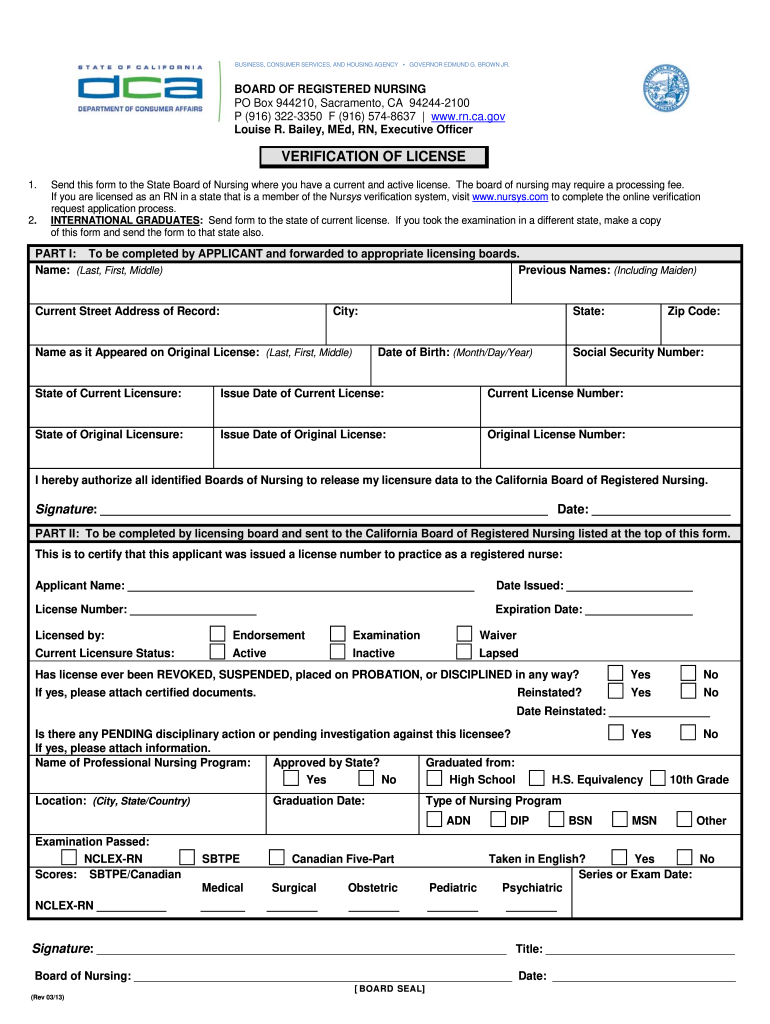
The first step is to identify the appropriate licensing board: the California Board of Registered Nursing (BRN) for RNs or the California Board of Vocational Nursing and Psychiatric Technicians (BVNPT) for LVNs. Within the chosen board’s website, locate the section for “Licensing” and select the appropriate application type (examination, endorsement, or reactivation).
Step 2: Gather Required Documentation
Thorough preparation of your documents is paramount. This typically includes:
- Official Transcripts: From your nursing education program. These should be sent directly from the educational institution to the BRN or BVNPT.
- Fingerprint Cards/Live Scan: For the criminal background check. California utilizes the Live Scan fingerprinting system for in-state applicants. Out-of-state applicants will typically use fingerprint cards that are mailed to the Department of Justice.
- Verification of Licensure: For endorsement applicants, this is a crucial step.
- Verification of Employment: In some cases, particularly for reactivation or if specific competency requirements need to be met, proof of recent nursing employment may be necessary.
- Credential Evaluation Report: For internationally educated nurses. Ensure the evaluation is performed by a BRN- or BVNPT-approved agency.
- Proof of Citizenship or Legal Status: Documentation may be required to confirm your right to work in the United States.
Step 3: Complete the Application Form
The application form is available on the respective board’s website. It is imperative to fill out the form accurately and completely. Any omissions or inaccuracies can lead to significant delays or denial of your application. Pay close attention to details such as your legal name, social security number, and any previous addresses or professional licenses.
Step 4: Submit Application Fees
Licensing boards charge fees for application processing, examination, and background checks. These fees are typically non-refundable. Review the current fee schedule on the BRN or BVNPT website to ensure you submit the correct amount. Payment methods usually include cashier’s checks, money orders, or online payment options.
Step 5: Undergo Criminal Background Check
A criminal background check is a mandatory component of the licensing process. This involves submitting fingerprints through Live Scan (if in California) or fingerprint cards (if outside California) to the California Department of Justice and the Federal Bureau of Investigation (FBI). Any prior convictions or disciplinary actions must be disclosed, and the boards will review these on a case-by-case basis.
Step 6: Take and Pass the NCLEX Examination (for Licensure by Examination)
Once your application for licensure by examination is approved and all other requirements are met, you will receive an Authorization to Test (ATT) from the BRN or BVNPT. You must then schedule your NCLEX-RN or NCLEX-PN exam with Pearson VUE. Passing the NCLEX is the final academic hurdle to licensure.
Step 7: Await License Issuance
After all requirements have been submitted and processed, including a satisfactory background check and passing the NCLEX (if applicable), the BRN or BVNPT will review your complete application package. If approved, your nursing license will be issued. You can typically verify the status of your application and check if your license has been issued through the respective board’s online license lookup system.

Important Considerations and Tips for Success
The path to a California nursing license, while structured, can present challenges. Here are some tips to navigate the process effectively:
- Start Early: The application process can be lengthy, especially if you are an international graduate or have a complex history. Begin gathering documents and completing forms well in advance of your desired start date.
- Read Instructions Carefully: Each board provides detailed instructions for their specific application process. Read them thoroughly and follow them precisely.
- Maintain Copies: Keep copies of all submitted documents, application forms, and payment receipts for your records.
- Communicate with the Board: If you have questions or encounter any issues, do not hesitate to contact the BRN or BVNPT directly. Their contact information is readily available on their respective websites. Be prepared to provide your application confirmation number or other identifying details.
- Stay Organized: Create a checklist of all required documents and steps. Track the progress of your application and any communications from the board.
- Be Honest and Transparent: Full disclosure of any past criminal convictions, disciplinary actions, or relevant information is critical. Non-disclosure can lead to severe penalties, including denial of licensure.
- Prepare for the NCLEX: The NCLEX is a comprehensive examination that requires dedicated preparation. Utilize study guides, practice questions, and review courses to ensure you are well-prepared. For those seeking to practice in California after obtaining a license elsewhere, understanding the state’s specific practice acts and regulations is also advisable.
Obtaining a nursing license in California is a significant achievement that opens doors to a rewarding career in one of the nation’s largest and most dynamic healthcare markets. By understanding the requirements, diligently preparing your application, and adhering to the guidance provided by the California Board of Registered Nursing and the California Board of Vocational Nursing and Psychiatric Technicians, you can successfully navigate this process and begin your professional journey.
LifeOutOfTheBox is a participant in the Amazon Services LLC Associates Program, an affiliate advertising program designed to provide a means for sites to earn advertising fees by advertising and linking to Amazon.com. Amazon, the Amazon logo, AmazonSupply, and the AmazonSupply logo are trademarks of Amazon.com, Inc. or its affiliates. As an Amazon Associate we earn affiliate commissions from qualifying purchases.