
Navigating the acquisition of ammunition in the Golden State presents a unique set of challenges and considerations for firearms owners. California has implemented some of the nation’s strictest gun control measures, and these regulations extend significantly to the purchasing of ammunition. Understanding the specific laws, the process, and the requirements is crucial for any individual looking to legally procure ammunition within the state. This guide aims to demystify the process, ensuring compliance and providing clarity for residents and visitors alike.
Understanding California’s Ammunition Regulations
The legal landscape surrounding ammunition in California is complex and has evolved over time. A significant piece of legislation, Proposition 63, enacted in 2016 and fully implemented in 2018, revolutionized how ammunition is bought and sold. This proposition, along with subsequent legislative actions, has made it illegal for most individuals to purchase ammunition without a valid Firearm Safety Certificate (FSC) and to have it shipped directly to their homes. Furthermore, there are restrictions on the types of ammunition that can be possessed and sold.

Firearm Safety Certificate (FSC) Requirement
One of the most fundamental requirements for purchasing ammunition in California is possessing a valid Firearm Safety Certificate (FSC). This certificate is obtained by passing a written examination administered by a certified firearms dealer. The exam covers safe gun handling, firearm laws, and the responsibilities of firearm ownership. The FSC is valid for five years and serves as a prerequisite for various firearm-related transactions, including the purchase of ammunition. Without a current FSC, a resident will be unable to complete an ammunition purchase from a licensed dealer within the state.
Ammunition Background Checks
In addition to the FSC, all ammunition purchases made from licensed firearms dealers in California are subject to a background check. This process, managed through the state’s Dealer Record of Sale (DROS) system, is similar to the background checks required for firearm purchases. The Dealer’s Record of Sale (DROS) fee for ammunition is separate from the fee for firearms. The background check aims to ensure that the purchaser is not prohibited from owning ammunition under state or federal law. This process typically involves a waiting period, though it is usually shorter than the waiting period for firearm purchases.
Ban on Ammunition Delivery to Residences
A significant aspect of the current regulations is the prohibition on having ammunition delivered directly to a residential address in California. This means that individuals cannot simply order ammunition online and have it shipped to their homes. Instead, all ammunition purchases must be picked up in person from a licensed ammunition vendor. This measure is intended to enhance accountability and reduce the ease with which individuals can acquire ammunition without direct interaction with a licensed professional who can verify eligibility.
Types of Ammunition Prohibited
California also prohibits certain types of ammunition. This includes, but is not limited to, hollow-point ammunition and armor-piercing ammunition. These restrictions are in place due to their perceived increased capacity for harm. When purchasing ammunition, it is essential to be aware of these prohibitions to avoid inadvertently attempting to buy illegal ordnance. Licensed dealers are knowledgeable about these restrictions and will refuse to sell prohibited ammunition.
The Ammunition Purchase Process
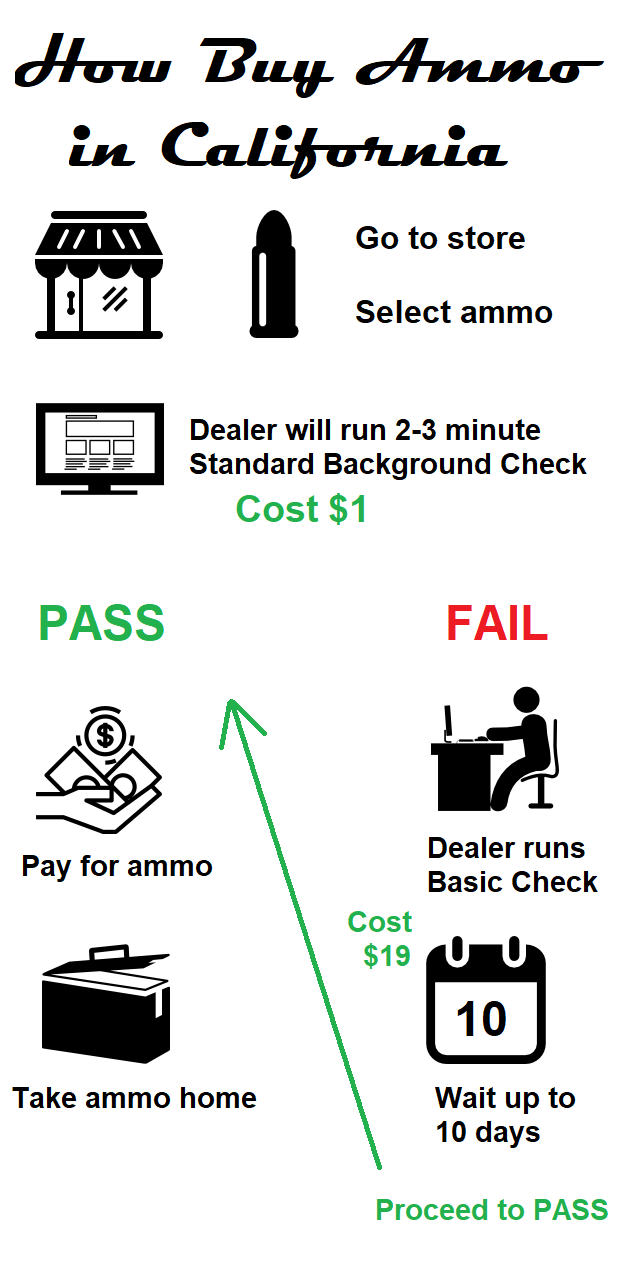
The process for legally buying ammunition in California involves several distinct steps. Adhering to these steps ensures a smooth transaction and compliance with state law.
Step 1: Obtain a Firearm Safety Certificate (FSC)
As previously mentioned, the first crucial step is securing a valid FSC. If you do not already possess one, you will need to find a licensed firearms dealer in California that offers FSC testing. Be prepared to study the California Department of Justice (DOJ) Firearm Safety Certificate Study Guide, which covers the necessary knowledge. Upon successful completion of the test and payment of the required fees, you will be issued your FSC.
Step 2: Locate a Licensed Ammunition Vendor
Once you have your FSC, you can begin looking for licensed ammunition vendors. These are typically licensed firearms dealers who are authorized to sell ammunition. You can find these vendors at local gun shops, sporting goods stores with firearms departments, and online directories of licensed dealers. When visiting a vendor, it is wise to call ahead to confirm they stock the specific type of ammunition you are looking for and to inquire about their purchasing process.
Step 3: Present Required Documentation
When you arrive at the vendor to make your purchase, you will be required to present specific documentation. This includes:
- Your valid Firearm Safety Certificate (FSC): This proves you have met the basic safety and legal requirements.
- A government-issued photo identification: This is typically a California driver’s license or a California identification card. The address on your identification must generally match your current residency.
- Proof of residency: In some cases, additional proof of residency may be required, such as a utility bill or rental agreement, especially if your government-issued ID does not reflect your current address.
Step 4: Complete the Dealer’s Record of Sale (DROS) Application
The vendor will then initiate the Dealer’s Record of Sale (DROS) process. You will need to fill out a DROS application form, which includes providing personal information, details about the ammunition you are purchasing, and attesting that you are legally permitted to acquire it. This application is transmitted electronically to the California DOJ for the background check.
Step 5: Pass the Background Check
The California DOJ will conduct a background check to verify that you are not prohibited from owning ammunition. This check typically involves reviewing state and federal databases for any disqualifying factors, such as felony convictions, domestic violence restraining orders, or mental health adjudications. While the background check for ammunition is generally expedited compared to firearm purchases, there is still a waiting period. The duration of this waiting period can vary but is often shorter than the 10-day waiting period associated with firearms.
Step 6: Pick Up Your Ammunition
Upon successful completion of the background check, you will be notified by the vendor that your ammunition is ready for pickup. You will then return to the vendor’s location to collect your purchase. It is essential to pick up your ammunition from the vendor where you initiated the DROS process.
Navigating Online Ammunition Purchases and Out-of-State Considerations
The prohibition on direct-to-residence delivery fundamentally alters how Californians can acquire ammunition, particularly from online retailers or out-of-state sources.
Online Purchases for In-Person Pickup
While direct delivery to your home is prohibited, many online retailers still serve Californians. The process involves ordering ammunition online and having it shipped to a licensed California firearms dealer of your choice. You will then go through the DROS and background check process at that dealer’s location to pick up your ammunition. This requires careful coordination with both the online seller and the local dealer to ensure a seamless transfer. Be aware of any transfer fees that the local dealer may charge for this service.
Out-of-State Purchases
Purchasing ammunition while traveling out of state presents its own set of complexities. Generally, if you are a California resident, you must still adhere to California laws when bringing ammunition back into the state. This means that any ammunition purchased out-of-state and brought into California must have been acquired legally according to California statutes. If you were to purchase ammunition out-of-state and attempt to bring it into California without complying with the FSC and background check requirements (if applicable to that specific acquisition method in California), you could face legal repercussions. The most straightforward approach for Californians purchasing ammunition out-of-state is to have it shipped to a licensed California dealer for pickup, thereby ensuring all state regulations are met.
Alternatives and Exemptions
While the regulations are stringent, there are a few nuances and potential exemptions to consider.
Ammunition Gifting and Inheritance
The laws surrounding the transfer of ammunition can be complex. Generally, gifts of ammunition are subject to the same regulations as direct purchases, meaning the recipient would likely need an FSC and undergo a background check. Similarly, inheriting ammunition may involve specific legal procedures to ensure lawful possession. It is advisable to consult with a legal professional or a licensed dealer for guidance on these specific scenarios.
Law Enforcement and Authorized Personnel
Certain individuals and entities are exempt from some of these regulations. Law enforcement officers, active military personnel, and licensed security guards may have specific provisions allowing them to purchase or possess ammunition under different rules, often related to their official duties. These exemptions are detailed within the relevant California codes and require proper identification and authorization.

Understanding Your Responsibilities
Ultimately, the responsibility for understanding and complying with California’s ammunition laws rests with the individual firearm owner. Staying informed about current legislation, consulting with licensed professionals, and meticulously following the established procedures are essential for legal and safe ammunition acquisition in the state. The aim of these regulations is to promote public safety, and adherence to them is paramount for all firearm enthusiasts in California.
LifeOutOfTheBox is a participant in the Amazon Services LLC Associates Program, an affiliate advertising program designed to provide a means for sites to earn advertising fees by advertising and linking to Amazon.com. Amazon, the Amazon logo, AmazonSupply, and the AmazonSupply logo are trademarks of Amazon.com, Inc. or its affiliates. As an Amazon Associate we earn affiliate commissions from qualifying purchases.