
Navigating the process of legally changing your name in California can seem like a complex undertaking, but with a clear understanding of the steps involved, it becomes a manageable and rewarding journey. Whether you’re seeking a name change for personal reasons, after marriage or divorce, or for gender affirmation, the state of California provides a structured legal framework to facilitate this transition. This guide will walk you through the essential requirements and procedures, ensuring a smooth and successful name change.
Understanding the Legal Framework for Name Changes in California
In California, the primary method for a legal name change is through a court order. This process involves petitioning the superior court in your county of residence. Unlike some other states, California generally does not require you to demonstrate a specific reason for the change, as long as it is not for fraudulent purposes or to evade legal obligations. The court’s role is to ensure that the requested name change is legitimate and does not infringe upon the rights of others.
Eligibility Requirements
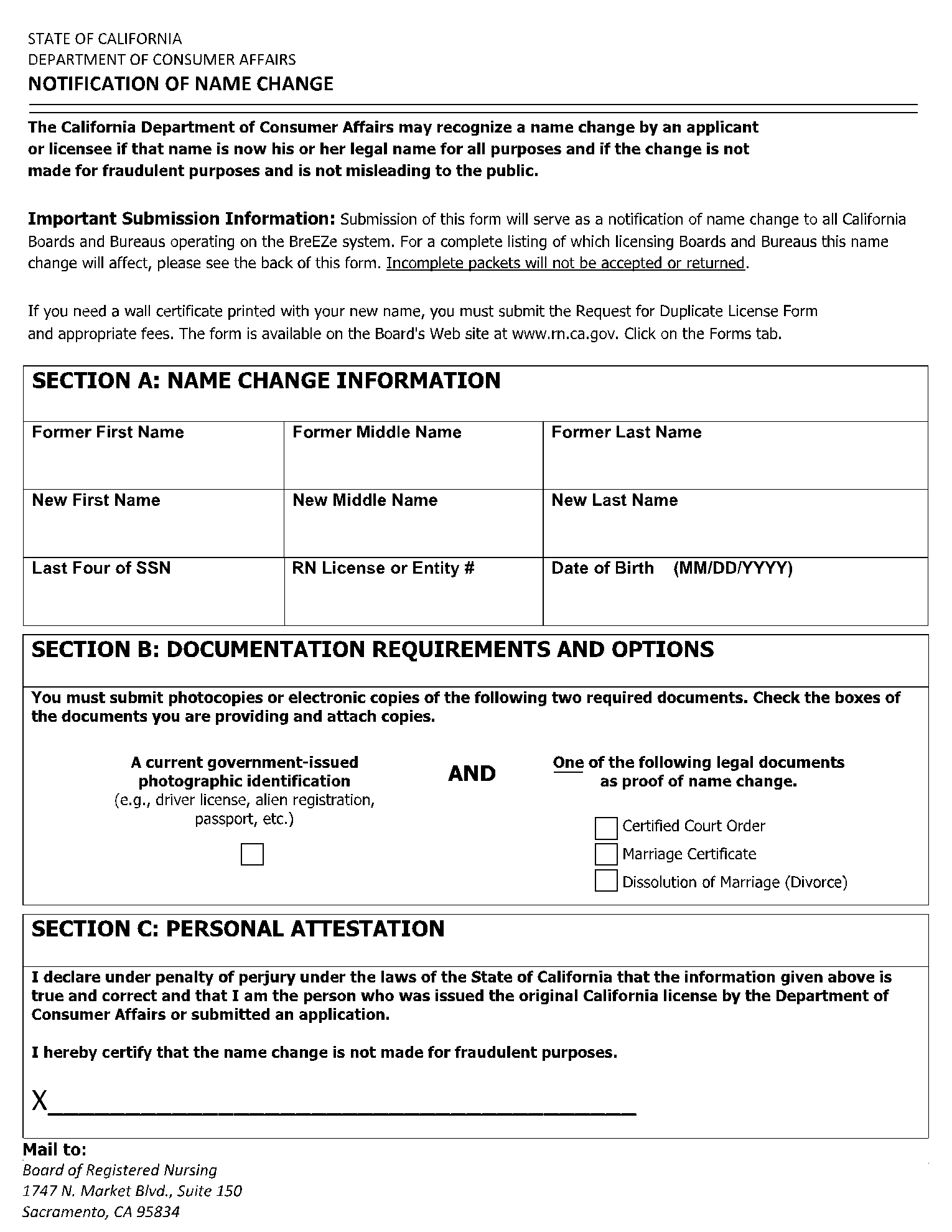
To initiate a name change in California, you must meet certain eligibility criteria. The most fundamental requirement is that you must be a resident of the state. This means you must have established a domicile in California and intend to remain here. The specific duration of residency may vary by county, so it’s advisable to check with your local superior court for precise details.
Furthermore, you must be at least 18 years of age to file a petition for a name change independently. If you are a minor, the petition must be filed by a parent or legal guardian, and the minor may also need to appear in court. There are specific forms and procedures for name changes involving minors, often requiring additional consent or court review.
Crucially, the court will not grant a name change if it’s being sought to:
- Defraud creditors: Hiding assets or evading debts by changing your name is illegal and will prevent the court from approving your petition.
- Evade criminal prosecution: Similarly, attempting to escape legal accountability for criminal actions through a name change is prohibited.
- Infringe on the rights of others: This could include attempting to impersonate someone or use a name that is already famously associated with another individual in a way that suggests endorsement or affiliation.
- Impersonate a celebrity or public figure: While not explicitly stated in all statutes, courts are wary of name changes that appear to be for deceptive or attention-seeking purposes.
The Petition for Name Change
The cornerstone of the legal name change process in California is the filing of a Petition for Change of Name. This document, typically Form NC-100, is available from the California Courts website or your local superior court clerk’s office. The petition requires you to provide specific information, including:
- Your current legal name: This is the name that appears on your birth certificate and other official documents.
- The name you wish to adopt: This is the new name you intend to use.
- Your date and place of birth: Standard biographical information.
- Your current address and length of residency in California: To establish jurisdiction.
- Reasons for the name change: While a specific reason isn’t always mandatory, you must state why you are seeking the change. General reasons such as personal preference, desire for a fresh start, or to align with personal identity are usually sufficient.
- Declarations: You will need to declare under penalty of perjury that you are not changing your name for any fraudulent or illegal purposes.
In addition to the primary petition form, you will likely need to file supporting documents. These often include:
- Civil L M-100 (Attachment to Petition): A supplemental form that provides more details about your personal history and marital status.
- Order to Show Cause for Change of Name (Form NC-120): This is a court order that sets a hearing date and requires public notice of your intended name change.
- Decree Changing Name (Form NC-130): This is the final court order that, once signed by the judge, legally changes your name.
It is highly recommended to consult with an attorney or legal aid society if you have any doubts or complexities regarding the petition process.
The Court Hearing and Public Notice
Once you have filed your petition, the court will schedule a hearing. A critical component of the legal name change process is providing public notice of your intent. This is to allow anyone who might have a valid objection to the name change to come forward.
Publishing the Order to Show Cause
The Order to Show Cause (Form NC-120) must be published in a local newspaper of general circulation for a specific period before your court hearing. The required publication period is typically four consecutive weeks. The exact duration and the type of newspaper acceptable can vary, so it is imperative to confirm these requirements with your local superior court clerk or the newspaper itself.
You will need to arrange for the publication and obtain an affidavit of publication from the newspaper once it has completed the required run. This affidavit serves as proof that you have fulfilled the public notice requirement and must be filed with the court before your hearing. Failure to properly publish the notice can lead to delays or dismissal of your petition.
The Court Hearing
On the date of your scheduled hearing, you must appear before the judge. The hearing is generally a brief proceeding. The judge will review your petition and supporting documents. If there are no objections filed by any party and all legal requirements have been met, the judge will typically grant your petition.
During the hearing, the judge may ask you a few questions to confirm your identity and the reason for your name change. Be prepared to answer clearly and concisely. If you are changing your name due to marriage or divorce, you may need to provide additional documentation, such as a marriage certificate or divorce decree.

For gender affirmation name changes, the process is largely the same as for any other legal name change. However, you may choose to include documentation related to your gender transition if you feel it is relevant or if specific county practices suggest it.
If an objection is raised, the judge will hear arguments from both sides before making a decision.
Post-Hearing Procedures and Updating Records
After the judge grants your petition and signs the Decree Changing Name (Form NC-130), you have legally changed your name. However, the process isn’t entirely complete. You will need to take the signed decree to various government agencies and private institutions to update your records.
Obtaining Certified Copies of the Decree
Your first step is to obtain certified copies of the Decree Changing Name from the court clerk. These certified copies are essential because they serve as your official proof of a legal name change. You will need these for every entity you update. There is usually a small fee for each certified copy.
Updating Identification and Official Documents
The most critical documents to update include:
- Social Security Card: Visit a Social Security Administration office with your certified decree and proof of identity. You will need to complete an application to update your Social Security record. This is a crucial step as many other identification documents will reference your Social Security number.
- Driver’s License or State ID: Visit your local California Department of Motor Vehicles (DMV) office. You will need to present your certified decree, your old driver’s license or ID, and potentially other supporting documents like a passport.
- Passport: If you have a U.S. passport, you can apply for a replacement with your new name through the U.S. Department of State. The process and required documentation will depend on whether your passport is still valid or has expired.
- Birth Certificate: While a court order does not directly change your birth certificate, you can petition the vital records office in the state where you were born to amend your birth certificate with your new name. This process varies by state.
Notifying Other Institutions
Beyond government identification, you will need to update your name with numerous other entities:
- Banks and Financial Institutions: Inform your bank, credit card companies, and any other financial service providers. You will need to provide them with a certified copy of your decree.
- Employer: Notify your employer’s Human Resources department. They will need to update your payroll and employment records.
- Educational Institutions: If you are a student or have attended colleges or universities, inform their registrar’s office.
- Landlord or Mortgage Company: Update your lease agreement or mortgage documents.
- Insurance Providers: Notify your health, auto, and life insurance companies.
- Voter Registration: Update your voter registration information with your local election office.
- Professional Licenses: If you hold any professional licenses (e.g., medical, legal, real estate), you will need to contact the issuing board.
- Post Office: Inform the United States Postal Service of your name change.
- Online Accounts: While less formal, consider updating your profiles on social media platforms and other online services.
The process of updating all these records can be time-consuming but is essential for ensuring that your legal identity aligns with your chosen name across all aspects of your life. Taking a systematic approach, perhaps by creating a checklist, can help manage this extensive task.
Special Considerations for Specific Circumstances
While the general name change process in California is standardized, certain circumstances may require additional steps or considerations.
Name Change Due to Marriage or Divorce
In California, a name change as a result of marriage is typically handled through the marriage license application process. You can elect to take your spouse’s last name or hyphenate your names. This is usually a simpler process than a court-ordered name change.
For name changes after a divorce, you can often request to resume your former name as part of the divorce proceedings. This is usually specified in the final divorce decree. If you did not request this during the divorce or if your divorce is finalized, you will need to follow the standard court petition process outlined above.
Name Change for Minors
Changing a minor’s name requires the consent of both parents or legal guardians, unless one parent’s rights have been terminated. If one parent objects, the court will hold a hearing to determine if the name change is in the best interest of the child. The minor may also be required to appear in court to express their wishes. The forms and procedures for minor name changes are distinct from those for adults.
Name Change for Gender Affirmation
For individuals undergoing gender affirmation, the legal name change process in California is the same as described above. The court order will legally change your name to one that aligns with your gender identity. Many transgender individuals find this legal recognition a crucial step in their journey. While not legally required for a name change, some may choose to include a letter of support from a medical professional or therapist as part of their petition, though this is not a standard requirement by law.
In conclusion, legally changing your name in California is a structured legal process that, while requiring attention to detail and adherence to procedure, is accessible to all eligible residents. By understanding the petition process, the importance of public notice, and the necessary post-hearing steps to update your identity documents, you can successfully navigate this significant personal transition.
LifeOutOfTheBox is a participant in the Amazon Services LLC Associates Program, an affiliate advertising program designed to provide a means for sites to earn advertising fees by advertising and linking to Amazon.com. Amazon, the Amazon logo, AmazonSupply, and the AmazonSupply logo are trademarks of Amazon.com, Inc. or its affiliates. As an Amazon Associate we earn affiliate commissions from qualifying purchases.