
Creating a trust in California is a powerful estate planning tool that can help you manage your assets, protect your beneficiaries, and avoid the complexities of probate. Whether you’re looking to safeguard wealth for future generations, ensure seamless transfer of property, or provide for loved ones with special needs, understanding the process is paramount. This guide will walk you through the essential steps and considerations for establishing a trust within the Golden State, focusing on the legal and practical aspects relevant to estate planning.
Understanding Trusts in California
At its core, a trust is a legal arrangement where a trustee holds and manages assets for the benefit of beneficiaries, according to the instructions set forth by the trustor (the person who creates the trust). California law recognizes various types of trusts, each serving distinct purposes. The most common type for estate planning is the revocable living trust, which offers significant flexibility and control to the trustor during their lifetime.

Revocable vs. Irrevocable Trusts
The primary distinction lies in the ability to modify or terminate the trust.
Revocable Living Trusts
- Flexibility: You, as the trustor, can amend, alter, or even revoke the trust entirely during your lifetime. This provides peace of mind, knowing you retain control over your assets.
- Probate Avoidance: Assets properly transferred into a revocable living trust bypass the probate process, a court-supervised procedure that can be time-consuming, costly, and public.
- Privacy: Unlike wills, which become public record during probate, trusts are private documents.
- Incapacity Planning: A revocable living trust can designate a successor trustee to manage your assets if you become incapacitated, avoiding the need for a conservatorship.
Irrevocable Trusts
- Permanence: Once established, irrevocable trusts generally cannot be altered or revoked without the consent of all beneficiaries and, in some cases, court approval.
- Asset Protection: Certain irrevocable trusts can offer protection from creditors and lawsuits, as the assets are no longer considered yours.
- Tax Benefits: Some irrevocable trusts may offer estate tax advantages.
- Specialized Uses: Often used for charitable giving, special needs planning, or minimizing estate taxes for very large estates.
For most individuals seeking to simplify their estate and avoid probate, a revocable living trust is the preferred choice.
Key Players in a Trust
Understanding the roles within a trust is crucial:
- Trustor (Grantor/Settlor): The individual who creates the trust and transfers assets into it. In a living trust, the trustor is typically also the initial trustee and beneficiary.
- Trustee: The person or entity responsible for managing the trust assets according to the trust document’s instructions. The trustee has a fiduciary duty to act in the best interests of the beneficiaries. In a living trust, you often name yourself as the initial trustee.
- Beneficiary: The individual or entity who will ultimately receive the benefits of the trust assets. You can name yourself as a beneficiary during your lifetime, and then designate others to inherit after your passing.
- Successor Trustee: The person or entity who takes over as trustee upon the incapacitation or death of the initial trustee.
Steps to Create a Trust in California
Creating a trust involves several distinct steps, each requiring careful consideration and adherence to legal formalities.
1. Define Your Goals and Identify Assets
Before drafting any documents, reflect on what you want your trust to achieve.
- Estate Distribution: Who should inherit your assets, and in what proportions?
- Beneficiary Needs: Do you have beneficiaries with special needs, or minors who require management of their inheritance?
- Asset Management: How do you want your assets managed during your lifetime, and after your death?
- Tax Planning: Are you concerned about estate taxes? (This is generally more relevant for larger estates.)
Next, take an inventory of all your assets. This includes:
- Real estate (your home, rental properties)
- Bank accounts (checking, savings, money market)
- Investment accounts (stocks, bonds, mutual funds)
- Retirement accounts (IRAs, 401(k)s – note: these often pass via beneficiary designations, but can be structured to work with trusts)
- Business interests
- Personal property (vehicles, jewelry, art)
- Life insurance policies
Understanding the scope of your assets will inform the structure and provisions of your trust.
2. Choose Your Trustee(s)
Selecting the right trustee is a critical decision. For a revocable living trust, you will typically name yourself as the initial trustee. Consider who you would like to serve as your successor trustee. This individual should be:
- Trustworthy and Responsible: Capable of managing finances and making sound decisions.
- Organized and Diligent: Able to keep accurate records and fulfill the trust’s obligations.
- Understanding of Your Wishes: Someone who knows your beneficiaries and your intentions.
- Willing to Serve: Ensure they are comfortable with the responsibility.
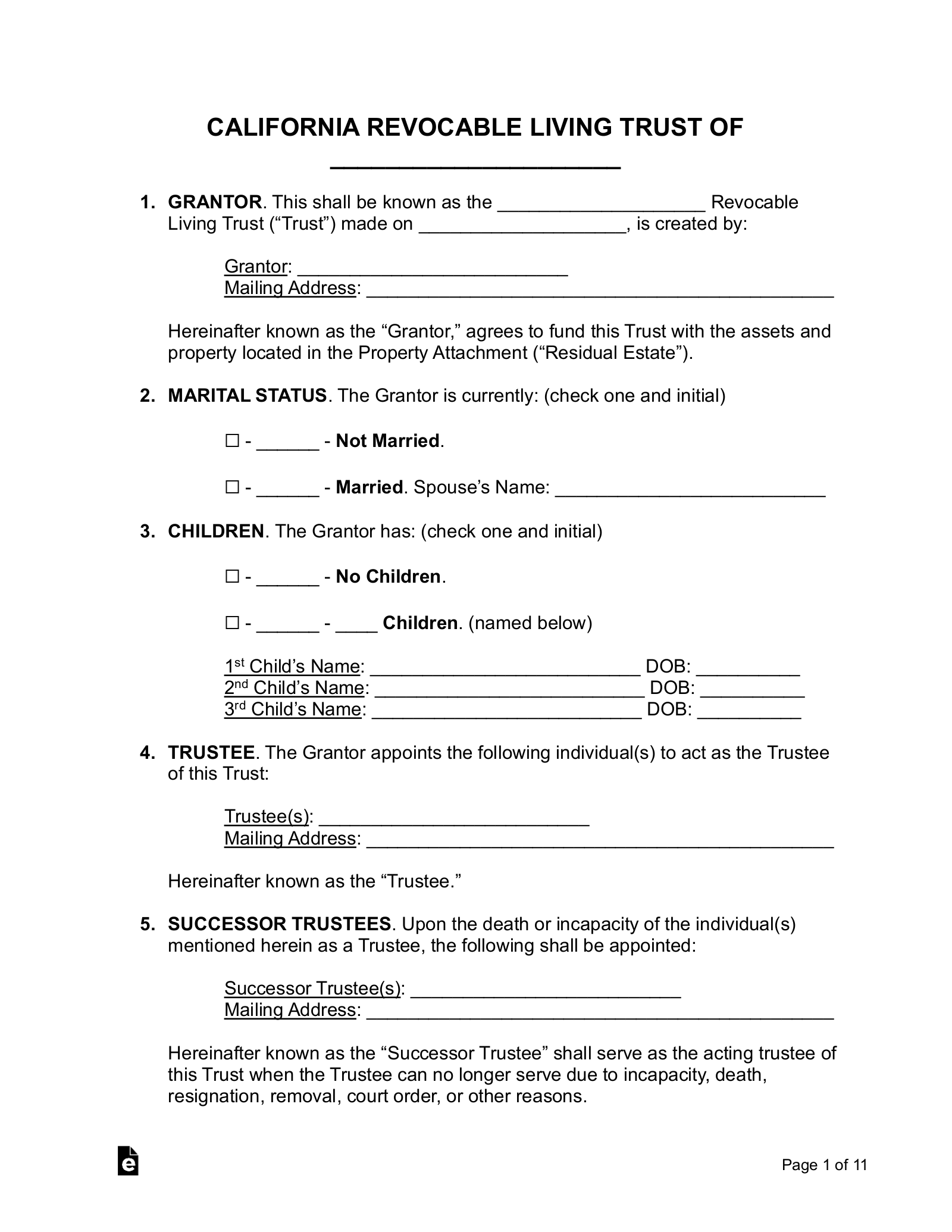
You can name a single individual, multiple individuals to serve jointly, or a professional trustee, such as a bank or trust company. It’s wise to name at least one successor trustee and potentially a second successor trustee in case the primary successor is unable or unwilling to serve.
3. Draft the Trust Document
This is the legal cornerstone of your trust. While it’s possible to find DIY trust forms, for a California trust, it is highly recommended to engage an experienced estate planning attorney. A well-drafted trust document will include:
- Declaration of Trust: A statement clearly establishing the trust and identifying the trustor, trustee, and beneficiaries.
- Trustee Powers: A detailed list of the powers granted to the trustee, such as the authority to buy, sell, invest, and manage assets.
- Distribution Provisions: Instructions on how and when trust assets should be distributed to beneficiaries. This can include outright distributions, staggered distributions (e.g., at certain ages), or distributions for specific purposes (e.g., education).
- Successor Trustee Provisions: Clear instructions on when and how a successor trustee takes over.
- Spendthrift Provisions (Optional): These can protect beneficiaries’ inheritances from their own creditors or poor financial management.
- Incapacity Clause: Provisions for managing your affairs if you become incapacitated.
- Revocability Clause: For a living trust, a clause stating that the trust is revocable.
An attorney will ensure the document complies with California law and accurately reflects your intentions, avoiding potential ambiguities that could lead to disputes or costly litigation later.
4. Fund the Trust (Asset Transfer)
This is arguably the most crucial step, as a trust only controls assets that have been formally transferred into it. For a revocable living trust, this process is known as “funding.”
- Real Estate: You will need to prepare and record new deeds for your California real estate, transferring ownership from your individual name to the name of the trust (e.g., “The [Your Name] Family Trust”).
- Bank and Investment Accounts: Contact your financial institutions to retitle your accounts into the name of your trust. This often involves completing new signature cards or account opening forms.
- Other Assets: For other assets like vehicles, you will need to update titles. For tangible personal property, a simple assignment of property to the trust may suffice.
Important Note: While retirement accounts like IRAs and 401(k)s are often excluded from direct funding into a living trust because of specific IRS rules, you can name your trust as a beneficiary (or a “contingent beneficiary” if you have a spouse). However, this should be done with careful consideration and legal advice, as it can impact tax implications for your heirs. It is also common to have a “pour-over will” that directs any assets not already in the trust to be transferred into it upon your death.
5. Sign and Notarize the Trust Document
Once the trust document is drafted and you are satisfied with its contents, you will sign it. In California, a revocable living trust generally does not require notarization to be valid, but it is a strong best practice. Notarization provides an extra layer of authenticity and can help prevent challenges to the document’s validity.
6. Consider a Pour-Over Will
A pour-over will is a complementary document to a living trust. Its primary purpose is to “catch” any assets that you might have acquired or forgotten to transfer into your trust before your death. These assets will then “pour over” into your trust and be distributed according to its terms. A pour-over will still goes through probate, but its function is to ensure all your assets are ultimately managed by your trust.
Maintaining Your Trust
Creating a trust is not a one-time event. It requires ongoing attention to ensure it remains effective and aligned with your life circumstances.
Regular Reviews
Life changes – your assets might grow or shift, your beneficiaries’ needs may evolve, or California laws could change. It’s advisable to review your trust document and overall estate plan every three to five years, or whenever significant life events occur, such as:
- Marriage or divorce
- Birth or adoption of a child
- Death of a beneficiary or trustee
- Significant changes in asset value or composition
- Moving to a different state
Amendments
If you need to make changes to your revocable living trust, you will do so through a formal amendment process, also drafted by an attorney. This amendment will be signed and dated, just like the original trust document.
Trustee Responsibilities
If you have designated a successor trustee, ensure they are aware of their role and have access to the trust documents. As a trustee, you have significant responsibilities, including managing assets prudently, keeping accurate records, and distributing assets according to the trust’s terms.

Why Choose a California Trust?
The benefits of establishing a trust in California extend beyond simple asset transfer. They offer a comprehensive approach to estate planning, providing:
- Efficiency: Avoiding the lengthy and often expensive probate process.
- Control: Dictating how and when your assets are distributed.
- Privacy: Keeping your personal financial affairs out of public record.
- Protection: Safeguarding assets for beneficiaries, especially minors or those with special needs.
- Incapacity Planning: Ensuring your affairs are managed if you are unable to do so yourself.
While the initial process may seem complex, the long-term advantages of a well-structured trust in California can provide immense peace of mind for you and your loved ones. Consulting with a qualified estate planning attorney is the most effective way to navigate this process and create a plan tailored to your unique situation.
LifeOutOfTheBox is a participant in the Amazon Services LLC Associates Program, an affiliate advertising program designed to provide a means for sites to earn advertising fees by advertising and linking to Amazon.com. Amazon, the Amazon logo, AmazonSupply, and the AmazonSupply logo are trademarks of Amazon.com, Inc. or its affiliates. As an Amazon Associate we earn affiliate commissions from qualifying purchases.