
Navigating the legal system can often feel like a daunting task, especially when dealing with financial disputes that fall below the threshold for traditional civil litigation. Fortunately, for residents of California, small claims court offers a streamlined and accessible avenue for resolving these matters. This specialized court is designed to be user-friendly, allowing individuals to represent themselves without the need for an attorney, and it handles disputes involving monetary claims up to a certain limit. Understanding the process, from determining jurisdiction to preparing for your hearing, is crucial for a successful outcome.

Understanding Small Claims Court in California
Small claims court in California is a division of the superior court system that hears civil cases where the amount of money claimed is relatively small. Its primary purpose is to provide a forum for resolving disputes efficiently and inexpensively. The monetary limits for claims can vary, but generally, they are set to cover common disputes such as unpaid debts, property damage, or breaches of contract.
Jurisdiction and Monetary Limits
Before initiating a lawsuit, it’s essential to confirm that your claim falls within the jurisdiction of the California small claims court. The court’s jurisdiction is primarily determined by the amount of money you are seeking.
- Individual Claimants: For most individual plaintiffs, the maximum amount you can sue for is $10,000.
- Businesses and Other Entities: For businesses, corporations, or other entities, the limit is typically $5,000. However, there are exceptions for certain types of businesses or claims.
- Government Agencies: Government agencies generally have a $5,000 limit.
It’s important to note that if your claim exceeds the jurisdictional limit, you cannot simply split it into multiple smaller claims to stay within the small claims court’s purview. You would need to either file in a higher court or waive the excess amount to proceed in small claims.
Types of Cases Heard
Small claims courts are designed to handle a wide array of disputes. Common examples include:
- Unpaid Debts: This could be a loan you made to a friend or a balance due from a contractor.
- Property Damage: Claims arising from accidents or negligence that caused damage to your vehicle or other personal property.
- Breach of Contract: Disputes over agreements for services or goods where one party failed to uphold their end of the bargain.
- Landlord-Tenant Disputes: Issues related to security deposits, repairs, or lease violations.
- Consumer Disputes: Problems with faulty products or services purchased from businesses.
However, there are certain types of cases that small claims court cannot hear, such as divorces, bankruptcies, or cases seeking an injunction (a court order to do or not do something).
Preparing Your Case for Small Claims Court
Thorough preparation is the cornerstone of success in any legal proceeding, and small claims court is no exception. Even though attorneys are not required, presenting a well-organized and compelling case significantly increases your chances of a favorable judgment.
Identifying the Defendant and Venue
The first critical step is to correctly identify the party you are suing (the defendant) and to file your case in the appropriate court.
- Proper Defendant: You must sue the correct legal entity or individual. If you are suing a business, you need to determine if it’s a sole proprietorship, partnership, or corporation and sue accordingly. You can often find this information through business registration records.
- Proper Venue: Generally, you must file your case in the county where:
- The defendant lives or does business.
- The contract was entered into or was to be performed.
- The incident (e.g., accident) occurred.
If you file in the wrong venue, the defendant can request that the case be moved, causing delays and potential additional costs.
Gathering Evidence
Your case will be built upon the evidence you present. It’s crucial to collect all relevant documentation and information that supports your claim. This includes:
- Written Agreements: Contracts, leases, promissory notes, or any other written agreements between you and the defendant.
- Correspondence: Emails, letters, text messages, or any communication that proves the agreement or dispute.
- Receipts and Invoices: Proof of payment, cost of repairs, or value of goods.
- Photographs and Videos: Visual evidence of damage, faulty work, or the condition of property.
- Witness Statements: If you have witnesses who can testify to the facts of your case, obtain written statements from them or be prepared for them to appear in court.
- Repair Estimates: If you are seeking damages for repairs, obtain at least two detailed estimates from reputable repair services.
Organize your evidence logically. Consider creating a timeline of events and labeling each piece of evidence clearly.
Filing Your Claim and Serving the Defendant
Once you have gathered your evidence and identified the correct defendant and venue, you can proceed with filing your claim.
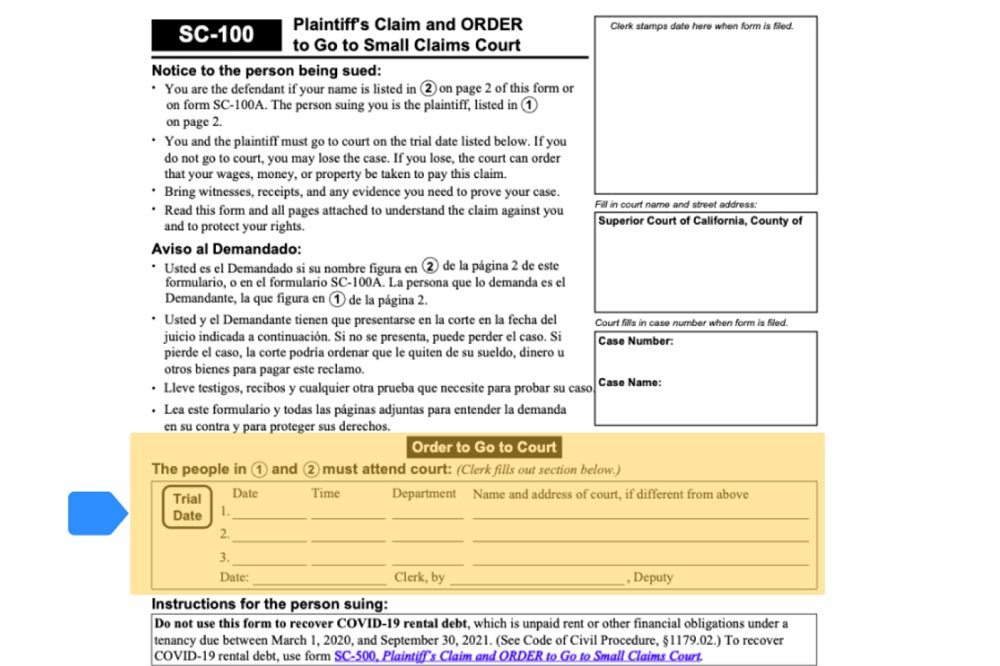
- Obtain the Necessary Forms: The primary form you will need is the “Plaintiff’s Claim and Order to Go to Small Claims Court” (Form SC-100). You can obtain this form from your local California Superior Court clerk’s office or download it from the California Courts website.
- Complete the Form: Fill out the form accurately and completely. This includes providing your name and address, the defendant’s name and address, the amount you are claiming, and a brief explanation of why the defendant owes you money.
- File with the Court: Take the completed form to the clerk of the small claims court in the proper venue. You will need to pay a filing fee, which varies depending on the amount of your claim. If you cannot afford the fee, you may apply for a fee waiver.
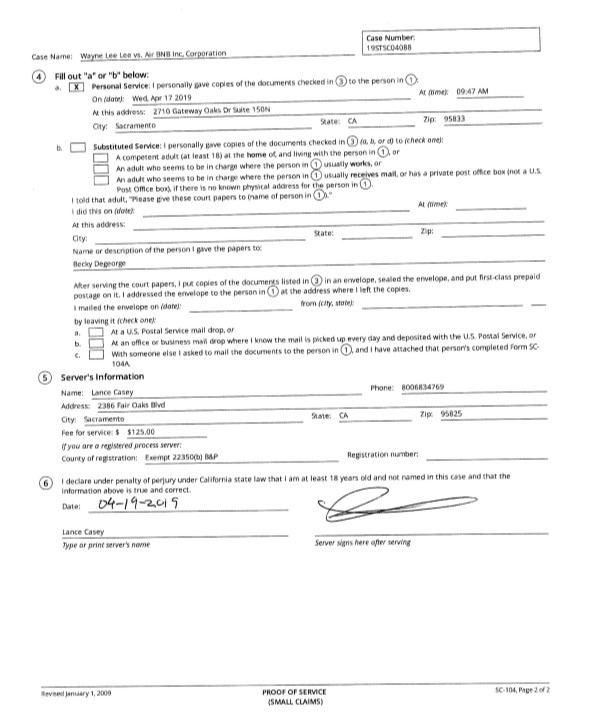
- Serve the Defendant: After filing, you must officially “serve” the defendant with a copy of the Plaintiff’s Claim and a blank Defendant’s Claim form (SC-120). Service ensures that the defendant is formally notified of the lawsuit. This can be done by:
- Personal Service: Having a sheriff, marshal, registered process server, or any adult (18 or older) who is not a party to the case personally deliver the documents to the defendant.
- Substituted Service: In some cases, if personal service is not possible, other methods may be permitted, such as leaving the documents with a competent adult at the defendant’s home or workplace and then mailing a copy.
- Service by Mail: This is generally allowed only if the defendant agrees to it in writing.
The person who serves the defendant must then complete and sign a “Proof of Service” form (SC-104) and file it with the court. Strict adherence to service rules is critical, as improper service can lead to your case being dismissed.
Representing Yourself in Small Claims Court
Small claims court is designed for self-representation, making it an accessible option for individuals without legal counsel. However, this means you are responsible for presenting your case effectively to the judge.
Preparing for Your Hearing
The hearing is your opportunity to present your evidence and arguments. Proper preparation can significantly influence the outcome.
- Review Your Case: Go over all your evidence, witness statements, and legal arguments. Ensure you understand the key facts and how they support your claim.
- Anticipate the Opposition: Consider what the defendant might argue and prepare your responses. If the defendant files a “Defendant’s Claim” (SC-120), you will need to prepare a defense against their claims as well.
- Organize Your Presentation: Plan how you will present your case to the judge. A clear, chronological explanation of events is usually most effective.
- Prepare Your Witnesses: If you have witnesses, ensure they understand their role and what they will be asked. Remind them to speak clearly and honestly.
- Know the Rules of Evidence: While small claims court is less formal than regular civil court, basic rules of evidence still apply. You will generally need to show the judge your evidence, explain its relevance, and have your witnesses testify.
- Dress Appropriately: While not a legal requirement, dressing professionally demonstrates respect for the court and can create a positive impression.
Presenting Your Case
On the day of your hearing, arrive early to locate the courtroom and familiarize yourself with the environment. When your case is called, you will typically have the opportunity to present your side first.
- Opening Statement (Brief): Briefly introduce yourself, state that you are the plaintiff, and explain what you are seeking from the court.
- Present Your Evidence: Introduce your documents, photographs, and other exhibits. Explain what each item is and why it is important to your case.
- Call Your Witnesses: If you have witnesses, call them to testify. They will be sworn in, and you can ask them questions to elicit the relevant information.
- Cross-Examination: After you present your witnesses, the defendant will have the opportunity to ask them questions (cross-examine). You will also have the opportunity to cross-examine the defendant’s witnesses.
- Closing Statement (Brief): Summarize your key points and explain why the judge should rule in your favor.
The defendant will then have their opportunity to present their case, followed by your opportunity to respond. Listen attentively to the defendant’s arguments and evidence.
What to Expect During the Hearing
The judge will listen to both sides, review the evidence, and ask questions. The atmosphere is generally more informal than in higher courts, but it is still a formal legal proceeding. Be respectful, avoid interrupting, and answer all questions truthfully and directly.
- The Judge’s Role: The judge acts as an impartial arbiter. They may ask clarifying questions to understand the facts of the case.
- Objectivity is Key: Stick to the facts and avoid emotional outbursts or personal attacks on the defendant. Focus on why the defendant is legally responsible for the damages you are claiming.
- Decision: The judge may make a decision immediately after hearing both sides, or they may take the case under submission and mail you the decision later.
Enforcing Your Judgment
Winning your case is only half the battle; if the defendant does not voluntarily pay the judgment, you will need to take steps to enforce it. This is often the most challenging part of the process.
Types of Enforcement
If the defendant does not pay within the time specified by the court, you have several options for enforcement, which can include:
- Writ of Execution: This court order directs the sheriff or marshal to seize and sell the defendant’s non-exempt property to satisfy the judgment.
- Garnishment: This involves obtaining a court order to have a portion of the defendant’s wages or bank accounts directly paid to you. California has specific rules and limits on wage garnishment.
- Debtor’s Examination: You can request a court hearing where the defendant must appear and answer questions about their assets and income, helping you identify potential sources for collection.
- Abstract of Judgment: This document, when recorded with the county recorder, can create a lien on any real property the defendant owns, preventing them from selling or refinancing the property without paying your judgment.
Challenges in Enforcement
It’s important to be aware that collecting a judgment can be difficult. If the defendant has no assets or income, or if their assets are exempt from seizure by law, you may be unable to collect the full amount. The court will not collect the money for you; you must actively pursue these enforcement actions.
Statute of Limitations for Enforcement
Judgments in California small claims court are generally valid for 10 years and can be renewed, meaning you have a considerable amount of time to attempt to collect. However, the longer you wait, the harder it may become to locate the defendant and their assets.
By understanding the process, meticulously preparing your case, and knowing your options for enforcement, individuals can effectively utilize California’s small claims court system to resolve their disputes and achieve a just outcome.
LifeOutOfTheBox is a participant in the Amazon Services LLC Associates Program, an affiliate advertising program designed to provide a means for sites to earn advertising fees by advertising and linking to Amazon.com. Amazon, the Amazon logo, AmazonSupply, and the AmazonSupply logo are trademarks of Amazon.com, Inc. or its affiliates. As an Amazon Associate we earn affiliate commissions from qualifying purchases.