
The allure of California, with its sun-drenched beaches, iconic landmarks, and vibrant cities, draws millions of visitors each year. From the bustling streets of Los Angeles to the redwood forests of the north, the Golden State offers an unparalleled travel experience. For some, however, experiencing California also involves a consideration for personal safety and the legal means to carry a concealed firearm. This guide delves into the intricate process of obtaining a California Concealed Carry Permit (CCW), offering a comprehensive overview for those seeking this specific type of legal protection while traveling within the state. It is crucial to understand that this information is provided for educational purposes and does not constitute legal advice. Anyone considering applying for a CCW should consult with legal counsel and their local law enforcement agency.

Understanding California’s CCW Laws and Requirements
California has some of the most stringent firearm laws in the United States. Obtaining a CCW permit is a privilege, not a right, and the process is designed to be thorough. The primary requirement is demonstrating “good cause” to carry a concealed firearm, a standard that has evolved through legal challenges and legislative changes. Historically, “good cause” meant a reasonable fear of great bodily harm. However, recent court decisions have shifted this interpretation, generally requiring issuing authorities to grant permits to applicants who meet objective criteria, rather than making subjective judgments about the applicant’s perceived threat level.
Eligibility Criteria
To be eligible for a California CCW permit, applicants must meet several fundamental requirements:
- Age: Applicants must be at least 21 years of age.
- Residency: You must be a resident of the county where you apply or have your principal place of employment in that county.
- Criminal Record: Applicants cannot have been convicted of a felony or certain misdemeanors, including those involving violence, domestic violence, or drug offenses. A thorough background check is a cornerstone of the application process. Specific disqualifiers can include arrests and convictions, as well as other factors that may indicate a propensity for violence or a disregard for the law.
- Mental Health: Applicants must not be addicted to the use of any intoxicating drug or alcohol, and they must not be suffering from any mental condition that makes them a danger to themselves or others. This often involves psychological evaluations.
- Firearm Proficiency: You must demonstrate proficiency with a firearm. This is typically achieved by completing a certified firearms training course.
- Good Moral Character: Applicants are generally required to demonstrate good moral character, which is assessed through various means, including references and background checks.
- No Outstanding Warrants: There should be no outstanding warrants for your arrest.
The “Good Cause” Standard
The interpretation of “good cause” has been a significant point of contention and legal evolution in California. While the state previously allowed for more subjective interpretations by issuing authorities, court rulings have moved towards a more objective standard. Generally, an applicant who can demonstrate a specific need for self-defense, beyond that of the general public, may qualify. This can include, but is not limited to:
- Specific Threats: Documented threats against your life or property.
- Vulnerable Profession: Individuals whose profession places them at a demonstrably higher risk of harm (e.g., certain business owners who regularly handle large sums of cash, individuals working in high-crime areas).
- High-Profile Individuals: Those who, due to their public profile, may be subject to specific threats.
It is imperative to consult with the specific Sheriff’s Department or Police Department where you intend to apply, as their interpretation and application of the “good cause” requirement may vary slightly, though they must adhere to state law and court precedent.
The Application Process: A Step-by-Step Guide
The process for obtaining a CCW permit in California is multi-faceted and requires meticulous attention to detail. While the exact steps may vary slightly by county, the general framework remains consistent.
1. Initial Research and Preparation
Before submitting any paperwork, it is essential to thoroughly research the requirements of the specific law enforcement agency responsible for issuing permits in your county of residence. This typically involves visiting their website or contacting their CCW unit directly.
- Identify the Issuing Authority: Determine whether the Sheriff’s Department or a local Police Department handles CCW applications in your jurisdiction.
- Review Application Forms and Requirements: Download and carefully read all application forms, along with any accompanying documentation requirements.
- Understand the “Good Cause” Narrative: Begin formulating your “good cause” statement, gathering any supporting evidence you may have.
2. Completing the Application
The application itself is a comprehensive document that requires honesty and accuracy. It will likely ask for detailed personal information, employment history, residency history, and a declaration regarding any prior arrests or convictions.
- Accuracy is Paramount: Ensure all information provided is truthful and accurate. False statements on the application can lead to denial and potential legal repercussions.
- Gather Supporting Documentation: This may include proof of residency (utility bills, lease agreements), a valid California driver’s license or ID, and any evidence supporting your “good cause” claim.
3. Firearms Training and Qualification
A mandatory component of the CCW application is completing a certified firearms safety and training course. These courses are designed to ensure applicants are competent and responsible in the safe handling and use of firearms.
- Find a Certified Instructor: Look for instructors certified by the California Department of Justice (DOJ). Many local gun ranges and training facilities offer these courses.
- Course Content: The training typically covers firearm safety, marksmanship, legal aspects of carrying a concealed firearm, and conflict de-escalation.
- Qualification Shoot: You will usually need to pass a live-fire qualification course to demonstrate proficiency with the firearm(s) you intend to carry. Some permits are issued for specific firearms.
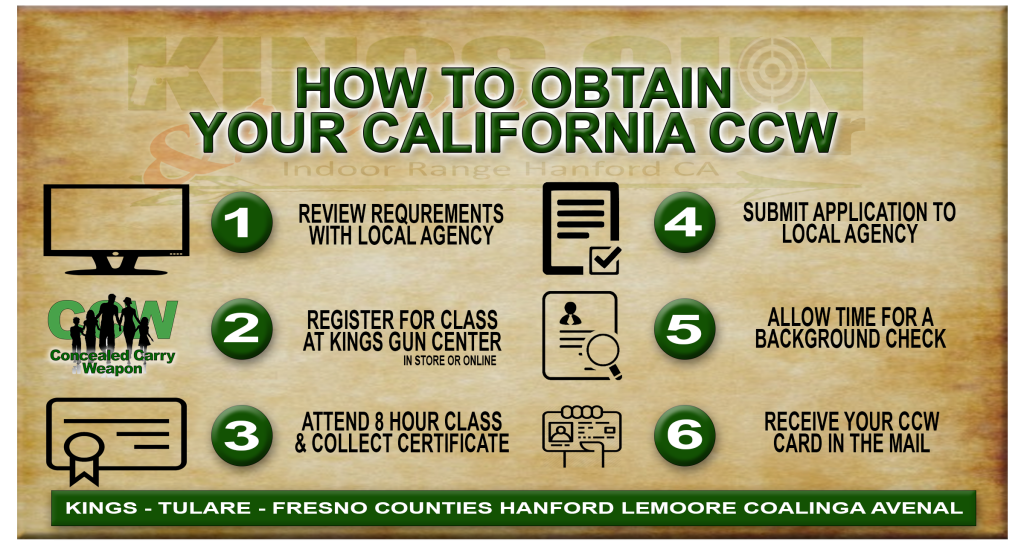
4. Background Investigation
Once your application is submitted, the issuing agency will conduct an extensive background investigation. This process can take several months and includes:
- Criminal History Check: A thorough review of your criminal record at local, state, and federal levels.
- Mental Health Records Review: Access to relevant mental health records to assess fitness.
- Reference Checks: The agency may contact the personal references you provide on your application.
- Interview: You will likely be scheduled for an interview with a detective or officer from the CCW unit. This is an opportunity for them to clarify information on your application and assess your demeanor and suitability.
5. Livescan Fingerprinting
As part of the background check, you will be required to undergo Livescan fingerprinting. This electronic process transmits your fingerprints to the California Department of Justice and the FBI for a comprehensive background check.
6. Permit Issuance or Denial
After all steps are completed and reviewed, the issuing agency will make a decision on your application.
- Approval: If approved, you will be notified to pick up your permit. There will be an issuance fee associated with this.
- Denial: If denied, you will receive a written explanation of the reasons for the denial. You typically have the right to appeal this decision.
Essential Considerations for Travelers and Applicants
Obtaining a CCW permit in California is a significant undertaking. For individuals planning to travel to the state with the intention of legally carrying a concealed firearm, several critical points must be considered.
Reciprocity and Other State Permits
California does not recognize concealed carry permits from any other state. This means that even if you hold a valid CCW permit from your home state, it is not valid for carrying a concealed firearm in California. To legally carry a concealed firearm in California, you must obtain a California CCW permit, which requires meeting all the state’s specific eligibility and application requirements.
Firearms Transportation
The rules for transporting firearms into California are complex and vary depending on whether you are transporting them unloaded, in a locked container, and separate from ammunition. It is highly advisable to research federal and state laws regarding the transportation of firearms well in advance of your trip. Ignorance of these laws can lead to severe penalties.
Restricted Locations
Even with a valid California CCW permit, there are numerous locations where carrying a firearm is prohibited by law. These include, but are not limited to:
- Schools and universities
- Government buildings (courthouses, legislative offices)
- Airports (beyond security checkpoints)
- Polling places on election days
- Private property where the owner has posted signage prohibiting firearms
- Amusement parks
It is the responsibility of the permit holder to be aware of and adhere to all restrictions.
Renewal Process
California CCW permits are typically valid for two years. A renewal process, which involves re-qualification and re-application, will be necessary to maintain the permit’s validity. The renewal process generally mirrors the initial application but may be streamlined.

Navigating the Nuances of Firearms Laws
The legal landscape surrounding firearms, particularly concealed carry, is intricate and subject to change. For travelers planning to visit California and considering the acquisition of a CCW permit, a proactive and informed approach is paramount. Understanding the specific statutes, case law, and local ordinances is not merely a procedural step but a crucial element of responsible gun ownership and adherence to the law.
The journey to obtaining a California Concealed Carry Permit is rigorous and demands a significant commitment of time and effort. It is a process that underscores the state’s commitment to public safety and its carefully calibrated approach to firearm regulation. For those who meet the stringent criteria and successfully navigate the application, the permit offers a measure of personal security while experiencing the diverse attractions and experiences that California has to offer, from the surf of Malibu to the vineyards of Napa Valley.
LifeOutOfTheBox is a participant in the Amazon Services LLC Associates Program, an affiliate advertising program designed to provide a means for sites to earn advertising fees by advertising and linking to Amazon.com. Amazon, the Amazon logo, AmazonSupply, and the AmazonSupply logo are trademarks of Amazon.com, Inc. or its affiliates. As an Amazon Associate we earn affiliate commissions from qualifying purchases.