
This article delves into the intricate landscape of firearm acquisition within the state of California in the year 2025. It is crucial to approach this subject with a comprehensive understanding of the legal framework, the various pathways available, and the responsibilities that accompany gun ownership. This guide aims to provide clarity and insight for individuals navigating this process.
Understanding California’s Firearm Regulatory Environment
California maintains some of the nation’s most stringent firearm laws, a testament to its commitment to public safety. These regulations are designed to create multiple barriers to acquisition, ensuring that firearms are only accessible to law-abiding citizens who meet specific criteria. Understanding the existing legal architecture is the foundational step in any acquisition process.
Key Legislative Pillars
The regulatory framework in California is built upon several key legislative pillars, each contributing to the overall control and oversight of firearms. These include:
-
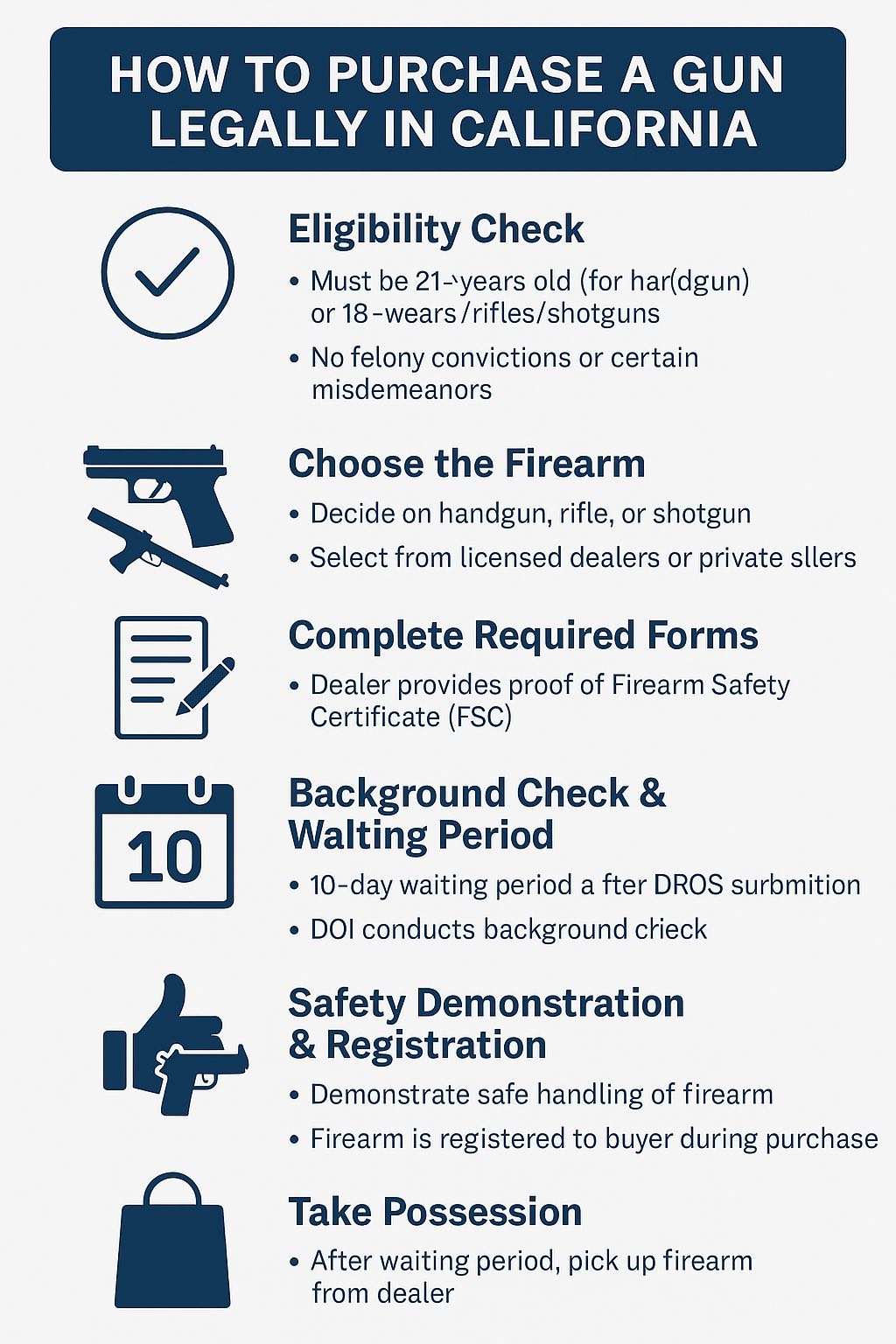
The Firearm Safety Certificate (FSC): This is a mandatory requirement for most firearm purchases in California. The FSC program aims to ensure that individuals possess a basic understanding of firearm safety, laws, and the safe handling of firearms. To obtain an FSC, an individual must pass a written test administered by a certified firearms dealer. The test covers topics such as firearm storage, safe gun handling practices, identifying firearm parts, and California firearm laws. The certificate is valid for five years.
-
The Dealer Record of Sale (DROS) Process: Every firearm transaction, whether through a licensed dealer or a private party transfer, must go through the DROS process. This involves the buyer filling out a DROS application, which is then submitted to the Department of Justice (DOJ). The DOJ conducts a background check to ensure the buyer is legally eligible to own a firearm. This check includes verifying the buyer’s identity, checking for criminal records, and assessing mental health history.
-
The Ten-Day Waiting Period: Following the submission of the DROS application and the initiation of the background check, a mandatory ten-day waiting period commences. This period is designed to provide a buffer for the background check to be completed thoroughly and to offer a cooling-off period for the purchaser. The firearm cannot be released to the buyer until this ten-day period has elapsed and the background check has cleared.
-
The Roster of Handguns Certified for Sale: California maintains a roster of handguns that are deemed safe and compliant with specific safety features and testing requirements. Generally, only handguns listed on this roster can be purchased from licensed dealers in California. There are specific exceptions, such as for law enforcement officers or through private party transfers under certain conditions.
-
Assault Weapons Ban: California has a strict ban on the possession, sale, and manufacture of certain types of firearms defined as “assault weapons.” This definition is based on specific features and characteristics. Possession of unregistered assault weapons acquired before the ban is permissible under specific registration requirements.
Eligibility Requirements
Beyond the procedural aspects, prospective firearm owners in California must meet stringent eligibility requirements. These are designed to exclude individuals who may pose a risk to themselves or others.
-
Age Restrictions: Individuals must be at least 21 years old to purchase most firearms, including handguns, in California. For long guns (rifles and shotguns), the minimum age is generally 18.
-
Residency: Purchasers must be legal residents of California and provide proof of residency, typically through a valid California driver’s license or identification card. Out-of-state residents generally cannot purchase firearms in California unless specific federal laws and state regulations are met, which often involves purchasing through a licensed dealer in their home state.
-
Prohibited Persons: Federal and state laws prohibit certain individuals from possessing firearms. This includes those convicted of felonies, certain misdemeanors, domestic violence offenses, individuals subject to domestic violence restraining orders, those with a history of certain mental health adjudications, and unlawful users of controlled substances.
Pathways to Firearm Acquisition in 2025
In 2025, the primary avenues for legally acquiring a firearm in California remain consistent with previous years, focusing on licensed dealers and, with specific limitations, private party transfers.
Purchasing Through a Licensed Firearms Dealer
This is the most common and straightforward method for acquiring a firearm in California. Licensed dealers, often referred to as Federal Firearms Licensees (FFLs), are regulated by federal and state law.
-
The Process:
- Selection: The buyer selects a firearm from the inventory of an FFL. If the firearm is a handgun, it must generally be on the California Roster of Handguns Certified for Sale.
- Identification and FSC: The buyer presents a valid, government-issued photo identification (e.g., California driver’s license) and their Firearm Safety Certificate (FSC). If the buyer does not have a current FSC, they will need to take and pass the FSC test.
- DROS Application: The dealer initiates the Dealer Record of Sale (DROS) process by completing the required application and collecting necessary information from the buyer.
- Background Check: The DROS information is submitted to the California Department of Justice for a background check.
- Ten-Day Waiting Period: The buyer must wait a minimum of ten days from the date the DROS is submitted before they can take possession of the firearm.
- Firearm Handgun Safety Device (FHSD) Requirement: For handguns, purchasers are typically required to purchase or demonstrate ownership of a DOJ-approved Firearm Handgun Safety Device (FHSD), such as a trigger lock or gun safe, at the time of DROS submission.
- Take Possession: Once the ten-day waiting period has passed and the background check has cleared, the buyer can take possession of the firearm.
-
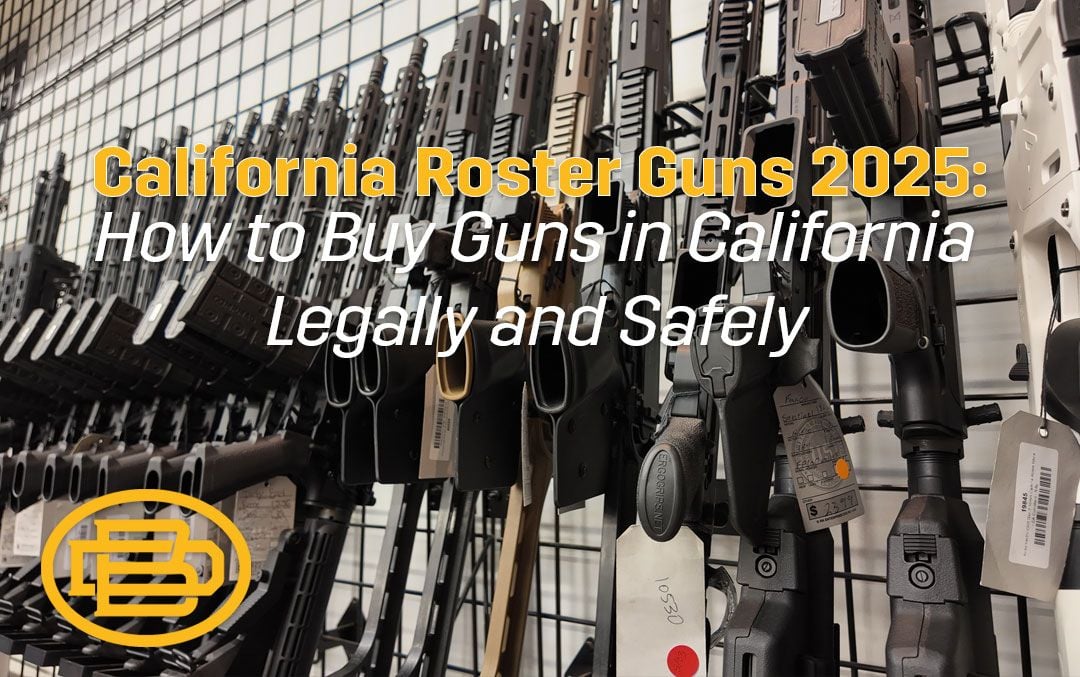
Types of Firearms Available: FFLs can offer a wide range of firearms, subject to California’s laws on assault weapons and magazine capacity limits (generally 10 rounds).
Private Party Transfers (PPTs)
Private party transfers involve the sale or transfer of a firearm directly from one individual to another, without the involvement of a licensed dealer. While seemingly simpler, these transfers are still subject to strict regulation in California.
-
The Process:
- Involvement of a Licensed Dealer: All private party firearm transfers in California must be conducted through a licensed firearms dealer. The buyer and seller must meet at an FFL’s location to complete the transaction.
- DROS and Background Check: The FFL will facilitate the DROS process, including conducting the background check on the buyer. The buyer must meet all the standard eligibility requirements, including age, residency, and passing the background check.
- Ten-Day Waiting Period: The standard ten-day waiting period applies to private party transfers as well.
- Roster Exemptions: One significant aspect of PPTs is that they are generally exempt from the requirement that handguns be on the Roster of Handguns Certified for Sale. This allows individuals to transfer handguns that may no longer be on the roster. However, the firearm must have been legally possessed in California prior to the transfer.
- Documentation: The FFL will handle all necessary paperwork, ensuring the transfer is legally documented.
-
Limitations: There are restrictions on the types of firearms that can be transferred via PPT, particularly concerning assault weapons. Individuals cannot sell or transfer a firearm that is illegal to possess in California.
Safe Storage and Responsible Ownership
Acquiring a firearm is only the first step in a journey of responsible ownership. California mandates specific safe storage practices to prevent accidental discharges and unauthorized access, particularly by children.
Legal Requirements for Storage
-
Trigger Locks/Gun Safes: As mentioned, the purchase of a firearm often necessitates the acquisition of a DOJ-approved Firearm Handgun Safety Device. Furthermore, firearms must be stored in a manner that prevents unauthorized access. This typically means locking them in a safe, gun case, or using a trigger lock.
-
Proximity to Children: Storing firearms in a location accessible to children is a serious offense. The law aims to prevent children from gaining access to firearms and potentially causing harm to themselves or others.
The Importance of Training and Education
Responsible firearm ownership extends beyond legal compliance; it encompasses a commitment to safety through continuous education and training.
-
Firearm Safety Courses: Beyond the FSC, prospective owners are strongly encouraged to enroll in certified firearm safety courses offered by qualified instructors. These courses provide in-depth training on safe handling, marksmanship, firearm maintenance, and the legal responsibilities of ownership.
-
Continuous Learning: The legal landscape surrounding firearms can evolve. Staying informed about California and federal firearm laws is a crucial aspect of responsible ownership.
Navigating Special Circumstances and Exemptions
While the general pathways are well-defined, certain individuals or situations may involve specific exemptions or alternative procedures.
Law Enforcement and Military Personnel
Active and retired law enforcement officers, as well as certain military personnel, may have exemptions from some of California’s firearm regulations, including the handgun roster and waiting periods, under specific federal and state provisions. These exemptions typically require proper identification and adherence to strict guidelines.
Gifting Firearms
Gifting a firearm to a family member or friend within California still requires a formal transfer through a licensed dealer, including the DROS process and background check for the recipient. Private transfers, even if considered gifts, must follow the established legal channels.

Out-of-State Acquisitions
Acquiring a firearm from another state and bringing it into California is subject to strict federal and state laws. Generally, a firearm purchased out-of-state by a California resident must be shipped to a licensed dealer in California and transferred through them, following all standard DROS and waiting period requirements. Any firearm not on the roster cannot be transferred to a California resident this way, with limited exceptions.
In conclusion, navigating the process of acquiring a firearm in California in 2025 requires a thorough understanding of its robust regulatory framework, adherence to eligibility requirements, and a commitment to responsible ownership. All transactions must be conducted legally and ethically, prioritizing safety and compliance with state and federal laws.
LifeOutOfTheBox is a participant in the Amazon Services LLC Associates Program, an affiliate advertising program designed to provide a means for sites to earn advertising fees by advertising and linking to Amazon.com. Amazon, the Amazon logo, AmazonSupply, and the AmazonSupply logo are trademarks of Amazon.com, Inc. or its affiliates. As an Amazon Associate we earn affiliate commissions from qualifying purchases.