
Navigating the intricacies of commercial driving in California involves more than just a standard commercial driver’s license (CDL). For those aspiring to transport passengers, a crucial step is obtaining a Passenger Endorsement. This specialized certification signifies that a driver has met the rigorous training and testing requirements to safely operate vehicles designed to carry multiple passengers, such as buses, shuttles, and vans. Whether you envision a career in public transportation, charter services, or school bus operations, understanding the process for acquiring this endorsement is paramount. This guide will walk you through the essential requirements, the application steps, and key considerations for successfully obtaining your Passenger Endorsement in the Golden State.

Understanding the Passenger Endorsement
The Passenger Endorsement, often referred to as the “P” endorsement, is a vital addition to a California CDL. It’s not a standalone license but rather an augmentation of an existing CDL that permits the holder to drive specific types of passenger-carrying commercial motor vehicles (CMVs). The primary purpose of this endorsement is to ensure that drivers possess the specialized knowledge and skills necessary to manage the unique challenges associated with transporting people. This includes understanding passenger safety protocols, emergency procedures, vehicle inspection requirements specific to passenger vehicles, and the laws governing passenger transportation.
Types of Vehicles Requiring the Endorsement
The Passenger Endorsement is typically required for drivers of CMVs designed to transport a certain number of passengers. In California, this generally includes:
- School Buses: Vehicles specifically designed and equipped for transporting students to and from school. Operating a school bus requires not only the Passenger Endorsement but often a School Bus Endorsement as well, which has its own set of stringent requirements.
- Passenger Buses: This category encompasses a wide range of vehicles, from large motorcoaches used for long-distance travel and tours to smaller transit buses operated by public transportation agencies. The specific classification may depend on the vehicle’s Gross Vehicle Weight Rating (GVWR) and passenger capacity.
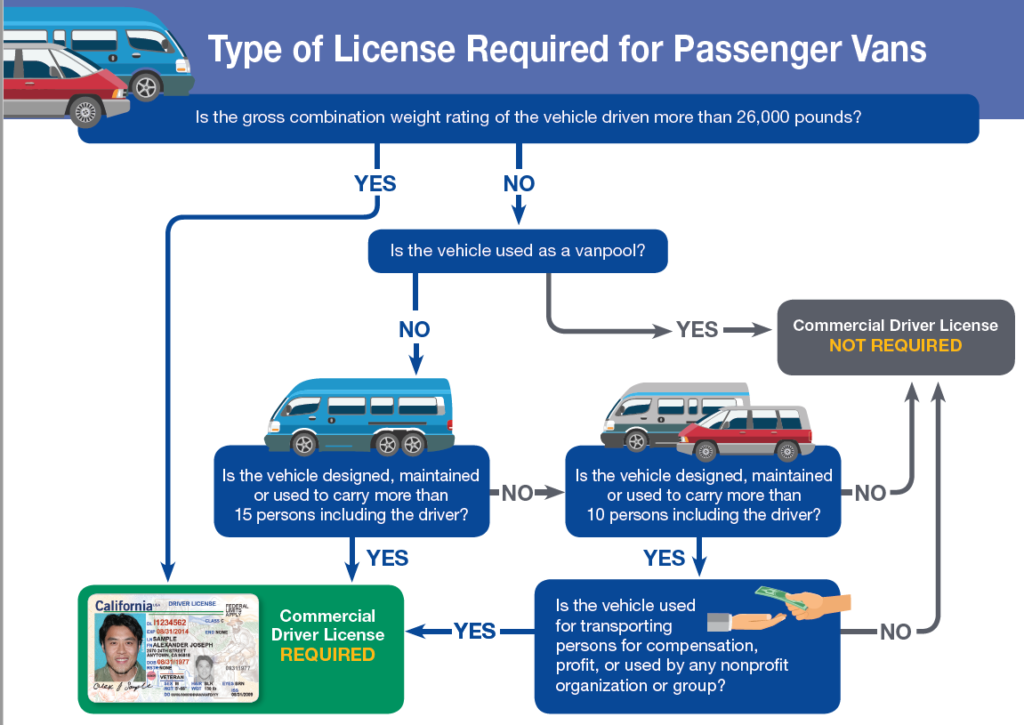
- Shuttles and Vans: Many shuttle services operating at airports, hotels, or for event transportation utilize vehicles that fall under the CMV classification and thus require a Passenger Endorsement. This can include vans designed to carry more than 15 passengers, including the driver.
The exact threshold for when a CDL and a Passenger Endorsement are required can depend on the vehicle’s seating capacity and GVWR. The Federal Motor Carrier Safety Administration (FMCSA) regulations, which are adopted by California, provide the definitive guidelines. Generally, if a vehicle is designed to transport 15 or more passengers (including the driver), a CDL is required. For vehicles that transport 10 or more passengers (including the driver), a CDL may also be needed, particularly if the vehicle’s GVWR exceeds a certain limit or if it is used for specific commercial purposes. It is crucial to consult the California Department of Motor Vehicles (DMV) or relevant transportation authorities for the most up-to-date classifications and requirements.
Benefits of Obtaining a Passenger Endorsement
Beyond meeting legal requirements, obtaining a Passenger Endorsement opens up a wider array of career opportunities within the transportation industry. Many employers in public transit, charter bus companies like Greyhound or Megabus, and even school districts specifically seek drivers with this certification. It demonstrates a commitment to passenger safety and a higher level of proficiency in operating large vehicles. This can lead to more stable employment, competitive wages, and the ability to take on more diverse driving roles.
Steps to Obtain Your Passenger Endorsement
The process of acquiring a Passenger Endorsement in California is a multi-step journey that begins with possessing a valid CDL. It involves a combination of specialized training, written examinations, and practical skills testing.
1. Possess a Valid Commercial Driver’s License (CDL)
Before you can even consider a Passenger Endorsement, you must first hold a valid California CDL. This means you have already successfully completed the general CDL knowledge and skills testing, which includes obtaining the appropriate CDL class (Class A, B, or C) and any other necessary endorsements. If you do not yet have a CDL, you will need to go through that entire process first. This typically involves:
- Obtaining a Commercial Learner’s Permit (CLP).
- Completing the required training and passing the CDL knowledge test.
- Passing the CDL skills test, which includes pre-trip inspection, basic controls, and on-road driving.
2. Study the Commercial Driver Handbook
The California Commercial Driver Handbook is your primary resource for understanding the rules of the road and the specific requirements for commercial driving. For the Passenger Endorsement, you will need to pay particular attention to the sections covering passenger transport, vehicle safety, emergency procedures, and passenger management. Thoroughly studying this handbook will prepare you for the written knowledge test. Key areas to focus on include:
- Vehicle Inspection: Understanding how to perform a pre-trip inspection specifically for passenger-carrying vehicles, identifying potential safety issues.
- Passenger Safety: Learning about securement of passengers, proper boarding and alighting procedures, and the importance of maintaining a safe environment.
- Emergency Procedures: Knowing how to respond to various emergencies, including accidents, mechanical failures, and medical issues, with passengers on board.
- Prohibited Practices: Understanding rules regarding smoking, alcohol consumption, and other prohibited activities on passenger-carrying vehicles.
3. Pass the Passenger Endorsement Knowledge Test
Once you feel adequately prepared, you will need to visit a California DMV office to take the written knowledge test for the Passenger Endorsement. This test is designed to assess your understanding of the specialized knowledge required to safely operate passenger-carrying vehicles. It will cover topics such as:
- Vehicle inspection procedures for passenger vehicles.
- Passenger loading and unloading procedures.
- Emergency equipment and procedures.
- Passenger safety rules and regulations.
- Fueling and braking procedures for passenger vehicles.
Passing this test is a prerequisite for moving on to the skills testing phase. If you do not pass, you will need to re-study and retake the test.
4. Obtain a Medical Certificate
As with obtaining a CDL in the first place, you will need to meet the medical requirements for commercial drivers. This involves passing a medical examination administered by a certified medical examiner. The examiner will assess your physical and mental health to ensure you are fit to operate a commercial vehicle safely. For passenger endorsement, the emphasis on your ability to manage a potentially vulnerable group of passengers is heightened. You will need to provide proof of a valid Medical Examiner’s Certificate to the DMV.
5. Pass the Passenger Endorsement Skills Test
This is arguably the most critical part of the process. The Passenger Endorsement skills test is a practical examination that evaluates your ability to safely operate a passenger-carrying CMV. The test typically consists of several components:
- Pre-trip Inspection: You will be required to perform a thorough pre-trip inspection of the specific type of passenger vehicle you will be driving. This inspection is more detailed than a standard pre-trip inspection for other CMVs, focusing on components crucial for passenger safety and comfort.
- Basic Vehicle Control: This may involve maneuvers such as backing the vehicle into a parking space, making turns, and general vehicle maneuvering in a controlled environment.
- On-Road Driving: You will drive the passenger vehicle on public roads under the observation of a DMV examiner. The examiner will assess your driving skills, adherence to traffic laws, safe operation of the vehicle, and your ability to manage passengers (if applicable during the test, though this is rare). They will be looking for your ability to anticipate hazards, maintain proper speed and following distances, and execute smooth maneuvers.
The specific vehicle used for the skills test should be representative of the type of passenger vehicle you intend to drive professionally. For example, if you aim to drive a school bus, the test should ideally be conducted in a school bus.
6. Add the Endorsement to Your CDL
Upon successfully passing both the written knowledge test and the skills test, and having your valid medical certificate on file, you will be eligible to have the Passenger Endorsement added to your California CDL. You will typically need to visit a DMV office, present your documentation, and pay the applicable fees. The endorsement will then be reflected on your updated CDL.
Special Considerations for Specific Passenger Vehicles
While the general process for obtaining a Passenger Endorsement is consistent, certain types of passenger vehicles may have additional requirements or specialized training that is highly recommended, even if not strictly mandated for the basic Passenger Endorsement.
School Bus Operations
Operating a school bus in California requires more than just a Passenger Endorsement. You will likely need to obtain a School Bus Endorsement (S endorsement) in addition to the Passenger Endorsement. This involves additional testing and training focused on the unique responsibilities of transporting children. This includes:
- Child Passenger Safety: Specific knowledge regarding the safe loading, unloading, and supervision of student passengers.
- Evacuation Procedures: Understanding and practicing emergency evacuation drills for school buses.
- State and Federal Laws: Familiarity with the specific laws and regulations governing school transportation.
Many school districts and private school bus operators offer specialized training programs to help drivers prepare for the School Bus Endorsement tests.
Public Transit and Charter Services
For those aspiring to drive for public transit agencies or charter bus companies, additional certifications or company-specific training may be required. While the Passenger Endorsement demonstrates baseline competency, employers often provide in-depth training on:
- Customer Service: Interacting with diverse passengers and providing excellent service.
- Route Specifics: Familiarity with specific routes, schedules, and fare collection systems (for transit drivers).
- Advanced Defensive Driving: Techniques for navigating complex urban environments and anticipating potential risks.
- First Aid and CPR: Many companies require or strongly encourage drivers to be certified in basic first aid and cardiopulmonary resuscitation.
It is advisable to research the specific requirements of potential employers in the public transit and charter bus sectors.
Maintaining Your Passenger Endorsement
Once you have obtained your Passenger Endorsement, it is crucial to understand the ongoing requirements for maintaining its validity. Like your CDL, your Passenger Endorsement is subject to renewal and compliance with regulations.
Renewal Requirements
The Passenger Endorsement is typically renewed along with your CDL. This means you will need to periodically:
- Renew Your CDL: Follow the California DMV’s renewal procedures for your commercial driver’s license.
- Maintain Medical Certification: Ensure your Medical Examiner’s Certificate remains current. Failure to maintain a valid medical certification will invalidate your CDL and all its endorsements.
- Retake Knowledge Tests: In some cases, you may be required to retake portions of the knowledge test upon renewal, particularly if regulations have changed.

Compliance and Safety Records
Maintaining a clean driving record is paramount for anyone holding a CDL and Passenger Endorsement. Violations, accidents, and traffic citations can have serious consequences, including potential suspension or revocation of your license and endorsement. Employers will conduct regular reviews of your driving record, and a history of unsafe driving practices can lead to termination of employment. Adhering to all traffic laws, safe driving practices, and company policies is essential for a long and successful career in passenger transportation.
Obtaining a Passenger Endorsement in California is a significant achievement that unlocks rewarding career paths in the transportation industry. By understanding the requirements, diligently preparing for the tests, and maintaining a commitment to safety, you can successfully navigate this process and embark on a fulfilling career as a professional passenger vehicle operator.
LifeOutOfTheBox is a participant in the Amazon Services LLC Associates Program, an affiliate advertising program designed to provide a means for sites to earn advertising fees by advertising and linking to Amazon.com. Amazon, the Amazon logo, AmazonSupply, and the AmazonSupply logo are trademarks of Amazon.com, Inc. or its affiliates. As an Amazon Associate we earn affiliate commissions from qualifying purchases.