
Navigating the legalities of marriage can feel like a significant hurdle, especially when planning a wedding. For couples looking to tie the knot in the Golden State, obtaining a marriage license in California is a crucial first step. This guide will walk you through the essential requirements, the application process, and important considerations to ensure your journey to matrimony is as smooth as possible. While the act of marriage is deeply personal and romantic, understanding the administrative aspects is key to a successful and legally recognized union.
Understanding the Basics of a California Marriage License
A marriage license is a legal document issued by a county clerk that permits a couple to marry. In California, there are two types of marriage licenses available: a public marriage license and a confidential marriage license. Each has distinct requirements and implications, so understanding the difference is paramount.
Public Marriage License
The most common type, a public marriage license, is available to any couple who meets the state’s eligibility criteria. Once issued, this license is a public record.
-
Eligibility Requirements:
- Age: Both individuals must be at least 18 years old. If either party is under 18, they will need written consent from at least one parent or guardian and permission from a California Superior Court judge.
- Marital Status: Neither party can be currently married to someone else. If a previous marriage existed, proof of dissolution (divorce decree or death certificate) may be required.
- Identification: Both applicants must present valid, government-issued photo identification. Acceptable forms typically include a driver’s license, state ID card, passport, or military ID. Ensure your ID is not expired.
- Relationship: You cannot marry a close blood relative (e.g., parent, sibling, aunt, uncle, niece, nephew).
-
Where to Apply: You can apply for a public marriage license at any County Clerk’s office throughout California. The license is valid statewide.
-
Validity Period: A public marriage license is valid for 90 days from the date of issuance. This means your ceremony must take place within this 90-day window. If you do not marry within 90 days, the license will expire, and you will need to reapply and pay the fees again.
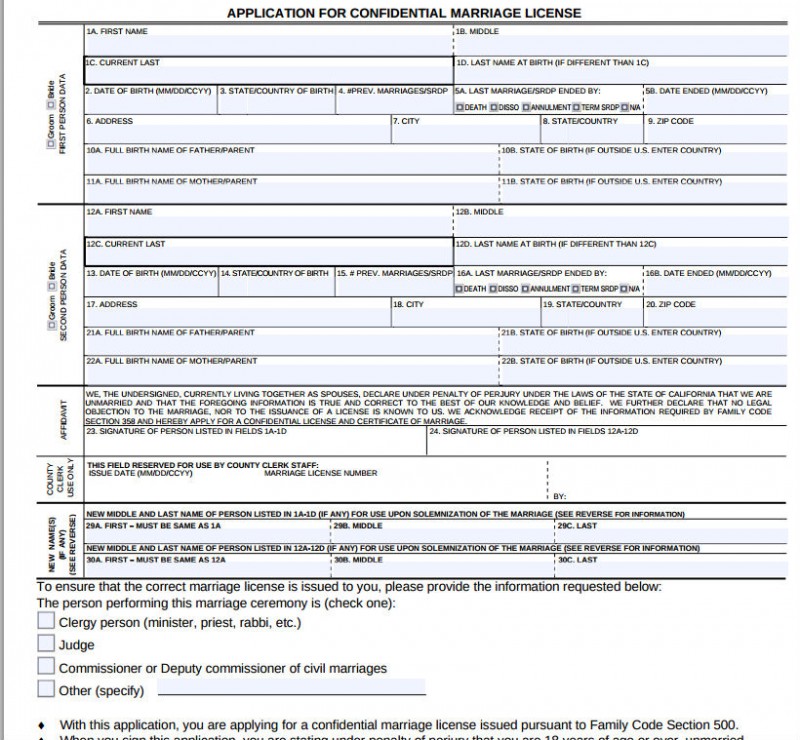
Confidential Marriage License
A confidential marriage license offers a degree of privacy, as the record of the marriage is not publicly accessible. This option is designed for couples who wish to keep their marriage details private.
-
Eligibility Requirements:
- Age: Both individuals must be at least 18 years old. Similar to the public license, minors require parental/guardian consent and judicial permission.
- Marital Status: Neither party can be currently married to someone else. Proof of dissolution of prior marriages may be necessary.
- Identification: Valid, government-issued photo identification is required for both applicants.
- Living Together: Crucially, for a confidential marriage license, the couple must be currently living together as spouses. This is a key distinction from the public license.
- Relationship: The same prohibition against marrying close blood relatives applies.
-
Where to Apply: Confidential marriage licenses are issued by the County Clerk’s office in the county where you intend to get married. It is not valid statewide in the same way a public license is.
-
Validity Period: Like the public license, a confidential marriage license is also valid for 90 days from the date of issuance, and the ceremony must occur within this timeframe.
Key Differences to Consider
The primary distinction between the two types of licenses lies in their public accessibility. A public marriage license makes your marriage record a public document, searchable by anyone. A confidential marriage license, on the other hand, is sealed and only accessible to the married couple themselves, or by court order. Another significant difference is the requirement for couples to be living together to obtain a confidential license. If you have not yet cohabited as spouses, you will need to opt for the public license.
The Application Process: Step-by-Step
Obtaining a marriage license in California involves a straightforward application process, but it’s essential to be prepared.
Step 1: Gather Necessary Documentation
Before visiting the County Clerk’s office, ensure you have all the required documents.
-
Valid Photo Identification: As mentioned, this is non-negotiable. Examples include:
- Driver’s License or State ID Card
- U.S. Passport
- Foreign Passport
- Military ID Card
- (Note: Some counties may have specific lists of acceptable IDs. It’s wise to check the website of the County Clerk’s office you plan to visit.)
-
Proof of Dissolution of Previous Marriages (If Applicable): If either applicant has been married before, you may need to provide evidence that the previous marriage has legally ended. This could be a certified copy of a divorce decree, an annulment decree, or a death certificate of the former spouse. Some counties may ask for the date the divorce was finalized, while others require the actual document.
Step 2: Complete the Marriage License Application Form
Most County Clerk offices provide an application form that can often be downloaded from their website and filled out in advance. This form will ask for personal details about both applicants, including full legal names, dates of birth, places of birth, current addresses, parents’ full names and birthplaces, and information regarding previous marriages. It’s crucial to fill this out accurately and legibly to avoid any delays. Some counties may require both parties to be present to sign the application.
Step 3: Visit the County Clerk’s Office
Both parties must typically appear in person at the County Clerk’s office to submit the application and present their identification. Some counties may offer online pre-applications to expedite the in-person visit.
-
Scheduling an Appointment: While some County Clerk offices accept walk-ins, it is highly recommended to check their website and schedule an appointment in advance. This can significantly reduce your waiting time, especially in busy urban areas like Los Angeles or San Francisco.
-
The Interview: At your appointment, a clerk will review your application and identification. They will likely ask a few questions to verify the information provided. If you are applying for a confidential marriage license, they will confirm that you are currently living together.
-
Taking an Oath: You will likely be required to take an oath, affirming that the information you have provided is true and correct, and that there are no legal impediments to your marriage.
Step 4: Pay the Marriage License Fee
There is a fee associated with obtaining a marriage license, which varies by county. Be prepared to pay this fee at the time of application. Accepted payment methods also vary by county, so check their website for details (e.g., cash, credit card, money order).
Step 5: Receive Your Marriage License
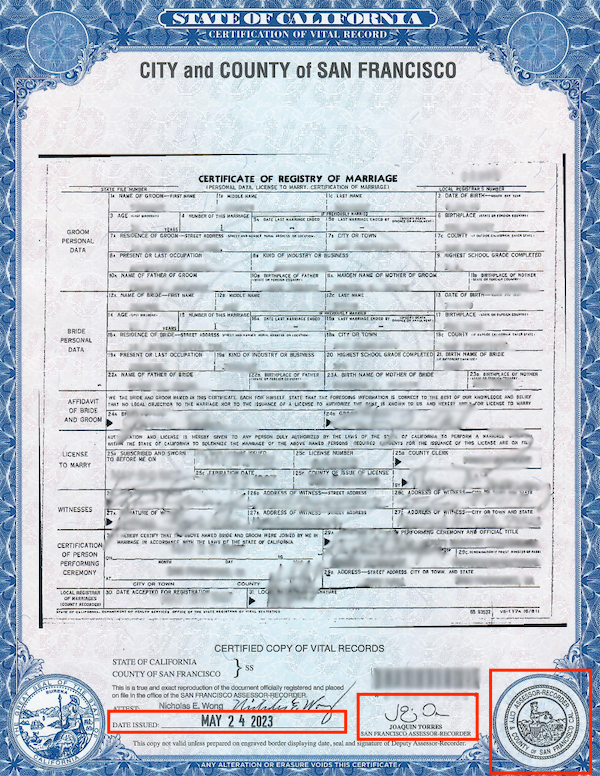
Once your application is approved and the fee is paid, the County Clerk will issue your marriage license. You will receive the physical document on the spot. Remember, this license is your authorization to get married, but it is not the marriage certificate itself. The marriage certificate is created after the ceremony has taken place and has been properly recorded.
The Marriage Ceremony and Beyond
With your marriage license in hand, you are ready to proceed with your wedding ceremony.
Who Can Solemnize Your Marriage?
In California, your marriage ceremony can be solemnized by:
- A priest, minister, rabbi, or other religious official of any denomination.
- A judge or retired judge of a federal, state, or local court.
- A commissioner or assistant commissioner of a court.
- A justice or retired justice of the peace.
- A state legislator or constitutional officer of this state.
- A current mayor.
- A county supervisor.
- A county clerk or deputy commissioner of civil marriages.
- Certain other authorized officials.
For a confidential marriage license, the ceremony must be solemnized by an authorized person. For a public marriage license, any of the above authorized individuals can perform the ceremony.
The Marriage Certificate
After your ceremony, the officiant, along with two witnesses (aged 18 or older for a public license), will sign the marriage license. The officiant is responsible for returning the signed license to the County Clerk’s office within 10 days of the ceremony for recording. Once recorded, this becomes your official marriage certificate, which you will need for various legal purposes, such as changing your name, updating insurance policies, or filing joint tax returns. You can request certified copies of your marriage certificate from the County Recorder’s office.
Important Considerations and Tips
Planning a wedding involves numerous details, and your marriage license is a critical one. Here are some tips to ensure a seamless process.
Timing is Everything
- Apply Well in Advance: While a marriage license is valid for 90 days, it’s wise not to wait until the last minute. Unexpected delays can occur, and you don’t want to be stressed about this legal requirement on the eve of your wedding. Aim to apply at least a few weeks before your ceremony.
- Check County-Specific Requirements: Although California has statewide laws, individual counties may have specific procedures, forms, or appointment systems. Always visit the official website of the County Clerk in the county where you plan to apply for the most accurate and up-to-date information.
- Weekends and Holidays: Be mindful of weekends and public holidays when planning your visit to the County Clerk’s office, as they are often closed. Weekday appointments are generally more readily available.
Name Changes
If you plan to change your name after marriage, the marriage license application is typically where you will indicate your new name. However, remember that the marriage license itself is not sufficient for legal name changes. You will need your official marriage certificate to present to the Social Security Administration, the Department of Motor Vehicles, and other institutions.
Virtual Options and Remote Applications
The landscape of obtaining legal documents is evolving. While appearing in person is still the standard for marriage licenses in most of California, some counties may offer limited virtual services or allow for pre-application online. Research the specific county’s offerings to see if any aspects of the process can be handled remotely. However, the final signing and issuance often require an in-person visit.

Special Circumstances
- Same-Sex Marriage: California was one of the first states to legalize same-sex marriage, and the process for obtaining a marriage license is the same regardless of the gender of the couple.
- Marriage by Proxy: In rare circumstances, if one party cannot appear in person due to military service, incarceration, or serious illness, a marriage by proxy might be possible for a public marriage license. This requires specific court approval and documentation, so consult with the County Clerk’s office for detailed guidance.
Obtaining a marriage license in California is a fundamental step in formalizing your union. By understanding the requirements for public versus confidential licenses, preparing your documentation, and following the application process diligently, you can ensure this legal aspect of your wedding is managed with ease, allowing you to focus on the joyous celebration of your commitment.
LifeOutOfTheBox is a participant in the Amazon Services LLC Associates Program, an affiliate advertising program designed to provide a means for sites to earn advertising fees by advertising and linking to Amazon.com. Amazon, the Amazon logo, AmazonSupply, and the AmazonSupply logo are trademarks of Amazon.com, Inc. or its affiliates. As an Amazon Associate we earn affiliate commissions from qualifying purchases.