
Securing a vital document like a birth certificate in California is often a necessity for a multitude of purposes, from obtaining a driver’s license to applying for a passport or even enrolling in educational institutions. While the process might seem straightforward, navigating the official channels can sometimes present challenges. This comprehensive guide aims to demystify the procedure for obtaining a certified copy of a birth certificate in California, ensuring a smooth and efficient experience.
Understanding Eligibility and Requirements
Before embarking on the application process, it’s crucial to understand who is eligible to request a certified copy of a California birth certificate and what documentation will be required. California law strictly governs the release of vital records to protect privacy.

Who Can Request a Certified Copy?
In California, a certified copy of a birth certificate can typically be requested by:
- The person named on the birth certificate: If you are an adult, you can request your own.
- A parent or legal guardian: This includes the mother, father, or legally appointed guardian.
- A child, grandchild, sibling, spouse, or grandparent: These individuals may be eligible if they can prove their relationship to the registrant.
- An attorney representing the registrant or their estate: This requires proper legal documentation.
- A party entitled to receive the record as a result of a court order: This is typically for legal proceedings.
- A law enforcement official or agency: When acting within the scope of their official duties.
It is important to note that “informational” copies may be available to a broader range of individuals, but these are not legally sufficient for identification purposes. This guide focuses on obtaining a certified copy.
Required Documentation
Regardless of your relationship to the registrant, you will need to provide proof of your identity and, in some cases, your relationship to the person whose birth certificate you are requesting. Common forms of identification include:
- Valid Government-Issued Photo ID: This could be a driver’s license, state ID card, passport, or military ID.
- Proof of Relationship: If you are not the registrant, you may need to provide documents such as a marriage certificate, a court order establishing guardianship, or a birth certificate showing a common parent.
The specific documentation requirements can vary slightly depending on the agency through which you are applying. It is always advisable to check the most up-to-date requirements on the official website of the California Department of Public Health (CDPH) or the relevant county recorder’s office.
Application Methods: Choosing Your Path
California offers several convenient ways to request a birth certificate. Each method has its own advantages and processing times.
1. Online Request (Third-Party Services)
Several reputable third-party services partner with government agencies to facilitate online requests for vital records. These services can often expedite the process and provide a user-friendly interface.
- Convenience: These platforms allow you to complete the entire application from the comfort of your home, 24/7.
- Streamlined Process: They typically guide you through each step, ensuring all necessary information is provided.
- Expedited Options: Many offer expedited processing and shipping for an additional fee.
- Verification: Reputable services will have secure payment gateways and clear privacy policies.
- Fees: Be aware that these services usually charge an additional convenience fee on top of the government’s required fees.
When choosing an online service, always opt for one with a strong reputation and clear contact information. Look for services that explicitly state they are authorized to process requests on behalf of California vital records offices.
2. Mail-In Request
For those who prefer a traditional approach or are not comfortable with online submissions, a mail-in request is a viable option.
- Downloadable Forms: You can download the application form directly from the CDPH website or the relevant county recorder’s office.
- Notarization: Many mail-in applications require your signature to be notarized. This adds a layer of security and verification. You will need to visit a notary public with your application and valid photo ID.
- Payment: Payment is typically made via check or money order.
- Processing Time: Mail-in requests generally have longer processing times compared to online or in-person applications due to mail delivery and manual processing.
Ensure you fill out the form completely and accurately, and include all required supporting documents and payment. Sending your request via certified mail with a return receipt is recommended for tracking purposes.
3. In-Person Request
If you reside in California and can visit the relevant office, an in-person request can be the quickest method for obtaining your birth certificate.

- Direct Submission: You can submit your application and supporting documents directly to the county recorder’s office or the CDPH office.
- Immediate Assistance: You can speak with a clerk who can answer any questions and verify your documentation on the spot.
- Same-Day Service: In many cases, you can receive your birth certificate on the same day, especially if you are requesting your own or have all your paperwork in order.
- Location: You will typically apply at the county recorder’s office where the birth occurred. If you are unsure of the specific office, the CDPH website can provide a directory.
Be sure to check the operating hours and any specific appointment requirements for the office you plan to visit. Bringing all necessary identification and proof of relationship is crucial.
Navigating Specific Scenarios
While the general process is outlined above, certain situations might require special attention.
Births That Occurred Long Ago
If you are requesting a birth certificate for someone born many decades ago, the records may be archived.
- County Archives: Older records are often held by the county recorder’s office where the birth took place. They might have a different retrieval process or require you to fill out a specific form for historical records.
- California State Archives: In some cases, very old records might be transferred to the state archives. The CDPH website or the county recorder’s office can guide you on where to search.
- Information vs. Certified Copies: For very old records, you might initially find informational copies easier to access, but a certified copy for legal purposes might still involve a more involved process.
Births Outside of California
It’s important to clarify that this guide specifically addresses obtaining birth certificates for births that occurred within California. If the birth occurred in another state or country, you will need to contact the vital records office of that specific jurisdiction. For example, if you were born in Nevada, you would need to follow Nevada’s procedures.
What If My Birth Certificate Has Errors?
If you discover an error on your birth certificate, such as a misspelled name or incorrect date, you will need to go through a formal amendment process.
- Contact the Issuing Agency: Reach out to the county recorder’s office or the CDPH that issued the original certificate.
- Amendment Forms: They will provide specific forms for correcting vital records.
- Supporting Documentation: You will likely need to provide supporting documents (e.g., school records, baptismal certificates, affidavits) to prove the correct information.
- Fees and Processing Time: There may be fees associated with amendments, and the process can take time to review and process.
Fees and Processing Times
Understanding the costs and how long it will take to receive your birth certificate is vital for planning.
Cost of a Birth Certificate
The fees for obtaining a certified copy of a birth certificate in California are set by state law and can vary slightly by county.
- Base Fee: As of recent updates, the fee for a certified copy of a California birth certificate is typically around $29.
- Additional Copies: If you need multiple copies, each additional copy ordered at the same time may have a slightly reduced fee.
- Third-Party Service Fees: Online third-party services will add their own convenience fees, which can range from $10 to $50 or more, depending on the service and any expedited options chosen.
- Notary Fees: If you are mailing in your application, you will incur the cost of a notary public, which is usually between $10 and $20.
Always check the official websites for the most current fee schedules.
Typical Processing Times
Processing times can vary significantly based on the method of request and the volume of applications the agency is handling.
- Online (Third-Party): Expedited online requests can sometimes be processed and shipped within 2-5 business days. Standard processing can take 7-14 business days.
- Mail-In: This is generally the slowest method, with processing times ranging from 2-6 weeks, not including mail delivery time.
- In-Person: This is often the fastest, with many offices able to issue certified copies on the same day you apply, provided you have all the necessary documentation.
Important Note: Processing times are estimates and can be affected by factors such as holidays, staff availability, and the complexity of the request. Always factor in a buffer time, especially if you have a critical deadline.
Conclusion: Your Path to Obtaining Your Birth Certificate
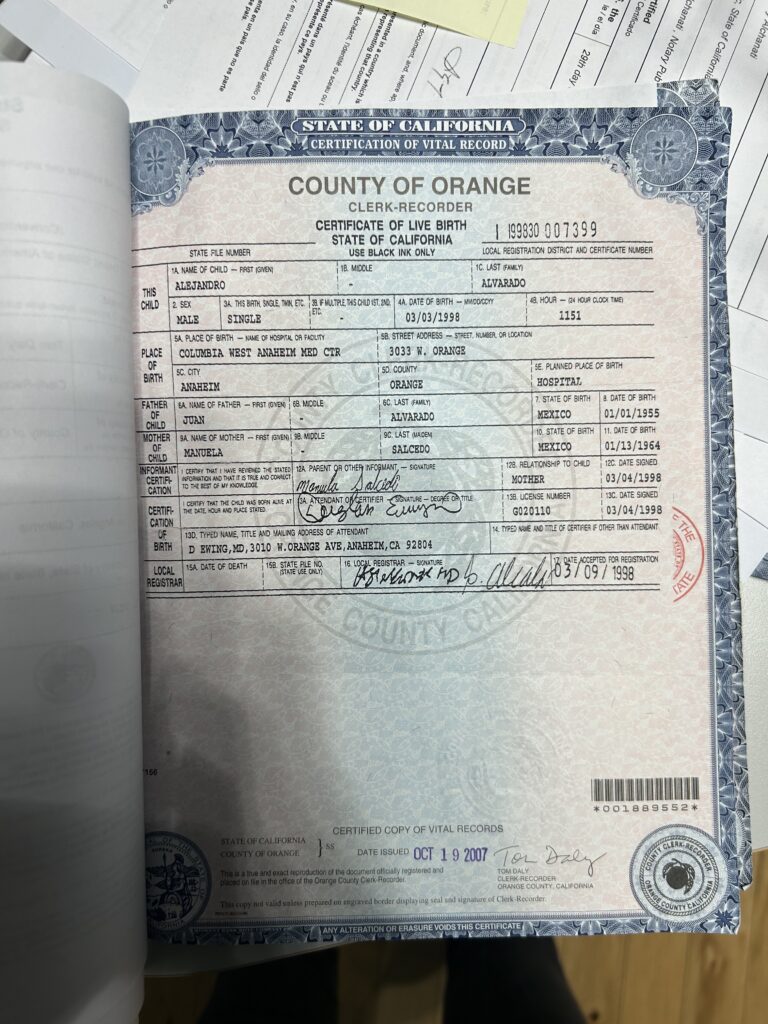
Obtaining your birth certificate in California is a manageable process when you understand the requirements and available options. Whether you choose the convenience of an online service, the traditional route of mail-in application, or the immediacy of an in-person visit, preparedness is key. Always ensure you have the correct identification and proof of relationship, and always consult the official websites of the California Department of Public Health or the specific county recorder’s office for the most accurate and up-to-date information. With this knowledge, you can confidently navigate the process and secure this essential document.
LifeOutOfTheBox is a participant in the Amazon Services LLC Associates Program, an affiliate advertising program designed to provide a means for sites to earn advertising fees by advertising and linking to Amazon.com. Amazon, the Amazon logo, AmazonSupply, and the AmazonSupply logo are trademarks of Amazon.com, Inc. or its affiliates. As an Amazon Associate we earn affiliate commissions from qualifying purchases.