
The Statement of Information (SOI) is a crucial document for businesses operating in California, serving as a vital link between the business and the California Secretary of State. It provides essential details about the company’s officers, directors, registered agent, and principal business address. Regularly updating this information ensures legal compliance and facilitates communication with state authorities. Failure to file a timely SOI can result in penalties, including administrative dissolution of the business. This guide will walk you through the process of renewing your California Statement of Information, ensuring your business remains in good standing.
Understanding the Statement of Information (SOI)
Before delving into the renewal process, it’s important to understand what the SOI entails and why it’s indispensable for your business.
What is the California Statement of Information?
The SOI is a biennial report required by the California Secretary of State for corporations, limited liability companies (LLCs), limited partnerships, and other business entities registered in the state. It is designed to maintain up-to-date records of key personnel and addresses associated with the business.
For corporations, the SOI typically includes:
- The corporation’s name and the Secretary of State file number.
- The names and addresses of the corporation’s directors.
- The names and addresses of the corporation’s principal officers (e.g., President, Vice President, Secretary, Treasurer).
- The name and address of the corporation’s chief executive officer.
- The name and address of the corporation’s registered agent for service of process.
- The principal business office address.
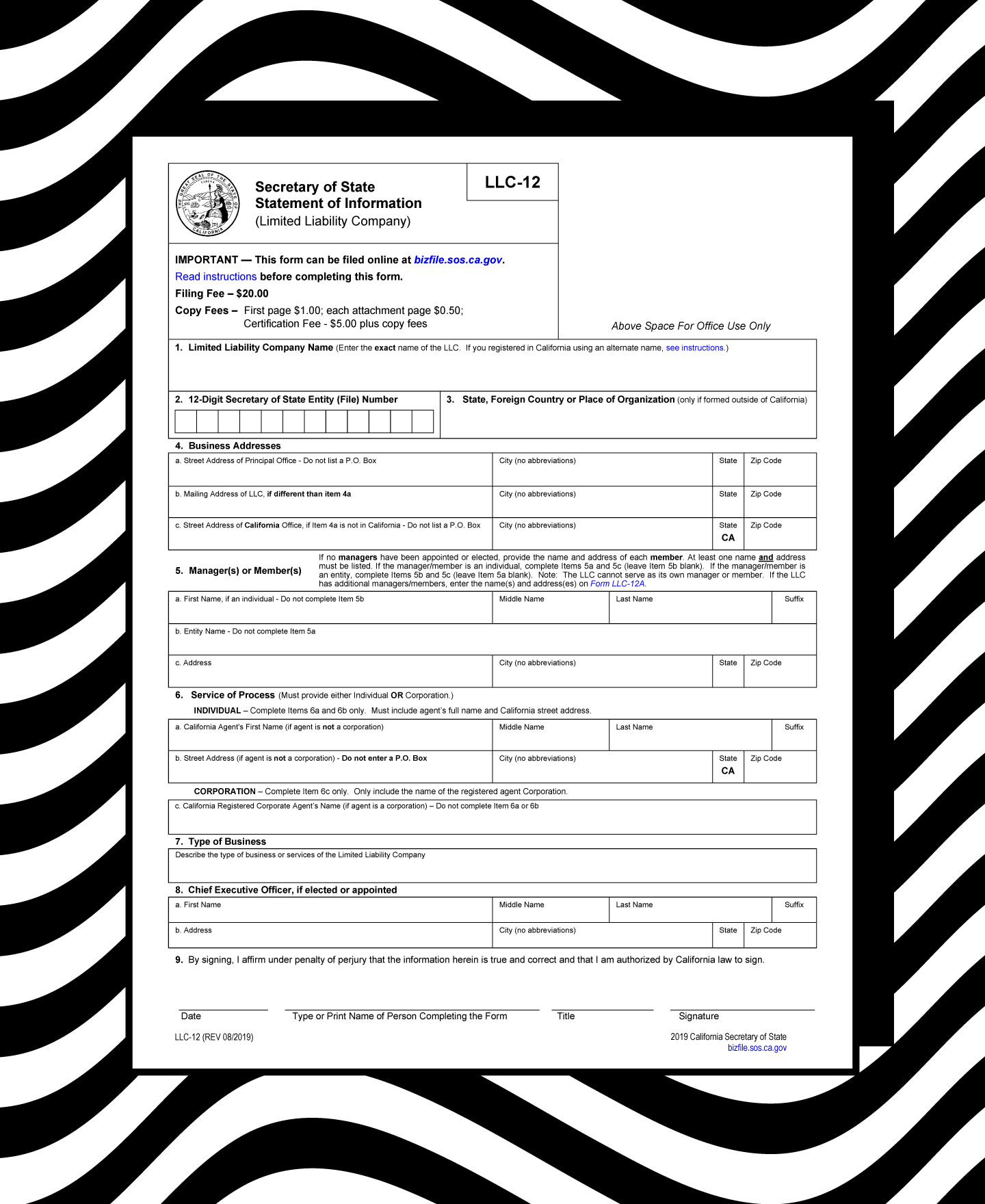
For limited liability companies (LLCs), the SOI usually requires:
- The LLC’s name and the Secretary of State file number.
- The names and addresses of the LLC’s managers (if managed by managers) or members (if member-managed).
- The name and address of the LLC’s agent for service of process.
- The principal business office address.
Why is Timely Filing Important?
Filing the SOI accurately and on time is not merely a bureaucratic formality; it has significant legal and operational implications:
- Legal Compliance: It’s a mandatory requirement under California law. Non-compliance can lead to penalties.
- Maintaining Good Standing: A business in good standing can conduct normal operations, enter contracts, and access legal protections without impediment.
- Avoiding Penalties: The California Secretary of State imposes a $250 penalty for late filings of SOIs. For corporations, this penalty is in addition to any late franchise tax penalties from the Franchise Tax Board.
- Facilitating Communication: It ensures that official notices, legal documents, and correspondence from state agencies reach the correct individuals and addresses.
- Credibility: A business that diligently files its SOI appears more reputable and organized to potential partners, investors, and customers.
The Renewal Process: Step-by-Step
Renewing your California Statement of Information is a straightforward process, whether you choose to file online or by mail. The key is to be prepared with accurate information.
Determining Your Filing Due Date
The SOI is generally due every two years for LLCs and annually for corporations, though the specific timing can vary based on when your business was originally registered.
- LLCs: The SOI is due within 90 days after filing the initial Articles of Organization and every two years thereafter. The due date will be noted on your initial filing confirmation.
- Corporations: The SOI is due within 90 days after filing the initial Articles of Incorporation and annually thereafter.
It is critical to refer to your business’s registration documents or check with the California Secretary of State online portal to confirm your specific filing deadlines. Many businesses set internal reminders to avoid missing these crucial dates.
Gathering Necessary Information
Before you begin the filing process, ensure you have the following information readily available:
- Business Entity Name: The exact legal name of your business.
- Secretary of State File Number: This unique number is assigned by the California Secretary of State upon registration.
- Principal Business Address: The main physical location of your business operations. This cannot be a P.O. Box for the principal business address.
- Mailing Address (if different): The address where you wish to receive official mail.
- Registered Agent Information:
- Name of the Registered Agent: This is the individual or entity designated to receive legal documents on behalf of the business.
- California Street Address of the Registered Agent: This must be a physical street address in California, not a P.O. Box.
- Agent’s Acceptance: If the agent is an individual, they generally need to have a physical address in California. If the agent is a corporation, it must be qualified to do business in California and have an office in the state.
- Officer/Manager/Member Information:
- Names and addresses of all directors and principal officers (for corporations).
- Names and addresses of all managers or members (for LLCs).
- Title of each officer/manager/member.
Important Note on Registered Agents: If your registered agent has moved or resigned, you must update this information in your SOI filing. If you are using a commercial registered agent service, ensure you have their current details.

Filing Options: Online vs. Mail
The California Secretary of State offers two primary methods for filing your Statement of Information:
Online Filing (Recommended)
This is generally the fastest and most efficient method.
- Visit the Secretary of State Website: Navigate to the official website of the California Secretary of State.
- Access the Business Programs Section: Look for the “Business Programs” or “Online Filings” section.
- Locate the Statement of Information Filing: Find the specific link for filing or renewing your Statement of Information. This might be under “File a Statement of Information” or “Business Filings.”
- Search for Your Business: You will likely need to enter your business name or file number to retrieve your entity’s record.
- Update Information: The system will typically pre-populate your existing SOI information. Carefully review each section and make any necessary corrections or additions.
- Verify Addresses: Ensure all street addresses are current and accurate.
- Update Personnel: Add or remove officers, directors, managers, or members as needed, along with their current contact information.
- Confirm Registered Agent: Double-check the registered agent’s details.
- Pay the Filing Fee: There is a statutory filing fee associated with the Statement of Information. The current fee can be found on the California Secretary of State website. Payment is typically made via credit card or electronic check.
- Submit and Save Confirmation: Once you have reviewed and confirmed all information, submit your filing. You will receive a confirmation of your submission, often instantly. It is highly recommended to save or print this confirmation for your records.
Advantages of Online Filing:
- Speed: Filings are processed much faster, often immediately.
- Accuracy: The system can help flag common errors.
- Convenience: Accessible 24/7 from anywhere with internet access.
- Record Keeping: Digital confirmation provides an immediate record.
Mail-In Filing
While less common and slower, you can also file by mail.
- Download the Correct Form: Visit the California Secretary of State website and download the appropriate Statement of Information form for your entity type (e.g., Form LLC-12 for LLCs, Form SI-550 for corporations).
- Complete the Form: Print the form clearly and legibly. Fill in all required fields accurately, using black or blue ink. Ensure you have all the necessary information as outlined previously.
- Prepare Payment: Create a check or money order payable to the California Secretary of State for the exact filing fee. Do not send cash.
- Mail the Form and Payment: Send the completed form and your payment to the address specified on the form for Statement of Information filings. It’s advisable to send it via certified mail with a return receipt requested to have proof of mailing and delivery.
Disadvantages of Mail-In Filing:
- Processing Time: Mail can take weeks to be processed, increasing the risk of missing deadlines.
- Potential for Errors: Manual filling increases the chance of mistakes or illegible entries.
- Less Immediate Confirmation: Proof of filing is delayed.
Post-Filing Procedures and Best Practices
Once your Statement of Information has been successfully filed, there are a few important steps and best practices to consider.
Verification and Record Keeping
After filing, it’s good practice to verify that your filing has been processed and accepted by the California Secretary of State. You can usually do this by searching for your business entity on the Secretary of State’s website a few days after filing. Keep a digital or physical copy of your filed SOI and the confirmation receipt in your business records. This documentation is essential for audits, legal matters, or if you need to reference the information later.
Updating Information Between Filings
The Statement of Information is a snapshot of your business at a particular time. However, business operations are dynamic. If there are significant changes to your business information between your scheduled SOI filings, you are legally obligated to file an updated Statement of Information to reflect these changes promptly. This includes:
- Change of Registered Agent: If your registered agent resigns or changes their address, you must file an updated SOI.
- Change of Principal Business Address: If your business moves to a new principal location in California, an updated SOI is required.
- Changes in Officers, Directors, or Managers: While less common to change frequently, significant changes in key personnel should be reflected.
Filing an amended SOI for these changes is separate from the biennial or annual renewal and may incur an additional filing fee.

Consulting Professionals
While the SOI filing process is designed to be manageable, complex business structures or significant changes might warrant professional assistance.
- Attorneys: A business attorney can advise on compliance requirements, ensure accurate information is provided, and help navigate any legal nuances related to your business structure.
- Accountants/CPAs: Especially if your business is part of a larger financial structure or if you have questions regarding tax implications, accountants can offer valuable insights.
- Registered Agent Services: If you are unsure about selecting or managing a registered agent, specialized services can handle this role for you, including promptly notifying you of any legal documents served.
By understanding the requirements, utilizing the convenient online filing system, and staying vigilant about updating your business information, you can ensure your California business remains compliant and operates smoothly. The Statement of Information, though a simple form, is a cornerstone of corporate and LLC governance in the Golden State.
LifeOutOfTheBox is a participant in the Amazon Services LLC Associates Program, an affiliate advertising program designed to provide a means for sites to earn advertising fees by advertising and linking to Amazon.com. Amazon, the Amazon logo, AmazonSupply, and the AmazonSupply logo are trademarks of Amazon.com, Inc. or its affiliates. As an Amazon Associate we earn affiliate commissions from qualifying purchases.