
While the title itself poses a geographical query, the immediate answer is a definitive no. California, a state renowned for its diverse landscapes, vibrant cities, and influential industries, is geographically situated on the western edge of the United States, bordering the vast expanse of the Pacific Ocean. The Atlantic Coast Conference, commonly abbreviated as the ACC, is a collegiate athletic conference primarily comprised of universities located along the eastern seaboard of the United States. This stark geographical separation means that California is not, and has never been, a member of the ACC.

However, the question, when considered within the broader context of collegiate athletics and university affiliations, opens up avenues for exploring the complex landscape of athletic conferences and their geographical and strategic considerations. The world of intercollegiate sports is a fascinating ecosystem, driven by a confluence of athletic competition, academic prestige, regional identity, and, increasingly, lucrative media deals. Understanding this dynamic can shed light on why such a question might arise, even if the geographical premise is incorrect.
The Geographical Divide: Pacific vs. Atlantic
The fundamental reason for California’s absence from the Atlantic Coast Conference lies in its geographical location. The ACC is rooted in the eastern United States, with its member institutions spread across states like North Carolina, Virginia, Florida, and Massachusetts. These universities share a commonality in their proximity to the Atlantic Ocean and a historical trajectory of athletic competition within a defined regional framework.
Conversely, California is the quintessential example of a West Coast state. Its prominent universities, such as the University of California, Berkeley, the University of California, Los Angeles (UCLA), and the University of Southern California (USC), have historically been affiliated with West Coast-centric athletic conferences. The most notable of these has been the Pac-12 Conference, a league that, until its recent dissolution, encompassed universities primarily situated in the western United States.
The logistics of travel alone present a significant hurdle for a West Coast university to compete regularly in an East Coast conference like the ACC. The sheer distance between, for example, San Francisco and Boston, or San Diego and Miami, would necessitate extensive travel for athletes, coaches, and support staff. This would not only incur substantial costs but also impact academic schedules, student-athlete well-being, and the overall competitive balance of the league.
The Evolving Landscape of Collegiate Athletics
The world of collegiate athletics is far from static. Conferences have undergone significant expansion and realignment over the decades, driven by a complex interplay of factors. While geography has traditionally been a primary determinant of conference membership, the pursuit of enhanced media revenue, increased national exposure, and broader recruiting bases has led to some surprising shifts.
Historical Conference Alignments
For much of their history, collegiate athletic conferences were largely regional. Universities within a defined geographic area would form leagues to facilitate regular competition, fostering local rivalries and minimizing travel burdens. This was the case for California’s major universities, which found their natural athletic homes within the Pacific Coast Conference and later the Pac-10 and Pac-12 conferences. These leagues reflected the westward expansion of collegiate sports and the unique athletic culture of the West Coast.
The Era of Realignment
In recent years, the landscape of collegiate sports has been significantly reshaped by a phenomenon known as conference realignment. Driven by the massive financial implications of television contracts, conferences have sought to expand their reach and increase their value to broadcasters. This has led to universities moving between conferences, often across vast distances, to join leagues with more lucrative media deals or to secure a more prominent national profile.
The Pac-12 Conference, once a storied league, faced significant instability leading to its eventual dissolution. Many of its flagship members, including USC and UCLA, announced moves to the Big Ten Conference, a league traditionally associated with the Midwest. Similarly, other Pac-12 institutions found new homes in conferences like the Big 12 Conference and the Atlantic Coast Conference.
Hypothetical Scenarios and Strategic Moves
While a direct move of California’s flagship universities to the ACC is geographically improbable and strategically unlikely, the broader trend of realignment might prompt speculation about potential, albeit far-fetched, scenarios. For instance, if the ACC were to undergo a massive expansion that prioritized national media markets and brand recognition over strict geographical proximity, it is theoretically possible that a West Coast institution could be considered. However, the practicalities of such a move remain formidable.
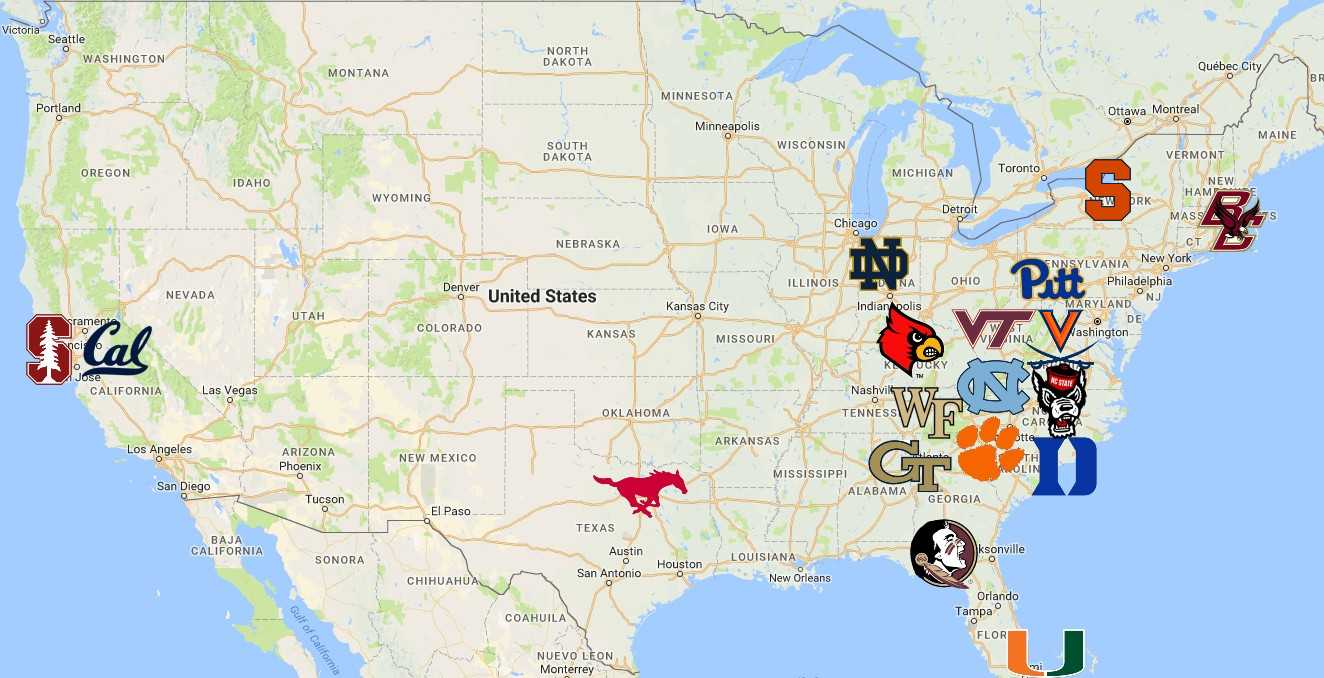
The current trends suggest a move towards super-conferences that aim to consolidate the most valuable media markets. The Big Ten has already shown a willingness to cross the country with its additions. The ACC has also expanded, notably with the addition of SMU, California, and Stanford for the 2024-2025 academic year. This expansion, however, makes California and Stanford members of the ACC for athletic purposes. The inclusion of these institutions represents a significant departure from the conference’s traditional geographical footprint, signaling a new era defined by national reach and media influence rather than solely regional ties.
The “California” Universities in the ACC
The discussion around California and the Atlantic Coast Conference takes on a different dimension when we consider the specific universities that bear the state’s name or are geographically located within it. As of the 2024-2025 academic year, the Atlantic Coast Conference has indeed welcomed new members from California, altering the traditional geographical boundaries of collegiate sports.
University of California, Berkeley (Cal)
The University of California, Berkeley, often simply referred to as “Cal”, is now a member of the ACC. This move marks a significant shift for the esteemed institution, which for decades was a cornerstone of the Pac-12 Conference. The decision to join the ACC reflects the evolving dynamics of collegiate athletics, where media rights and national exposure have become paramount considerations. While the geographical distance presents logistical challenges, the allure of enhanced revenue streams and a broader national platform for its athletic programs likely outweighed these concerns.
Stanford University
Joining Cal in the ACC is Stanford University, another prestigious institution from California. Stanford, with its strong academic reputation and competitive athletic programs, also leaves the Pac-12 for the East Coast conference. This dual addition of major West Coast universities signifies a strategic expansion by the ACC, aiming to capture new fan bases and television markets. The presence of these California-based schools in an otherwise East Coast-centric conference underscores the transformative power of realignment in modern college sports.

The Implications for the ACC and its Members
The inclusion of Cal and Stanford undoubtedly reshapes the Atlantic Coast Conference. It necessitates adjustments in scheduling, travel protocols, and potentially even the conference’s identity. For the student-athletes, this means longer road trips and a more demanding travel schedule. For the conference itself, it represents an opportunity to expand its reach and diversify its membership, but also presents the challenge of integrating institutions from a vastly different geographical and cultural region. The long-term success of this expansion will depend on how well these new members integrate and how the conference adapts to its new, broader footprint.
In conclusion, while the initial question “Is California In The Atlantic Coast Conference?” might seem straightforward from a purely geographical perspective, the answer has become more nuanced with recent conference realignments. The state of California itself is not a monolithic entity in collegiate athletics; rather, its prominent universities, the University of California, Berkeley and Stanford University, have indeed become members of the ACC, fundamentally altering the conference’s traditional geographic boundaries and signaling a new era in collegiate sports.
LifeOutOfTheBox is a participant in the Amazon Services LLC Associates Program, an affiliate advertising program designed to provide a means for sites to earn advertising fees by advertising and linking to Amazon.com. Amazon, the Amazon logo, AmazonSupply, and the AmazonSupply logo are trademarks of Amazon.com, Inc. or its affiliates. As an Amazon Associate we earn affiliate commissions from qualifying purchases.