
The question of the Federal Reserve’s incorporation, particularly whether it is a California-based entity, often arises from a misunderstanding of its unique structure and its role within the United States economic framework. To understand this, we must delve into the foundational principles of the Federal Reserve and its relationship with governmental and private entities. Far from being a private corporation registered in a specific state like California, the Federal Reserve operates as an independent entity within the U.S. government, designed to serve the nation as a whole.
The Federal Reserve System: A Hybrid Structure
The Federal Reserve System, commonly known as the Fed, was established by the Federal Reserve Act of 1913. Its creation was a response to a series of financial panics that had plagued the United States in the late 19th and early 20th centuries. The aim was to create a central banking system that could provide the nation with a safer, more flexible, and more stable monetary and financial system. The structure it adopted is deliberately complex, a hybrid of public and private elements, which often leads to misconceptions about its legal status and domicile.

Origins and Purpose
Before the Federal Reserve, the U.S. experienced recurrent banking crises, often characterized by bank runs and widespread financial instability. The lack of a central authority to manage the money supply and act as a lender of last resort exacerbated these problems. The Federal Reserve was envisioned to address these issues by:
- Conducting the nation’s monetary policy: This involves influencing money and credit conditions to foster maximum employment, stable prices, and moderate long-term interest rates.
- Supervising and regulating banking institutions: Ensuring the safety and soundness of the U.S. banking and financial system and protecting the credit rights of consumers.
- Maintaining the stability of the financial system: Containing systemic risk that may arise in financial markets.
- Providing financial services to depository institutions, the U.S. government, and foreign official institutions: Including serving as the bank for the U.S. Treasury.
The Federal Reserve is not a government agency in the traditional sense, nor is it a private corporation owned by shareholders. Its structure is a unique blend, designed to insulate it from short-term political pressures while ensuring accountability to the public.
The Board of Governors
At the apex of the Federal Reserve System is the Board of Governors of the Federal Reserve System, headquartered in Washington, D.C.. This is a federal agency. The seven members of the Board are appointed by the President of the United States and confirmed by the Senate. They serve staggered 14-year terms, a design intended to shield them from direct political influence. The Chair and Vice Chair of the Board are also appointed by the President and confirmed by the Senate. The Board is responsible for setting reserve requirements, discount rates, and overseeing the operations of the 12 Federal Reserve Banks.
The Federal Reserve Banks
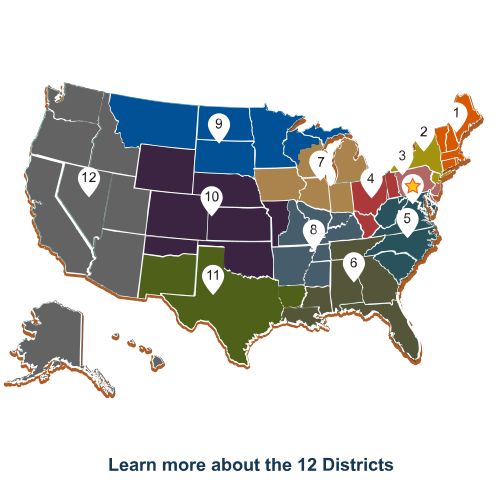
The 12 Federal Reserve Banks are organized as quasi-governmental entities. They are located in major cities across the country, including New York City, Chicago, San Francisco, and others. Each Reserve Bank serves its designated district, which comprises several states.
These Banks are often the source of confusion regarding incorporation. They are “corporations” in a structural sense, but not in the way a private business is. Their stock is owned by member commercial banks within their respective districts. However, this stock is not transferable, cannot be traded on exchanges, and pays a statutory dividend set by law. Ownership of this stock does not confer control in the way that stock ownership does in a private corporation. The Federal Reserve Banks are subject to the oversight of the Board of Governors and are accountable to Congress. Their primary purpose is to implement monetary policy and serve the economic needs of their regions and the nation.
Debunking the California Incorporation Myth

The idea of the Federal Reserve being incorporated in California likely stems from a misinterpretation of the decentralized nature of the Federal Reserve System and the role of the Reserve Banks. While the Federal Reserve Bank of San Francisco serves the Twelfth District, which includes California, this does not mean the entire Federal Reserve System is incorporated there.
The Federal Reserve System is a national entity with a central governing body in Washington, D.C., and a network of regional banks that operate across the country. Each Reserve Bank is an independent entity within the Federal Reserve System, but none of them represent the entirety of the Federal Reserve or its incorporation status.
Legal Status and Accountability
The Federal Reserve is often described as an independent entity within the government. This independence is crucial for its ability to make monetary policy decisions free from short-term political pressures. However, it is not a private, profit-making organization. Its profits, after expenses and the statutory dividend to member banks, are remitted to the U.S. Treasury.
The Federal Reserve is subject to oversight by Congress. It regularly reports to Congress on its activities and monetary policy. The actions of the Federal Reserve are subject to judicial review, although the scope of such review is limited, particularly concerning monetary policy decisions.
The Nature of Federal Reserve “Stock”
The member banks’ ownership of stock in their respective Federal Reserve Banks is a mechanism for governance and capital infusion, not for profit-seeking or control. The Federal Reserve Act mandates that each member bank subscribe to the stock of the Federal Reserve Bank in its district in an amount equal to 3 percent of its capital and surplus. This stock is:
- Non-transferable: It cannot be bought or sold in the open market.
- Non-speculative: It does not fluctuate in value based on market forces.
- Pays a fixed dividend: The dividend rate is set by law, currently 6 percent per annum on the paid-in capital stock.
This structure ensures that control of the Federal Reserve Banks rests with the public interest as represented by the Board of Governors and the appointed directors of the Reserve Banks, rather than with the private interests of the member banks.
Comparing the Fed to Private Corporations
A private corporation, such as one incorporated in California or any other state, is fundamentally different. A private corporation:
- Is owned by shareholders: These shareholders can be individuals, institutions, or other companies.
- Is operated for profit: The primary goal is to generate returns for its shareholders.
- Is subject to state corporate law: Its formation, governance, and operations are dictated by the laws of the state in which it is incorporated.
- Shares can be traded: Investors can buy and sell shares on stock exchanges, impacting the company’s market valuation.
The Federal Reserve does not fit this profile. It is not owned by private shareholders in the traditional sense, it is not operated for profit, and its structure and operations are governed by federal law, not state corporate law. The confusion may arise from the term “corporation” used in the Federal Reserve Act to describe the structure of the Reserve Banks, but the context and purpose of these “corporations” are distinctly public.
Conclusion: A Unique National Institution
In conclusion, the Federal Reserve is not incorporated in California or any other specific state in the manner of a private business. It is a unique, independent entity within the U.S. government, established by federal law to serve the nation’s economic interests. Its structure, a blend of public oversight and decentralized regional operations, is designed to ensure stability, flexibility, and accountability. Understanding this structure is key to appreciating the Federal Reserve’s vital role in the American economy.
LifeOutOfTheBox is a participant in the Amazon Services LLC Associates Program, an affiliate advertising program designed to provide a means for sites to earn advertising fees by advertising and linking to Amazon.com. Amazon, the Amazon logo, AmazonSupply, and the AmazonSupply logo are trademarks of Amazon.com, Inc. or its affiliates. As an Amazon Associate we earn affiliate commissions from qualifying purchases.