
Understanding the nuances of property taxes in California is crucial for anyone considering purchasing or owning real estate in the Golden State. These taxes form a significant portion of local government revenue, funding essential public services like schools, parks, and infrastructure. For travelers and potential residents alike, grasping this fundamental aspect of Californian life can shape financial planning and investment decisions.
The Foundation: Proposition 13 and Assessed Value
At the heart of California’s property tax system lies Proposition 13, a landmark initiative passed in 1978. This amendment to the California Constitution fundamentally altered how properties are assessed for tax purposes.
Base Year Value and Inflation Adjustments
Prior to Proposition 13, property values were reassessed periodically, leading to fluctuating tax burdens. Proposition 13 introduced a cap on property tax rates and limited annual increases in assessed value.
- Base Year Value: The assessed value of a property is generally fixed at its market value as of March 1, 1975, or its reappraised value upon a change in ownership after that date. This “base year value” becomes the starting point for tax calculations.
- Annual Inflation Adjustment: The assessed value can increase by a maximum of 2% per year, or the rate of inflation, whichever is less. This provision aims to provide stability and predictability for property owners, preventing sudden, dramatic tax hikes. This inflation adjustment is independent of the actual market value fluctuations of the property.
Reassessment Upon Change in Ownership
The most significant factor that can trigger a reassessment of a property’s value to its current market value is a change in ownership. This includes:
- The sale of the property: When a property is sold, it is reassessed to its current market value as of the date of sale. This is why buyers often face a substantial increase in their property tax bill compared to the previous owner.
- Transfer of ownership between family members: While some interfamily transfers are exempt from reassessment (e.g., parent to child, with certain limitations), many others will trigger a reassessment. It is essential to consult with local tax officials or legal counsel to understand these specific exemptions.
- Acquisition through inheritance: Generally, inheritance itself does not trigger a reassessment if the transfer is between certain family members as defined by law. However, if the property is later sold by the heir, a reassessment will occur.
- Creation or termination of trusts: Depending on how a property is held in trust, the transfer into or out of a trust can be considered a change in ownership, necessitating reassessment.
It is crucial to note that minor improvements or renovations typically do not trigger a reassessment unless they constitute new construction.
Calculating Your Property Tax Bill
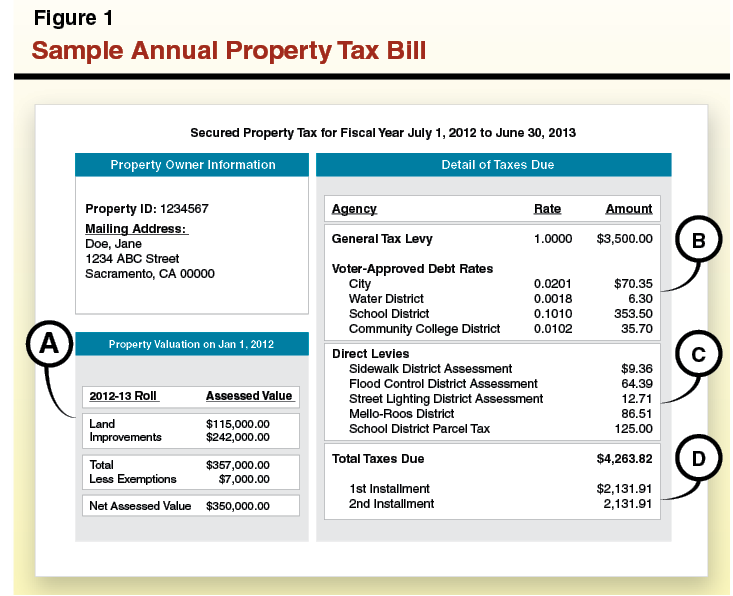
Once the assessed value is determined, calculating the actual property tax bill involves applying the tax rate.
The Standard Tax Rate
Under Proposition 13, the maximum property tax rate is capped at 1% of the assessed value. This 1% rate is applied statewide to fund general government operations.
Additional Levies and Special Assessments
While the 1% rate is the base, many California counties, cities, and special districts levy additional taxes and assessments to fund specific local services or projects. These can include:
- School Bonds: Local school districts often issue bonds to finance new construction, renovations, or educational programs. These bond measures are voted on by the public and, if approved, result in an additional property tax assessment specifically for that district’s schools.
- Community Facilities Districts (CFDs): These are formed to finance public infrastructure such as roads, sewers, and parks within a specific development. Property owners within a CFD pay an additional tax to fund these improvements.
- Other Special Districts: Various special districts, such as water districts, fire protection districts, and lighting districts, may impose additional assessments to cover the costs of their services.
The combination of the base 1% rate and these additional levies means that the effective property tax rate in many parts of California can exceed 1%. The specific amount of these additional levies varies significantly by location.

Exemptions and Reductions
Several exemptions and programs can reduce a property owner’s tax liability:
- Homeowner’s Exemption: This provides a modest reduction in assessed value for a primary residence. Eligible homeowners can claim an annual exemption, which effectively lowers their tax bill by a fixed amount (determined by the state).
- Senior Citizen Property Tax Assistance: For seniors who meet certain income and age qualifications, there are programs that offer property tax assistance or deferral.
- Disabled Veterans’ Exemption: Disabled veterans may be eligible for a significant reduction or even a complete exemption from property taxes on their primary residence.
- Proposition 8 Reductions: If the market value of a property declines below its factored base year value, owners can petition the county assessor to temporarily reduce the assessed value to reflect the current market conditions. This reduction remains in effect until the property’s market value rises back to or exceeds its factored base year value.
These exemptions and reductions are critical for understanding the final tax burden and are vital for homeowners to explore to minimize their tax obligations.
Who Collects Property Taxes?
Property taxes in California are collected at the county level.
The County Tax Collector
Each of California’s 58 counties has a Tax Collector’s office responsible for administering the property tax system. This includes:
- Mailing Tax Bills: The Tax Collector’s office is responsible for preparing and mailing annual property tax bills to all property owners.
- Processing Payments: They receive and process all property tax payments.
- Enforcing Delinquency: If taxes are not paid by the due dates, the Tax Collector’s office initiates collection procedures, which can ultimately lead to the sale of the property if the delinquency is not resolved.
- Distributing Funds: Once collected, the property tax revenues are distributed to various local government entities, including cities, school districts, and special districts, based on their respective tax rates and allocations.
The County Assessor
While the Tax Collector handles the billing and collection, the County Assessor is responsible for determining the assessed value of all taxable property within the county. They maintain property records, conduct appraisals, and implement Proposition 13’s valuation rules.
Implications for Travelers and Potential Residents
For those visiting or considering a longer stay in California, understanding property taxes has several practical implications.
Rental Property and Short-Term Stays
If you are considering renting out a property in California, such as through platforms like Airbnb or for longer-term leases, the property tax implications for the owner are significant. The rental income must be sufficient to cover not only mortgage payments and maintenance but also the substantial property tax burden. Understanding the local tax rates and the potential for reassessment upon acquiring such a property is paramount.
Vacation Homes and Second Residences
Owning a vacation home in desirable California locations like Lake Tahoe, Palm Springs, or along the coast near San Diego or San Francisco involves annual property tax expenses. These costs are in addition to any homeowner association fees and maintenance expenses.
Long-Term Residential Investment
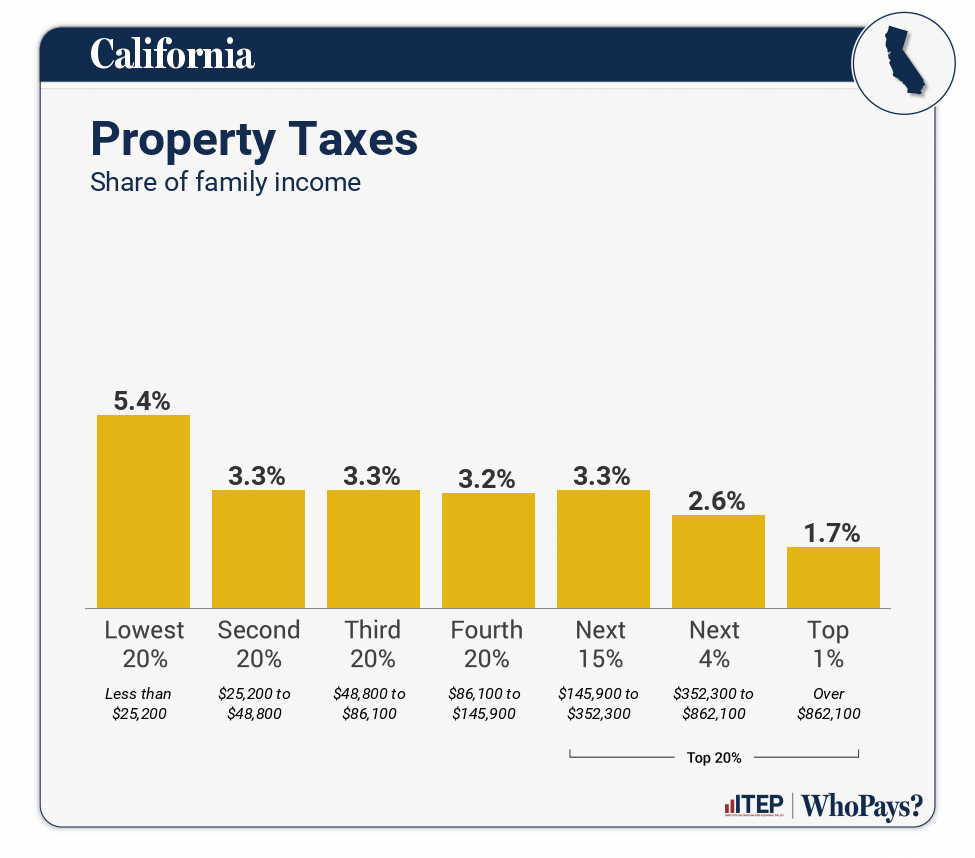
For individuals looking to establish a primary residence in California, the property tax is a recurring annual expense that must be factored into the overall cost of homeownership. Comparing the property tax burdens in different counties and cities is an essential part of the relocation or home-buying process. For instance, a property in a more affluent area with higher demand and numerous special districts might carry a higher tax burden than a similar property in a less developed region.
The unique nature of California’s property tax system, shaped by Proposition 13, creates a landscape where long-term homeowners often pay significantly less in taxes than new buyers, even for properties with comparable market values. This can influence real estate market dynamics and investment strategies. Navigating these complexities ensures a more informed and financially sound experience when dealing with property in the Golden State.
LifeOutOfTheBox is a participant in the Amazon Services LLC Associates Program, an affiliate advertising program designed to provide a means for sites to earn advertising fees by advertising and linking to Amazon.com. Amazon, the Amazon logo, AmazonSupply, and the AmazonSupply logo are trademarks of Amazon.com, Inc. or its affiliates. As an Amazon Associate we earn affiliate commissions from qualifying purchases.