
California, a state renowned for its breathtaking landscapes, from the sun-drenched beaches of Southern California to the majestic peaks of the Sierra Nevada, is also a haven for avian diversity. This vast state, encompassing a multitude of habitats, from coastal wetlands and arid deserts to dense forests and rolling grasslands, supports an astonishing array of bird species. For the avid birder or the curious traveler, understanding the feathered residents of the Golden State offers a unique lens through which to appreciate its natural wonders. This guide delves into the fascinating world of California’s birds, highlighting some of the most iconic, common, and sought-after species, and where to find them.
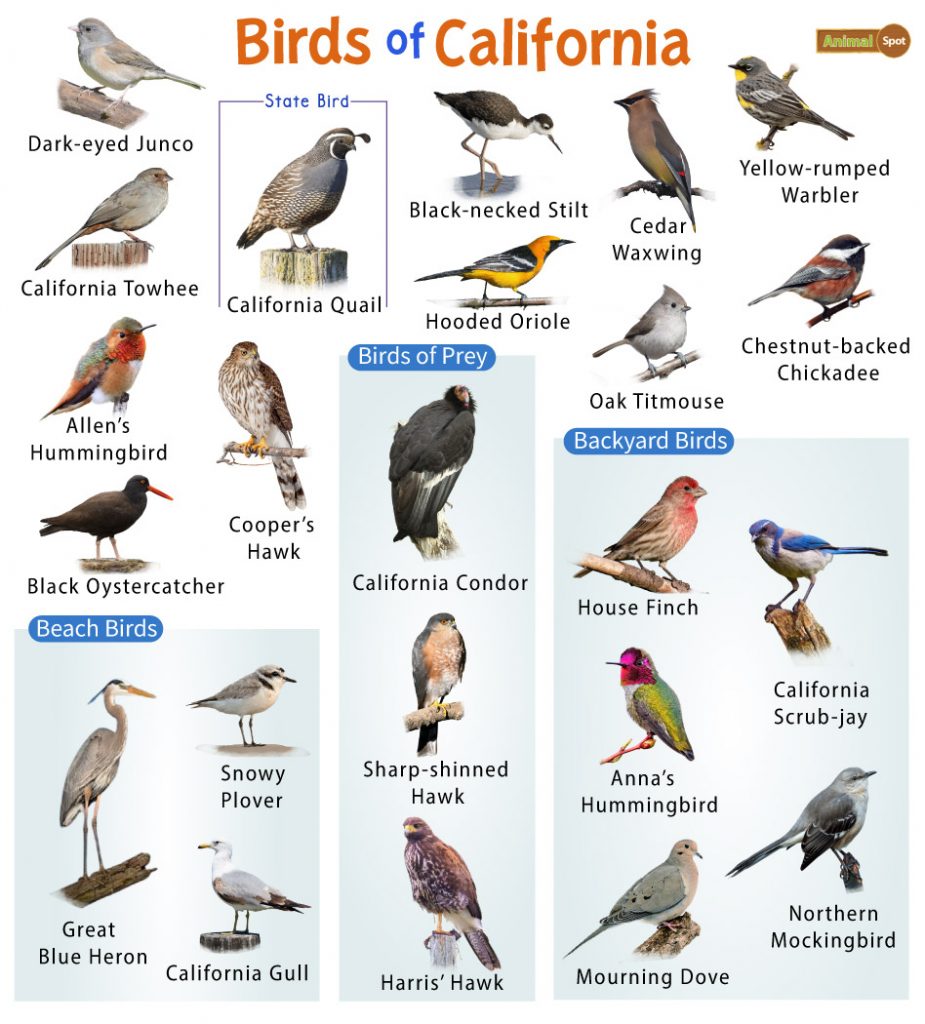
Coastal Avifauna: Jewels of the Pacific
The extensive coastline of California is a dynamic and critical environment for a wide variety of seabirds and shorebirds. The cold, nutrient-rich waters of the Pacific Ocean support abundant food sources, attracting species that are either residents or frequent visitors, especially during migration periods.
Shorebirds and Waders
Along the sandy beaches and rocky shores, one can find a fascinating array of shorebirds. The Western Snowy Plover, an endangered species, can be spotted on coastal dunes and beaches, requiring careful observation and respect for their sensitive nesting grounds. Larger waders, such as the Great Blue Heron, are a common sight, gracefully stalking through shallow waters in search of fish. Willets and Marbled Godwits are often seen probing the mudflats during low tide, their distinctive calls echoing across the estuaries. The diminutive Least Tern nests in colonies on sandy areas, a testament to the resilience of coastal ecosystems.
Pelagic Birds and Marine Visitors
Beyond the immediate shoreline, the open ocean is home to a rich diversity of pelagic birds. Boat tours departing from ports like Monterey or San Diego offer unparalleled opportunities to witness these marine specialists. Albatrosses, particularly the Laysan Albatross and Black-footed Albatross, are magnificent gliders that can be seen soaring effortlessly over the waves. Shearwaters, such as the Sooty Shearwater, migrate in vast numbers, creating spectacular “boiling” events as they feed. Storm Petrels, the smallest of seabirds, flit over the water’s surface, appearing to walk on it. Closer to shore, Brown Pelicans are a quintessential California sight, their dramatic plunge-dives for fish a constant spectacle. Colonies of Brandt’s Cormorants and Pelagic Cormorants often cling to rocky cliffs, their dark plumage stark against the coastal backdrop.
Harbor and Bay Inhabitants
Sheltered harbors and bays, such as San Francisco Bay, are crucial staging and wintering grounds for numerous waterfowl and gulls. California Gulls, the state bird, are ubiquitous, often seen scavenging near human activity but also forming large colonies in protected areas. Various duck species, including the Bufflehead, Scaup, and Goldeneye, gather in large numbers during the winter months. The elegant American Avocet, with its upturned bill, and the striking Black Oystercatcher are also common residents of these intertidal zones.
Inland Habitats: Deserts, Forests, and Mountains
California’s diverse inland geography presents a mosaic of habitats, each supporting a unique avian community. From the scorching heat of the Mojave Desert to the towering redwoods of the north, the opportunities for birdwatching are boundless.
Desert Dwellers
The arid landscapes of California’s deserts, including the Mojave National Preserve and Anza-Borrego Desert State Park, are surprisingly rich in birdlife, adapted to extreme conditions. The iconic Greater Roadrunner, a ground-dwelling cuckoo, is a master of its arid domain, often seen dashing across desert roads. Gambel’s Quail form coveys, their distinctive topknots bobbing as they forage. Birds of prey are well-represented, with Harris’s Hawks often seen perched on saguaro cacti and Golden Eagles soaring over vast, open country. The vibrant Phainopepla, a silky-plumed bird, is a striking resident of mesquite groves. In riparian areas, oases like those found in Palm Springs, a surprising number of species can be found, including various hummingbirds and flycatchers.
Forest and Woodland Species

The vast forests of California, from the coastal redwood forests of Muir Woods National Monument to the pine forests of the Sierra Nevada, are home to a dazzling array of woodland birds. The majestic Steller’s Jay, with its brilliant blue plumage, is a common and noisy inhabitant. Acorn Woodpeckers are fascinating social birds, storing acorns in meticulously drilled “granary trees.” Various finches, including the Pine Siskin and Lesser Goldfinch, flit through the canopy. Larger birds of prey like the Red-tailed Hawk are frequently seen hunting over open forest clearings. In the higher elevations, the elusive White-tailed Ptarmigan can be found, perfectly camouflaged against its alpine environment.
Mountain and Alpine Avians
The Sierra Nevada mountains, including Yosemite National Park and Sequoia National Park, offer a unique avian experience in their alpine and subalpine zones. Above the treeline, the American Pipit nests on rocky slopes. Clark’s Nutcrackers are adept at caching pine seeds, playing a vital role in forest regeneration. Raptors such as the Cooper’s Hawk and Northern Goshawk patrol the dense forests. In the more remote wilderness areas, larger birds like the Ruffed Grouse can be found in suitable habitat. The highest peaks may even host occasional vagrants or specialized species adapted to extreme cold.
Grasslands and Agricultural Lands: Open Country Birds
The vast expanses of grasslands and agricultural lands that characterize much of central and southern California are important for many ground-nesting birds and species that thrive in open environments.
Ground Nesters and Grassland Specialists
The open fields and meadows are prime habitat for various ground-nesting species. Western Meadowlarks, with their melodious songs, are a familiar sound in these areas. American Kestrels, the smallest falcon in North America, can often be seen perched on fence posts, scanning for small rodents. Horned Larks are masters of camouflage, blending seamlessly with the dry grasses. Large flocks of American Goldfinches can be found foraging in thistle patches, their bright yellow plumage a cheerful sight. During migration, these areas can host large numbers of sparrows and other passerines seeking food and shelter.
Agricultural Avifauna
Farmland, particularly areas with diverse crops and associated wild patches, attracts a specialized set of birds. Red-winged Blackbirds are ubiquitous, their males with their striking red and yellow epaulets defending their territories in wetlands and marshes adjacent to fields. Killdeer are often found in open, gravelly areas, their distinctive call and broken-wing display a common defense mechanism. Starlings and House Sparrows are abundant, though native species like the Savannah Sparrow also thrive in suitable agricultural mosaics.
Migratory Routes and Hotspots
California lies along major migratory flyways, making it an essential stopover and wintering ground for millions of birds. Understanding these migratory patterns can unlock incredible birding experiences.
Pacific Flyway Importance
The Pacific Flyway is one of North America’s most significant migratory routes, and California plays a pivotal role. Coastal wetlands, such as those found in the San Francisco Bay National Wildlife Refuge complex and the Salton Sea, are critical refueling stations for shorebirds, waterfowl, and many passerine species during their arduous journeys. The sheer numbers of birds passing through can be staggering, creating opportunities for exceptional birding throughout the spring and fall.

Fall and Spring Spectacles
During the fall migration, birders can witness the southward movement of raptors along coastal ridges and mountain ranges, with sites like the Hawk Hill in the Golden Gate National Recreation Area offering prime viewing. Spring migration, conversely, brings a surge of activity as birds return to their breeding grounds. The deserts, often overlooked, can be surprisingly productive during spring migration, with an influx of warblers and other songbirds seeking water and food at desert oases. Birding festivals, often held in locations like Klamath Basin or the Kern National Wildlife Refuge, celebrate these migratory phenomena and offer guided tours and educational programs.
California’s avian richness is a testament to its ecological diversity. Whether you are exploring its coast, venturing into its deserts, or hiking its mountains, the chance to encounter a wide array of captivating bird species is ever-present. Each sighting, from the common to the rare, adds another layer to the appreciation of this extraordinary state’s natural heritage.
LifeOutOfTheBox is a participant in the Amazon Services LLC Associates Program, an affiliate advertising program designed to provide a means for sites to earn advertising fees by advertising and linking to Amazon.com. Amazon, the Amazon logo, AmazonSupply, and the AmazonSupply logo are trademarks of Amazon.com, Inc. or its affiliates. As an Amazon Associate we earn affiliate commissions from qualifying purchases.