
The legal landscape of California, much like its diverse geography, presents a complex tapestry of regulations. For those planning a visit, or perhaps considering a longer stay, understanding certain legal nuances can be unexpectedly crucial, even impacting the logistics of travel and the sense of security while exploring. While travel itineraries often focus on popular attractions like the Golden Gate Bridge or the charm of San Francisco, a less commonly discussed aspect of a destination’s legal framework can offer a unique perspective on its societal structure and the protections it offers. This article delves into a specific area of California law that has profound implications: crimes with no statute of limitations. While seemingly a niche legal topic, its existence underscores the state’s commitment to pursuing justice for the most severe offenses, a principle that resonates with the safety and stability travelers and residents alike expect from any destination.

The Principle of Statutes of Limitations
Before exploring the exceptions, it’s vital to grasp the fundamental concept of a statute of limitations. In most legal systems, including California’s, statutes of limitations are laws that set a maximum time period after an event within which legal proceedings may be initiated. The primary purpose of these statutes is to ensure fairness and reliability in the legal process. Over time, evidence can degrade, memories fade, and witnesses may become unavailable, making it increasingly difficult to present a just case. By imposing a time limit, the law encourages prompt prosecution and prevents defendants from living under the perpetual threat of charges for long-past events.
For less serious offenses, such as misdemeanors or certain low-level felonies, these time limits are relatively short. For example, many misdemeanor charges must be filed within one year of their commission, while some lower-level felonies might have a three or five-year limit. This framework is designed to allow for the swift resolution of most criminal matters. However, California, like many jurisdictions, recognizes that certain crimes are so egregious that the passage of time should not preclude justice from being served.
The Gravest Offenses: Crimes Beyond Time Limits
California law carves out significant exceptions to the general rule, creating a category of crimes for which there is effectively no statute of limitations. This means that the state can pursue charges for these offenses regardless of how much time has elapsed since they were committed. These are universally recognized as the most serious transgressions against individuals and society, reflecting a legislative intent to ensure that perpetrators of such acts can be brought to justice at any point in their lives.
Homicide: The Ultimate Unforgivable Act
Perhaps the most prominent and universally understood category of crimes without a statute of limitations is homicide. This encompasses murder and voluntary manslaughter. The intentional taking of another human life is considered the ultimate offense, and the gravity of this act is deemed so profound that the legal system places no temporal boundary on prosecution. This applies to all degrees of murder, from premeditated first-degree murder to second-degree murder and even voluntary manslaughter, where the killing occurs in the heat of passion.
The reasoning behind this unlimited timeframe is rooted in the irreversible nature of the crime and the profound impact on victims’ families and society. Allowing for prosecution at any point ensures that those who commit such heinous acts cannot escape accountability simply by waiting for a statutory period to expire. This principle is particularly important in cases where evidence may be discovered years later, or where a perpetrator may have evaded capture for an extended period. The pursuit of justice for a murdered individual is a perpetual endeavor under California law.
Sex Offenses Against Minors: Protecting the Vulnerable
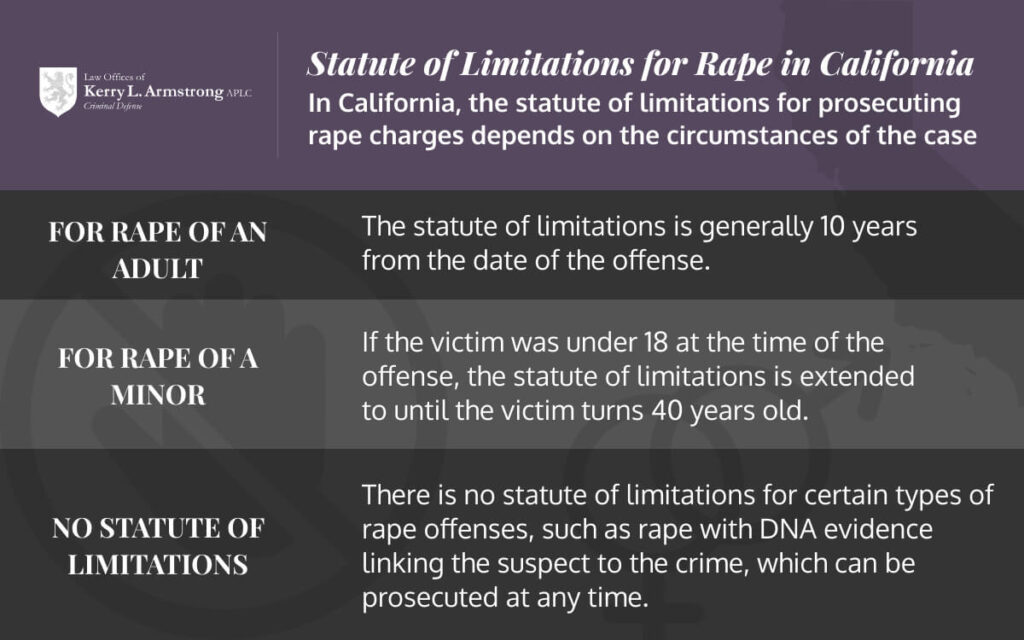
Another critical area where California law removes the statute of limitations is in relation to certain sex offenses committed against minors. This is a testament to the state’s strong commitment to protecting children and ensuring that those who exploit them face consequences, no matter when the abuse occurred.

Specifically, crimes such as aggravated sexual assault of a child, rape of a child under 14, and lewd or lascivious acts upon a child under 14 often have no statute of limitations. This broad protection is crucial because the effects of such abuse can be long-lasting and deeply traumatic, and victims may not be able to come forward or fully process their experiences until many years later. The law recognizes that the vulnerability of children necessitates extended, and in these cases, indefinite, periods for seeking justice. The focus is on empowering survivors and ensuring that their perpetrators cannot hide from their crimes due to the passage of time.
Other Serious Felonies
While homicide and sex offenses against minors are the most widely recognized examples, California law also extends the absence of statutes of limitations to other very serious felonies. These often include crimes that involve significant harm or threat to the public, or those where evidence may be particularly difficult to uncover or preserve over long periods.
- Kidnapping for Ransom: The unlawful imprisonment and holding of a person for the purpose of extorting money or other concessions is a crime that carries immense psychological and physical trauma for the victim and their loved ones. The protracted nature of such crimes and the potential for ongoing threat means that prosecution is often permitted indefinitely.
- Certain Robbery Offenses: While not all robberies are exempt, some forms of aggravated or violent robbery, particularly those involving extreme violence or lasting harm, may fall under categories with extended or absent statutes of limitations, reflecting the severity of the offense.
- Crimes Involving Specific Forms of Malice or Intent: In some instances, the specific intent or malice aforethought associated with a crime can influence its statute of limitations. For example, crimes that are considered “capital offenses” or those that involve particularly depraved intent may have no time limit for prosecution.
The inclusion of these offenses underscores California’s prioritization of safeguarding its citizens from the most dangerous and harmful criminal activities. The absence of a statute of limitations serves as a clear message: no matter how much time passes, the state will endeavor to hold individuals accountable for these severe transgressions.
Implications for Travelers and Residents
While the legal concept of statutes of limitations might seem abstract, its practical implications can be relevant for anyone spending time in California. For tourists visiting iconic landmarks like Disneyland or exploring the beaches of San Diego, understanding that the state is equipped to prosecute the most severe crimes at any time can contribute to a sense of underlying safety and order. It signifies a robust justice system that prioritizes victim rights and societal protection.
For those considering extended stays, perhaps in a vacation rental in Palm Springs or a longer-term apartment in Los Angeles, this legal framework reinforces the stable environment expected of a well-governed jurisdiction. It’s a subtle but important aspect of the state’s commitment to maintaining a secure and just society.
Moreover, for individuals who may have pasts they wish to leave behind, or for those who have experienced past traumas, the legal certainty provided by these statutes is significant. It means that the most serious offenses will not fade into irrelevance with time, offering a measure of reassurance to communities.
Navigating Legal Matters in California
While the existence of crimes without statutes of limitations is a critical legal point, it’s essential to remember that this applies to a narrow, albeit significant, category of offenses. For the vast majority of criminal matters, statutes of limitations are in effect, and prompt reporting and prosecution are generally required.
For visitors and residents alike, the primary takeaway is that California takes its commitment to justice seriously, particularly when it comes to the most heinous crimes. This legal framework, while complex, ultimately serves to protect individuals and uphold the principles of accountability and fairness that are fundamental to any thriving society, whether one is enjoying a short trip to Yosemite National Park or settling into a new home in Silicon Valley. The enduring pursuit of justice for the gravest offenses is a cornerstone of the Golden State’s legal structure.
LifeOutOfTheBox is a participant in the Amazon Services LLC Associates Program, an affiliate advertising program designed to provide a means for sites to earn advertising fees by advertising and linking to Amazon.com. Amazon, the Amazon logo, AmazonSupply, and the AmazonSupply logo are trademarks of Amazon.com, Inc. or its affiliates. As an Amazon Associate we earn affiliate commissions from qualifying purchases.