
The landscape of firearm legality in the Golden State is a complex and frequently evolving area. For residents and visitors alike, understanding the nuances of what firearms are permissible and under what conditions is paramount for responsible ownership and to avoid legal entanglements. California has some of the most stringent gun laws in the United States, reflecting a deliberate policy choice to enhance public safety through regulation. This guide aims to demystify the current legal standing of various firearms within the state as of 2024, covering handguns, rifles, shotguns, and the critical concept of “assault weapons.”

Handgun Legality in California
Handguns, often carried for self-defense or sport, are subject to rigorous oversight in California. The cornerstone of handgun legality is the Roster of Handguns Certified for Sale.
The Roster of Handguns Certified for Sale
This official list, maintained by the California Department of Justice, details the specific models of handguns that manufacturers can legally sell to the public in California. For a handgun to be added to the roster, it must meet several stringent safety requirements, including:
- Microstamping Technology: Newer additions to the roster must incorporate a microstamping device, which imprints a unique code onto spent casings to aid law enforcement in investigations.
- Drop Safety: The handgun must be designed not to discharge if dropped.
- Magazines Disconnect: The firearm must not fire if the magazine is removed.
- Load Indicator: A visual indicator must show whether a round is present in the chamber.
These requirements significantly limit the number of handgun models available for purchase through licensed California firearms dealers. Handguns not on the roster can still be legally possessed if they were lawfully acquired before the roster’s inception or if they are part of a private party transfer that meets specific exemption criteria.
Private Party Transfers (PPTs)
While the roster restricts new sales, private party transfers offer a pathway to acquire handguns not listed. A PPT involves a sale between two private individuals, facilitated through a licensed California firearms dealer. Both parties must complete the necessary background checks, and the transaction must be recorded. The handguns involved in a PPT do not need to be on the approved roster.
Other Considerations for Handguns
- Magazine Capacity: Handguns are generally limited to a maximum of 10 rounds per magazine.
- Concealed Carry Permits: Carrying a concealed handgun requires obtaining a permit, which is issued at the county level and involves background checks, training, and a demonstration of good cause, though this is becoming more accessible after recent legal rulings.
- Assault Weapon Ban: Certain handguns that meet the definition of an “assault weapon” are prohibited, even if they are on the roster.
Rifle and Shotgun Legality in California
Rifles and shotguns, often used for hunting, sport shooting, or home defense, also face significant regulation in California.
Feature-Based “Assault Weapon” Ban
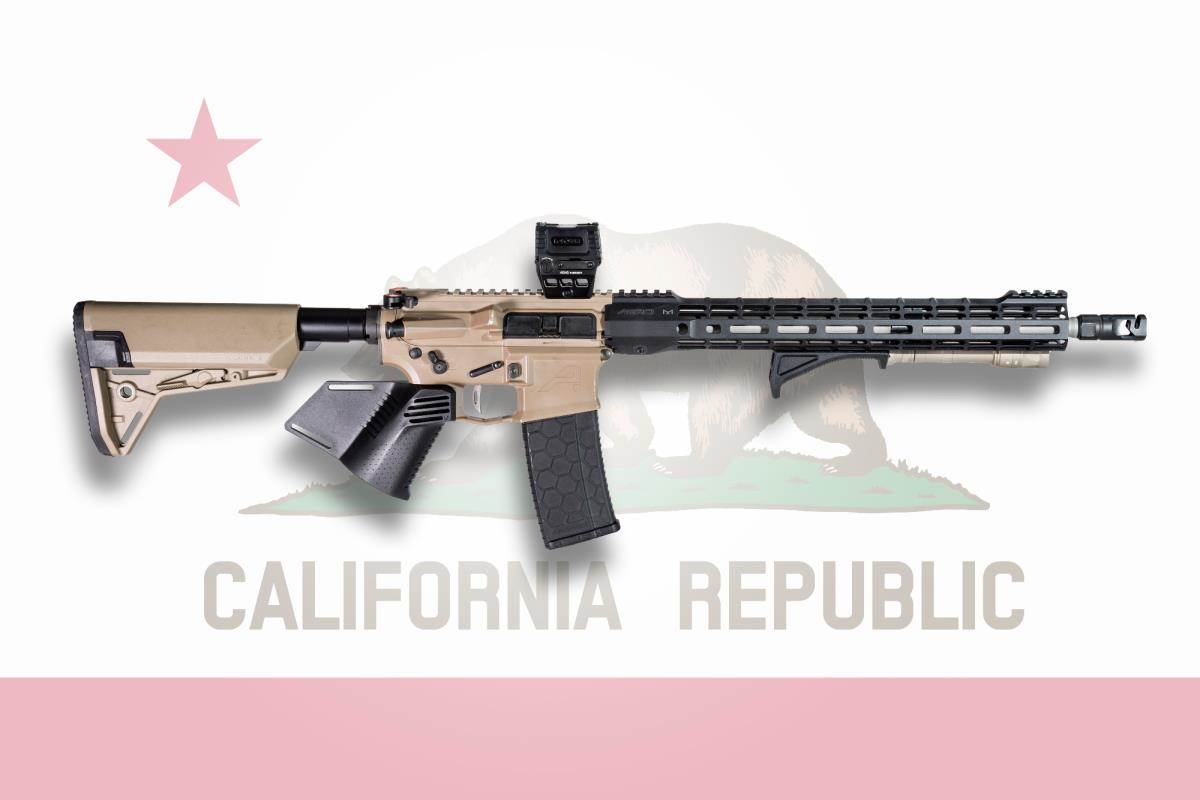
The primary restriction on rifles and shotguns is the state’s ban on “assault weapons.” Unlike handguns which have a specific roster, the definition of an assault weapon for rifles and shotguns is based on a list of specific features. A firearm is generally considered an assault weapon if it is a semi-automatic, centerfire rifle or shotgun that possesses any one of a number of enumerated features, including:
- Pistol grip
- Folding or telescoping stock
- Barrel shroud
- Threaded barrel (for rifles)
- Grenade launcher
- Forward pistol grip
There are specific exceptions and nuances to this definition, particularly concerning rifles that use a fixed magazine that can hold no more than 10 rounds. Similarly, shotguns are defined as assault weapons if they have a revolving cylinder or can accept a detachable magazine.
Registration of Assault Weapons
Any rifle or shotgun that met the definition of an assault weapon prior to the ban’s enactment, and which was lawfully possessed, could be registered with the California Department of Justice as a “pre-ban” assault weapon. These registered firearms are generally allowed to be possessed, though certain transfers of these weapons are restricted.
Other Considerations for Rifles and Shotguns

- Magazine Capacity: Similar to handguns, rifles and shotguns are typically limited to 10-round magazines.
- Centerfire vs. Rimfire: The assault weapon ban primarily targets semi-automatic, centerfire rifles and shotguns. Many rimfire firearms (e.g., .22 caliber) with similar features are not classified as assault weapons.
- Bolt-Action and Lever-Action: Traditional bolt-action and lever-action rifles and shotguns, which are manually operated and not semi-automatic, are generally not subject to the assault weapon ban, regardless of other features.
Prohibited Firearms and Accessories
Beyond specific types of firearms, California also regulates or prohibits certain accessories and types of weapons.
High-Capacity Magazines
As mentioned, magazines capable of holding more than 10 rounds are illegal to possess, manufacture, import, or sell in California, with limited exceptions for individuals who lawfully possessed them before the ban and registered them. This applies to magazines for both handguns and long guns.
Automatic Firearms
Fully automatic firearms (machine guns) are generally illegal for civilian ownership in California, with very limited exceptions for those registered under federal law prior to May 1986 and state law prior to 2000.
Short-Barreled Rifles and Shotguns (SBRs/SBSs)
Rifles with barrels less than 16 inches or an overall length of less than 26 inches, and shotguns with barrels less than 18 inches or an overall length of less than 26 inches, are also regulated. Possession of unregistered SBRs or SBSs is generally illegal, as they fall under federal and state prohibitions unless properly registered as NFA items.
Destructive Devices
Weapons like grenades, bombs, and certain large-caliber artillery are classified as destructive devices and are strictly prohibited for civilian possession.
Navigating Legal Firearm Ownership in California
The legality of firearms in California is a dynamic and intricate subject. For anyone considering firearm ownership or seeking to ensure compliance with existing laws, the following steps are recommended:
Consult Official Sources
The most accurate and up-to-date information can be found on the official website of the California Department of Justice. This includes details on the handgun roster, assault weapon definitions, and registration requirements.
Seek Professional Legal Counsel
Given the complexity and potential for severe penalties for violations, consulting with an attorney specializing in firearm law is highly advisable. They can provide personalized guidance based on individual circumstances and the latest legal interpretations.
Engage with Licensed Firearms Dealers
Licensed dealers in California are knowledgeable about the state’s laws and can ensure that any firearm purchased through them is compliant. They are also essential for facilitating private party transfers and ensuring all paperwork is correctly filed.
Stay Informed About Legislative Changes
Firearm laws are subject to frequent amendments and new legislation. Regularly checking official government sources and reputable legal news outlets is crucial for staying informed about any changes that may affect firearm legality in California.
Understanding the intricacies of firearm laws in California is not merely a matter of legal compliance but a fundamental aspect of responsible gun ownership. By staying informed and adhering to the regulations, individuals can exercise their rights while contributing to public safety.
LifeOutOfTheBox is a participant in the Amazon Services LLC Associates Program, an affiliate advertising program designed to provide a means for sites to earn advertising fees by advertising and linking to Amazon.com. Amazon, the Amazon logo, AmazonSupply, and the AmazonSupply logo are trademarks of Amazon.com, Inc. or its affiliates. As an Amazon Associate we earn affiliate commissions from qualifying purchases.