
Understanding the statute of limitations on debt in California is crucial for both consumers and businesses. This legal concept dictates the maximum time a creditor has to initiate legal action to collect a debt. Once this period expires, the debt is considered “time-barred,” and the creditor generally loses the right to sue for repayment. Navigating these deadlines is essential for protecting your financial rights and making informed decisions about debt management.
The Foundation: Understanding Statutes of Limitations
A statute of limitations is a law that sets a limit on the amount of time parties have to initiate legal proceedings. These laws exist to promote fairness and prevent stale claims from being brought to court long after evidence has disappeared or memories have faded. In essence, they provide a degree of finality to legal matters. For debts, this means that creditors cannot indefinitely pursue debtors for outstanding balances. The specific time frame varies significantly depending on the type of debt and the jurisdiction. California has its own set of statutes governing debt collection, and it’s vital to be aware of these to avoid unexpected legal entanglements.
Why Do Statutes of Limitations Exist?
The rationale behind statutes of limitations is multifaceted:
- Preventing Stale Claims: Over time, evidence can be lost, witnesses may become unavailable, and memories can become unreliable. Allowing lawsuits to be filed years or decades after an event could lead to unjust outcomes.
- Promoting Diligence: These statutes encourage creditors to pursue debts in a timely manner. If a creditor is not diligent in collecting, they may lose their legal recourse.
- Providing Certainty: For debtors, statutes of limitations offer a degree of certainty. After a certain period, they can have a reasonable expectation that they will no longer be legally pursued for a debt.
- Encouraging Resolution: The existence of these deadlines can encourage both parties to seek resolution before the statutory period expires.
Types of Debt and Their Statutes of Limitations in California
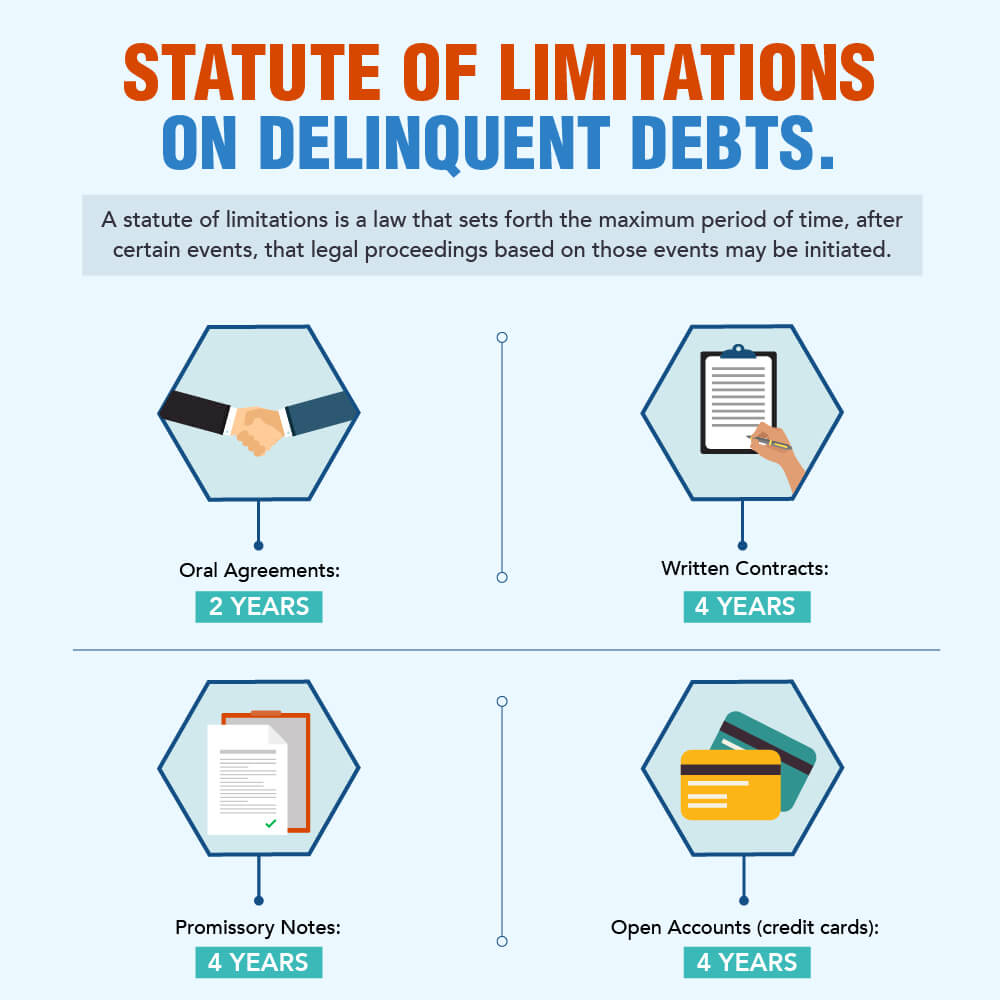
In California, the statute of limitations for debt collection varies based on the nature of the debt. The most common types and their respective time limits are:
Written Contracts
For debts arising from written agreements, such as loan agreements, credit card agreements, or installment contracts, the statute of limitations in California is four years. This period generally begins from the date of the breach of contract, which is typically the date the payment was missed or the contract was violated.
- Example: If you defaulted on a written loan agreement on January 1, 2020, a creditor would have until January 1, 2024, to file a lawsuit against you in California.
Oral Contracts
Debts based on oral agreements or verbal promises have a shorter statute of limitations in California. For oral contracts, the time limit is also two years. This period usually starts from the date the debt became due or the agreement was broken. Proving the existence and terms of an oral contract can be more challenging than with a written one, making it even more critical for creditors to act quickly.
- Example: If you verbally agreed to borrow money from a friend with a specific repayment date and missed that date on March 15, 2022, your friend would generally have until March 15, 2024, to sue you in California.
Promissory Notes
Promissory notes, which are written promises to pay a specific sum of money on demand or at a specified future date, also fall under contract law. In California, the statute of limitations for a promissory note is typically four years from the date of the last payment or the date the note becomes due if no payments have been made.
Credit Card Debt
Credit card debt is generally considered an unsecured debt arising from a written contract (the credit card agreement). Therefore, in California, the statute of limitations for credit card debt is four years. This period usually starts from the date of your last payment or the date your account became delinquent.
Medical Debt
The statute of limitations for medical debt in California is also four years, as it is typically based on a written agreement for services rendered.
Judgments
Once a creditor has obtained a court judgment against you for an unpaid debt, the situation changes. A judgment itself is a court order that declares you owe a specific amount of money. In California, a civil judgment is valid for ten years and can be renewed by the judgment creditor, potentially extending its enforceability for much longer. This means that even after the original debt’s statute of limitations has expired, a judgment can still be enforced.
When Does the Statute of Limitations Clock Start Ticking?
Determining the exact start date for the statute of limitations is critical. In California, the clock generally begins to run from the date of the “cause of action,” which is typically:
- For contracts: The date of the breach of contract, meaning when a payment was missed or an obligation was not met.
- For judgments: The date the judgment was entered by the court.
However, there are nuances that can affect this start date:
Accrual of the Cause of Action
The “accrual” of a cause of action refers to the point in time when a lawsuit can be filed. For most debts, this is straightforward: the day after the payment was due and missed.
Tolling the Statute of Limitations
In certain circumstances, the statute of limitations can be “tolled,” meaning the clock is temporarily paused. Common reasons for tolling in California include:
- Debtor Absence from the State: If the debtor leaves California for an extended period, the statute of limitations may be paused during their absence.
- Defendant’s Incarceration: If the debtor is imprisoned, the statute of limitations might be tolled.
- Partial Payment: Making a payment on a debt can sometimes restart the statute of limitations clock. This is a critical point. Even a small payment can renew the creditor’s right to sue for the full amount.
- Acknowledgment of Debt: A written acknowledgment of the debt by the debtor, or even sometimes a verbal acknowledgment in certain contexts, can also restart the statute of limitations. This is why it’s crucial to be cautious about what you say or write to creditors.
The Implications of Time-Barred Debt
Once a debt is past its statute of limitations in California, it is considered “time-barred.” This has significant implications for both the debtor and the creditor.
What a Time-Barred Debt Means for You
- Creditor Cannot Sue You: The most important implication is that a creditor can no longer win a lawsuit against you for the debt. If they attempt to sue, you can raise the statute of limitations as a defense, and the court will likely dismiss the case.
- Debt Still Exists: It’s crucial to understand that the debt is not erased. It still exists on your credit report (though its impact diminishes over time) and can still be collected through non-legal means.
- Collection Agencies: Debt collectors may still attempt to contact you to collect the debt. They can call you, send letters, and try to persuade you to pay. However, they cannot sue you if the statute has expired.
- Credit Reporting: While time-barred debts may remain on your credit report for up to seven years from the date of the last activity, their negative impact lessens over time. A time-barred debt cannot be the sole basis for a negative mark on your credit report after seven years.
What Creditors Cannot Do with Time-Barred Debt
Creditors and debt collectors are subject to regulations that limit their actions, especially concerning time-barred debts:
- Cannot Sue or Threaten to Sue: They cannot file a lawsuit or credibly threaten to sue if the statute of limitations has expired.
- Cannot Garnish Wages or Bank Accounts: Without a court judgment, they cannot legally garnish your wages or seize funds from your bank account.
- Misrepresentation: They cannot misrepresent the status of the debt or the legal options available to them.
Strategies for Dealing with Debt and Statutes of Limitations
Navigating debt and understanding the statute of limitations requires a strategic approach.
Know Your Rights
The first step is to be aware of the statutes of limitations for different types of debt in California. Knowing these timelines empowers you to understand your legal standing.
Document Everything
Keep records of all your debts, including original agreements, payment histories, and any communication with creditors or collection agencies. This documentation is invaluable if you need to prove when a debt originated or when the last payment was made.
Be Cautious with Communication
As mentioned, making a payment or even acknowledging a debt in writing or verbally can restart the statute of limitations. Before making any payment or discussing payment plans for an old debt, carefully consider the implications and consult with a legal professional if necessary.
Consider Legal Counsel
If you are being pursued for a debt that you believe is past the statute of limitations, or if you are unsure about the status of a debt, seeking advice from a consumer protection attorney or a debt relief specialist is highly recommended. They can review your specific situation, advise you on your rights, and help you formulate a strategy.
Negotiate if Necessary
While a creditor cannot sue you for a time-barred debt, they can still attempt to collect it voluntarily. If you choose to settle a time-barred debt, you may be able to negotiate a lower settlement amount than the full balance owed. However, be aware of the potential to restart the statute of limitations if not handled correctly.
Common Misconceptions About Statutes of Limitations
Several myths surround statutes of limitations on debt. Dispelling these can prevent costly mistakes.
Myth 1: The Debt Disappears After the Statute Expires
As noted, the debt itself doesn’t vanish; the creditor’s legal right to sue for it expires. This is a crucial distinction.
Myth 2: A Collection Agency Can Still Sue You
Collection agencies often purchase old debts. While they can attempt to collect these debts, they are bound by the same statute of limitations as the original creditor. If the debt is time-barred, they cannot legally sue you for it in California.
Myth 3: “If I Don’t Hear From Them, It’s Gone”
While it’s true that statutes of limitations exist, creditors might still have your contact information and periodically attempt collection efforts, even after the statute has expired. Ignoring the issue doesn’t make it disappear legally, but understanding the statute of limitations gives you a powerful defense if they choose to take legal action.
Myth 4: A Credit Counseling Agency Can Reset the Clock
While credit counseling agencies can be helpful for managing current debt, they cannot legally reset or alter the statute of limitations for past debts. Their actions should not be misconstrued as a way to renew a creditor’s right to sue.
In California, the statute of limitations on debt is a critical legal protection for consumers. By understanding the different time limits for various debt types and the factors that can affect these deadlines, individuals can better manage their financial obligations and protect themselves from outdated legal claims. Always seek professional advice when dealing with complex debt situations.
LifeOutOfTheBox is a participant in the Amazon Services LLC Associates Program, an affiliate advertising program designed to provide a means for sites to earn advertising fees by advertising and linking to Amazon.com. Amazon, the Amazon logo, AmazonSupply, and the AmazonSupply logo are trademarks of Amazon.com, Inc. or its affiliates. As an Amazon Associate we earn affiliate commissions from qualifying purchases.