
Understanding the climate of Long Beach, California is paramount for anyone planning a visit, whether for a fleeting day trip or an extended exploration. The moderate Southern Californian weather significantly influences the daily experiences of residents and tourists alike, shaping everything from outdoor activities to the types of clothing one might pack. Long Beach, nestled within the greater Los Angeles metropolitan area, benefits from a distinct coastal microclimate that moderates extreme temperatures, offering a generally pleasant environment year-round.
Understanding Long Beach’s Coastal Climate
The defining characteristic of Long Beach, California’s weather is its proximity to the Pacific Ocean. This vast body of water acts as a natural thermostat, buffering the city from the more arid and temperature-fluctuating conditions found inland. The ocean’s influence is most pronounced during the summer months, where it brings cooling sea breezes that prevent the scorching heat often associated with inland Southern California. Conversely, in winter, the ocean retains heat, offering a moderating effect that keeps temperatures from plummeting to harsh lows.

Average Temperature Trends
On average, Long Beach, California experiences a Mediterranean climate, characterized by warm, dry summers and mild, wetter winters. The daily average temperature hovers around 70 degrees Fahrenheit (21 degrees Celsius) throughout the year. However, this is an average, and actual temperatures will fluctuate based on the season, time of day, and specific microclimates within the city.
The Influence of Ocean Breezes
The ubiquitous marine layer, often referred to as “May Gray” and “June Gloom,” plays a significant role in shaping the daily temperature in Long Beach, California, particularly in late spring and early summer. This low-lying cloud cover typically burns off by late morning or early afternoon, revealing sunny skies. While it can keep mornings and early afternoons cooler, it also prevents the intense, direct sunlight that can lead to extreme heat inland. These sea breezes are a welcome respite during the warmer months, making outdoor activities more comfortable.
Seasonal Temperature Breakdown
To truly grasp the temperature in Long Beach, California, it’s essential to examine how it varies across the four distinct seasons. Each season offers a unique atmospheric profile, influencing the types of activities that are most appealing and the practical considerations for visitors.
Spring (March – May)
Spring in Long Beach, California marks a transition from the mild winter to the warmer summer. Temperatures begin to gradually increase, with average highs reaching into the mid-70s Fahrenheit (around 24 degrees Celsius) by May. However, the marine layer is still a prominent feature, especially in the mornings and evenings. This means that while the sun can provide warmth, the overall feel is often pleasant and mild. Rainfall is less frequent than in winter, but occasional showers can still occur. It’s a time when the city’s many parks and outdoor attractions become increasingly inviting.
Summer (June – August)
Summers in Long Beach, California are typically warm and sunny, but rarely excessively hot. The average high temperature generally stays in the mid-to-upper 80s Fahrenheit (around 29-31 degrees Celsius). The cooling influence of the Pacific Ocean is at its peak during these months, with consistent sea breezes keeping temperatures from soaring. Evenings remain comfortably mild, often in the low 70s Fahrenheit (around 22 degrees Celsius). This is the prime season for beach activities, boat tours, and exploring the vibrant waterfront. Humidity is usually low, contributing to the overall comfort.
Autumn (September – November)
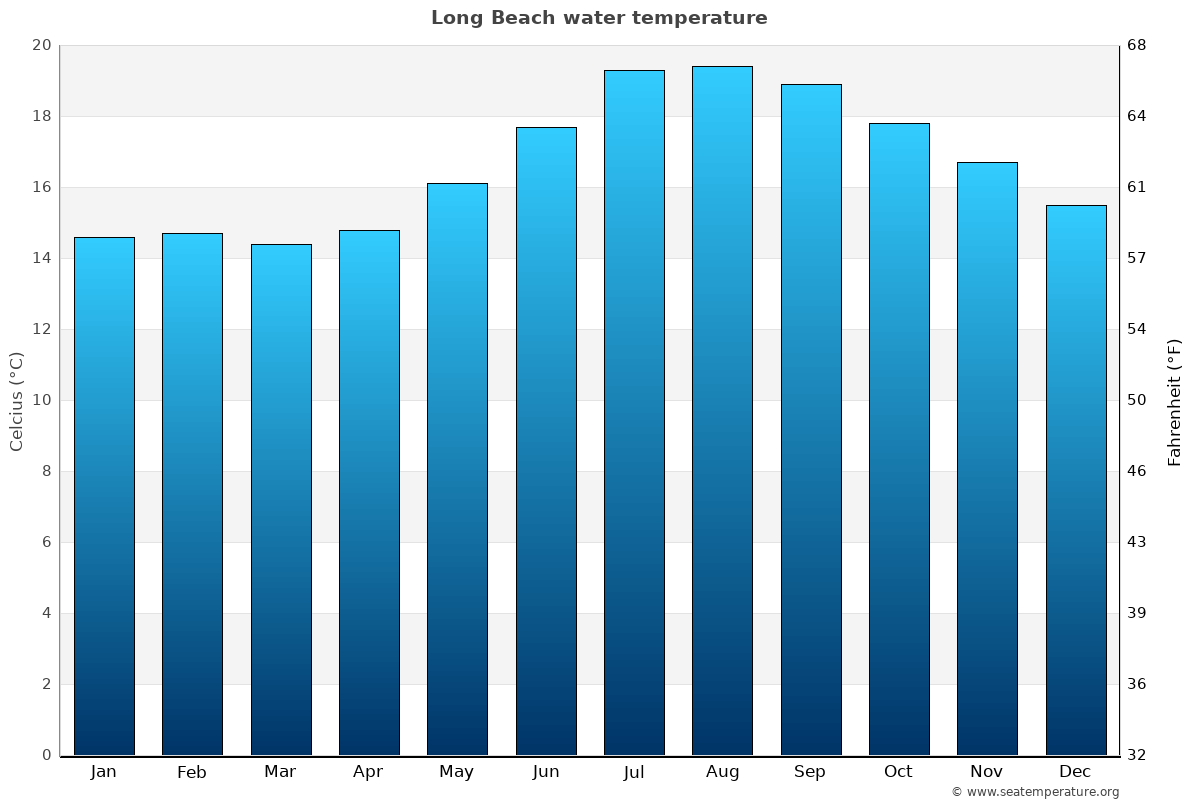
Autumn is often considered one of the most pleasant seasons in Long Beach, California. The intense heat of inland summers begins to dissipate, and the marine layer becomes less persistent. Temperatures remain warm, with average highs still in the mid-80s Fahrenheit (around 29 degrees Celsius) in September, gradually cooling to the mid-70s Fahrenheit (around 24 degrees Celsius) by November. The ocean water temperature is also at its warmest during this period, making it ideal for swimming. This season is perfect for exploring attractions like the Aquarium of the Pacific or enjoying leisurely walks along the Shoreline Village.
Winter (December – February)
Winters in Long Beach, California are mild and characterized by cooler temperatures and a higher chance of rainfall, though significant snow is unheard of. Average daytime temperatures typically range from the mid-60s to low 70s Fahrenheit (around 18-22 degrees Celsius). Nights can be cooler, dropping into the 50s Fahrenheit (around 10-15 degrees Celsius). While not beach weather in the traditional sense, the mild temperatures are still conducive to outdoor activities like visiting the Long Beach Museum of Art or exploring the historic Queen Mary. The city maintains its charm, and it’s a less crowded time to visit.
Factors Influencing Local Temperatures
While the ocean is the primary driver of Long Beach, California’s climate, several other factors can influence the precise temperature readings at any given moment. Understanding these nuances can help visitors better anticipate conditions.
Proximity to the Coast
Even within Long Beach, California itself, there can be slight temperature variations based on how close one is to the immediate coastline. Areas directly on the beach will experience the strongest influence of the sea breeze, often resulting in slightly cooler temperatures than areas just a few miles inland. This effect is more pronounced on hot summer days.
Elevation and Urban Heat Island Effect
While Long Beach, California is relatively flat, any subtle changes in elevation can have a minor impact. More significant is the “urban heat island” effect, common in metropolitan areas. Densely populated areas with more concrete and asphalt absorb and retain heat, which can lead to slightly higher temperatures in the central urban core compared to more vegetated or coastal areas. However, due to the strong oceanic influence, this effect is generally less pronounced in Long Beach, California than in many other large cities.
Weather Systems and Seasonal Patterns
The passage of weather systems, whether they are high-pressure systems bringing clear skies and warmth or low-pressure systems bringing clouds and potential rain, will naturally cause daily temperature fluctuations. Understanding broader weather patterns for Southern California can provide a good indication of what to expect beyond the general seasonal averages. For instance, a “Santa Ana wind” event, while rare in Long Beach, California compared to inland areas, could bring unseasonably warm and dry conditions for a short period.
Planning Your Visit Based on Temperature
Knowing the typical temperatures in Long Beach, California allows for more informed planning of travel dates, packing, and itinerary. Whether you’re seeking sun-drenched beach days or a mild climate for cultural exploration, the temperature plays a crucial role.
Packing Recommendations
Your packing list should always consider the time of year you plan to visit.
- Summer: Light, breathable clothing, swimwear, sun hats, sunglasses, and sunscreen are essential. A light jacket or sweater might be useful for cooler evenings, especially near the water.
- Spring and Autumn: Layers are key. Pack a mix of short-sleeved shirts, long-sleeved shirts, and a medium-weight jacket or sweater. Comfortable walking shoes are a must for exploring the city.
- Winter: While mild, evenings can be cool. Pack layers including a warm jacket or fleece, long pants, and perhaps a scarf. Umbrellas are advisable, though rain is not constant.

Activity Considerations
The temperature directly impacts the types of activities you might enjoy.
- Beach and Water Activities: The warmest months, particularly late summer and early autumn, offer the most comfortable conditions for swimming, sunbathing, and water sports at beaches like Rosie’s Dog Beach or Mother’s Beach.
- Outdoor Sightseeing and Exploration: Spring, autumn, and even mild winter days are ideal for walking tours, visiting outdoor markets, or exploring attractions like the Earl Burns Miller Japanese Garden. The moderate temperatures prevent discomfort from heat exhaustion.
- Indoor Attractions: Museums, aquariums, and indoor entertainment venues are enjoyable year-round, providing a comfortable alternative regardless of the external temperature or weather.
By paying attention to the temperature in Long Beach, California, visitors can ensure a more comfortable and enjoyable experience, making the most of this beautiful coastal city.
LifeOutOfTheBox is a participant in the Amazon Services LLC Associates Program, an affiliate advertising program designed to provide a means for sites to earn advertising fees by advertising and linking to Amazon.com. Amazon, the Amazon logo, AmazonSupply, and the AmazonSupply logo are trademarks of Amazon.com, Inc. or its affiliates. As an Amazon Associate we earn affiliate commissions from qualifying purchases.