
California, a land synonymous with dreams and destiny, owes much of its iconic status to the glittering allure of gold. The very name “California” is often linked to legends of vast riches, and the discovery of gold here didn’t just transform a territory; it reshaped a nation and drew people from every corner of the globe. While the widely celebrated California Gold Rush began in 1848, the question of who first unearthed this precious metal in the Golden State is a subject of historical fascination, pointing to a figure whose contribution, though less famed than the eventual boom, laid the very groundwork for an epochal event.

The narrative of California’s gold discovery is intricately woven with the history of Mexico, California, and the United States. Before the dramatic influx of prospectors and the subsequent establishment of major settlements, the region was a sparsely populated territory, primarily inhabited by Native American tribes and overseen by Mexican authorities. The lands were vast, and their mineral wealth, though suspected by some, remained largely hidden beneath the surface for centuries.
The Unsung Pioneer: James W. Marshall
The name that echoes most prominently in the annals of California’s initial gold discovery is James W. Marshall. A carpenter by trade and an employee of John Sutter, a Swiss immigrant who had acquired a vast land grant from the Mexican government, Marshall was tasked with a crucial project: constructing a sawmill on the banks of the American River near Coloma. This sawmill, known as Sutter’s Mill, was intended to provide lumber for Sutter’s burgeoning agricultural empire and future construction projects in San Francisco.
It was during the construction of the mill race—a channel to direct water to the sawmill’s water wheel—that the fateful discovery occurred. On the morning of January 24, 1848, as Marshall was inspecting the tailrace, he spotted something glittering in the shallow water. His initial observation was of a small, yellow object, unlike any common rock or mineral he had encountered before. Intrigued, he picked it up. It was heavy for its size and malleable, suggesting it was not merely a piece of pyrite, often called “fool’s gold.”
The Moment of Revelation
Marshall, a man of practical disposition rather than speculative ambition, recognized the potential significance of his find. He discreetly collected more of the glittering material, testing its properties. He subjected it to the anvil test, hammering it to see if it would flatten or break. It flattened, a characteristic of true gold. He also tested its malleability and density, comparing it to known metals. The evidence pointed overwhelmingly to one conclusion: it was gold.
The immediate reaction was one of cautious secrecy. Marshall and the other workers at the mill understood the potential ramifications of such a discovery, particularly in the politically charged atmosphere of Mexican California. They agreed to keep the find quiet until a more thorough investigation could be conducted and its extent determined. This period of hushed excitement, however, was destined to be short-lived.
The Test and the Spread of News
To confirm his suspicions, Marshall took the samples to Sutter himself. Sutter, ever the businessman, was initially more concerned with the impact this might have on his mill construction and his control over the land. He and Marshall, along with a few trusted individuals, conducted further tests, including heating the samples and dissolving them in nitric acid, a rudimentary but effective test for distinguishing gold from other metals. The results were conclusive: they had found gold.
Despite their best efforts to maintain secrecy, the news of the gold discovery began to leak. The men working at the mill, eager to capitalize on the find, started discreetly searching for more gold in the surrounding area. The allure of easy wealth proved too strong for absolute silence. The remote location of Sutter’s Mill could not indefinitely contain such a momentous revelation.

The Ripple Effect: From Secrecy to Gold Rush
The true catalyst for the California Gold Rush was not merely the discovery itself, but the public announcement and the subsequent confirmation by individuals who had the ear of the wider populace. While Marshall and Sutter attempted to control the narrative, the floodgates of information were already opening.
Sam Brannan’s Role
A pivotal figure in transforming the localized discovery into a nationwide frenzy was Samuel Brannan. A businessman, journalist, and a prominent figure in the Mormon community in San Francisco, Brannan was not initially involved in the gold discovery itself. However, he was one of the first to grasp the immense economic potential of the find.
Upon hearing rumors of gold, Brannan traveled to Coloma in early March 1848. He witnessed firsthand the widespread prospecting and the increasing amounts of gold being found. Recognizing an unparalleled business opportunity, he purchased all the available mining tools, provisions, and supplies in San Francisco. He then embarked on a legendary promotional tour through the streets of San Francisco, waving a vial of gold dust and shouting, “Gold! Gold! Gold from the American River!”
The Birth of the Gold Rush
Brannan’s flamboyant announcement and commercial acumen are widely credited with igniting the California Gold Rush. He effectively turned the abstract idea of gold into a tangible, accessible opportunity for thousands. His actions ensured that the news, which had been circulating in whispers, was now proclaimed from the rooftops, reaching even the furthest corners of California and beyond.
By the time the news reached the East Coast of the United States in late 1848, following the official transfer of California from Mexico to the United States in February 1848, it was already a fait accompli in the territory. President James K. Polk formally confirmed the discovery in his address to Congress in December 1848, solidifying the event’s national significance and setting the stage for the mass migration of prospectors, famously known as the “Forty-Niners.”
Legacy and Historical Context
The discovery of gold by James W. Marshall at Sutter’s Mill was the spark that ignited one of the most significant events in American history. While Marshall is undeniably credited with the initial find, his life after the discovery was marked by hardship and a lack of significant financial gain from his momentous discovery. He never received substantial rewards for his role, a stark contrast to the fortunes amassed by others, including his employer, John Sutter, who ultimately lost much of his land due to the ensuing chaos.
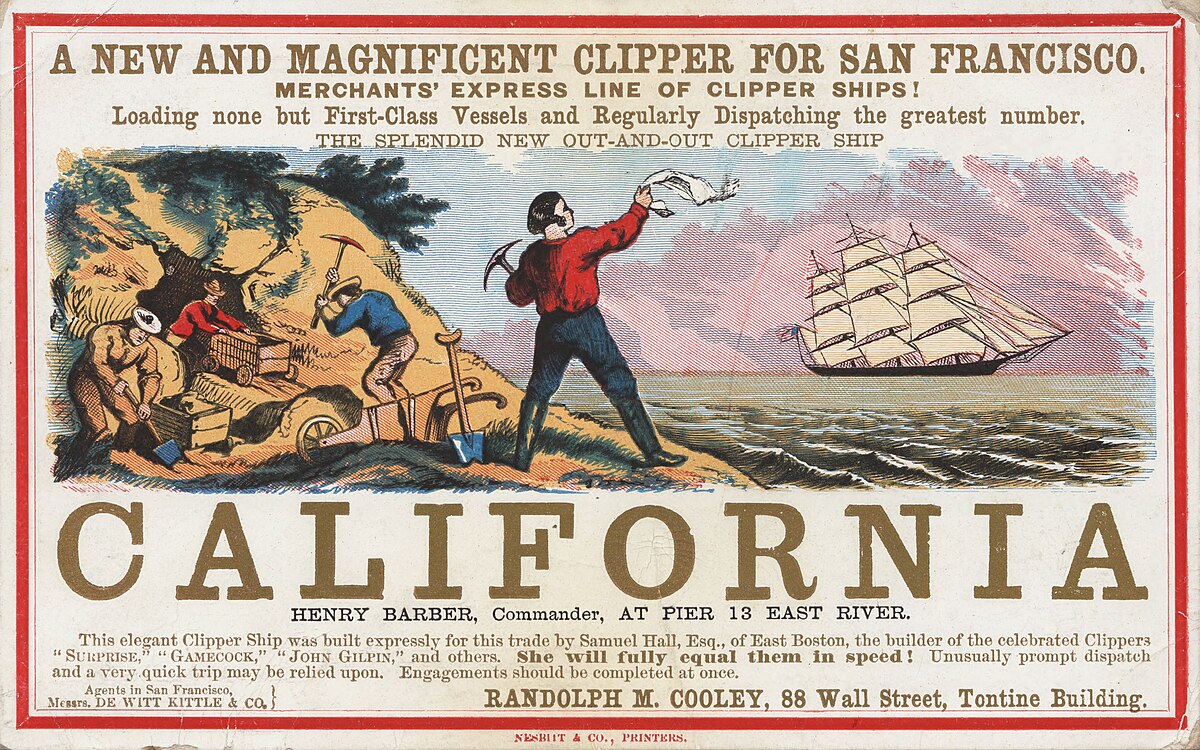
The California Gold Rush transformed California from a remote frontier into a bustling state, driving its rapid settlement and economic development. It had profound impacts on Native American populations, leading to displacement and hardship, as well as on the diverse populations that flocked to the region seeking their fortunes.
Honoring the Discovery Site
Today, Coloma is a protected historical site, preserving the legacy of this pivotal moment. Marshall Gold Discovery State Historic Park stands as a testament to James W. Marshall and the thousands of individuals whose lives were forever altered by the glint of gold in a small stream. Visitors can walk the grounds where the discovery was made, see replicas of Sutter’s Mill, and learn about the lives of the early prospectors and the profound historical currents that converged in this fertile valley. The story of who was the first to find gold in California is not just about a single person; it’s about the confluence of individuals, ambitions, and historical circumstances that led to an era-defining discovery, forever imprinting “The Golden State” onto the global consciousness and attracting countless travelers to explore its rich historical landmarks.
LifeOutOfTheBox is a participant in the Amazon Services LLC Associates Program, an affiliate advertising program designed to provide a means for sites to earn advertising fees by advertising and linking to Amazon.com. Amazon, the Amazon logo, AmazonSupply, and the AmazonSupply logo are trademarks of Amazon.com, Inc. or its affiliates. As an Amazon Associate we earn affiliate commissions from qualifying purchases.