
Understanding the Context of Federal Deployment
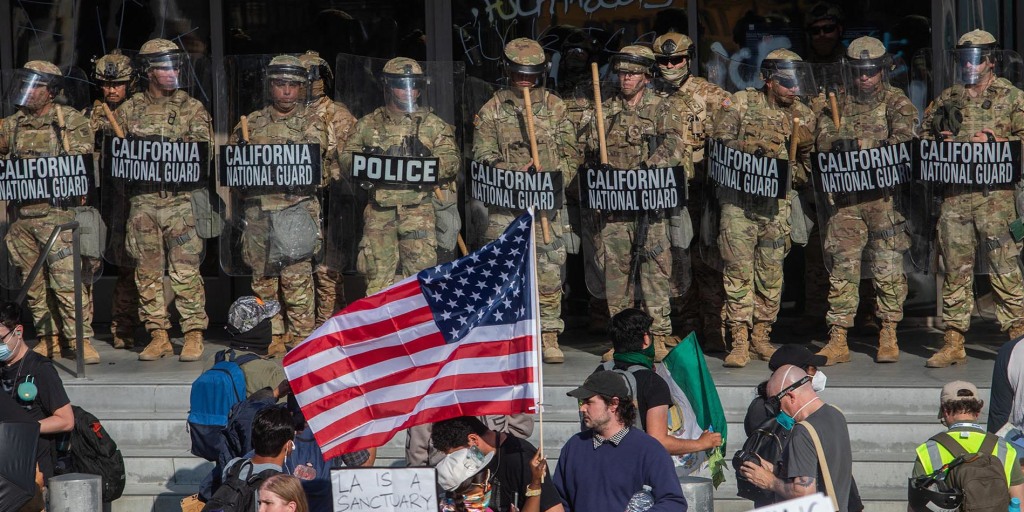
The deployment of the National Guard to any state is a significant event, often indicative of a severe crisis or a perceived threat that local and state authorities are struggling to manage. When Donald Trump, as President of the United States, ordered the deployment of National Guard units to California, the nation watched with keen interest. This action, while ostensibly for specific purposes, often sparks broader conversations about federal-state relations, the role of the military in domestic affairs, and the underlying issues that necessitate such a response. To understand why this particular deployment occurred, it’s crucial to delve into the specific circumstances that led to the request and the subsequent decision.
Federal-State Dynamics
The deployment of the National Guard is a complex interplay between federal and state authority. While the National Guard operates under the command of state governors in their state capacity, the President can federalize them, bringing them under direct federal control for national emergencies. In the case of California, any federal deployment would typically follow a request from the state’s governor or a determination by the federal government that a national interest was at stake. The dynamic often hinges on the perceived capacity of state resources to handle an unfolding situation. When the federal government intervenes, it signals a belief that the situation has escalated beyond the immediate capabilities of the state or that federal assets are uniquely positioned to provide necessary support. This intervention can be a point of contention, with some viewing it as essential assistance and others as an overreach of federal power.
National Guard’s Dual Role
The National Guard is unique in its dual federal and state mission. In their state role, Guard members respond to domestic emergencies such as natural disasters, civil unrest, and humanitarian crises, operating under the command of their state governor. In their federal role, they can be called into active federal service by the President, becoming part of the U.S. Army or Air Force for national defense or international operations. This dual capacity means that deployments, even domestically, can be framed through the lens of national security or the fulfillment of federal responsibilities. When deployed to California, the National Guard could have been tasked with a range of duties, from logistical support and infrastructure repair to maintaining order during periods of civil disturbance.
The Specific Triggers for Deployment
The decision to deploy the National Guard to California during the Trump administration was not a singular event but rather a response to specific, often interconnected, crises. While the title of an article might generalize the reason, the reality on the ground was typically more nuanced, involving a confluence of factors. These factors could range from natural disasters and humanitarian needs to public safety concerns and border security issues. Understanding these triggers requires an examination of the specific policy priorities and the prevailing domestic challenges faced by the nation at the time of the deployment.
Border Security and Immigration Concerns
One of the most prominent reasons cited for federalizing and deploying the National Guard to California during Donald Trump’s presidency was related to border security and immigration. The administration had a strong focus on stemming the flow of undocumented immigrants, particularly along the United States-Mexico border. California, with its extensive border with Mexico, became a focal point for these efforts.
Support for Border Patrol
The National Guard units were often deployed to provide support to the U.S. Customs and Border Protection (CBP) and Immigration and Customs Enforcement (ICE) agencies. This support was not intended to involve direct law enforcement or apprehension of individuals but rather to augment the logistical and operational capabilities of these agencies. Tasks might have included surveillance, transportation, perimeter security at border facilities, and administrative support. The rationale was that by freeing up CBP and ICE agents from these ancillary duties, more personnel could be dedicated to border patrol and enforcement activities. This strategy aimed to increase the effectiveness of immigration control measures without expanding the direct federal law enforcement footprint in a manner that might infringe on state responsibilities.
Addressing Humanitarian Needs at the Border
Beyond direct enforcement, deployments also sometimes addressed the humanitarian aspects of the border situation. Large influxes of migrants, including families and unaccompanied children, created significant strains on resources for shelter, food, and medical care. While primary responsibility for these needs often fell to humanitarian organizations and state and local governments, the federal government, through the National Guard, could provide supplemental assistance. This could involve establishing temporary shelters, distributing supplies, and providing basic medical support. The deployment in such instances was framed as a necessary measure to manage a humanitarian crisis that had national implications.
Natural Disasters and Emergency Response

California is no stranger to natural disasters, from wildfires and earthquakes to mudslides and floods. The National Guard is a critical asset in responding to such events, providing personnel and equipment for search and rescue, disaster relief, and the restoration of essential services. While often a state-led response, the scale and severity of certain disasters can necessitate federal assistance.
Wildfire Suppression and Support
The vastness and frequency of wildfires in California have, at times, overwhelmed state firefighting resources. In such situations, the National Guard has been mobilized to assist. This support can include aerial firefighting capabilities (e.g., using helicopters), providing ground personnel for fire containment, assisting with evacuations, and supporting the logistical needs of first responders. The deployment of Guard members allows for a broader and more sustained response, especially when fires threaten large populated areas or critical infrastructure. The federal government’s involvement, through the National Guard, underscores the national interest in protecting lives, property, and natural resources within the state.
Disaster Relief and Recovery
Following major natural disasters, the National Guard plays a crucial role in the immediate aftermath and long-term recovery phases. This can involve distributing essential supplies like water, food, and blankets, clearing debris, providing temporary shelter, and assisting with the restoration of power and communication lines. The presence of the National Guard can also help maintain public order and security in affected areas, preventing looting and ensuring the safety of residents. Federalizing the Guard for these purposes often aligns with declarations of major disaster by the President, which unlocks federal funding and resources through agencies like the Federal Emergency Management Agency (FEMA).
The Political and Perceptual Dimensions of Deployment
Beyond the immediate operational reasons, the decision to deploy the National Guard to California under Donald Trump also carried significant political and perceptual weight. The administration’s approach to governance often involved assertive displays of federal authority, and deployments could be used to signal a strong stance on certain issues or to create a visual representation of federal commitment.
Demonstrating Federal Authority and Commitment
For an administration keen on projecting strength and decisiveness, deploying federal assets like the National Guard can serve as a powerful symbol. It demonstrates a willingness to commit national resources to address perceived problems, whether they are at the border, in response to a natural disaster, or in response to civil unrest. In California, a state often at political odds with the federal administration, such deployments could be interpreted as an assertion of federal prerogative or, conversely, as a necessary intervention to support a state facing overwhelming challenges. The optics of uniformed personnel on the ground, whether at the border or in disaster zones, are potent and can influence public perception of the administration’s effectiveness.
Inter-State Relations and Perceived Federal Overreach
The relationship between the federal government and states, particularly a large and influential state like California, is a delicate balance. Deployments of the National Guard can sometimes be seen as either a supportive gesture or an intrusion. Critics might argue that such deployments, especially if not explicitly requested by the state’s governor, represent federal overreach and an attempt to impose federal policy on a state. This was particularly relevant when discussions around border security and immigration policy became highly politicized. The federal government’s involvement, even through the National Guard, could be viewed as undermining state sovereignty or as a move to circumvent state-level policies that might differ from federal directives. Conversely, supporters might see it as the federal government fulfilling its constitutional duty to ensure national security and provide essential support during times of crisis.
Conclusion: A Multifaceted Response to Complex Challenges
The question of why Donald Trump sent the National Guard to California is best answered by acknowledging the multifaceted nature of the challenges faced by the state and the nation during his presidency. The deployments were not typically a monolithic response but rather a series of actions taken in response to specific circumstances, including border security imperatives, the exigencies of natural disasters, and the broader political landscape.
Operational Necessity Versus Political Signaling
In many instances, the operational necessity for National Guard support was undeniable. California’s immense size, population, and geographic vulnerabilities mean that it often requires substantial resources to manage crises effectively. However, the context of the Trump administration also suggests that political considerations played a role. The desire to project a strong image on issues like immigration or to assert federal authority could have influenced the timing, scale, and nature of these deployments. Understanding the motivations behind such decisions requires an analysis of both the pragmatic needs of disaster response and border management, as well as the strategic political calculations that often accompany significant federal actions.

Lasting Implications for Federal-State Cooperation
The deployments of the National Guard to California during the Trump era offer valuable insights into the evolving dynamics of federal-state cooperation. They highlight the crucial role of the National Guard as a flexible and responsive asset that can bridge the gap between state and federal capabilities. However, they also underscore the persistent tensions that can arise when federal and state priorities diverge, particularly on issues as sensitive as immigration and border security. Ultimately, these deployments serve as a reminder of the complex interplay of operational needs, political imperatives, and constitutional frameworks that shape the deployment of national resources in response to domestic challenges.
LifeOutOfTheBox is a participant in the Amazon Services LLC Associates Program, an affiliate advertising program designed to provide a means for sites to earn advertising fees by advertising and linking to Amazon.com. Amazon, the Amazon logo, AmazonSupply, and the AmazonSupply logo are trademarks of Amazon.com, Inc. or its affiliates. As an Amazon Associate we earn affiliate commissions from qualifying purchases.