
Evanston, Illinois, a vibrant and historically rich city nestled along the shores of Lake Michigan, holds a unique position as a close neighbor to the bustling metropolis of Chicago. While often perceived as an extension of the larger city, Evanston maintains its distinct identity, boasting its own charming downtown, world-class educational institutions, and a thriving arts scene. Understanding the proximity between these two Illinois gems is crucial for travelers, residents, and anyone looking to explore the diverse offerings of the Chicagoland area. The distance between Evanston and Chicago is not a static figure; it varies depending on the specific starting and ending points within each city and, more importantly, the chosen mode of transportation. This article delves into the various ways to traverse this relatively short distance, exploring the time, cost, and experience associated with each option, thereby illuminating the intricate relationship between these two significant urban centers.
Navigating the Distance: Travel Options and Timelines
The journey from Evanston to Chicago is a well-trodden path, facilitated by a variety of transportation methods, each offering a distinct perspective on the landscape and a unique travel experience. The perceived “distance” is not merely measured in miles but also in minutes, budget, and convenience.
By Public Transportation: The Reliable Commute
For many, the most practical and often the most economical way to travel between Evanston and Chicago is by utilizing the Chicago Transit Authority (CTA) system. The CTA ‘L’ train, specifically the Yellow Line and the Purple Line, provides direct and frequent service.
The Yellow Line: A Direct Link
The Yellow Line operates from the Howard station in Chicago and extends north to the Skokie station. While it doesn’t directly enter Evanston, it offers a convenient transfer point. For those starting in northern Evanston, a short bus or taxi ride to the Howard station is typically required. The Yellow Line journey itself is brief, but its primary utility lies in its connection to other lines that can then take you deeper into the city.
The Purple Line: Evanston’s Lifeline
The Purple Line is the primary artery connecting Evanston to downtown Chicago. It originates from the Linden station in Wilmette and makes several stops within Evanston, including the Davis Street, Foster, Dempster, and Noyes stations, before continuing south into Chicago. The travel time from a central Evanston station, such as Davis Street, to the Loop in downtown Chicago is approximately 30-45 minutes, depending on the specific destination within the Loop and the time of day. This makes it an ideal option for daily commuters and tourists alike.
Considerations for Public Transit:
- Cost: A single ride on the CTA ‘L’ train is generally affordable, with various passes available for frequent riders, offering significant savings.
- Frequency: Trains run frequently, especially during peak hours, minimizing wait times.
- Convenience: The CTA ‘L’ train stations are strategically located throughout Evanston, making them accessible to a large portion of the population. However, it’s important to check schedules, especially during off-peak hours or weekends.
- Experience: Traveling by ‘L’ train offers a quintessential Chicago experience, providing elevated views of the city as you approach the downtown core.
By Car: Flexibility and Direct Access
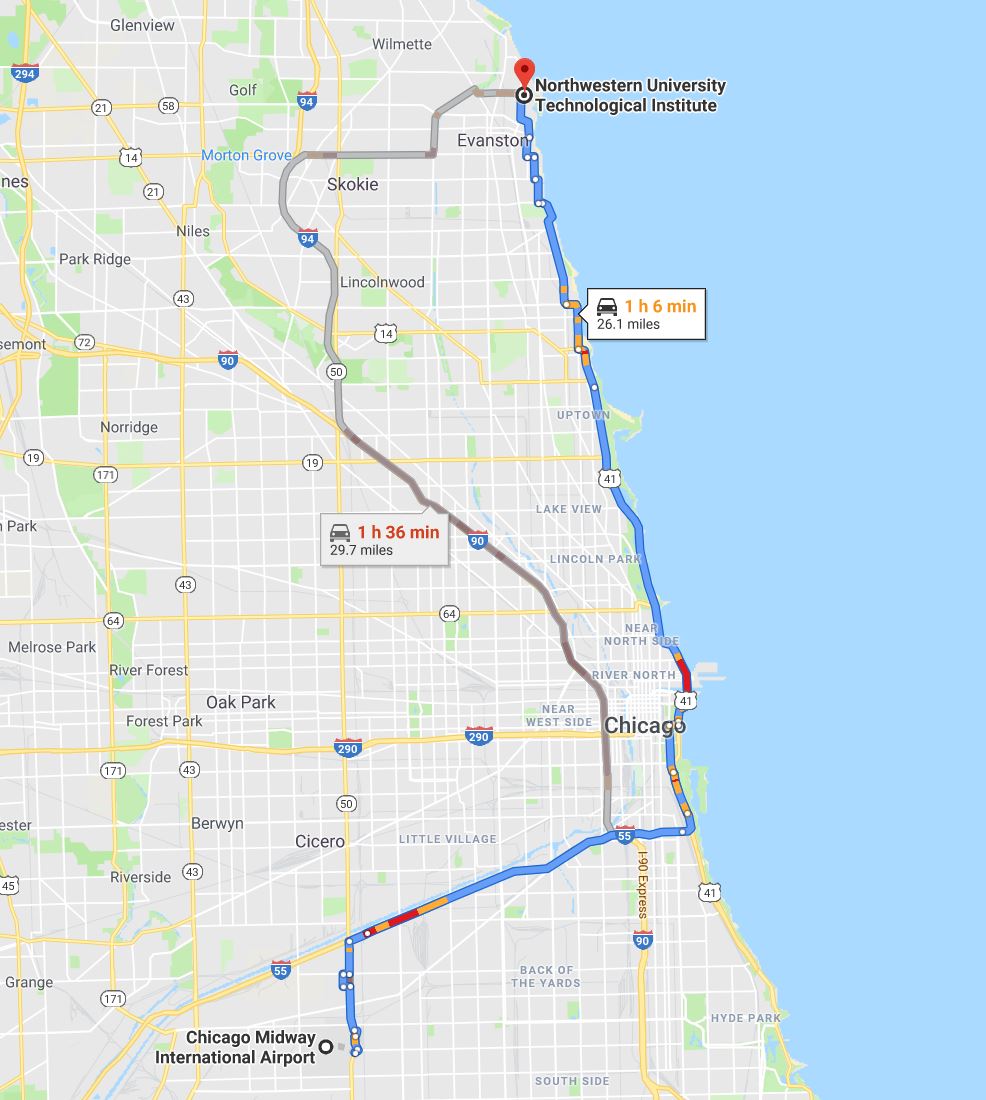
For those who prioritize flexibility and direct access to their destinations, driving a car remains a popular choice. The distance between Evanston and Chicago by car is relatively short, but travel times can be significantly influenced by traffic conditions.
The Drive: Routes and Estimates
The most common route from Evanston to downtown Chicago involves taking Sheridan Road south, which eventually merges with Lake Shore Drive (also known as DuSable Lake Shore Drive). The approximate driving distance is around 13-15 miles, depending on the specific start and end points.
- Without Traffic: Under ideal conditions, with minimal traffic, the drive can take as little as 25-30 minutes. This is often achievable during off-peak hours, such as late at night or very early in the morning.
- With Moderate Traffic: During typical commuting hours, traffic on Sheridan Road and Lake Shore Drive can build up considerably. Expect travel times to increase to 45-60 minutes.
- With Heavy Traffic: Major events, accidents, or severe weather can lead to significant delays, potentially doubling or even tripling the travel time. It is not uncommon for journeys to stretch to 90 minutes or more during peak congestion.
Considerations for Driving:
- Parking: Parking in Chicago, especially in popular downtown areas and tourist attractions, can be expensive and challenging to find. Factor in the cost and time spent searching for parking.
- Tolls: While the primary route along Lake Shore Drive is generally toll-free, some alternative routes or exits might involve toll roads, particularly if you venture further west into the suburbs.
- Flexibility: Driving offers the freedom to stop at various points of interest along the way or to depart and arrive at your exact desired location. This is particularly advantageous for those carrying luggage or traveling with children.
- Cost: Beyond fuel, consider the cost of potential parking fees and wear and tear on your vehicle.

Ride-Sharing Services: Convenience on Demand
Ride-sharing services like Uber and Lyft have become a ubiquitous option for travelers seeking a balance of convenience and directness. They offer a door-to-door service without the need to find parking, and drivers are familiar with the local routes.
Ride-Sharing Estimates:
- Cost: Prices fluctuate based on demand, time of day, and traffic conditions. Expect costs to be higher than public transportation but generally comparable to or slightly less than traditional taxis. A typical ride from Evanston to downtown Chicago might range from $30 to $60, excluding surge pricing.
- Time: The travel time is essentially the same as driving a personal vehicle, as ride-sharing vehicles utilize the same road networks. Therefore, traffic considerations remain paramount.
- Convenience: This is where ride-sharing truly shines. You can book a ride from your doorstep and be dropped off directly at your destination, eliminating the need for transfers or navigating public transit maps.
Exploring the Interplay: Evanston’s Role in the Greater Chicago Landscape
Evanston’s proximity to Chicago is not just a matter of mileage; it’s a relationship that enriches both communities. Evanston serves as a sophisticated gateway to the northern reaches of Cook County, offering a distinct experience that complements the vibrant energy of the big city.
A Haven of Culture and Academia
Evanston is renowned for being the home of Northwestern University, a prestigious private research university. The presence of Northwestern University imbues Evanston with an intellectual and cultural dynamism. The university’s numerous museums, galleries, and performance spaces, such as the Mary and Leigh Block Museum of Art and the McCormick Tribune Campus Center, are often open to the public, offering enriching experiences that rival those found in Chicago.
The downtown area of Evanston, centered around Sherman Avenue and Davis Street, is a hub of activity. Here, visitors can explore a diverse array of independent boutiques, bookstores, and restaurants. The Space at Ryder Farm, a renowned music venue, attracts performers and audiences from across the region. The Civic Evanston Theatre Company also contributes to the city’s rich cultural tapestry.
Lakeside Charm and Recreational Opportunities
The long stretch of shoreline along Lake Michigan that defines Evanston offers a serene counterpoint to the urban intensity of Chicago. Numerous parks and beaches, including Lee Street Beach and Clark Street Beach, provide residents and visitors with opportunities for recreation, relaxation, and stunning views of the lake and the Chicago skyline in the distance. The Chicago Botanic Garden, while technically in Glencoe, is easily accessible from Evanston and offers a spectacular display of horticultural artistry.
For those interested in maritime history, the Grosse Point Lighthouse, a historic landmark, stands as a testament to the region’s seafaring past. Its picturesque setting and historical significance make it a popular destination for photographers and history enthusiasts.
Planning Your Visit: Integrating Evanston and Chicago
The close geographical and temporal proximity between Evanston and Chicago allows for seamless integration of these two destinations into a single trip. Travelers can choose to base themselves in Evanston and make day trips into the city, or vice versa.
Strategic Accommodation Choices
When selecting accommodation, consider your primary interests. If a vibrant nightlife and world-renowned museums are your main focus, a hotel in downtown Chicago might be ideal. However, if you seek a more tranquil setting with easy access to a charming downtown, excellent dining, and a beautiful lakefront, Evanston offers compelling options.
- Hotels in Evanston: Several hotels are located within Evanston, offering a range of amenities and price points. These often provide a more intimate and locally-focused experience. The Hilton Orrington/Evanston and the Hyatt House Chicago/Evanston are popular choices, known for their convenient locations and comfort.
- Hotels in Chicago: For those prioritizing immediate access to Chicago’s iconic attractions like Magnificent Mile, Millennium Park, and the Art Institute of Chicago, a hotel within the city limits is the obvious choice.

Experiencing Both Worlds
A common travel strategy involves spending a few days exploring the distinct character of Evanston – its academic ambiance, lakefront serenity, and local culinary scene – followed by a few days immersed in the urban excitement of Chicago. The ease of travel between the two via the CTA ‘L’ train makes this dual exploration effortless. Imagine starting your day with a leisurely stroll along the Evanston lakefront, perhaps visiting the Frances Searle Observatory for a unique perspective, and then taking the Purple Line south to spend your afternoon exploring world-class museums or catching a show in the theatre district.
This symbiotic relationship means that visitors to the Chicagoland area are not confined to a single experience. They can enjoy the sophistication of a university town and the boundless energy of a major global city, all within a short commute. The question of “how far” becomes less about mere distance and more about the richness of the interconnected experiences available to anyone choosing to explore this dynamic region.
LifeOutOfTheBox is a participant in the Amazon Services LLC Associates Program, an affiliate advertising program designed to provide a means for sites to earn advertising fees by advertising and linking to Amazon.com. Amazon, the Amazon logo, AmazonSupply, and the AmazonSupply logo are trademarks of Amazon.com, Inc. or its affiliates. As an Amazon Associate we earn affiliate commissions from qualifying purchases.