
The story of how Florida became part of the United States is a fascinating chapter in American history, marked by exploration, colonial rivalries, and ultimately, diplomacy. It’s a narrative that begins long before the Stars and Stripes flew over the peninsula, with the earliest European explorers laying claim to this land. The subsequent centuries saw Spain, France, and Great Britain vie for control, each leaving their indelible mark on the region’s development and culture before it finally transitioned to American possession. Understanding this acquisition is key to appreciating the unique heritage of Florida, from its vibrant local culture to its historical landmarks.
Early European Encounters and Spanish Dominance
The first European to set foot on what is now Florida was the Spanish explorer Juan Ponce de León in 1513. He claimed the land for Spain, naming it “La Florida” in honor of the Easter season (“Pascua Florida” in Spanish) and its abundant floral vegetation. His expedition was part of the broader age of discovery, driven by a desire for new territories, resources, and fame. While Ponce de León’s initial voyages were primarily exploratory, they marked the beginning of a long Spanish presence in the region.
St. Augustine: A Spanish Stronghold
One of the most significant outcomes of the Spanish exploration was the founding of St. Augustine in 1565 by Pedro Menéndez de Avilés. This makes it the oldest continuously inhabited European-established settlement in the continental United States. For centuries, St. Augustine served as the capital of Spanish Florida and a crucial strategic outpost. Its defenses, most notably the Castillo de San Marcos, were built to protect against potential incursions from other European powers and indigenous peoples. The Spanish influence is still palpable in St. Augustine today, evident in its architecture, street names, and a deep sense of history that draws countless visitors interested in landmarks and historical experiences. The Spanish Crown’s control, though often challenged, remained largely intact for over two centuries, shaping the early development of the peninsula.
The Shifting Sands of Colonial Power
The early 17th century saw other European nations casting their eyes toward North America. While Spain held a firm grip on Florida, the presence of other colonial powers created a complex geopolitical landscape. The French made an attempt to establish a colony at Fort Caroline in 1564, near present-day Jacksonville, but it was swiftly destroyed by the Spanish under Menéndez de Avilés the following year. This event underscored the Spanish determination to maintain their claim.
British Intervention and the First Treaty of Paris
The true challenge to Spanish dominion came later, with the rise of the British Empire. Throughout the 18th century, tensions between Spain and Great Britain intensified, often spilling over into colonial territories. During the Seven Years’ War (known as the French and Indian War in the colonies), British forces captured Havana, Cuba, from the Spanish in 1762. In the subsequent peace negotiations, which concluded with the First Treaty of Paris in 1763, Great Britain received significant territorial concessions from Spain. In exchange for their loss of Florida, the Spanish were allowed to retain Cuba and Manila. This marked the first time Florida passed from one European power to another, ushering in a period of British rule.
British Rule and a New Administration
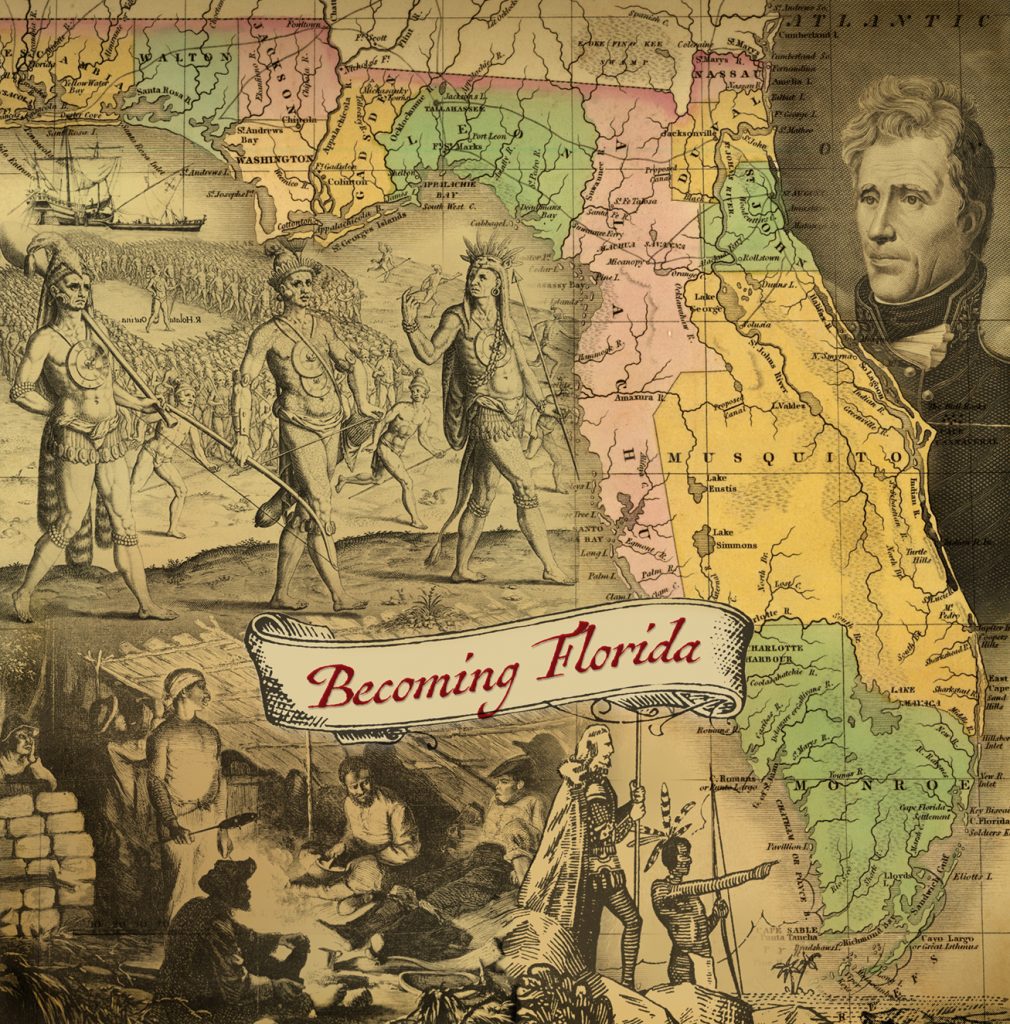
The British administration of Florida from 1763 to 1783 brought about considerable changes. The British divided the territory into two colonies: East Florida with its capital at St. Augustine, and West Florida with its capital at Pensacola. The British sought to develop the region more effectively, encouraging settlement and economic activity, particularly in timber and agriculture. They also implemented new governance structures and initiated land surveys, aiming to integrate Florida more closely into their imperial designs. However, this period was relatively short-lived, as the geopolitical tides were about to shift once again.
The Second Spanish Period and the Adams-Onís Treaty
The American Revolutionary War played a pivotal role in Florida’s trajectory. As Great Britain was engaged in conflict with its thirteen colonies, Spain saw an opportunity to reclaim territories lost in 1763. Spanish forces, allied with the American revolutionaries, attacked and recaptured West Florida, including Pensacola, during the war. When the American Revolutionary War concluded with the Treaty of Paris in 1783, Great Britain ceded Florida back to Spain. This marked the beginning of a second Spanish period, which lasted for nearly four decades.
The United States Sets Its Sights on Florida
During the second Spanish period, the United States, now a burgeoning nation, began to view Florida as strategically important, particularly due to issues with border disputes and trade. The presence of Seminole tribes often engaged in raids into Georgia, and the Spanish administration’s perceived inability to control them, provided a casus belli for American intervention. Furthermore, access to the Gulf of Mexico and control over the port of New Orleans (which Spain briefly controlled after the Louisiana Purchase) were significant economic and strategic considerations for the young republic.
The Diplomacy of the Adams-Onís Treaty
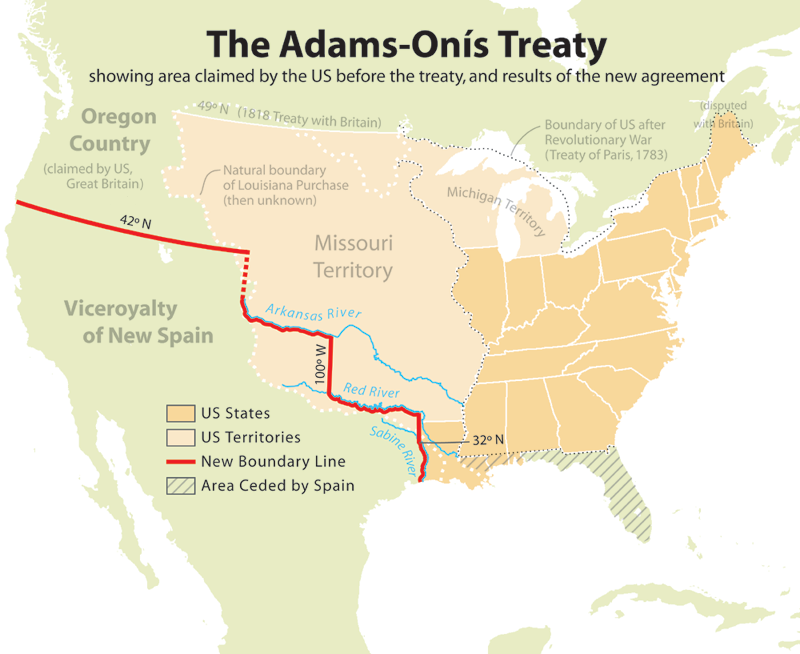
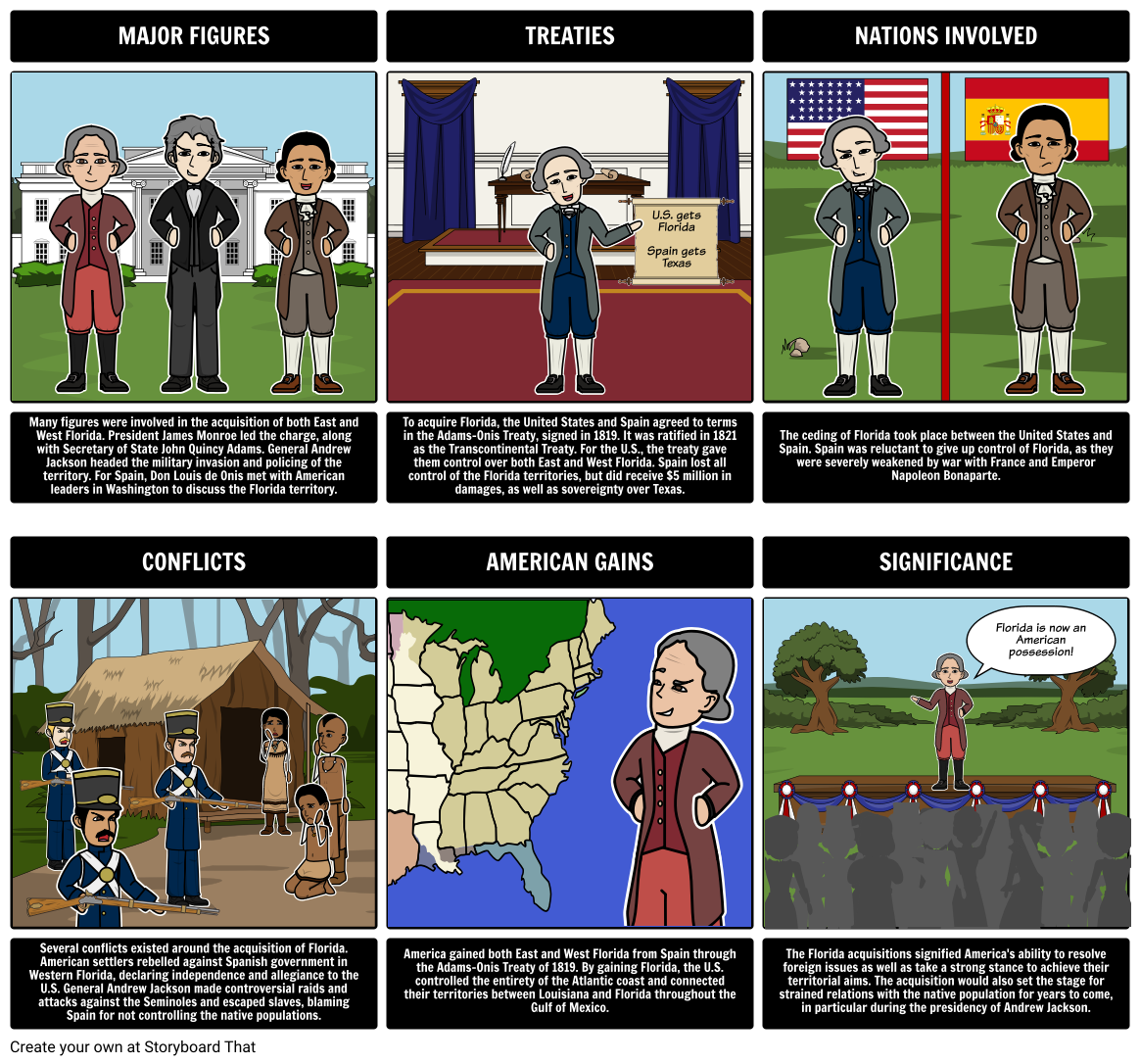
The negotiations that ultimately led to the acquisition of Florida were a testament to the diplomatic skill of John Quincy Adams, the then U.S. Secretary of State, and the Spanish diplomat Luis de Onís y González-Vara. The Adams-Onís Treaty, signed in 1819 and ratified in 1821, was a landmark agreement. Under its terms, Spain ceded all of its territory in East Florida and all of its claims to West Florida to the United States. In return, the U.S. agreed to pay $5 million to Spanish citizens who had claims against the Spanish government, and crucially, agreed to relinquish its own claims to territory in what is now Texas. The treaty also established a clear boundary between the United States and New Spain (which would later become Mexico). This diplomatic triumph effectively transferred Florida from Spain to the United States, a momentous occasion that significantly expanded the young nation’s territory and strategic reach.
Statehood and Integration
Following the ratification of the Adams-Onís Treaty, the United States formally took possession of Florida in 1821. Andrew Jackson was appointed as the first military governor. The process of establishing a territorial government and preparing for statehood began, though it was not without its challenges, including ongoing conflicts with indigenous tribes such as the Seminole. Florida was officially admitted to the Union as the 27th state on March 3, 1845, marking the culmination of its journey from a contested colonial territory to an integral part of the United States. The acquisition of Florida was not just a territorial expansion; it was a pivotal event that reshaped the geopolitical map of North America, securing vital coastlines and opening new avenues for westward expansion and economic development, contributing to the rich tapestry of American history and its diverse local culture.
LifeOutOfTheBox is a participant in the Amazon Services LLC Associates Program, an affiliate advertising program designed to provide a means for sites to earn advertising fees by advertising and linking to Amazon.com. Amazon, the Amazon logo, AmazonSupply, and the AmazonSupply logo are trademarks of Amazon.com, Inc. or its affiliates. As an Amazon Associate we earn affiliate commissions from qualifying purchases.