
Understanding the duration of a flight from Chicago to Mexico is a crucial piece of information for any traveler planning their getaway. The seemingly simple question belies a complex answer, as numerous factors influence how long you’ll spend in the air. While a direct flight offers the quickest route, the vastness of Mexico and the specific destination within it play significant roles. Furthermore, the choice between a non-stop journey and one with layovers can drastically alter your travel time, impacting everything from your arrival schedule to your overall energy levels upon reaching your destination. This guide aims to demystify flight times, offering insights into what to expect and how to make informed decisions for your trip.

Direct Flight Durations: A Snapshot
For those seeking the most efficient travel, direct flights from Chicago to popular Mexican destinations are generally the preferred option. These non-stop journeys bypass the complexities and time commitments of connecting flights, allowing travelers to maximize their time at their chosen resort or exploring the local culture.
To Major Hubs and Coastal Resorts
The most common flight paths from Chicago O’Hare International Airport (ORD) or Chicago Midway International Airport (MDW) lead to key travel hubs in Mexico, such as Mexico City International Airport (MEX), and popular tourist destinations like Cancun International Airport (CUN).
- Chicago to Cancun: This is arguably the most popular route, connecting the Midwest to the vibrant Riviera Maya. A direct flight typically ranges from 3 hours and 45 minutes to 4 hours and 30 minutes. This allows for easy access to world-class all-inclusive resorts, stunning beaches, and historical sites like Chichen Itza. The relatively short flight time makes a weekend getaway or a longer vacation equally feasible.
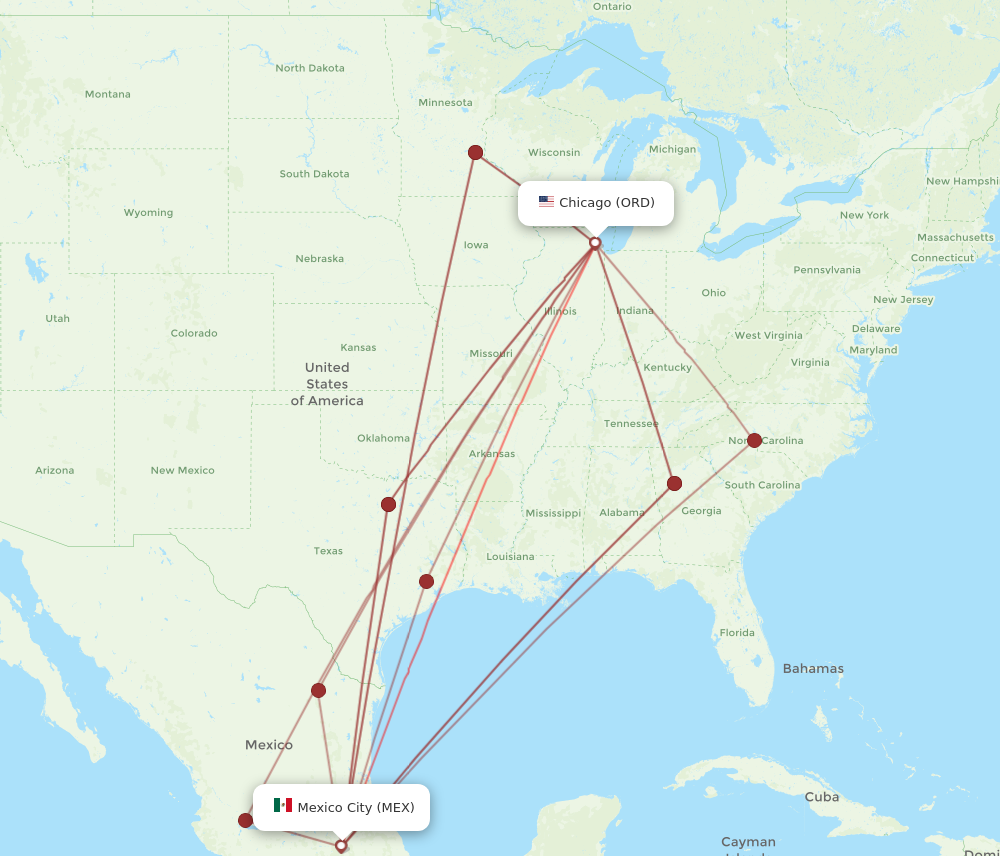
- Chicago to Mexico City: For travelers interested in the rich history, bustling metropolis, and culinary scene of Mexico’s capital, the flight duration is slightly longer. Direct flights from Chicago to Mexico City (MEX) generally last between 4 hours and 15 minutes to 4 hours and 45 minutes. This allows ample time to explore the historic center, visit the National Museum of Anthropology, and experience the vibrant life of this sprawling city.
- Chicago to Puerto Vallarta: On the Pacific coast, Puerto Vallarta offers a different kind of Mexican charm. Direct flights to Licenciado Gustavo Díaz Ordaz International Airport (PVR) from Chicago typically take around 4 hours and 30 minutes to 5 hours. This destination is known for its picturesque beaches, lively boardwalk, and excellent dining options, making the flight time a worthwhile investment.
- Chicago to Los Cabos: The upscale resort destination of Los Cabos, encompassing Cabo San Lucas and San Jose del Cabo, also attracts many travelers from Chicago. Direct flights to Los Cabos International Airport (SJD) usually hover around 4 hours and 45 minutes to 5 hours and 15 minutes.
It is important to note that these times are estimates and can fluctuate based on wind speed, air traffic, and the specific flight path taken by the airline.
Factors Influencing Flight Time
While direct flights provide a baseline, several variables can significantly impact the actual duration of your journey from Chicago to Mexico. Understanding these factors can help set realistic expectations and plan your travel itinerary accordingly.
Headwinds and Tailwinds
The direction and speed of the wind, known as headwinds and tailwinds, are primary determinants of flight duration. Traveling east from Chicago towards Mexico, flights often encounter prevailing westerly winds.
- Tailwinds: When the wind blows in the same direction as the aircraft, it is considered a tailwind. Tailwinds can significantly reduce flight times, as the wind essentially pushes the plane forward, increasing its ground speed. This is why a flight from Mexico back to Chicago might be slightly longer than the eastbound journey, as it contends with headwinds.
- Headwinds: Conversely, headwinds blow against the direction of the aircraft, slowing it down and increasing flight time. Air traffic control and pilots constantly monitor wind conditions to optimize routes for fuel efficiency and speed, but headwinds are an unavoidable element of air travel.
Aircraft Type and Cruising Speed
The specific model of aircraft used for the flight also plays a role. Different aircraft have varying cruising speeds and fuel capacities, which can influence flight planning and, consequently, duration. Modern jetliners are designed for efficiency, but subtle differences in cruising speeds can lead to minor variations in flight times, especially on longer routes. Airlines also consider the optimal cruising altitude, which can be affected by weather patterns and air traffic, further impacting the journey.
Air Traffic Control and Flight Paths
Air traffic control (ATC) plays a vital role in managing the skies, ensuring the safety and efficiency of air travel. Flights are routed along designated air corridors, and at times, ATC may direct aircraft to follow slightly longer paths to avoid congested airspace or to maintain safe separation from other planes. This can add minutes, or sometimes even more, to the overall flight time. The complexity of airspace management, particularly around major international airports like Chicago O’Hare and Mexico City (MEX), can contribute to these route adjustments.
Flights with Layover: Extended Journeys
While direct flights offer convenience, they are not always available or the most cost-effective option. Flights with one or more layovers can significantly extend the total travel time from Chicago to Mexico. These journeys require careful consideration of connecting times and potential delays.

Connecting Through Major Hubs
Many travelers opt for flights with layovers, often connecting through major hubs in the United States or even within Mexico itself. Common connecting cities include:
- Dallas/Fort Worth International Airport (DFW)
- Houston George Bush Intercontinental Airport (IAH)
- Atlanta Hartsfield-Jackson International Airport (ATL)
- Miami International Airport (MIA)
Calculating Total Travel Time
When factoring in layovers, the total travel time is a sum of several components:
- Flight Time to Layover City: The duration of the initial flight from Chicago to the connecting city. This can range from 1 to 3 hours, depending on the layover location.
- Layover Duration: The time spent on the ground at the connecting airport. This is highly variable, from a quick 1-hour connection to a multi-hour wait.
- Flight Time from Layover City to Final Destination: The duration of the second flight, from the connecting city to your chosen destination in Mexico. This will depend on the distance from the layover city to Mexico.
Example Scenario:
A flight from Chicago to Cancun (CUN) with a layover in Houston (IAH) might look like this:
- Flight Chicago to Houston (IAH): Approximately 2 hours 30 minutes.
- Layover in Houston (IAH): 2 hours.
- Flight Houston (IAH) to Cancun (CUN): Approximately 2 hours 45 minutes.
Total Travel Time: 2.5 hours + 2 hours + 2.75 hours = 7 hours and 15 minutes.
This example illustrates how a layover can add several hours to your journey compared to a direct flight. It is crucial to account for this added time when planning airport transfers, check-in procedures, and your overall arrival at your Mexican destination.
Minimizing Layover Impact
- Choose Shorter Layover Times: While excessively short layovers increase the risk of missing a connection, overly long ones can be tedious. Aim for a comfortable connection time, typically 1.5 to 3 hours, depending on the airport size and your comfort level.
- Strategic Layover Cities: Some layover cities might offer more efficient connections or be geographically advantageous for your route. Researching different connecting options can sometimes reveal faster overall journeys.
- Consider Overnight Layovers: For very long journeys or when seeking to break up travel, an overnight layover can be a strategic choice, allowing for rest before the onward journey. However, this significantly extends the total trip duration.
Planning Your Travel and Arrival
Knowing the estimated flight times is just the first step in seamless travel planning. To ensure a smooth experience from Chicago to Mexico, consider these practical aspects.
Time Zone Differences
When planning your arrival, it’s essential to factor in the time zone differences. Mexico observes several time zones, similar to the United States. For instance, Cancun is in the Eastern Standard Time zone (EST) during daylight saving and GMT-5 year-round, while Mexico City is also GMT-5. Puerto Vallarta and Los Cabos are in the Pacific Time zone (PST) or GMT-8. This means that even if your flight lands at a certain local time, the actual elapsed time since your departure from Chicago will be influenced by these shifts. Always verify the time zone of your destination.
Airport Procedures and Travel Time
- Departure from Chicago: Arrive at ORD or MDW well in advance of your flight. For international travel, airlines typically recommend arriving at least 3 hours prior to departure. This allows ample time for check-in, bag drop, and security screening.
- Arrival in Mexico: Upon arrival in Mexico, you will go through immigration and customs. The time this takes can vary significantly depending on the airport and the volume of arriving passengers. Some major airports like Cancun International Airport (CUN) have efficient processes, but it’s wise to allocate at least 1-2 hours for these procedures.
- Travel to Your Accommodation: Once through customs, you will need to arrange transportation to your hotel or resort. Options typically include airport shuttles, taxis, or pre-booked private transfers. The travel time from the airport to your accommodation will depend on its location and local traffic conditions. For example, reaching a resort in the Riviera Maya from Cancun (CUN) can take anywhere from 30 minutes to over an hour.
By understanding the flight durations, the factors that influence them, and the practicalities of airport procedures and time zones, travelers can more accurately estimate their total travel time and plan a stress-free journey from Chicago to the beautiful destinations of Mexico.
LifeOutOfTheBox is a participant in the Amazon Services LLC Associates Program, an affiliate advertising program designed to provide a means for sites to earn advertising fees by advertising and linking to Amazon.com. Amazon, the Amazon logo, AmazonSupply, and the AmazonSupply logo are trademarks of Amazon.com, Inc. or its affiliates. As an Amazon Associate we earn affiliate commissions from qualifying purchases.