
Navigating your journey to the vibrant city of Chicago often involves an assessment of various travel expenses, and the cost of tolls is a significant consideration for many drivers. As a major metropolitan hub and a popular tourist destination, Chicago is accessible via a network of toll roads that can significantly impact your overall travel budget. Understanding these costs upfront can help you plan a smoother and more predictable trip, whether you’re embarking on a cross-country road trip or a regional excursion.
The tolls leading into Chicago are primarily managed by the Illinois State Toll Highway Authority (ISTHA). These tolls are not static and can vary based on several factors, including the specific toll roads used, the time of day (for some peak pricing), the type of vehicle you are driving, and your method of payment. To effectively budget for your trip, it is essential to familiarize yourself with the different tollway systems and their associated charges.
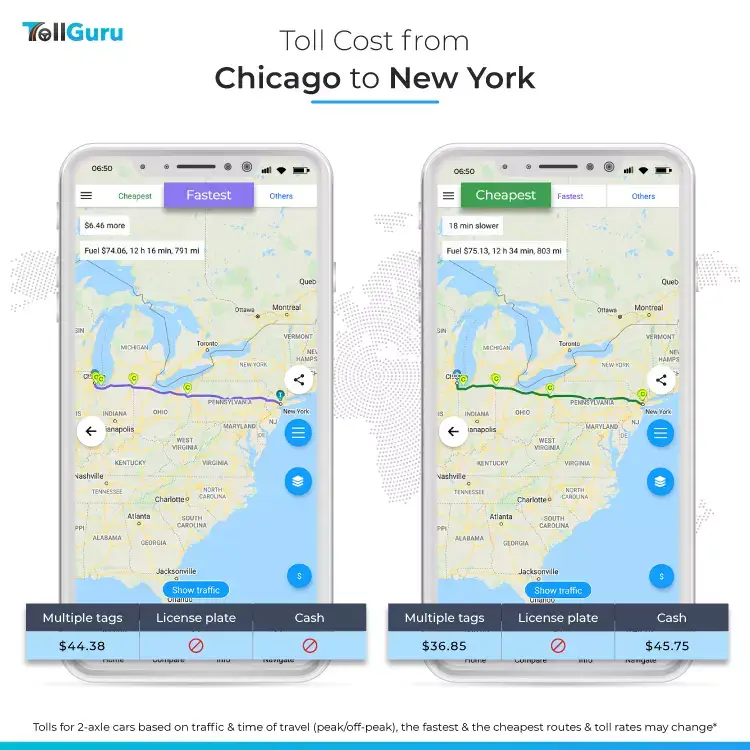
Understanding the Chicago Tollway System
The Chicago metropolitan area is served by an extensive network of toll highways designed to facilitate efficient traffic flow and manage congestion. The primary toll roads you are likely to encounter when approaching Chicago include:
The Illinois Tollway System
The ISTHA operates over 1,000 miles of toll roads in northern Illinois, with a significant portion serving the Chicagoland area. The main tollways relevant to inbound travel include:
I-90 (Jane Addams Memorial Tollway)
This tollway stretches from the Wisconsin border, west of Rockford, and heads east towards the city of Chicago. It is a major artery for travelers coming from the north and northwest. The I-90 tollway features several toll plazas, including the notorious “Skyway Toll Plaza,” which can contribute significantly to the overall cost of entry.
I-88 (Ronald Reagan Memorial Tollway)
This tollway connects the Quad Cities area to the western suburbs of Chicago, eventually feeding into other tollways that lead into the city. It’s a common route for travelers arriving from the west.
I-355 (Veterans Memorial Tollway)
This is a north-south tollway that encircles portions of the western and southern suburbs of Chicago. It connects I-80 and I-90, offering a bypass for those looking to avoid the direct urban core.
I-80 (East-West Tollway)
While portions of I-80 are toll-free, sections in Illinois are part of the tollway system, particularly as it heads east towards Indiana and the southern approaches to Chicago.
I-55 (Reagan Memorial Tollway – partially tolled)
Although largely a free interstate, certain sections near Chicago might involve tolls, especially when transitioning onto other tolled routes.
The Chicago Skyway
A separate entity from the main ISTHA system, the Chicago Skyway (I-90) is a 7.8-mile toll road that extends from the Dan Ryan Expressway (I-90/I-94) to the Indiana state line, where it connects with the Indiana Toll Road. The Skyway is known for its high toll rates, particularly for cash payers, and is often the most expensive single toll you will encounter when entering Chicago from the southeast.
Factors Influencing Toll Costs
The exact amount you will pay in tolls to reach Chicago is not a fixed number and depends on several variables:
Route Taken
The most significant factor is the specific path you choose. Traveling on I-90 from Wisconsin will involve a different set of tolls than entering from Indiana via the Chicago Skyway or approaching from the west on I-88. Each tollway has its own pricing structure.
Vehicle Type
Toll rates are typically tiered based on the vehicle’s size and number of axles. Passenger cars (two axles) will generally pay the lowest rates. Larger vehicles such as trucks, RVs, and vehicles with trailers will incur higher tolls.

Time of Day
While not universally applied across all ISTHA roads, some toll sections may implement congestion pricing or have slightly different rates during peak travel hours. This is less common on the main ISTHA routes but can be a factor on some urban expressways.
Payment Method
This is a crucial element in determining your total toll cost. The ISTHA operates primarily on an all-electronic tolling system, with no cash lanes on most of its newer facilities and increasingly phasing them out.
- I-PASS: The official electronic transponder for the Illinois Tollway. Using an I-PASS transponder offers the lowest toll rates, as it provides the deepest discount compared to other payment methods. If you frequently travel on toll roads in Illinois or other participating states (through the E-ZPass network), an I-PASS is a worthwhile investment.
- E-ZPass: E-ZPass is a widely interoperable transponder system used across many states in the eastern half of the United States. Your I-PASS will work with E-ZPass systems, and an E-ZPass transponder is generally accepted on the Illinois Tollway, offering similar discounted rates to I-PASS.
- Toll by Plate: If you do not have an I-PASS or E-ZPass, your license plate will be photographed, and a bill will be mailed to the registered owner of the vehicle. This method incurs higher rates than using a transponder, often referred to as the “full toll rate” or a “processing fee” on top of the toll. It is crucial to pay these bills promptly to avoid additional penalties and fees.
- Chicago Skyway Tolls: The Chicago Skyway also utilizes an electronic tolling system (Skyway Tolling) and allows for I-PASS/E-ZPass use, which offers discounted rates. Cash payment is generally not accepted, and drivers without a transponder will be billed via Toll by Plate.
Estimating Your Toll Costs
To provide a concrete example, let’s consider a common scenario: driving from the Wisconsin border into downtown Chicago via I-90.
Example Scenario: Driving from Wisconsin to Downtown Chicago on I-90
Assuming you are driving a standard passenger car and are using an I-PASS or E-ZPass:
- Jane Addams Memorial Tollway (I-90): As you travel east on I-90, you will encounter multiple toll plazas. The total tolls for this section alone can range from approximately $10 to $15, depending on the exact entry and exit points and any temporary construction or pricing adjustments.
- Chicago Skyway: If your final destination is in the southeast part of the city or if you are heading into Indiana, you might use the Chicago Skyway. The toll for a passenger car on the Skyway can be around $5-$6 (with an I-PASS/E-ZPass).
Total Estimated Tolls (I-90 from Wisconsin to Downtown Chicago, using I-PASS/E-ZPass): Approximately $15 – $21.
If you opt for the Toll by Plate method, expect these costs to increase by a significant margin, potentially adding several dollars per toll collection point.
Driving from Western Illinois on I-88
If you are coming from the west on I-88, you will encounter tolls along the Ronald Reagan Memorial Tollway. For a passenger car using I-PASS/E-ZPass, the tolls from the Quad Cities area to the connection with I-355 or further into the suburbs can range from $5 to $10. From there, connecting to other tollways or toll-free routes will determine the final cost into the city.
Driving from Southern Illinois on I-55/I-80
Approaching Chicago from the south on I-55 may involve fewer tolls until you reach connections with I-80 or I-355, which are tolled. The cost will be highly dependent on the specific junctions used. Tolls for the I-80 and I-355 sections could add another $5 to $10 for a passenger car with an electronic transponder.
Tools for Calculating Tolls
Fortunately, planning your trip and estimating toll costs has become much easier with the advent of online tools and mobile applications.
ISTHA Website and App
The Illinois State Toll Highway Authority (ISTHA) provides a comprehensive website with a toll calculator. You can input your starting point and destination, and it will provide an estimated toll cost based on your route and vehicle type. They also offer a mobile app that can be helpful for real-time toll information and account management.
Third-Party Navigation Apps
Popular navigation applications like Google Maps, Waze, and Apple Maps often have built-in toll calculation features. When you plan a route, these apps can provide an estimated toll cost for your journey. It’s important to note that these estimates can sometimes be approximate, and it’s always best to cross-reference with the official ISTHA resources if precise budgeting is critical. Some apps even allow you to specify whether you want to avoid tolls entirely, though this can significantly increase travel time.

Tips for Managing Tolls When Traveling to Chicago
- Get an I-PASS or E-ZPass: This is the single most effective way to save money on tolls. If you plan on traveling to Chicago or any other area with toll roads, invest in a transponder. The savings can quickly add up.
- Understand Your Billing: If you use Toll by Plate, ensure your address is up to date with the DMV and monitor your mail for toll bills. Pay them promptly to avoid late fees and collection actions.
- Plan Your Route in Advance: Use toll calculators or navigation apps to estimate costs and consider alternative routes if tolls are a major concern. Sometimes, a slightly longer route on free roads can be more economical.
- Factor Tolls into Your Budget: When planning your overall travel expenses, remember to include toll costs as a dedicated line item. This will prevent unwelcome surprises on your trip.
- Be Aware of the Chicago Skyway: Due to its high rates, be particularly mindful of your approach if you intend to use the Chicago Skyway, especially if coming from Indiana.
In conclusion, while tolls are an unavoidable aspect of driving into Chicago for many, understanding the system, the factors that influence costs, and utilizing available tools can help you navigate these charges effectively and ensure your journey is as financially predictable as possible.
LifeOutOfTheBox is a participant in the Amazon Services LLC Associates Program, an affiliate advertising program designed to provide a means for sites to earn advertising fees by advertising and linking to Amazon.com. Amazon, the Amazon logo, AmazonSupply, and the AmazonSupply logo are trademarks of Amazon.com, Inc. or its affiliates. As an Amazon Associate we earn affiliate commissions from qualifying purchases.