
Navigating a new city, especially one as sprawling and vibrant as Chicago, often involves understanding its public transportation system. For many travelers and locals alike, the Chicago bus system, operated by the Chicago Transit Authority (CTA), is an essential and affordable way to get around. Understanding the fare structure is a crucial part of planning your journeys, whether you’re heading to Millennium Park or exploring the Lincoln Park Zoo. This guide will break down the current Chicago bus fare, the various payment options, and how to maximize your savings.
Understanding The Basic Fare Structure
The core of the Chicago bus fare is straightforward. The CTA employs a flat fare system for most rides. This means that regardless of the distance you travel on a single bus route, the base fare remains the same. This simplifies the process for riders, eliminating the need to calculate fares based on zones or mileage, a common practice in some other metropolitan transit networks.
Standard Fare
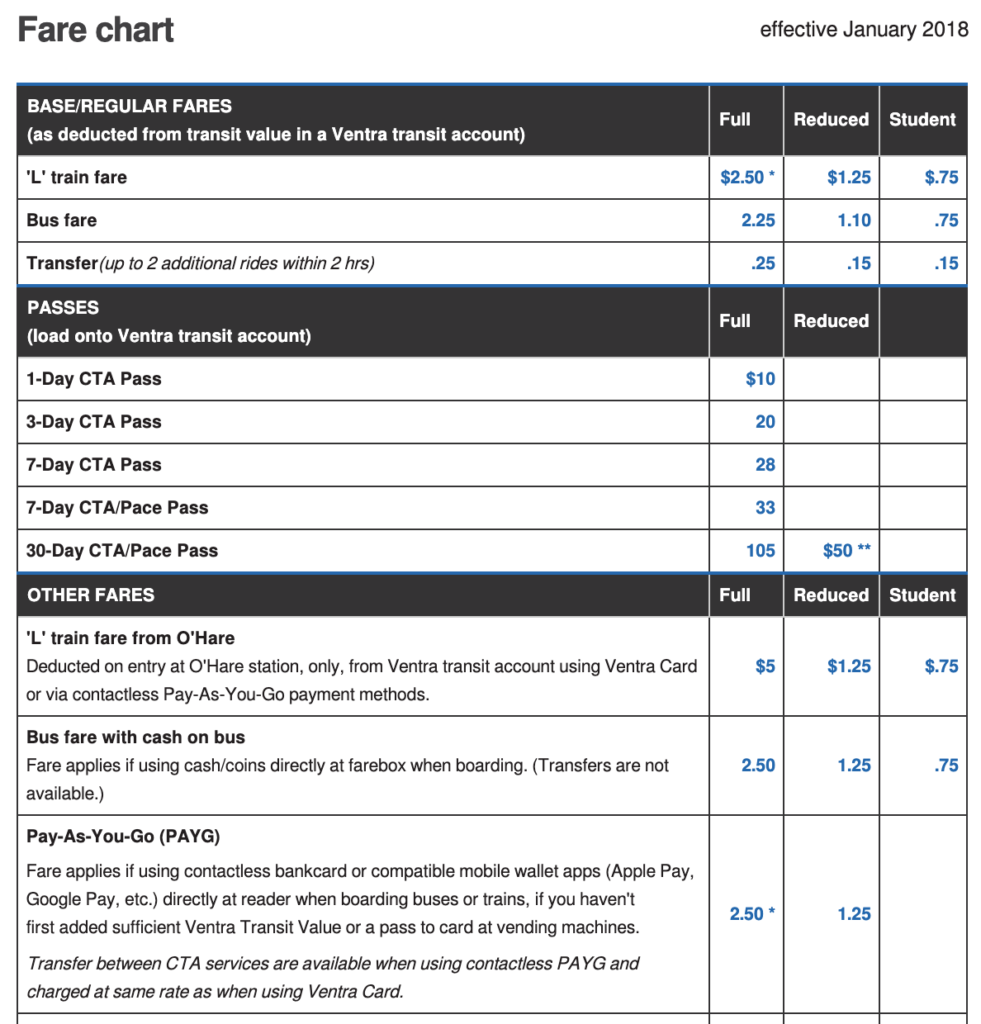
The standard single-ride fare for a Chicago bus is currently $2.50. This fare allows you to board any CTA bus. When you pay this fare, you are also entitled to a free transfer to another bus route or to the CTA ‘L’ train system within a two-hour window. This transfer policy is a significant benefit, allowing for multi-leg journeys without incurring additional costs. It’s important to note that this transfer is only valid in one direction; you cannot use it to go back to your starting point.
Reduced Fare Eligibility
The CTA offers reduced fares for specific groups of riders. This initiative ensures that public transportation remains accessible to those who may face financial challenges or have specific needs.
Seniors and People with Disabilities
Qualifying seniors (typically aged 65 and older) and individuals with disabilities are eligible for a reduced fare. The current reduced fare for these groups is $1.25 per ride. To utilize this reduced fare, riders must apply for and obtain a Reduced Fare Permit from the CTA. This permit must be presented when boarding.
Students
Eligible students, generally those from kindergarten through 12th grade, can also benefit from a reduced fare. The student fare is also $1.25 per ride. Similar to seniors and people with disabilities, students must have a valid student transit card issued by the CTA or their school district to qualify for this discounted rate.
Payment Methods: How to Pay Your Fare
The CTA offers several convenient ways to pay your bus fare, catering to different preferences and ensuring ease of access.
Ventra Card and App
The primary and most recommended payment method is the Ventra card or the Ventra mobile app. Ventra is the integrated fare payment system for the CTA and Pace suburban bus service.
Purchasing and Reloading a Ventra Card
Ventra cards can be purchased at CTA vending machines located at ‘L’ stations, at Ventra retailers throughout the city, or online. Once you have a card, you can reload it with stored value or passes at the same locations, online, or via the Ventra app. A new Ventra card typically costs $5, which is credited to your account for transit use.
Using the Ventra App
The Ventra app allows you to manage your account, purchase fares, and even use your smartphone as a contactless payment method. You can buy single rides, daily passes, and monthly passes directly through the app. When boarding the bus, you can simply hold your phone near the Ventra reader on the farebox.
Benefits of Ventra
Using Ventra offers several advantages. It automatically tracks your rides and applies the free transfer benefit. It also caps your daily and weekly spending, meaning you’ll never pay more than a certain amount, even if you make many rides. For example, after you pay for 3 rides on a Ventra card within a 24-hour period, any subsequent rides that day are free, up to a maximum of $5 for the day. Similarly, there’s a weekly fare cap.
Contactless Payment
For added convenience, the CTA also accepts contactless credit or debit cards, as well as devices like Apple Pay and Google Pay, directly at the farebox. When you tap your contactless card or device, you will be charged the standard $2.50 fare, and the free transfer policy still applies, managed by the Ventra system.
Cash Payment
While Ventra and contactless payments are preferred, cash is still accepted on buses. However, there are important limitations to be aware of.
Exact Change Required
Bus fareboxes on CTA buses require exact change. This means you must have $2.50 in coins (quarters, dimes, nickels, and pennies) or $1 bills if the farebox can make change. The farebox does not provide change for cash payments, so you must have the precise amount.
No Transfers with Cash
A significant drawback of paying with cash is that you do not receive a transfer. If you pay with cash and need to switch to another bus or the ‘L’ train, you will have to pay the full fare again for your second ride. This makes cash a less economical option for journeys involving transfers.
Discounted Passes and Fare Capping
For frequent riders or those planning extensive travel within Chicago, purchasing passes can offer significant savings compared to paying per ride. The Ventra system incorporates fare capping, which automatically ensures you get the best value.
Daily and Weekly Passes
The CTA offers 1-Day, 3-Day, 7-Day, and 30-Day passes. These can be loaded onto a Ventra card or purchased through the Ventra app.
1-Day Pass
A 1-Day Pass costs $10 and allows for unlimited rides on all CTA buses and trains for a 24-hour period. This is a great value if you plan to take more than four rides in a single day.
3-Day Pass
The 3-Day Pass is priced at $20 and offers unlimited rides for three consecutive days. This pass is ideal for visitors spending a long weekend exploring the city.
7-Day Pass
For longer stays, the 7-Day Pass costs $32 and provides unlimited rides for a full week. This pass is very economical if you are a daily commuter or plan to visit many attractions spread across different days.
30-Day Pass
The 30-Day Pass is the most cost-effective option for regular riders, costing $105. This pass offers unlimited rides for an entire month and is the best option for Chicago residents or those on extended visits who rely heavily on public transit.
Fare Capping Explained
The Ventra system automatically applies fare capping to all Ventra cards and contactless payments. This means that once you reach a certain spending limit within a defined period, you will not be charged for further rides.
Daily Fare Cap
The daily fare cap is $5. If you use your Ventra card or contactless payment method for multiple rides, once your total fares for that day reach $5, all subsequent rides on that day are free. This is equivalent to paying for two standard $2.50 rides.
Weekly Fare Cap
The weekly fare cap is $32. This means that if you use the same payment method for rides throughout a seven-day period (Sunday through Saturday), once your total fares reach $32, all subsequent rides for the remainder of that week are free. This effectively makes the 7-Day Pass the maximum you’ll ever pay for unlimited travel within a week, even if you don’t purchase it upfront.
Planning Your Trip and Budgeting
Knowing the fare structure allows for effective travel planning and budgeting. Whether you are a tourist looking to visit the Art Institute of Chicago or a local commuting to work, understanding these costs can help you make informed decisions.
Tips for Saving Money
- Utilize the free transfer: Always pay with a Ventra card or contactless payment to benefit from the free two-hour transfer.
- Consider a pass for multiple days: If you plan on taking more than two rides in a day, the 1-Day Pass is likely more economical. For longer stays, the 3-Day, 7-Day, or 30-Day passes offer increasing savings.
- Take advantage of fare capping: If you don’t want to commit to a pass, simply use your Ventra card or contactless payment, and the system will ensure you don’t overpay due to the daily and weekly caps.
- Apply for reduced fares if eligible: If you are a senior, person with a disability, or a student, ensure you have the necessary permits or cards to pay the reduced fare.
Navigating the System
The CTA website and app provide detailed maps, schedules, and trip planners that can help you navigate the bus system efficiently. Familiarizing yourself with these tools before you embark on your journey can save you time and ensure a smoother experience. Remember that bus routes cover a vast area of the city, connecting key neighborhoods and attractions from the bustling Magnificent Mile to the historic Pullman Historic District. By understanding the fare system, you can confidently explore all that Chicago has to offer without breaking the bank.
LifeOutOfTheBox is a participant in the Amazon Services LLC Associates Program, an affiliate advertising program designed to provide a means for sites to earn advertising fees by advertising and linking to Amazon.com. Amazon, the Amazon logo, AmazonSupply, and the AmazonSupply logo are trademarks of Amazon.com, Inc. or its affiliates. As an Amazon Associate we earn affiliate commissions from qualifying purchases.