
When crafting academic papers, research projects, or even detailed travel blogs, citing your sources accurately is paramount. For those documenting their travel experiences, particularly those inspired by or featuring multimedia content like YouTube videos, understanding the nuances of citation styles is crucial. The Chicago Manual of Style is a widely respected and comprehensive guide, offering detailed instructions for various source types. This article will delve into how to reference a YouTube video according to the Chicago style, ensuring your work is both credible and impeccably formatted.
Understanding Chicago Style for Multimedia Sources
The Chicago Manual of Style recognizes the evolving landscape of information and provides guidelines for citing a broad range of sources, including digital and multimedia content. YouTube videos, with their increasing prevalence as sources of information, entertainment, and inspiration for travelers, fall squarely into this category.
Chicago style offers two primary systems for citation: the notes-bibliography system and the author-date system. While both are valid, the notes-bibliography system is often favored in humanities and some social sciences, which aligns well with many travel writing contexts. This guide will primarily focus on the notes-bibliography system, but we will touch upon the author-date method as well. The core principle behind both is to provide enough information for your reader to locate the original source with ease.
The Notes-Bibliography System
In the notes-bibliography system, you use footnotes or endnotes to cite sources within the text, followed by a comprehensive bibliography at the end of your work.
Footnotes/Endnotes for YouTube Videos
When you cite a YouTube video in a footnote or endnote, the format is generally as follows:
Structure for a Footnote/Endnote:
First Name Last Name (or channel name if no individual is identified), “Title of Video” (or description if no title), YouTube video, published Date, URL.
Example:
- Anthony Bourdain, “Parts Unknown: Vietnam – Episode 1” (clip), YouTube video, published May 3, 2013, https://www.youtube.com/watch?v=….
Key Components Explained:
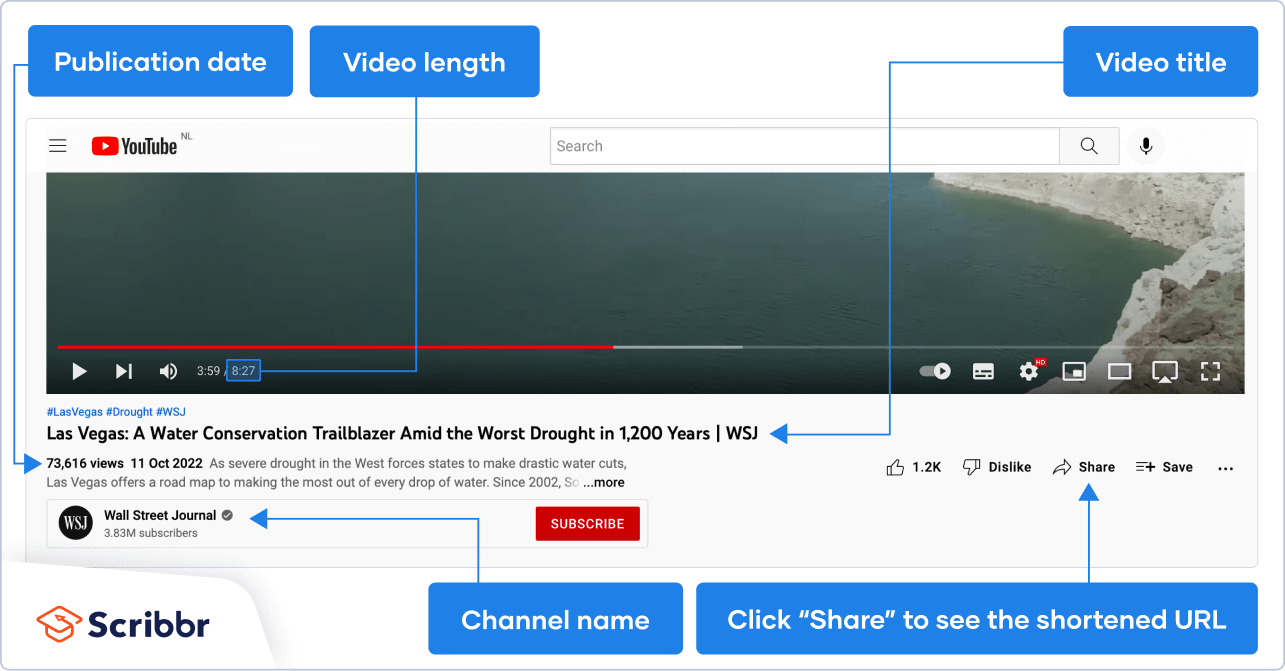
- Author/Creator: This is typically the uploader of the video. If an individual is credited, use their full name. If it’s a channel or organization without a clear individual author, use the channel name. For instance, if you’re referencing a video from a travel agency’s official channel, you might list the agency name.
- Title of Video: This should be the exact title as it appears on YouTube. If the video lacks a formal title, provide a brief, descriptive phrase enclosed in quotation marks.
- Medium Identification: Clearly state that it is a “YouTube video.” If you are referencing a specific segment or clip, you can add this detail in parentheses, e.g., “(clip)” or “(segment).”
- Publication Date: This is the date the video was published or uploaded to YouTube. This is usually found below the video player.
- URL: The complete web address of the video. It’s crucial to ensure this URL is accurate and leads directly to the video.
Important Considerations for Footnotes/Endnotes:
- First Reference: The first time you cite a specific YouTube video, the footnote or endnote should contain all the detailed information.
- Subsequent References: For subsequent citations of the same video, you can use a shortened form. This typically includes the author’s last name (or channel name), a shortened title, and the page number (if applicable, though less common for videos) or a reference to the footnote number.
- Example of a shortened note: Bourdain, “Parts Unknown: Vietnam.”
Bibliography Entry for YouTube Videos
The bibliography entry for a YouTube video follows a similar structure but is formatted slightly differently, typically without footnote numbers and with a slightly different order for some elements.
Structure for a Bibliography Entry:
Last Name, First Name (or channel name). “Title of Video.” YouTube video. Published Date. URL.
Example:
Bourdain, Anthony. “Parts Unknown: Vietnam – Episode 1.” YouTube video. Published May 3, 2013. https://www.youtube.com/watch?v=….
Key Differences from Footnotes/Endnotes:
- Author’s Name: In the bibliography, the author’s last name comes first.
- No Footnote Number: Bibliography entries are not numbered in relation to their appearance in the text.
- Punctuation: There are slight variations in punctuation, with periods generally separating the main components.
The Author-Date System
If your work uses the author-date system, you will cite sources within the text using parenthetical citations and provide a reference list at the end.
In-Text Citations for YouTube Videos
In the author-date system, your in-text citation typically includes the author’s last name and the publication year.
Example:
(Bourdain 2013)
If there is no specific author, you might use the channel name.
Example with Channel Name:
(National Geographic 2022)
Reference List Entry for YouTube Videos
The reference list entry in the author-date system provides the full details.
Structure for a Reference List Entry:
Last Name, First Name (or channel name). Year. “Title of Video.” YouTube video. Published Date. URL.
Example:
Bourdain, Anthony. 2013. “Parts Unknown: Vietnam – Episode 1.” YouTube video. Published May 3, 2013. https://www.youtube.com/watch?v=….
Key Differences from Bibliography Entry:
- Year Placement: The year of publication immediately follows the author’s name.
- Date Format: While the full publication date is often still included for clarity, the primary reference point in the in-text citation and reference list is the year.
Specific Scenarios and Best Practices for Citing YouTube Videos
Navigating the citation of YouTube videos can sometimes present unique challenges. Here are some common scenarios and how to address them within Chicago style guidelines.
When the Author is Unclear or a Channel Name is Used
If a video is uploaded by a large organization or a general channel without a clearly identified individual author, use the channel name as the author.
- Footnote/Endnote Example:
- National Geographic, “The Best of Machu Picchu” (travel guide), YouTube video, published October 15, 2022, https://www.youtube.com/watch?v=….
- Bibliography Example:
National Geographic. “The Best of Machu Picchu.” YouTube video. Published October 15, 2022. https://www.youtube.com/watch?v=…. - In-Text (Author-Date): (National Geographic 2022)
- Reference List (Author-Date):
National Geographic. 2022. “The Best of Machu Picchu.” YouTube video. Published October 15, 2022. https://www.youtube.com/watch?v=….
Citing Specific Segments or Timestamps
If you are referencing a particular moment or segment within a longer YouTube video, Chicago style recommends noting the time. This is particularly helpful for longer documentary clips or instructional videos. You can add this information within the note or bibliography entry.
- Footnote/Endnote Example:
- Rick Steves, “Florence, Italy: Art and Architecture” (segment), YouTube video, published April 10, 2018, 15:23, https://www.youtube.com/watch?v=….
- Bibliography Example:
Steves, Rick. “Florence, Italy: Art and Architecture.” YouTube video. Published April 10, 2018. 15:23. https://www.youtube.com/watch?v=….
Videos Without Clear Publication Dates
While less common, some older or independently uploaded videos might lack explicit publication dates. In such cases, use “n.d.” (for no date) in place of the publication date.
- Footnote/Endnote Example:
- Local Historian, “Exploring the Old Streets of [City Name]” YouTube video, n.d., https://www.youtube.com/watch?v=….
- Bibliography Example:
Local Historian. “Exploring the Old Streets of [City Name].” YouTube video. n.d. https://www.youtube.com/watch?v=….
When the “Author” is a Professional Organization Producing Content About Destinations
For professional travel content creators or organizations focusing on destinations, the attribution should reflect this. For instance, if you are referencing a video about visiting Paris produced by a tourism board.
- Footnote/Endnote Example:
- Visit Paris Tourism Board. “Discovering the Hidden Gems of Paris.” YouTube video, published July 22, 2023, https://www.youtube.com/watch?v=….
- Bibliography Example:
Visit Paris Tourism Board. “Discovering the Hidden Gems of Paris.” YouTube video. Published July 22, 2023. https://www.youtube.com/watch?v=….

The Importance of Accuracy and Consistency
Adhering to Chicago style for referencing YouTube videos ensures that your readers can easily verify your sources, lending greater credibility to your travel narratives and research. It demonstrates a commitment to academic integrity and good scholarly practice.
When referencing YouTube videos, always strive for accuracy in titles, publication dates, and URLs. Consistency in your chosen citation style (notes-bibliography or author-date) throughout your entire document is also paramount. Familiarize yourself with the latest edition of The Chicago Manual of Style, as guidelines can evolve. By mastering these citation techniques, you can confidently incorporate the wealth of information available on platforms like YouTube into your travel writing and research. Whether you’re detailing a culinary journey through Italy or providing a historical overview of London, correct citation practices will elevate the quality and trustworthiness of your work.
LifeOutOfTheBox is a participant in the Amazon Services LLC Associates Program, an affiliate advertising program designed to provide a means for sites to earn advertising fees by advertising and linking to Amazon.com. Amazon, the Amazon logo, AmazonSupply, and the AmazonSupply logo are trademarks of Amazon.com, Inc. or its affiliates. As an Amazon Associate we earn affiliate commissions from qualifying purchases.