
Understanding the Fundamentals of Chicago Style
The Chicago Manual of Style (CMOS) is a widely adopted style guide in academic and professional writing, particularly in the humanities and some social sciences. Its primary function is to ensure clarity, consistency, and credibility in scholarly work. Adhering to Chicago format demonstrates attention to detail and a commitment to academic rigor, making your research more accessible and authoritative to your readers. This guide will walk you through the essential components of Chicago style, focusing on two main citation systems: the Notes-Bibliography system and the Author-Date system. While both systems are valid within Chicago style, the Notes-Bibliography system is more prevalent in fields like history, literature, and the arts, and will be the primary focus for this explanation.
The core principles of Chicago style revolve around presenting information in a clear, logical, and organized manner. This includes establishing a consistent approach to formatting your manuscript, citing sources accurately, and presenting a bibliography that allows readers to easily locate the materials you consulted. Mastering these elements will elevate the quality of your written work, whether you are composing a research paper for a university course, an article for an academic journal, or a chapter for a scholarly book.
Manuscript Formatting Guidelines
Before delving into citations, it’s crucial to establish proper manuscript formatting. A well-formatted paper is easier to read and helps readers focus on your content rather than being distracted by presentation issues.
General Layout
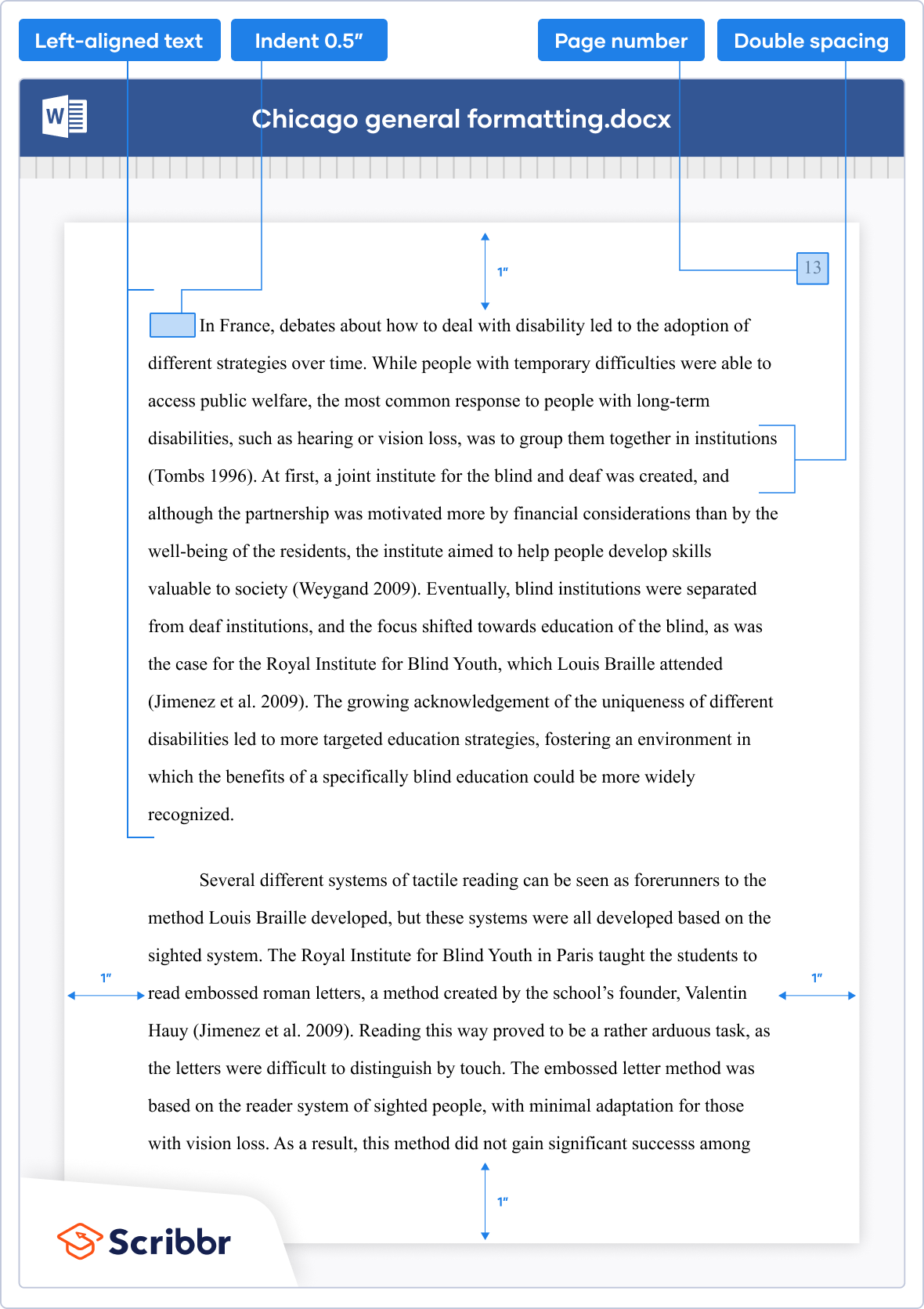
- Paper Size and Margins: Unless otherwise specified by your instructor or publisher, use standard 8.5-by-11-inch paper. Maintain 1-inch margins on all sides (top, bottom, left, and right). This ensures ample space for printing, potential annotations, and a clean visual presentation.
- Font and Spacing: Use a readable, standard font such as Times New Roman, Arial, or Georgia, typically in 12-point size. Double-space the entire manuscript, including block quotations, notes, and the bibliography. This improves readability and allows space for editorial marks if necessary.
- Page Numbers: Page numbers should appear in the upper right-hand corner of each page, beginning with the second page of your paper. The first page, often the title page, is not numbered, but its presence is counted in the sequence.
Title Page
A title page is standard for most academic papers. It should include:
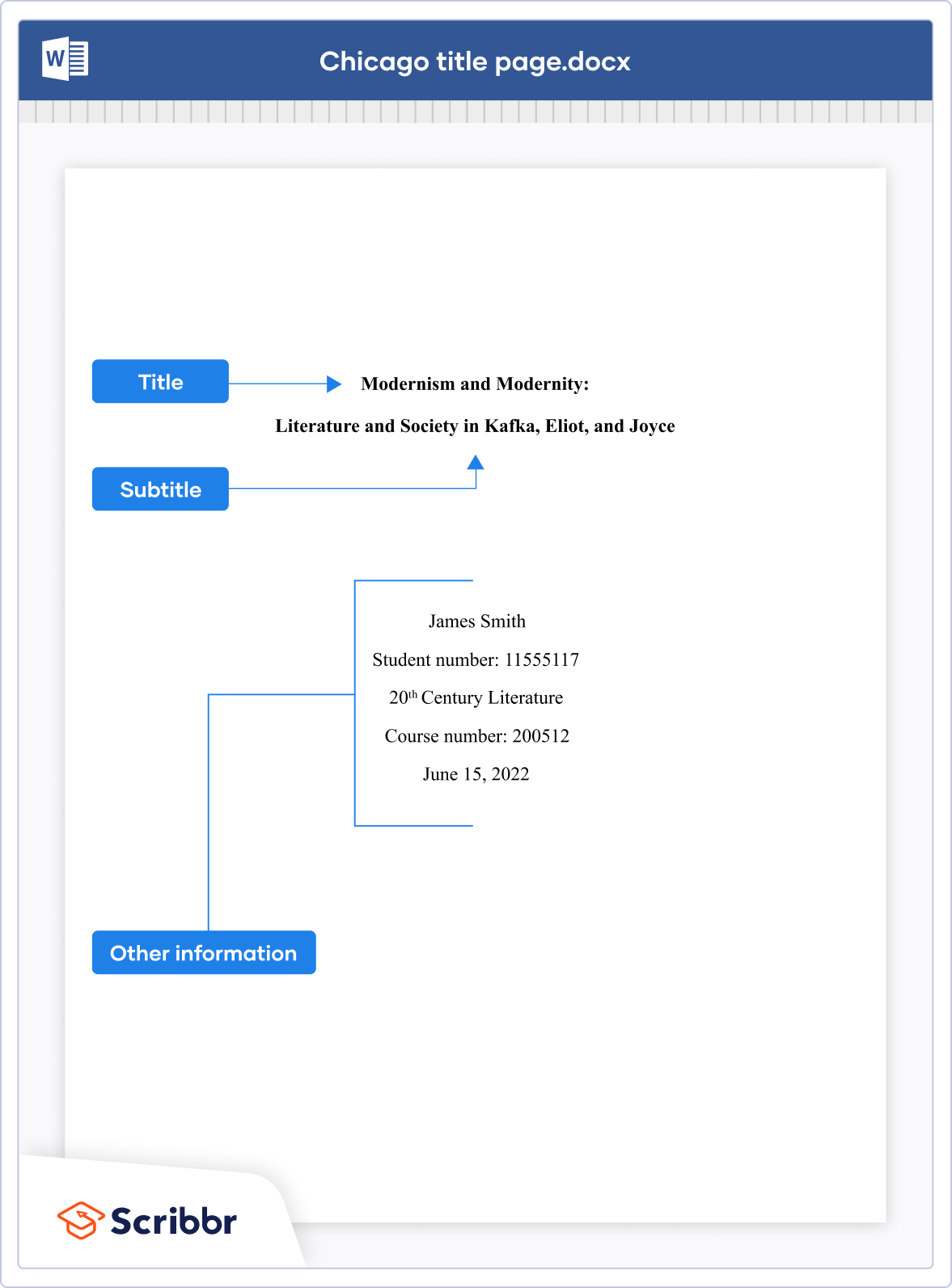
- Title of the Paper: Centered and in title case, typically on the third or fourth line from the top of the page.
- Your Name: Centered below the title.
- Course Name and Number: Centered below your name.
- Instructor’s Name: Centered below the course information.
- Date: Centered at the bottom of the page.
No running head or other special formatting is typically required on the title page unless explicitly stated by your institution.
Headings and Subheadings
To organize your paper and guide the reader through your arguments, Chicago style allows for various heading levels. While specific formatting can vary, a common approach includes:
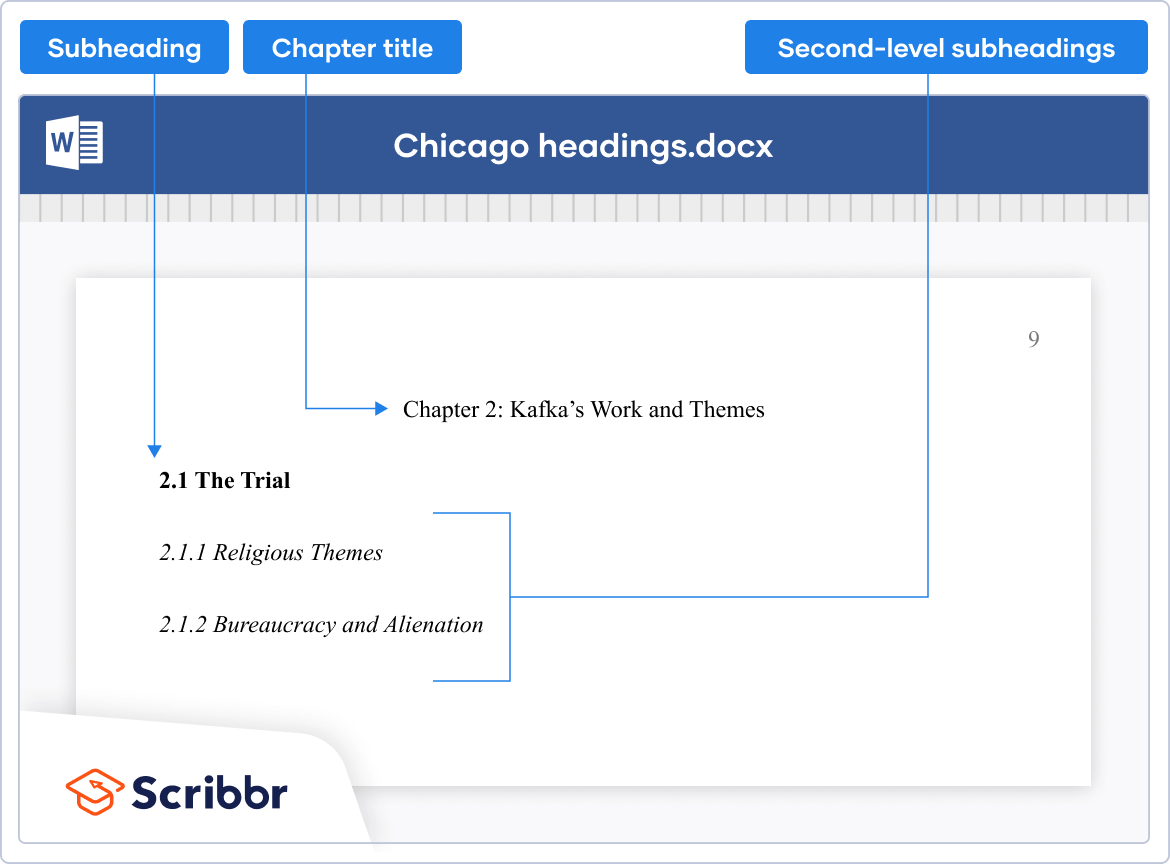
- First-Level Headings: Centered, in title case, and often bolded.
- Second-Level Headings: Flush left, in title case, and also often bolded.
- Third-Level Headings: Indented at the beginning of a paragraph, in title case, followed by a period, and then the text of the paragraph.
Always maintain consistency in your heading structure throughout the paper.
Mastering the Notes-Bibliography System
The Notes-Bibliography system is a cornerstone of Chicago style, particularly favored in the humanities. It uses numbered footnotes or endnotes to cite sources directly within the text, followed by a comprehensive bibliography at the end of the paper. This system allows for detailed commentary and direct source engagement within the notes themselves.
Footnotes and Endnotes
In the Notes-Bibliography system, every piece of information that is not common knowledge or original to your own thought process must be cited. This includes direct quotations, paraphrased ideas, statistics, and any borrowed material.
Placement of Note Numbers
A note number should follow the punctuation of the sentence or clause containing the cited material. For example:
“The impact of the Industrial Revolution was profound, reshaping not only economies but also social structures.”¹
If the citation pertains to a specific word or phrase, the note number can follow that element directly, but this is less common.
Numbering and Formatting
Note numbers are sequential and begin with 1 on the first page of your text. They are typically superscripts (slightly raised above the line of text) in the body of the paper.
In the notes themselves (either footnotes at the bottom of the page or endnotes at the end of the paper), the number is followed by a period and then the citation information.
- First Reference: For the first time you cite a source, the note provides full bibliographic details.
- Subsequent References: For any subsequent citations of the same source, a shortened form is used, typically including the author’s last name, a shortened title, and the page number(s).
Types of Sources and Their Citation
The specific format for notes and bibliography entries varies depending on the type of source. Here are common examples:
Books
First Reference Note:
¹ Author Last Name, Author First Name, Title of Book (Place of Publication: Publisher, Year), page number.
Example:
¹ Carl Sagan, Cosmos (New York: Random House, 1980), 15.
Subsequent Reference Note:
Author Last Name, Shortened Title, page number.
Example:
Sagan, Cosmos, 42.
Bibliography Entry:
Author Last Name, Author First Name. Title of Book. Place of Publication: Publisher, Year.
Example:
Sagan, Carl. Cosmos. New York: Random House, 1980.
Journal Articles
First Reference Note:
¹ Author Last Name, Author First Name, “Title of Article,” Title of Journal Volume, no. Issue (Year): page number(s).
Example:
¹ Elizabeth Kolbert, “The New Age of Extinction,” The New Yorker, August 20, 2018, 48.
Subsequent Reference Note:
Author Last Name, “Shortened Title,” page number.
Example:
Kolbert, “The New Age of Extinction,” 52.
Bibliography Entry:
Author Last Name, Author First Name. “Title of Article.” Title of Journal Volume, no. Issue (Year): page number(s).
Example:
Kolbert, Elizabeth. “The New Age of Extinction.” The New Yorker, August 20, 2018.
Websites and Online Articles
When citing online sources, include as much information as is available, such as author, title, website name, publication date, and a URL or DOI.
First Reference Note:
¹ Author Last Name, Author First Name, “Title of Web Page,” Name of Website, Publication Date, accessed Access Date, URL.
Example:
¹ Jane Smith, “Understanding the Local Ecosystem,” Nature Conservancy, May 15, 2022, accessed October 26, 2023, https://www.nature.org/local-ecosystem-guide.
Subsequent Reference Note:
Author Last Name, “Shortened Title.”
Example:
Smith, “Understanding the Local Ecosystem.”
Bibliography Entry:
Author Last Name, Author First Name. “Title of Web Page.” Name of Website. Publication Date. Accessed Access Date. URL.
Example:
Smith, Jane. “Understanding the Local Ecosystem.” Nature Conservancy. May 15, 2022. Accessed October 26, 2023. https://www.nature.org/local-ecosystem-guide.
The Bibliography
The bibliography appears at the end of your paper and lists all the sources you cited in your notes. It is arranged alphabetically by the author’s last name. Unlike the notes, which often use a comma to separate elements, bibliography entries typically use periods.
Formatting for Bibliography Entries
The general structure for bibliography entries mirrors that of the first reference note but with key differences in punctuation and the inclusion of access dates for web sources.
- Order of Elements: Author’s last name, first name. Title of work. Publication information.
- Punctuation: Periods are used to separate major bibliographic elements.
- Alphabetical Order: Entries are alphabetized by the author’s last name. If no author is listed, the entry is alphabetized by the first significant word of the title (ignoring articles like “A,” “An,” or “The”).
Specific Entry Examples (Bibliography)
- Book:
Doe, John. The Art of Travel Writing. New York: Wanderlust Press, 2021. - Edited Book:
Miller, Sarah, ed. Essays on Global Cultures. London: Academic Publishing House, 2019. - Chapter in an Edited Book:
Garcia, Maria. “Culinary Traditions of Andalusia.” In Exploring European Cuisine, edited by David Chen, 87-105. Paris: Gastronomy Books, 2020. - Journal Article:
Lee, Kenji. “The Evolution of Urban Landscapes.” Journal of Urban Studies 35, no. 2 (2022): 112-130. - Website:
World Heritage Organization. “Preserving Ancient Sites.” Accessed November 5, 2023. https://www.worldheritage.org/preserving-ancient-sites.
Handling Multiple Authors
- Two Authors: List both authors in the bibliography, separated by “and.” In notes, use “and.”
- Bibliography: White, Emily, and Robert Green. Adventures in Remote Regions. Boston: Explorer Books, 2018.
- Note: ¹ Emily White and Robert Green, Adventures in Remote Regions (Boston: Explorer Books, 2018), 55.
- Three or More Authors: In the bibliography, list all authors. In the notes, list only the first author followed by “et al.” (and others).
- Bibliography: Johnson, David, Maria Rodriguez, and Samuel Kim. The Global Impact of Tourism. New York: Global Travel Press, 2022.
- Note: ¹ David Johnson et al., The Global Impact of Tourism (New York: Global Travel Press, 2022), 78.
The Author-Date System
While the Notes-Bibliography system is common, Chicago style also offers an Author-Date system, often preferred in the sciences and some social sciences. This system uses in-text parenthetical citations and a reference list at the end of the paper.
In-Text Citations
Parenthetical citations typically appear within the text, enclosed in parentheses, and include the author’s last name and the year of publication, followed by a page number if a direct quote or specific information is being referenced.
Example:
The research indicated a significant shift in consumer behavior (Smith 2022, 45).
If the author’s name is already mentioned in the text, only the year and page number are needed in the parentheses:
Smith (2022) noted a significant shift in consumer behavior (45).
The Reference List
The reference list contains full bibliographic information for all sources cited in the text. It is alphabetized by the author’s last name. The formatting of entries in the reference list is similar to the bibliography in the Notes-Bibliography system, but with slight variations.
Formatting for Reference List Entries
- Author Last Name, First Name. Year. Title of work. Publication information.
- Year Placement: The year of publication is placed immediately after the author’s name.
- Punctuation: Periods are used to separate bibliographic elements.
Specific Entry Examples (Reference List)
- Book:
Doe, John. 2021. The Art of Travel Writing. New York: Wanderlust Press. - Journal Article:
Lee, Kenji. 2022. “The Evolution of Urban Landscapes.” Journal of Urban Studies 35 (2): 112-130. - Website:
World Heritage Organization. 2023. “Preserving Ancient Sites.” Accessed November 5, 2023. https://www.worldheritage.org/preserving-ancient-sites.
Finalizing Your Chicago Style Paper
Once you have drafted your paper and incorporated citations, a thorough review is essential. The goal is to ensure accuracy, consistency, and adherence to all Chicago style guidelines.
Proofreading and Editing
- Check Citation Consistency: Ensure that every in-text citation has a corresponding entry in your bibliography or reference list, and vice versa. Verify that the formatting for notes, bibliographical entries, and in-text citations is uniform throughout your paper.
- Verify Punctuation and Capitalization: Pay close attention to the correct use of commas, periods, colons, and capitalization in titles, headings, and citations.
- Review Page Numbers: Double-check that all page numbers in your citations and bibliography are accurate.
- Read Aloud: Reading your paper aloud can help you catch awkward phrasing, grammatical errors, and inconsistencies that you might otherwise miss.
Using Style Guides and Resources
The Chicago Manual of Style is the definitive source for all Chicago style rules. Familiarize yourself with its key sections or use an online version if available. For quick reference, many universities and academic writing centers provide style guides that summarize the most common rules. If you are unsure about a specific citation or formatting question, consult the official manual or a trusted academic writing resource.
By meticulously applying these principles, you will produce a paper that not only conveys your research effectively but also adheres to the high standards of academic presentation dictated by Chicago style. This dedication to detail will enhance your credibility and ensure your work is taken seriously within scholarly circles.
LifeOutOfTheBox is a participant in the Amazon Services LLC Associates Program, an affiliate advertising program designed to provide a means for sites to earn advertising fees by advertising and linking to Amazon.com. Amazon, the Amazon logo, AmazonSupply, and the AmazonSupply logo are trademarks of Amazon.com, Inc. or its affiliates. As an Amazon Associate we earn affiliate commissions from qualifying purchases.