
Changing your last name in Colorado is a significant decision that often accompanies major life events such as marriage or divorce, or it can be a personal choice for various reasons. While the process can seem daunting, understanding the steps involved in Colorado will help ensure a smooth transition. This guide will walk you through the legal procedures, from petitioning the court to updating your identification documents, allowing you to confidently navigate this life change.
The Legal Framework for a Name Change in Colorado
In Colorado, a legal name change is governed by state statutes, primarily the Colorado Revised Statutes (C.R.S.) concerning civil procedure and probate. The fundamental principle is that individuals are generally free to change their name as they see fit, provided the change is not for fraudulent purposes, such as evading debts or criminal prosecution. The court’s role is to review the petition and ensure all legal requirements are met before issuing an order officially recognizing the new name.
Understanding the Petition Process
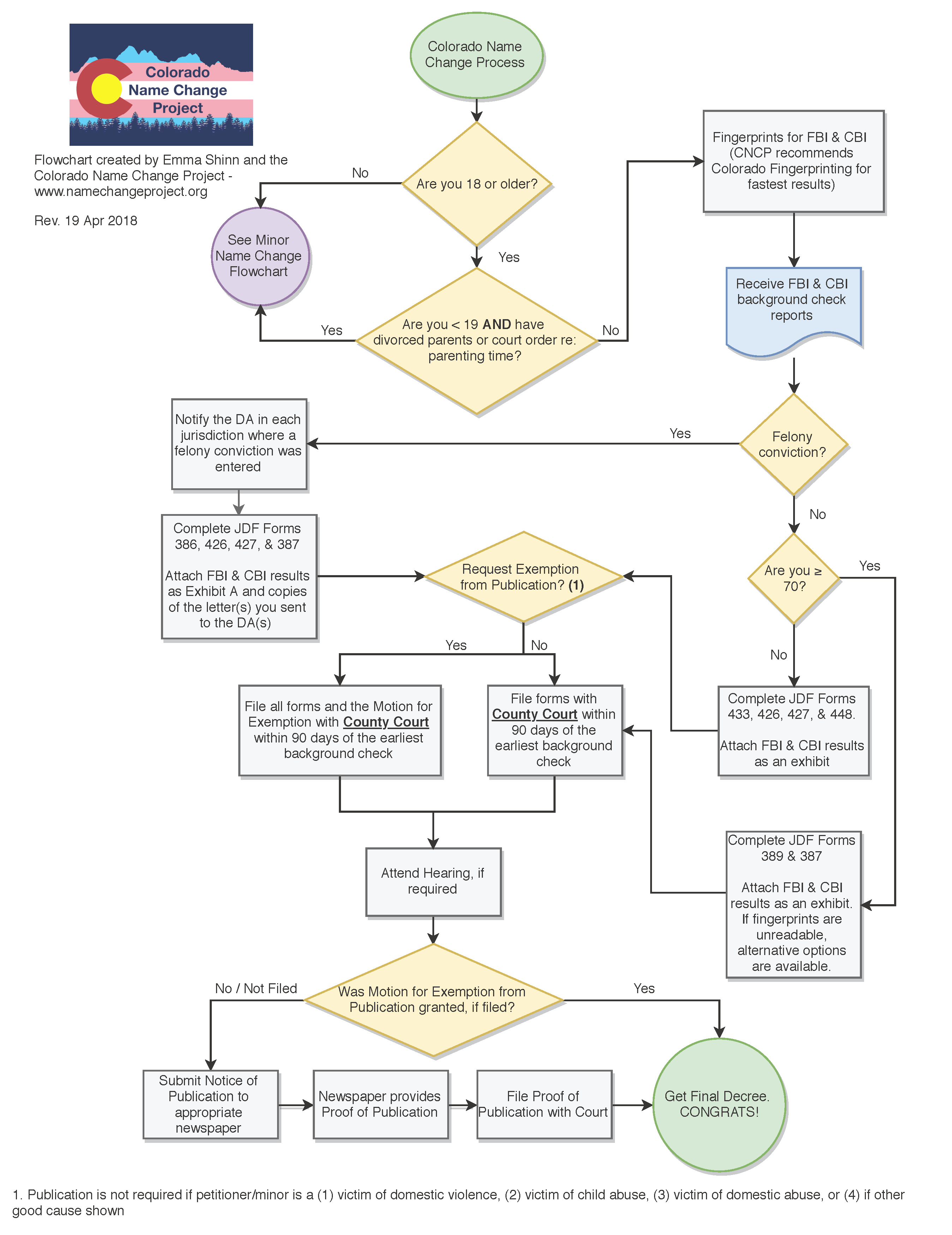
The journey begins with filing a formal petition for a name change with the appropriate Colorado district court. The specific court jurisdiction will depend on your county of residence. This petition is a legal document that requires specific information. You will need to provide your current legal name, the name you wish to adopt, your date of birth, your place of birth, and your current address.
Crucially, the petition must state the reason for the name change. While marriage and divorce are common reasons, you can also petition for a name change for personal preference, to honor a family member, or for other valid motivations. The petition must also affirm that the change is not being sought for any unlawful or fraudulent purpose.
Required Documentation and Forms
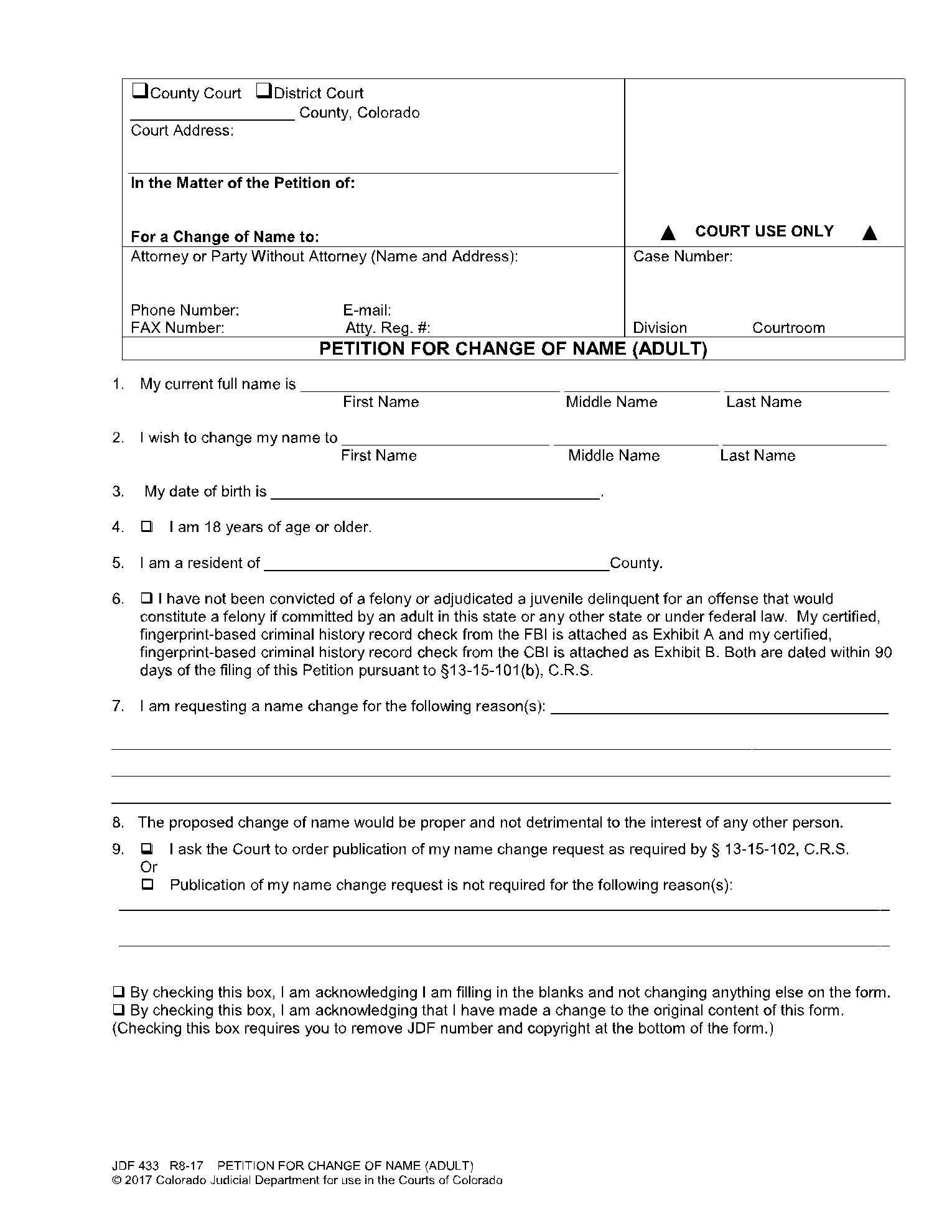
The Colorado Judicial Branch provides standardized forms that can be used for a name change petition. These forms are designed to guide you through the necessary information and declarations. Generally, you will need to complete a “Petition for Change of Name” and potentially other supporting documents. It is highly advisable to consult the official forms available through the Colorado Judicial Branch website or seek legal assistance to ensure accuracy.
Fees and Court Costs
As with most legal proceedings, there are filing fees associated with a name change petition in Colorado. These fees can vary by county and may be subject to change. If you are unable to afford the filing fees, you may be eligible to apply for a waiver of court costs by submitting an “Application to Waive Filing Fees.” The court will review your financial circumstances to determine eligibility.
Residency Requirements
To file a name change petition in Colorado, you must be a resident of the state. While specific durations can vary slightly depending on the court’s interpretation or specific circumstances, typically, you need to have resided in Colorado for a certain period before filing. It is best to confirm the current residency requirements with the local district court in the county where you intend to file.
Navigating the Court Order and Legal Publication
Once your petition is filed, the court will review it. In most cases, a hearing will be scheduled to present your petition to a judge. This hearing is often brief and serves as an opportunity for the judge to confirm your identity, your understanding of the proceedings, and the legitimacy of your requested name change.
The Importance of the Court Order
The culmination of the court process is the issuance of a court order officially granting your name change. This document is paramount. It is the legal proof of your new name and is required to update all your official identification and records. You will likely receive several certified copies of this order from the court. Keep these copies in a safe place, as you will need them for subsequent steps.
Publication Requirements
In Colorado, individuals seeking a name change are generally required to publish notice of their intended name change in a local newspaper of general circulation. This publication requirement serves to inform the public of the change and provide an opportunity for any interested parties to object. The court will typically provide instructions on how and where to publish the notice. The specific newspaper and duration of publication will be dictated by court rules. After publication, you will need to provide proof of publication to the court.
Updating Your Identification and Records
Receiving the court order is a significant milestone, but the process is not complete until you update all your official documents and records with your new legal name. This is a critical step to ensure your identity is consistent across all platforms.
Social Security Administration
The first and most crucial step after obtaining your court order is to update your name with the Social Security Administration (SSA). You will need to visit an SSA office with your certified court order and proof of identity (such as your driver’s license or passport). This update is essential as your Social Security record is the primary identifier used by many other institutions. You will receive a new Social Security card with your updated name.
Driver’s License and State ID
Next, you will need to update your name on your Colorado driver’s license or state identification card. Visit a Colorado Division of Motor Vehicles (DMV) office. You will need to present your court order, your current driver’s license or ID, and your updated Social Security card. A new photograph will be taken, and you will be issued a new license or ID reflecting your legal name.
Passport
If you have a U.S. passport, you will also need to update it. The process for updating a passport depends on when your current passport was issued. If it was issued less than a year ago, you can typically get it changed for free using a specific form and submitting your court order and current passport. If it was issued more than a year ago, you will likely need to apply for a new passport and pay the associated fees. Visit the U.S. Department of State website for detailed instructions.
Other Important Institutions
Beyond these primary documents, you will need to notify numerous other entities of your name change. This includes, but is not limited to:
- Banks and Financial Institutions: Update your name on all bank accounts, credit cards, and investment accounts.
- Employer: Inform your employer to update your payroll and HR records.
- Insurance Companies: Notify your health, auto, life, and homeowner’s insurance providers.
- Voter Registration: Update your voter registration to ensure you can vote under your new name.
- Landlord or Mortgage Company: If you own or rent property, update your name on leases or mortgage documents.
- Utilities and Service Providers: Contact utility companies (electricity, water, gas), internet providers, and phone carriers.
- Post Office: While mail forwarding can help, officially updating your name with the United States Postal Service for your address is advisable.
- Educational Institutions: Update your name with any schools or universities you have attended.
- Healthcare Providers: Inform your doctors, dentists, and other healthcare providers.
- Professional Licenses: If you hold any professional licenses, you will need to update them.
- Retirement Accounts and Pensions: Notify administrators of any retirement plans.
- Social Media and Online Accounts: While not legally required, updating these can help maintain consistency.
Special Considerations: Marriage and Divorce Name Changes
While the general legal framework applies to all name changes, Colorado offers specific streamlined processes for name changes associated with marriage and divorce.
Name Change Upon Marriage
When you get married in Colorado, you have the option to change your last name to your spouse’s surname, hyphenate your existing names, or create a new surname. The marriage certificate itself can often serve as the legal documentation for your name change when presenting it to the Social Security Administration and the Colorado Division of Motor Vehicles (DMV). However, you must ensure your marriage certificate is properly filed and certified. It is always a good practice to obtain multiple certified copies. While this process bypasses the formal court petition for a name change, it’s crucial to understand that the marriage certificate acts as the legal order.
Name Change Upon Divorce
Colorado law also allows for a name change as part of a divorce decree. During the divorce proceedings, you can request that the court restore your former name (e.g., a maiden name or a previous married name). If granted, the divorce decree will serve as the legal order for your name change. Similar to marriage, you will then use the certified divorce decree to update your identification and records with institutions like the Social Security Administration and the Colorado Division of Motor Vehicles (DMV). This typically simplifies the process compared to a standalone name change petition.

Tips for a Seamless Name Change Experience
Successfully changing your name involves meticulous attention to detail and proactive communication. Here are some tips to ensure a smoother transition:
- Start Early: Begin the process as soon as possible after your life event (marriage, divorce) or when you decide to change your name.
- Gather All Necessary Documents: Ensure you have all required forms, your birth certificate, marriage certificate (if applicable), divorce decree (if applicable), and any other supporting documents.
- Keep Certified Copies: Always obtain multiple certified copies of your court order, marriage certificate, or divorce decree. These are your legal proof.
- Create a Checklist: Make a comprehensive list of all the places and institutions you need to notify. This will prevent you from missing any crucial updates.
- Be Patient: Some processes may take time. Be patient with government agencies and financial institutions as they update your records.
- Consider Legal Counsel: If your situation is complex, or if you are unsure about any part of the process, consulting with a Colorado attorney specializing in family law or civil procedure can provide invaluable guidance.
- Double-Check Information: When updating your name, always double-check that the information is entered correctly by the agency or institution. Any discrepancies can cause further complications.
Changing your last name is a journey that requires navigating legal procedures and updating numerous records. By understanding the steps involved in Colorado, from filing the initial petition to updating your identification, you can approach this significant personal change with confidence and clarity.
LifeOutOfTheBox is a participant in the Amazon Services LLC Associates Program, an affiliate advertising program designed to provide a means for sites to earn advertising fees by advertising and linking to Amazon.com. Amazon, the Amazon logo, AmazonSupply, and the AmazonSupply logo are trademarks of Amazon.com, Inc. or its affiliates. As an Amazon Associate we earn affiliate commissions from qualifying purchases.