
Obtaining a real estate license in Colorado opens the door to a dynamic and rewarding career in one of the nation’s most picturesque states. The Centennial State boasts a thriving housing market, driven by its stunning natural beauty, growing economy, and desirable lifestyle. For aspiring real estate professionals, understanding the process, requirements, and nuances of licensing is paramount. This guide will navigate you through the essential steps to becoming a licensed real estate broker or salesperson in Colorado, ensuring you are well-prepared to embark on this exciting professional journey.
Understanding the Colorado Real Estate Commission and Licensing Requirements
The Colorado Real Estate Commission, a division of the Department of Regulatory Agencies (DORA), oversees all real estate licensing activities within the state. Their primary objective is to protect the public by ensuring that real estate brokers and salespersons are competent and ethical. Before embarking on the educational journey, it’s crucial to familiarize yourself with the fundamental eligibility criteria.
Eligibility Criteria
To be eligible for a real estate license in Colorado, aspiring agents must meet several key qualifications:
- Age: Applicants must be at least 18 years of age.
- Residency: While not strictly a residency requirement, you must have a legal address within the United States. This is often verified through your driver’s license or other government-issued identification.
- Education: A high school diploma or GED is a prerequisite.
- Criminal Background: Applicants must disclose any criminal convictions. The Commission reviews these on a case-by-case basis, considering the nature of the offense, the time elapsed, and evidence of rehabilitation. A felony conviction or a misdemeanor involving moral turpitude can significantly impact your application. It is advisable to contact the Commission directly if you have concerns about your background.
- Credit History: While not explicitly stated as a direct disqualifier, a history of financial irresponsibility, such as bankruptcy or significant debt, can be reviewed by the Commission. Demonstrating financial stability is generally beneficial.
Types of Real Estate Licenses in Colorado
Colorado offers two primary types of real estate licenses:
- Real Estate Salesperson License: This is the entry-level license. A salesperson must work under the supervision of a licensed real estate broker. This is the most common starting point for individuals new to the industry.
- Real Estate Broker License: This license allows an individual to own and operate their own real estate brokerage firm, employ other salespersons, and manage real estate transactions independently. To obtain a broker license, you must first hold a salesperson license and gain a specific amount of experience (detailed below).
The Educational Pathway to Licensing
Education is the cornerstone of obtaining a real estate license in Colorado. The state mandates a specific number of pre-licensing education hours from an approved real estate school.
Pre-Licensing Education Requirements
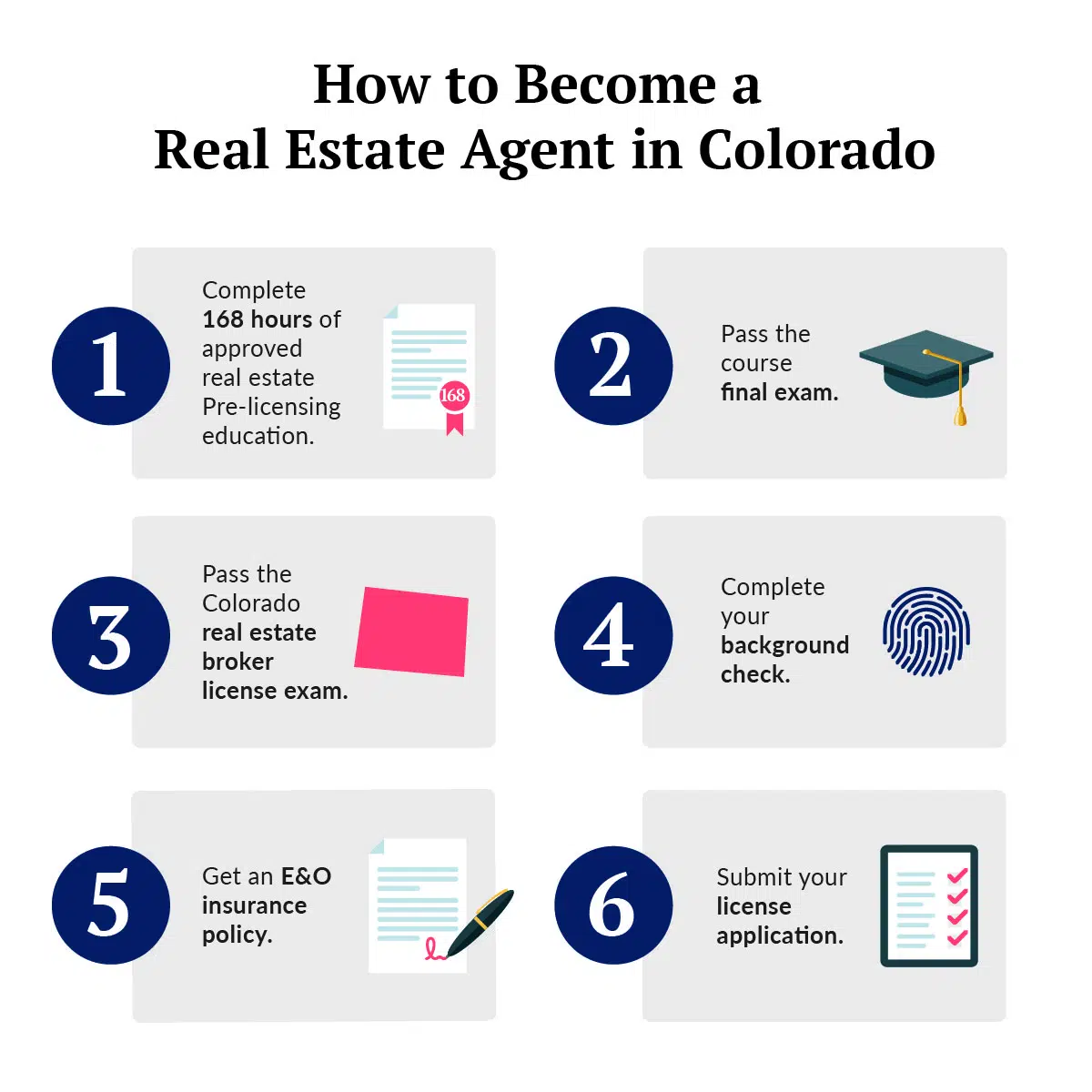
Aspiring real estate salespersons in Colorado must successfully complete 168 hours of approved pre-licensing education. This comprehensive curriculum is designed to cover essential aspects of real estate law, principles, practices, ethics, and state-specific regulations. The coursework typically includes:
- Colorado Real Estate Contracts and Regulations: This covers the legal framework governing real estate transactions in the state, including contract forms, disclosure requirements, and agency relationships.
- Real Estate Principles and Practices: This foundational module delves into concepts such as property rights, land valuation, financing, and market analysis.
- Real Estate Law: This component focuses on legal aspects like deeds, titles, mortgages, zoning, and fair housing laws.
- Real Estate Finance: Understanding mortgage lending, loan types, and the financial aspects of real estate transactions is crucial.
- Real Estate Appraisal: Learning how to determine property values is a key skill for any agent.
- Real Estate Ethics and Agency: This module emphasizes the ethical responsibilities and duties owed to clients and the public.
These courses must be taken through a real estate school officially approved by the Colorado Real Estate Commission. Many schools offer flexible learning options, including online courses, in-person classes, and hybrid formats, to accommodate diverse schedules. It is essential to verify that any chosen school and its curriculum are current and meet the Commission’s standards.
Choosing an Approved Real Estate School
Selecting the right real estate school is a critical decision. Look for schools that:
- Are Commission-Approved: This is non-negotiable. Check the Colorado DORA website for a list of approved providers.
- Offer Comprehensive Curriculum: Ensure the courses cover all the required topics and more.
- Provide Quality Instructors: Experienced and knowledgeable instructors can make a significant difference in your learning experience.
- Have a Good Pass Rate: While not always publicly available, some schools may provide information on their students’ success on the licensing exam.
- Offer Flexible Scheduling: If you are working or have other commitments, look for schools with online or evening/weekend class options.
- Provide Practice Exams and Study Materials: These resources are invaluable for exam preparation.
The Licensing Exam and Application Process
Upon successful completion of your pre-licensing education, the next significant hurdle is the state licensing examination. This exam is designed to test your knowledge of real estate principles and practices, as well as Colorado-specific laws and regulations.
Scheduling and Taking the Exam
The real estate licensing exam in Colorado is administered by a third-party testing service, typically Pearson VUE. You will need to register for the exam through their platform. The exam is computer-based and consists of two sections:

- National Portion: This section covers general real estate principles and practices common to most states.
- Colorado State Portion: This section focuses specifically on Colorado real estate laws, rules, and regulations.
The exam is timed, and you will receive your results immediately upon completion. To pass, you must achieve a minimum score on both sections. It is highly recommended to dedicate ample time to studying and utilizing practice exams provided by your real estate school or other reputable resources to prepare adequately.
The Application Submission
Once you have passed the licensing exam, you can proceed with submitting your official license application to the Colorado Real Estate Commission. The application process involves:
- Completing the Application Form: This is a detailed form that requires personal information, educational background, and disclosure of any criminal history.
- Submitting Exam Results: Proof of passing the state licensing exam will be required.
- Background Check: You will need to undergo a fingerprint-based criminal background check. This process involves submitting your fingerprints to the state and federal law enforcement agencies for review.
- Paying Fees: Various fees are associated with the application process, including the application fee, exam fee, and any background check fees. These are subject to change, so always check the latest fee schedule on the DORA website.
- Sponsoring Broker Information: As a salesperson, you will need to identify a licensed employing broker who will sponsor your license. This broker must sign off on your application, indicating their willingness to supervise you.
The Commission will review your application thoroughly. Processing times can vary, but it is generally recommended to allow several weeks for your license to be issued.
Becoming a Broker: Advancing Your Real Estate Career
While obtaining a salesperson license is the first step, many real estate professionals aspire to become licensed brokers to gain more autonomy and earning potential. The path to a broker license involves gaining experience and completing additional education.
Experience Requirements for Broker Licensure
To qualify for a real estate broker license in Colorado, an applicant must have actively engaged in the practice of real estate as a licensed salesperson for at least two years. This experience must be documented and verified, typically through your employing broker(s). The Commission will review your work history to ensure it meets the required standards of active participation in real estate transactions.
Broker Pre-Licensing Education
In addition to the salesperson pre-licensing education, aspiring brokers must complete an additional 8-hour Broker Management Course. This course focuses on the responsibilities and legal duties of a designated broker, including office management, supervision of agents, handling of trust accounts, and compliance with real estate regulations.
Broker Licensing Exam and Application
Once the experience and educational requirements are met, you will need to pass the broker licensing exam, which is administered by Pearson VUE. This exam is more comprehensive than the salesperson exam and includes a dedicated section on broker-specific responsibilities and management. After passing the exam, you will submit a separate application for a broker license, similar to the salesperson application process, including background checks and fees.
Maintaining Your License and Continuing Your Professional Development
Obtaining your real estate license is a significant achievement, but the journey doesn’t end there. To maintain an active license and remain competitive in the real estate market, ongoing education and adherence to ethical standards are crucial.
Continuing Education (CE) Requirements
The Colorado Real Estate Commission mandates continuing education for all licensed real estate professionals to ensure they stay current with changes in laws, regulations, and industry best practices.
- Salespersons: Must complete 24 hours of continuing education every three years, including at least 12 hours of mandatory courses designated by the Commission. These mandatory courses often cover topics like agency law, contracts, disclosures, and ethics.
- Brokers: Must also complete 24 hours of continuing education every three years, with a similar structure of mandatory and elective hours. The Broker Management Course counts towards a portion of the CE requirements.
Failure to complete the required CE hours by your license renewal deadline will result in your license becoming inactive, and you will not be permitted to practice real estate until the deficiencies are rectified.

Ethical Practices and Professionalism
Beyond the formal educational requirements, aspiring and licensed real estate professionals in Colorado must commit to the highest ethical standards. The real estate industry is built on trust and integrity. Adhering to the Colorado Real Estate Commission’s Code of Ethics and professional conduct is paramount. This includes:
- Honesty and Integrity: Always act with truthfulness and transparency in all dealings.
- Fiduciary Duties: Understand and uphold your duty of loyalty, obedience, disclosure, confidentiality, accounting, and reasonable care to your clients.
- Fair Housing: Comply with all federal and state fair housing laws, ensuring equal opportunity for all individuals in housing transactions.
- Professional Development: Continuously seek opportunities to expand your knowledge and skills through advanced training, industry conferences, and professional designations.
By diligently following these steps and committing to ethical practices, you can successfully obtain your real estate license in Colorado and build a thriving career in this vibrant and rewarding profession, contributing to the property landscape of beautiful Colorado.
LifeOutOfTheBox is a participant in the Amazon Services LLC Associates Program, an affiliate advertising program designed to provide a means for sites to earn advertising fees by advertising and linking to Amazon.com. Amazon, the Amazon logo, AmazonSupply, and the AmazonSupply logo are trademarks of Amazon.com, Inc. or its affiliates. As an Amazon Associate we earn affiliate commissions from qualifying purchases.