
Navigating the administrative processes of a new locale can often feel like a complex journey, especially when it involves ensuring your vehicle is legally compliant. For those venturing into the Centennial State, registering a car in Colorado is a crucial step to embracing the local lifestyle. This process, while seemingly straightforward, involves several key stages and requirements, from understanding emissions standards to gathering the necessary documentation. Whether you’re a newcomer setting roots in a bustling city like Denver or a mountain town resident, a thorough understanding of car registration in Colorado will smooth your transition and allow you to fully enjoy the state’s diverse landscapes and attractions.

Understanding Colorado’s Vehicle Registration Requirements
The Colorado Department of Revenue, Division of Motor Vehicles (DMV) oversees all vehicle registration matters. The primary goal of registration is to ensure that vehicles operating on public roads are properly identified, insured, and meet certain safety and environmental standards. For new residents, it’s imperative to register your vehicle within a specific timeframe after establishing residency. This typically means within 30 days of moving to Colorado. Failure to do so can result in penalties and fines. The registration process is designed to be accessible, with multiple options for submitting your application, including online, by mail, and in person at a county motor vehicle office.
Residency Requirements and Timeframes
Establishing residency in Colorado is the primary trigger for vehicle registration. This can be demonstrated through various means, such as obtaining a Colorado driver’s license, enrolling children in Colorado public schools, or securing employment within the state. Once residency is established, you have 30 days to register your vehicle. This grace period allows new residents to settle in and gather the necessary paperwork without immediate pressure. It’s advisable to begin the process sooner rather than later to avoid any potential issues or late fees.
Emissions Testing (Emissions Programs)
A significant aspect of vehicle registration in Colorado involves emissions testing. This requirement is in place to help maintain air quality across the state, particularly in its more populated areas. The specific requirements for emissions testing vary by county.
- Front Range Region: Counties such as Adams, Arapahoe, Boulder, Denver, Douglas, El Paso, Jefferson, Larimer, and Weld are part of the Enhanced Emissions Program. Vehicles registered in these counties, depending on their model year, will need to undergo regular emissions tests. This typically involves a tailpipe test to measure pollutant levels.
- Other Counties: Many other counties in Colorado have different requirements. Some may require only a visual inspection of the emissions control system, while others may be exempt from emissions testing altogether, especially for newer vehicles or those in less populated areas with better air quality.
It is crucial to check the specific emissions testing requirements for your county of residence on the Colorado Department of Revenue’s website. Vehicles that do not pass the emissions test will need to have the necessary repairs made before they can be registered.
Vehicle Identification Number (VIN) Inspection
For vehicles that were not previously registered in Colorado, a Vehicle Identification Number (VIN) inspection may be required. This inspection is conducted to verify that the VIN on the vehicle matches the documentation provided and that the vehicle is not stolen. These inspections are typically performed by law enforcement officers or authorized VIN inspectors at designated locations. It’s a proactive measure to ensure vehicle authenticity and security.
Gathering Required Documentation for Registration
Successfully registering your car in Colorado hinges on having all the correct documentation in order. Missing even one crucial item can lead to delays and multiple trips to the county motor vehicle office. It’s best to prepare thoroughly to make the process as seamless as possible.
Proof of Ownership
The most fundamental document is proof of ownership for the vehicle. This is typically your vehicle’s title.
- New Vehicle Purchase: If you purchased a new car from a dealership, they will often handle the initial titling and registration process, providing you with a manufacturer’s Certificate of Origin (MCO) or a statement of origin. You will then receive the official title from the state.
- Used Vehicle Purchase: For used vehicles, you will need the vehicle’s title, signed over to you by the previous owner. Ensure the title is free of any liens. If there was a lien, you’ll need a lien release document from the lender.
- Out-of-State Titles: If your vehicle was previously registered in another state, you will need to surrender that state’s title to Colorado to obtain a Colorado title.
Proof of Insurance
Colorado law mandates that all registered vehicles must have continuous liability insurance coverage. You will need to present proof of this insurance at the time of registration. This typically takes the form of an insurance card or a policy declaration page from your insurance provider, showing that you have met the minimum liability coverage requirements. The minimums are generally $25,000 for bodily injury per person, $50,000 for bodily injury per accident, and $15,000 for property damage per accident.
Identification and Residency Verification
You will need to provide valid identification to prove you are who you say you are. Acceptable forms of identification typically include:
- A valid Colorado driver’s license or state-issued ID card.
- A U.S. passport.
- Other government-issued identification documents.
Additionally, you may need to provide proof of residency in Colorado. This can include:
- A utility bill (gas, electric, water) in your name at your Colorado address.
- A lease agreement or mortgage statement.
- Official mail from government agencies.
Emissions Test Certificate (If Applicable)
As mentioned earlier, if your vehicle is subject to emissions testing in your county, you will need to bring your certificate of passing the emissions test. This certificate is issued by an authorized emissions testing station and confirms that your vehicle has met the state’s air quality standards.
Completed Application Forms
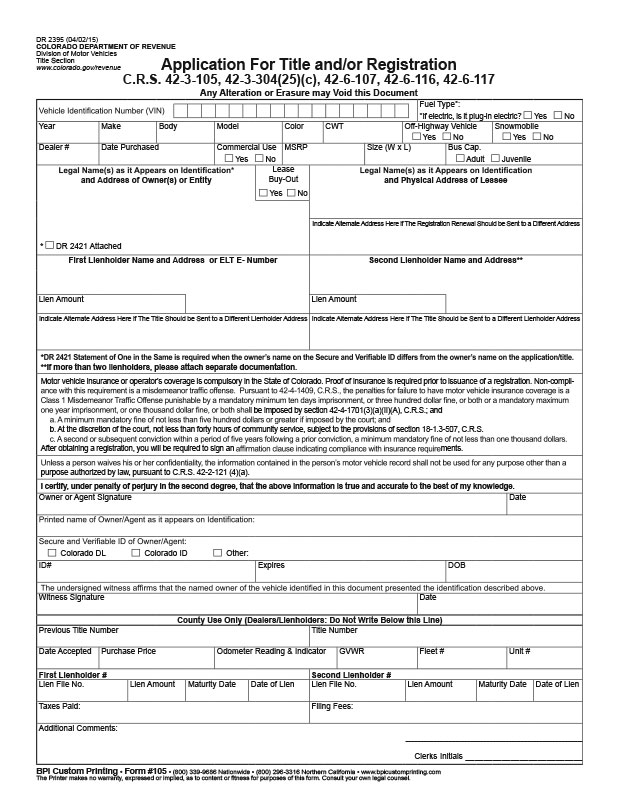
You will need to complete the relevant application forms provided by the Colorado DMV. These forms are typically available for download on the Colorado Department of Revenue website or can be obtained at the county motor vehicle office. Common forms include the Application for Colorado Title and the Application for Registration.
The Registration Process: Step-by-Step
Once you have gathered all the necessary documentation, you can proceed with the actual registration of your vehicle. Colorado offers several convenient methods for completing this process.
In-Person at a County Motor Vehicle Office
This is the most traditional and often the most straightforward method for new residents.
- Locate Your County Office: Find the motor vehicle office that serves your county of residence. You can usually find this information on the Colorado Department of Revenue website. Some counties may have multiple locations.
- Schedule an Appointment (Recommended): Many county offices recommend or require appointments to reduce wait times. Check the specific procedures for your local office.
- Submit Documents and Pay Fees: Present all your gathered documentation to the clerk. They will review your paperwork, process your application, and calculate the registration fees and taxes.
- Receive Plates and Registration: Upon successful processing, you will receive your new Colorado license plates, registration certificate, and stickers. Ensure you affix the stickers to your plates as instructed.
Online Registration
For certain types of registration renewals and some initial registrations for existing Colorado vehicles, online services may be available. However, for new residents registering a vehicle for the first time in Colorado with an out-of-state title, an in-person visit is usually required. Check the Colorado DMV website for the most current online options.
Mail-In Registration
In some limited circumstances, mail-in registration might be an option, particularly for renewals. However, for the initial registration of a vehicle that has not been previously registered in Colorado, this method is generally not applicable due to the need for VIN inspections and physical document verification.
Fees and Taxes Associated with Registration
The cost of registering your vehicle in Colorado is determined by several factors, including the age and type of vehicle, as well as local taxes.
Registration Fees
The base registration fee is a standard amount set by the state, which can change periodically. This fee helps fund the operations of the DMV and related services.
Ownership Tax (Tire Tax)
Colorado levies an annual ownership tax, often referred to as a “tire tax,” based on the manufacturer’s suggested retail price (MSRP) and the age of the vehicle. Newer, more expensive vehicles will generally have a higher ownership tax. This tax depreciates over time, meaning older vehicles have a lower ownership tax.
Sales Tax
When you purchase a vehicle in Colorado, you will pay sales tax at the time of titling and registration. The sales tax rate varies by county and municipality, with a portion going to the state and the remainder to local governments. If you purchased a vehicle out-of-state and paid sales tax there, you may receive a credit for that amount against your Colorado sales tax liability, up to the rate of the Colorado jurisdiction.
Other Potential Fees
Depending on your county and specific circumstances, there might be additional small fees, such as those for title transfers, license plate issuance, or specialty plates.
It’s always a good idea to visit the Colorado Department of Revenue’s website or contact your local county motor vehicle office for the most up-to-date fee schedules and to get an estimate of your total registration costs.
Maintaining Your Registration and Plates
Once your vehicle is registered, remember that registration is not a one-time event. It needs to be renewed annually to ensure your vehicle remains legally permitted on Colorado roads.
Annual Renewal Process
You will receive a renewal notice from the DMV typically 60 days before your registration expires. This notice will outline the steps required for renewal, including any necessary emissions testing. Renewals can often be completed online, by mail, or in person. Prompt renewal is essential to avoid late fees and ensure uninterrupted legal operation of your vehicle.
Replacing Lost or Stolen Plates and Stickers
If your license plates or registration stickers are lost, stolen, or damaged, you will need to apply for replacements. This usually involves visiting a county motor vehicle office, completing the necessary paperwork, and paying a replacement fee. You will likely need to provide proof of ownership and identity, similar to the initial registration process.

Moving Out of State
If you move from Colorado to another state, you will need to register your vehicle in your new state of residence and surrender your Colorado plates. It is also advisable to notify the Colorado DMV of your departure to avoid receiving unnecessary renewal notices.
Registering your car in Colorado is an integral part of settling into your new life in the state. By understanding the requirements, preparing your documentation, and following the outlined steps, you can efficiently complete this process and freely explore everything from the urban attractions of Denver to the majestic peaks of the Rocky Mountains.
LifeOutOfTheBox is a participant in the Amazon Services LLC Associates Program, an affiliate advertising program designed to provide a means for sites to earn advertising fees by advertising and linking to Amazon.com. Amazon, the Amazon logo, AmazonSupply, and the AmazonSupply logo are trademarks of Amazon.com, Inc. or its affiliates. As an Amazon Associate we earn affiliate commissions from qualifying purchases.