
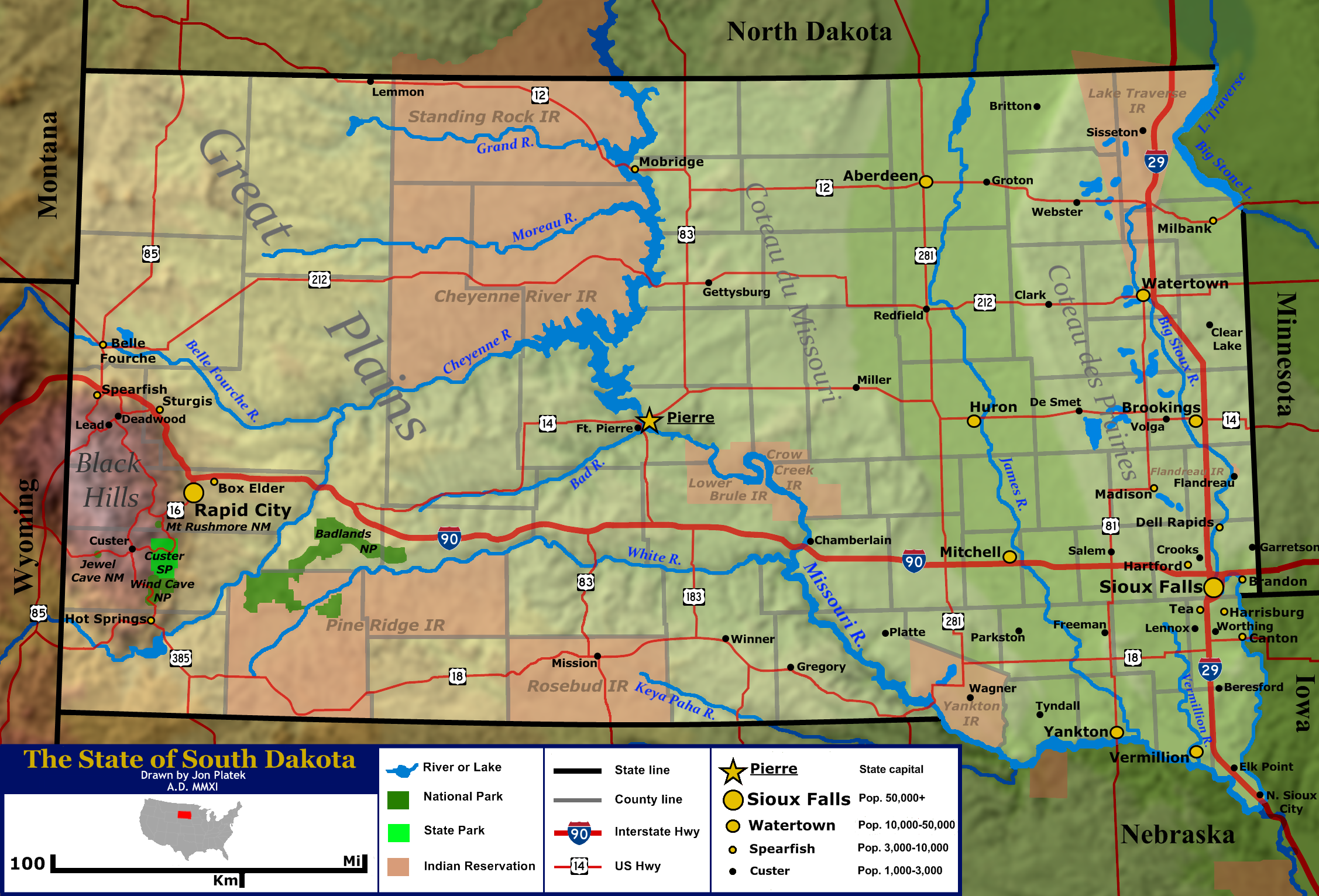
South Dakota, a state celebrated for its dramatic natural beauty, rich history, and iconic landmarks, is a cornerstone of the American Midwest. Understanding its regional placement is key to appreciating its unique character and the diverse experiences it offers to travelers. While often broadly categorized, a more nuanced view reveals its position within distinct geographical and cultural spheres. This exploration delves into the regional identity of South Dakota, highlighting its place within the Great Plains and its significant role in the broader American West.
The Northern Plains and the Great Plains Identity
South Dakota is unequivocally part of the Great Plains, a vast expanse of relatively flat, treeless grassland that stretches across the central United States and into Canada. This designation immediately conjures images of wide-open skies, rolling prairies, and an agricultural landscape dominated by wheat, corn, and cattle ranching. The Great Plains region is characterized by its semi-arid climate, distinct seasons, and a history deeply intertwined with Native American cultures and the westward expansion of the United States.
Defining the Great Plains
The Great Plains are defined by their elevation, which gradually rises from east to west, and their geological origins, largely shaped by ancient inland seas and subsequent erosion. This vast area is not a monolith; it is comprised of several sub-regions, and South Dakota occupies a prominent position within the Northern Plains sub-section. This northern aspect influences the climate, the dominant ecosystems, and the historical development of the state.
Agricultural Heartlands
The agricultural heritage of South Dakota is a defining characteristic of its Great Plains identity. For generations, farming and ranching have been the backbone of the state’s economy and culture. Visitors can witness this firsthand through the endless fields of golden wheat, the expansive ranches where cattle graze, and the small, resilient towns that dot the landscape. This agrarian lifestyle has fostered a sense of self-reliance, community, and a deep connection to the land. Destinations like the rolling hills near Wall offer a glimpse into this enduring way of life.
Environmental Characteristics
The Great Plains are known for their dramatic weather patterns, including strong winds, seasonal temperature extremes, and occasional severe storms. South Dakota experiences hot summers and cold, snowy winters. The landscape, while seemingly uniform, is a dynamic ecosystem supporting a variety of flora and fauna adapted to these conditions. Travelers who venture into areas like the Badlands National Park will encounter a starkly beautiful, yet challenging, environment that showcases the raw power of nature in this region.
Bridging the Midwest and the West
While firmly rooted in the Great Plains, South Dakota also possesses characteristics that place it at the intersection of the American Midwest and the American West. This dual identity is reflected in its demographics, its cultural influences, and the types of attractions it offers.
Midwestern Roots and Connections
The eastern part of South Dakota, particularly along the Missouri River, exhibits strong ties to the Midwest. Cities like Sioux Falls boast a blend of traditional Midwestern values and a growing metropolitan dynamism. The agricultural practices, community structures, and even the architecture in these eastern counties often echo those found in neighboring Midwestern states. The proximity to states like Iowa and Minnesota fosters cultural and economic exchange.
The Western Frontier Spirit
As one moves westward across South Dakota, the influence of the American West becomes increasingly pronounced. The rugged terrain of the Black Hills, the historical significance of figures like Wild Bill Hickok and Calamity Jane, and the presence of iconic Western landmarks such as Mount Rushmore National Memorial all contribute to this perception. The Black Hills themselves, with their granite peaks and pine forests, stand in stark contrast to the surrounding prairies, evoking a sense of adventure and the untamed frontier. The legendary Deadwood, a city steeped in the lore of the Old West, further solidifies this connection.
A Historical Crossroads
Historically, South Dakota served as a vital corridor for westward expansion. Trails like the Oregon Trail and the Mormon Trail passed through or near the state, bringing settlers and shaping the development of the region. The Missouri River was a critical artery for transportation and exploration. This history has left an indelible mark on the state, contributing to its complex regional identity and offering a rich tapestry of historical sites for visitors to explore.
Key Regions Within South Dakota
To truly understand what region South Dakota is in, it’s beneficial to look at its distinct internal geographical and cultural regions, each offering unique travel experiences.
Eastern South Dakota: Prairies and Rivers
Eastern South Dakota is characterized by fertile farmland and the expansive Missouri River Valley. This area is the most populated and economically developed part of the state.
Cities and Towns

- Sioux Falls: The largest city, offering a vibrant arts scene, a growing culinary landscape, and the natural beauty of the Falls Park.
- Brookings: Home to South Dakota State University, a hub of education and culture.
- Mitchell: Famous for its Corn Palace, a unique architectural marvel that celebrates the state’s agricultural bounty.
Attractions
- Falls Park (Sioux Falls): A stunning urban oasis with cascading waterfalls on the Big Sioux River.
- The Corn Palace (Mitchell): A must-see spectacle, redecorated annually with corn and other grains.
- Lewis and Clark Recreation Area: Along the Missouri River, offering opportunities for boating, fishing, and camping.
Central South Dakota: The Missouri River and Badlands Gateway
Central South Dakota is dominated by the Missouri River and serves as a transitional zone between the eastern farmlands and the western badlands and hills.
Cities and Towns
- Pierre: The state capital, located on the Missouri River, offering a glimpse into state government and history.
- Chamberlain: A gateway to central South Dakota and a popular stop for travelers crossing the Missouri River.
Attractions
- South Dakota State Capitol Building (Pierre): An impressive example of Beaux-Arts architecture.
- Oahe Dam: One of the largest dams in the world, creating Lake Oahe, a massive reservoir popular for recreation.
- Dignity of Earth and Sky Sculpture: A striking contemporary art installation near Chamberlain.
Western South Dakota: The Black Hills and the Badlands
Western South Dakota is perhaps the most iconic and visually dramatic region, renowned for its unique geological formations and historical significance.
Cities and Towns
- Rapid City: The “Gateway to the Black Hills,” serving as a major hub for exploring the western part of the state.
- Deadwood: A historic gold rush town, preserving its Old West charm and offering a lively entertainment scene.
- Spearfish: Nestled in a scenic canyon, known for its outdoor recreation opportunities.
Attractions
- Mount Rushmore National Memorial: The iconic sculpture of four U.S. Presidents carved into the granite face of Mount Rushmore.
- Badlands National Park: A surreal landscape of eroded buttes, pinnacles, and spires, offering incredible hiking and wildlife viewing.
- Black Hills National Forest: A vast forested area encompassing numerous natural wonders and recreational activities.
- Custer State Park: Home to diverse wildlife, including bison herds, and scenic drives like the Needles Highway and the Iron Mountain Road.
- Wind Cave National Park: One of the longest and most complex cave systems in the world.
- Jewel Cave National Monument: Another extraordinary cave system with stunning crystal formations.
Experiencing South Dakota’s Regional Identity
A visit to South Dakota is an immersion into the spirit of the Great Plains and the American West. Whether one is exploring the agricultural heartlands of the east, the expansive waters of the Missouri River in the center, or the majestic landscapes of the Black Hills and Badlands in the west, the state offers a diverse range of experiences that highlight its unique regional identity.
Understanding the Landscape
The landscape is perhaps the most immediate indicator of South Dakota‘s regional placement. The vast, open skies of the prairies evoke a sense of freedom and the frontier, while the dramatic geological formations of the west speak to the raw, untamed beauty of the American West. This visual distinctiveness is a fundamental aspect of its appeal to travelers.
Cultural Influences
The cultural mosaic of South Dakota is a testament to its regional positioning. Native American heritage is deeply woven into the fabric of the state, particularly in the western regions and reservations like the Pine Ridge Indian Reservation. The pioneer spirit, a blend of Midwestern hardiness and Western grit, is palpable in the towns and communities. This rich cultural tapestry adds depth and meaning to any exploration of the state.

Travel Considerations
When planning a trip to South Dakota, understanding its regional characteristics can enhance the travel experience. The vast distances between attractions, especially in the western part of the state, require careful planning. The seasonal weather patterns also play a significant role, with summer offering the most accessible conditions for exploring outdoor attractions, while winter can bring challenges but also a unique, stark beauty. Embracing the spirit of the Great Plains and the allure of the American West will undoubtedly lead to an unforgettable journey through this remarkable state.
LifeOutOfTheBox is a participant in the Amazon Services LLC Associates Program, an affiliate advertising program designed to provide a means for sites to earn advertising fees by advertising and linking to Amazon.com. Amazon, the Amazon logo, AmazonSupply, and the AmazonSupply logo are trademarks of Amazon.com, Inc. or its affiliates. As an Amazon Associate we earn affiliate commissions from qualifying purchases.