
The very thought of an earthquake conjures images of California’s dramatic fault lines and the seismic anxieties that grip the Golden State. For many, especially those planning a vacation or considering a permanent move to the Sunshine State, the idea of Florida experiencing significant seismic activity seems counterintuitive. The state is renowned for its sandy beaches, abundant sunshine, and, perhaps most crucially, its perceived geological stability. However, to dismiss the possibility of earthquakes entirely in Florida would be to overlook a nuanced geological reality. While not a hotbed for seismic events, Florida is not entirely immune, and understanding the nature and likelihood of these occurrences is essential for anyone engaging with the state as a travel destination, a place for accommodation, or a locale rich in natural and historical landmarks.
Understanding Florida’s Geological Landscape
Florida’s geological makeup is fundamentally different from that of regions prone to frequent and powerful earthquakes. The state sits atop the North American Plate, far from any major tectonic plate boundaries where the Earth’s crust is under immense stress. The dominant geological forces shaping Florida are not those of continental collision or subduction zones but rather the slow accumulation of sediment over millions of years, primarily from the erosion of the Appalachian Mountains and the deposition of marine organisms. This sedimentary layer, hundreds of feet thick in some areas, acts as a thick blanket, dampening the effects of any minor tremors originating from distant seismic zones.
The Influence of Tectonic Plates
The Earth’s crust is divided into several large and small tectonic plates that are constantly moving. The interactions at the boundaries of these plates are the primary cause of earthquakes. Major fault lines, like the San Andreas Fault in California, are where these plates grind against each other, building up immense pressure that is eventually released as seismic waves. Florida, situated in the interior of the North American Plate, is far from these active boundaries. This geographical isolation is the primary reason for the state’s low seismic hazard rating compared to other parts of the United States.
Sedimentary Layers and Seismic Dampening
The thick layers of sediment that form the Florida peninsula play a significant role in how seismic waves, if they were to reach the state, would be felt. Unlike bedrock, which transmits seismic energy more efficiently, the soft, unconsolidated sediments can absorb and dissipate some of the energy from distant earthquakes. This means that even if a moderate earthquake occurs hundreds or thousands of miles away, its impact in Florida would likely be significantly diminished. This phenomenon is crucial to understanding why historical seismic events in Florida have been relatively minor.
Historical Seismic Activity in Florida
While the geological conditions suggest a low risk, Florida has indeed experienced earthquakes. These events are typically minor and often attributed to causes other than large-scale tectonic shifts. Documented seismic activity in Florida is infrequent and generally of low magnitude, usually felt as a gentle tremor or a brief shaking.
Notable Earthquakes and Their Impacts
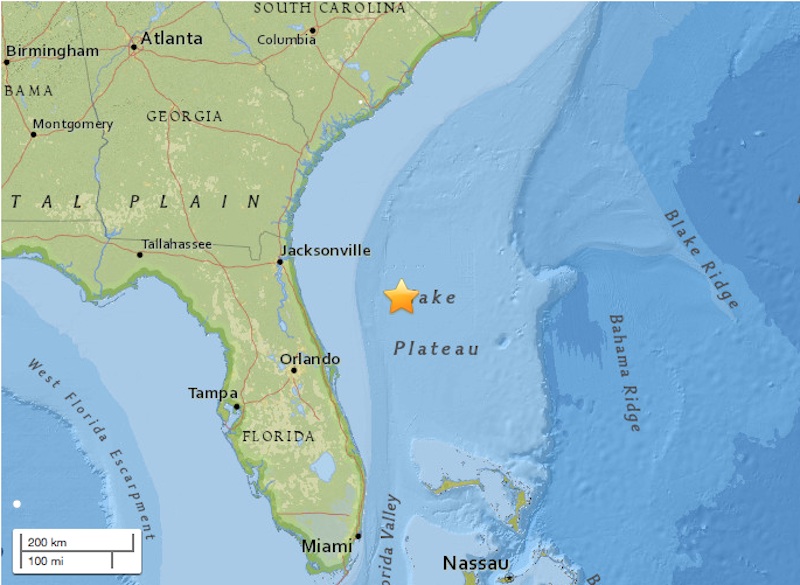
The most significant earthquake recorded in Florida occurred on January 12, 1879, near Charleston, South Carolina. While not directly in Florida, the tremor was felt across a wide area, including northern Florida, where residents reported shaking. More recently, on June 14, 2001, a magnitude 4.0 earthquake occurred off the coast of South Carolina and was felt in Jacksonville and St. Augustine. This highlights how distant seismic events can occasionally impact the state.
There have been instances of minor tremors originating within Florida itself. For example, a magnitude 3.3 earthquake was recorded near Bunnell, Florida, on November 17, 1975. Another minor event occurred near Lake Okeechobee in 1971. These events, while noticeable, did not cause significant damage. Their causes are often attributed to minor crustal adjustments or fault slippage within the region, rather than major tectonic plate movement.
Seismic Monitoring and Data

The U.S. Geological Survey (USGS) continuously monitors seismic activity across the United States, including Florida. Their data helps to track the frequency, magnitude, and potential impact of earthquakes. While the density of seismic monitoring stations in Florida is lower than in more seismically active regions, the existing network provides valuable information about the state’s geological behavior. This data consistently indicates that Florida is a region of low seismic hazard.
Causes of Earthquakes in Florida
Given Florida’s location away from major fault lines, the earthquakes that do occur are generally attributed to localized geological processes. These can include minor adjustments within the Earth’s crust beneath the state, or even the rare occurrence of volcanic activity, though the latter is exceptionally uncommon in the region.
Crustal Adjustments and Minor Faulting
The Earth’s crust is not a perfectly static entity. Even within the stable interior of a tectonic plate, there can be slow, subtle movements and stresses that build up over time. These stresses can lead to the reactivation of ancient, dormant faults or cause minor slippage along existing fracture zones in the bedrock. These “intraplate” earthquakes are typically smaller in magnitude than those occurring at plate boundaries.
Induced Seismicity and Human Activity
In some regions, human activities can induce seismic events. This is known as induced seismicity. In Florida, while not a primary cause of natural earthquakes, activities such as deep-well injection of wastewater or the extraction of resources like oil and gas have been linked to minor seismic tremors in other parts of the world. However, the prevalence and impact of such induced seismicity in Florida are considered minimal based on current research and monitoring. The primary focus for seismic risk assessment remains on natural geological processes.
Assessing the Risk for Travelers and Residents
For those planning a visit to Florida, considering a stay at a resort in the Florida Keys or booking accommodation in Miami, the risk of experiencing a significant earthquake is extremely low. The state’s geological stability is a well-established fact that underpins its appeal as a safe and desirable travel destination.
Comparing Florida’s Risk to Other Regions
When compared to states like California, which sits on the boundary of the Pacific and North American plates and faces the constant threat of powerful earthquakes, Florida’s seismic risk is negligible. The intensity and frequency of seismic events in California are orders of magnitude higher. This stark contrast is a significant factor for travelers and investors when considering safety and potential disruptions. For instance, a traveler might choose a vacation to Orlando for its theme parks, knowing that seismic activity is not a primary concern, unlike a trip to a seismically active region.
Safety and Preparedness
While the likelihood of a major earthquake is exceptionally low, it is always prudent for residents and visitors to be aware of basic earthquake safety guidelines. In the unlikely event of feeling shaking, the standard advice of “drop, cover, and hold on” applies. Most structures in Florida are built to withstand hurricane-force winds, which are a far more significant and frequent natural hazard for the state. Building codes primarily focus on wind resistance rather than seismic resilience, reflecting the state’s geological reality. Therefore, while awareness is good, extensive earthquake preparedness measures, as might be necessary in California, are not typically a primary concern for individuals in Florida. The focus for disaster preparedness in Florida overwhelmingly remains on hurricanes and tropical storms.

Conclusion: A Safe Haven, Geologically Speaking
In conclusion, the question “Can Florida have an earthquake?” is answered with a qualified yes. Florida can experience earthquakes, but these are typically minor, infrequent, and of low magnitude. The state’s position within the stable interior of the North American Plate and the thick sedimentary layers contribute to its low seismic hazard. For travelers seeking pristine beaches, vibrant cities like Tampa, or unique natural landmarks, Florida remains a safe and desirable destination, with seismic activity being a negligible concern compared to other natural phenomena like hurricanes. The geological stability of Florida is a key factor in its enduring appeal for tourism, accommodation, and a desirable lifestyle, ensuring that the Sunshine State can be enjoyed with peace of mind regarding seismic threats.
LifeOutOfTheBox is a participant in the Amazon Services LLC Associates Program, an affiliate advertising program designed to provide a means for sites to earn advertising fees by advertising and linking to Amazon.com. Amazon, the Amazon logo, AmazonSupply, and the AmazonSupply logo are trademarks of Amazon.com, Inc. or its affiliates. As an Amazon Associate we earn affiliate commissions from qualifying purchases.