
Navigating the legal complexities of divorce can be an emotionally taxing experience. For those seeking to end a marriage in the Sunshine State, understanding the procedural landscape is paramount. Filing for divorce in Florida involves a series of steps, legal requirements, and considerations designed to ensure a fair and equitable resolution. This guide aims to demystify the process, offering a clear pathway for individuals embarking on this significant life transition. Whether you are initiating the proceedings or responding to a petition, comprehending the nuances of Florida’s divorce laws is the first crucial step toward achieving closure and building a new future.

Understanding the Florida Divorce Process
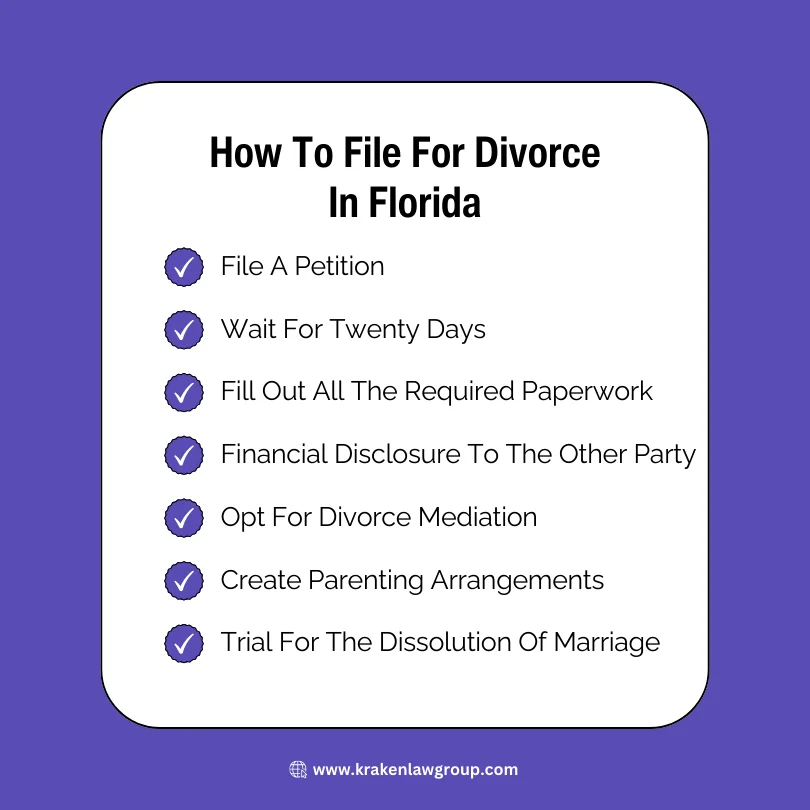
The state of Florida offers two primary avenues for divorce: an uncontested divorce and a contested divorce. The distinction lies in whether both parties agree on all the terms of their separation, including the division of assets and debts, child custody, and alimony. Choosing the right path significantly impacts the timeline, cost, and emotional toll of the divorce proceedings.
Uncontested Divorce
An uncontested divorce is generally the most straightforward and amicable route. It occurs when both spouses mutually agree on all issues pertaining to the dissolution of their marriage. This includes:
- Equitable Distribution of Marital Assets and Liabilities: Spouses must agree on how to divide property acquired during the marriage, such as homes, vehicles, bank accounts, and investments, as well as marital debts like mortgages, car loans, and credit card balances.
- Child Custody and Support: If there are minor children, agreement must be reached on legal and physical custody arrangements, visitation schedules, and child support payments. Florida courts prioritize the best interests of the child in all custody decisions.
- Alimony: Spouses may agree on whether one party will pay alimony (spousal support) to the other, and if so, the amount and duration.
- Name Change: If one spouse wishes to revert to a maiden name or a former name, this can also be included in the agreement.
Filing the Petition
In an uncontested divorce, one spouse, known as the petitioner, files a “Petition for Dissolution of Marriage” with the appropriate Florida county court. The petition outlines basic information about the marriage, such as the date of marriage, date of separation, names and birthdates of any children, and the grounds for divorce. While Florida is a no-fault state, meaning you do not need to prove wrongdoing by either party, you will still need to state that the marriage is irretrievably broken.
Service of Process
Once the petition is filed, the other spouse, the respondent, must be formally notified. In an uncontested divorce, the respondent typically signs a “Waiver of Service,” acknowledging receipt of the petition and waiving the need for formal legal service. This signifies their cooperation and agreement to proceed without formal legal notice.
Parenting Plan and Financial Affidavits
Both parties will need to submit a “Parenting Plan” that details how they will share parental responsibility, if applicable. Additionally, comprehensive financial affidavits must be completed and filed, disclosing all assets, liabilities, income, and expenses. These documents are crucial for the court to review and approve the agreed-upon terms.
Final Judgment
Upon submission of all required documents and a waiting period, the court will review the proposed settlement agreement. If all terms are deemed fair and in compliance with Florida law, the judge will sign a “Final Judgment of Dissolution of Marriage,” legally ending the marriage.
Contested Divorce
A contested divorce arises when spouses cannot agree on one or more of the critical issues surrounding their separation. This path is typically more time-consuming, expensive, and emotionally draining, often requiring court intervention to resolve disputes.
Grounds for Divorce
As mentioned, Florida is a no-fault divorce state. The primary ground for divorce is that the marriage is “irretrievably broken.” While fault is not a factor in granting the divorce itself, it can sometimes be considered in specific aspects of the proceedings, such as in cases involving domestic violence or extreme cruelty.
Filing and Service
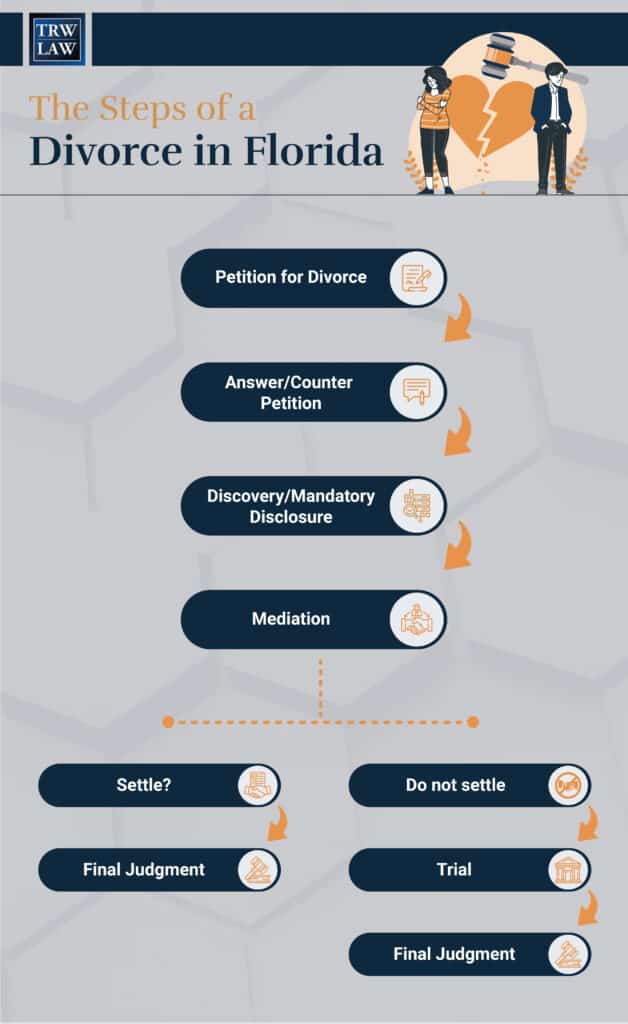
Similar to an uncontested divorce, the process begins with filing a “Petition for Dissolution of Marriage.” However, in a contested divorce, the respondent cannot simply waive service. They must be formally served with the petition and a summons, officially notifying them of the legal action and requiring them to respond within a specified timeframe.
Discovery Process
Once the respondent has answered the petition, the “discovery” phase begins. This is a critical stage where both parties gather information and evidence to support their claims. Discovery tools include:
- Interrogatories: Written questions that each party must answer under oath.
- Requests for Production of Documents: Requests for relevant documents, such as financial statements, tax returns, property deeds, and medical records.
- Depositions: Out-of-court testimony given under oath, where attorneys for both sides question witnesses or parties involved.
- Subpoenas: Legal orders compelling third parties to provide documents or testimony.
Mediation
Before a case proceeds to trial, courts in Florida often mandate mediation. Mediation is a process where a neutral third party, the mediator, facilitates discussions between the spouses to help them reach a mutually acceptable agreement. If mediation is successful, the agreement is documented and submitted to the court for approval. If mediation fails, the case will proceed toward trial.
Hearings and Trial
If no agreement is reached through negotiation or mediation, the case will proceed to various court hearings and potentially a full trial. At a trial, both sides will present their evidence and arguments before a judge, who will then make the final decisions on all contested matters. These decisions are then incorporated into the “Final Judgment of Dissolution of Marriage.”
Residency Requirements for Divorce in Florida
To file for divorce in Florida, at least one of the spouses must meet specific residency requirements.
-
Primary Requirement: One of the parties must have resided in the state of Florida for at least six months immediately preceding the filing of the petition for dissolution of marriage. This means that if you are planning to file for divorce, you or your spouse must have established a bona fide residence in Florida for this duration.
-
Court Jurisdiction: Meeting this residency requirement is essential for the court to have the legal authority, or jurisdiction, to grant the divorce. Without satisfying this condition, the court cannot proceed with the dissolution of marriage.
Key Legal Considerations in Florida Divorce
Beyond the procedural steps, several substantive legal issues must be addressed during a divorce. These require careful consideration and often legal counsel.
Equitable Distribution of Marital Property
Florida follows the principle of equitable distribution, which means marital assets and debts will be divided fairly, though not necessarily equally.
- Marital vs. Non-Marital Property: It is crucial to distinguish between marital property (acquired during the marriage) and non-marital property (owned before the marriage or received as a gift or inheritance). Only marital property is subject to equitable distribution.
- Factors Considered: Judges consider various factors when determining equitable distribution, including the duration of the marriage, the economic circumstances of each spouse, and contributions of each spouse to the marriage, including homemaking and child care.
Child Custody and Support
When minor children are involved, their well-being is the court’s paramount concern.
- Parenting Plan: As mentioned, a detailed parenting plan outlining decision-making authority and time-sharing schedules is mandatory.
- Best Interests of the Child: All custody decisions are based on the “best interests of the child” standard, which involves factors like the child’s wishes, the mental and physical health of each parent, and the ability of each parent to provide a stable environment.
- Child Support Guidelines: Florida has statutory guidelines for calculating child support based on the income of both parents and the amount of time each parent spends with the child.
Alimony and Spousal Support
Alimony is financial support paid from one spouse to the other. Florida law recognizes several types of alimony:
- Bridge-the-Gap Alimony: Designed to assist a party with specific needs for a short period.
- Rehabilitative Alimony: Intended to help a spouse gain education, training, or experience to become self-supporting.
- Durational Alimony: Awarded when one spouse needs financial assistance for a set period.
- Permanent Alimony: Awarded in long-term marriages where one spouse cannot become self-supporting.
The court considers numerous factors when awarding alimony, including the length of the marriage, the standard of living established during the marriage, and the financial resources and earning capacities of each spouse.
The Role of Legal Counsel
While it is possible to navigate the divorce process without an attorney, particularly in simple uncontested cases, engaging legal counsel is highly recommended for several reasons.
- Expertise: Divorce laws are complex and can change. An experienced family law attorney in Florida understands these intricacies and can guide you through each step, ensuring your rights are protected.
- Objective Advice: Attorneys provide objective advice, helping you make informed decisions without emotional bias.
- Negotiation and Representation: They can negotiate effectively on your behalf and represent you in court if necessary.
- Avoiding Costly Mistakes: Mistakes in legal filings or agreements can have long-lasting financial and personal consequences. An attorney helps prevent these errors.
For individuals facing divorce in Florida, understanding the procedural requirements, legal considerations, and the value of professional guidance is essential for achieving a fair and just resolution. By preparing thoroughly and seeking appropriate support, you can navigate this challenging period with greater confidence and clarity.
LifeOutOfTheBox is a participant in the Amazon Services LLC Associates Program, an affiliate advertising program designed to provide a means for sites to earn advertising fees by advertising and linking to Amazon.com. Amazon, the Amazon logo, AmazonSupply, and the AmazonSupply logo are trademarks of Amazon.com, Inc. or its affiliates. As an Amazon Associate we earn affiliate commissions from qualifying purchases.